
ADRIAN II, POPE. — Born in Rome in 792 into one of the finest families, which had already produced Popes Stephen IV (816–17) and Sergius II (844–47). Before entering the sacred orders, he had married Stefania, by whom he had a daughter. Gregory IV ordained him subdeacon in 822 and received him into the Lateran. Shortly afterward he ordained him priest and appointed him cardinal of the title of S. Marco. He was so pious and charitable that, already twice, at the deaths of Leo IV (855) and Benedict III (858), attempts had been made to elect him Pope. At the death of Nicholas I (13 Nov. 867), there was a desire for a pontiff who would continue his policies but with a less harsh hand. A. seemed the most suitable. It was necessary to act quickly, because Lambert of Spoleto had invaded the city, it is not known whether on the orders of the emperor Louis II (850–75), committing acts of violence and injustice there. Imperial ratification soon followed, and A. was consecrated in S. Pietro on 14 Dec. 867.
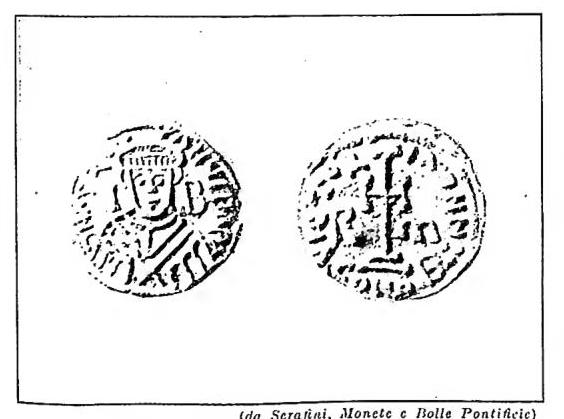
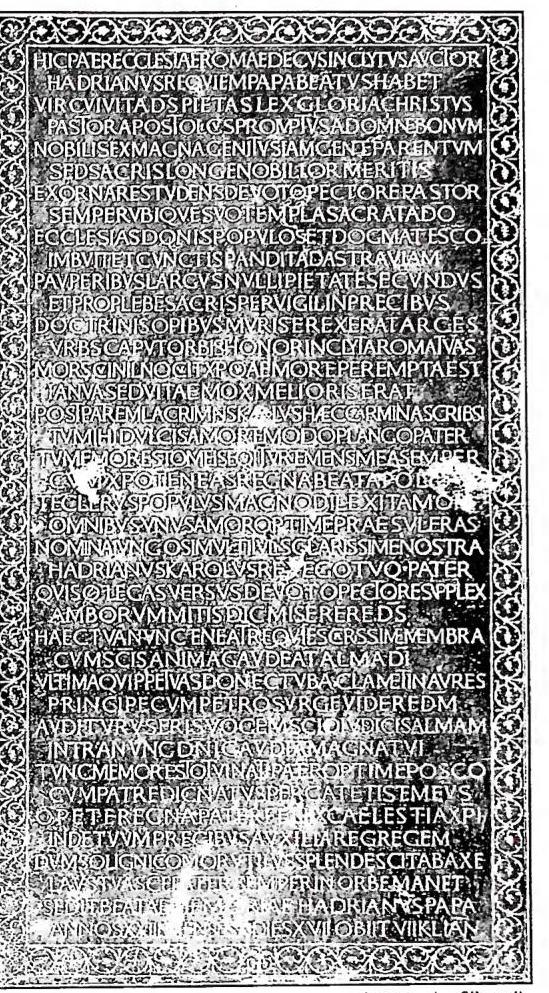
(property of A. Bliropi) ADRIAN I, pope — Epitaph dictated by Charlemagne — Atrium of the basilica of S. Pietro in Vaticano.
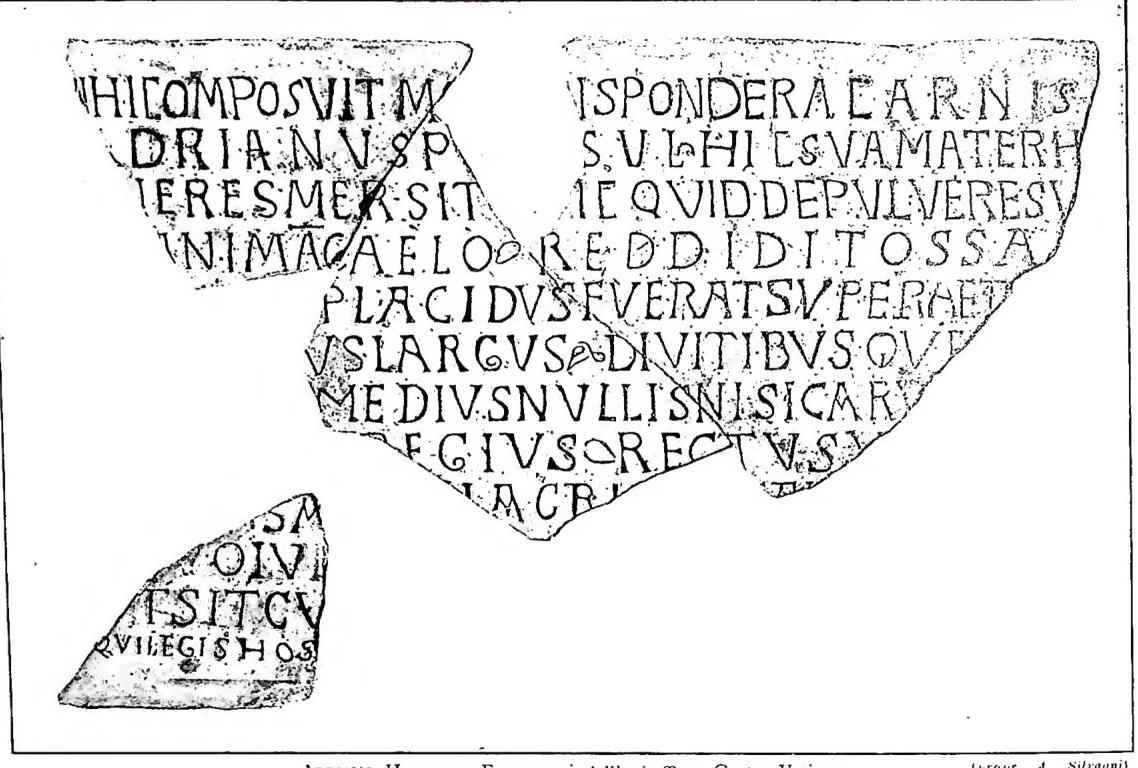
ADRIAN II, pope — Fragments of the epitaph — Vatican Grottoes.
(property of A. Siliagni)
new union with Waldrada and sent Teutberga to Rome to request dissolution of the marriage, but in vain. He then came to Italy himself and met the Pope at Montecassino, but was allowed to receive the Eucharist only after assuring him that he had had no further relations with the excommunicated woman (1 July 869). Having died suddenly on the return journey without leaving legitimate heirs (7 Aug. 869), he left the inheritance of his kingdom, Lotharingia, open. Charles the Bald, Louis the German, and the emperor all coveted II. A. supported the latter, but without success. During these controversies A. had to struggle intensely with Hincmar of Reims, who, in a long letter (Epist., XXVII: PL 126, 181), set forth “what would later be called political Gallicanism” (E. Amann). He had arranged for his nephew Hincmar to be promoted to the see of Laon, a suffragan of Reims, in 858; the nephew was turbulent and contentious. Some time later he had to defend him against the anger of Charles the Bald (868). Soon, however, Hincmar of Laon also broke off relations with his uncle, who had him deposed at the Council of Douzy (Aug. 871). He then appealed to Rome, where his appeal was accepted, and both the king’s conduct and that of Hincmar of Reims were censured. They reacted harshly, and A., unaware of the matter because the chancellor Anastasius had acted without his knowledge, finally informed of everything, replied conciliatorily, holding out to Charles the Bald the vision of the imperial crown, which, however, had just then suffered a grave humiliation. The duke of Benevento, Adelchis, had seized Louis II, who was staying in that city, and released him only when he learned of the Saracens’ landing at Salerno. To restore imperial prestige and encourage Louis, A. invited him to Rome and crowned him anew at S. Pietro (872).
The great Pontiff also had concerns in the East. A source of joy was the rapid conversion of the Moravians through the work of Constantine and Methodius (863 and following years). Invited to Rome by Nicholas I to justify their use of the Slavic language in the liturgy, they found A. there, and he received them benevolently, all the more because they brought the relics of S. Clement, discovered at Cherson. A. approved the use of the Slavic language, ordained Methodius and several Moravians priests, and would have consecrated Constantine bishop had the latter not died, after donning the monastic habit and changing his name to Cyril. Shortly afterward A. restored the see of Sirmium, consecrating Methodius bishop there with jurisdiction over Pannonia, Moravia, and Serbia. The usurper Basil the Macedonian, who in Nov. 867 had overthrown Photius and restored Ignatius to the see of Constantinople, wished for the convocation of a great council to settle the matter. A. preceded it with the Council of the Roman Province (10 June 869), at which he condemned Photius and deposed the legates. The Eighth Ecumenical Council, the Fourth Council of Constantinople (5 Oct. 869–28 Feb. 870), deposed Photius. A. accepted this, and, for the sake of peace, also accepted canon 21, which recognized for the patriarch of Constantinople second place after the patriarch of Rome. He rejected, however, the decisions of a conference convened on the margins of the Council, also attended by the papal legates, which assigned Bulgaria to the Byzantine patriarch. A. died between 26 Nov. and 14 Dec. 872.