
SERGIUS II, POPE. — Belonging to a noble family from which Pope Stephen V had already emerged, he was ordained a priest by Paschal I (817–24). He died on 27 January 847.
He was apparently already elderly and ill when, upon the death of Gregory IV, who had appointed him archpriest of S. Martino on the Esquiline, he was elected pope by the aristocratic party, in opposition to a deacon named Giovanni, otherwise unidentified, who was forcibly expelled from the Lateran, where he had already taken up residence (January 844). To avoid surprises, S. was immediately consecrated by his supporters, without awaiting the imperial confirmation of the election, as required by the Constitutum Lotharii of 824.
Emperor Lothair, far from willing to tolerate such an infraction, sent his son Louis to Rome, who had already been appointed to govern Italy. He proceeded with an army, accompanied by Drogo of Metz as adviser, by the archbishops of Milan and Ravenna, and by about twenty other bishops; upon entering Roman territory, he allowed devastation and plunder as proof of the imperial anger. Nevertheless received with honor in Rome, Louis had his bishops investigate the circumstances of S.’s election, which was ratified only after S. had sworn an oath of fidelity to the emperor, in accordance with the Constitution of 824. Having thus recognized the legitimacy of the Pontiff, Louis had himself solemnly crowned king on 15 June 844 and obtained for Drogo of Metz the apostolic vicariate in the Frankish lands.
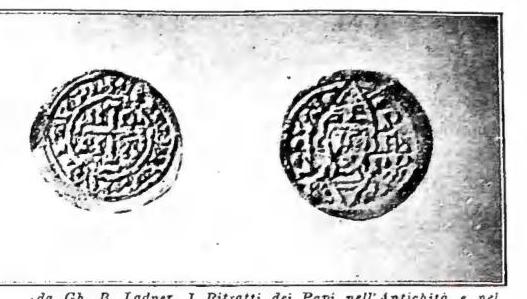
(from Gh. D. Ladner, I Ritratti dei Papi nell'antichità e nel Medioevo, Vatican City III, 1–XXV, c. SERGIUS III, POPE — Coin bearing the effigy of S. III.