RAVENNA, ARCIDIOCESI DI

RAVENNA, ARCIDIOCESI di - Patricolare del transito della Vergine. Affresco di scuola riminese (sec. XIV), distrutto dalla guerra. Ravenna, chiesa di S. Maria in Porto fuori.

(1st. d. liniari)

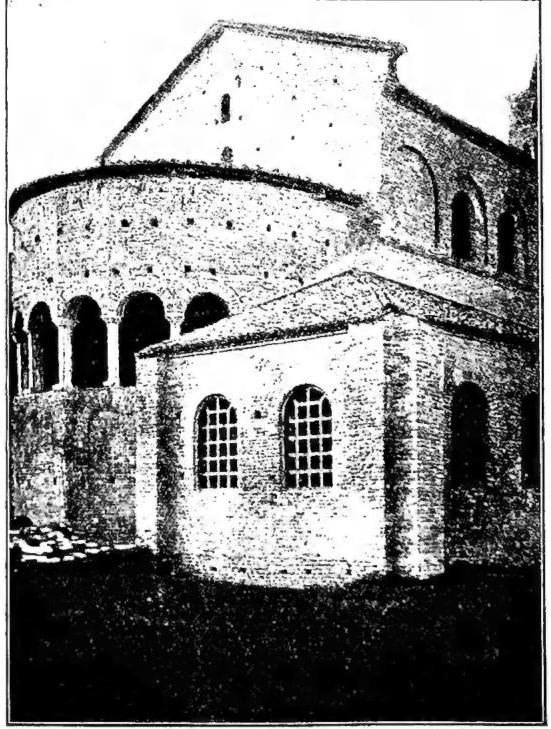
Ravenna, arch. of S. Maria in Porto fuori.

Among historians are to be remembered Desiderio Spreti (15th century), Girolamo Rossi (16th century), Girolamo Fabri and Serafino Pasolini (17th century), Pier Paolo Giannini and Camillo Spreti (18th century). A native of Ravenna is Tomaso Rangoni, called the philologist, who lived in Venice in the 17th century, as well as the priest Francesco Negri, a noted traveller of the 17th century, who, singular for his time, explored northern Europe, reaching as far as the Arctic Circle. Among ecclesiastics are also to be noted Cardinal Cesare Rasponi, created by Alexander VII, whose name is linked to the history of the Basilica of St John Lateran; Monsignor Francesco Ingoli (d. 1649), first secretary of the Congregation for the Propagation of the Faith, who wished the College of St Ephrem to be established in Ravenna for pupils of the Maronite nation destined for the priesthood; Monsignor Ludovico Piavi, of the Friars Minor, Latin Patriarch of Jerusalem (d. 1603); Genocchi (v.). Particular mention should be made of the archaeologist A. Zirardini (d. 1785), whose works are still today precious for the study of Ravenna’s monuments. The abbot Marinelli drew from him much of the material for his ‘Diplomatic Popes’. And in memory should be joined with Zirardini the name of Marco Fantuzzi, who with his work Monumenti ravennati de' secoli di mezzo, in 6 volumes, provided scholars with a mine of documents pertaining to Ravenna. Among the men of yesterday, deserving of special mention are Antonio Tarlazzi, canon and archivist of the archiepiscopal curia, who continued Fantuzzi’s work, as he did the Memorie sacre of G. Fabri; and one of his successors, Don Girolamo Zattoni (d. 1905), historian and critic of uncommon value. A diligent researcher was Silvio Bernicoli, who made the treasures of the municipal historical archive the subject of studies in valuable contributions to local history. Among all, in our own day, two names stand out: Corrado Ricci (v.) and Santi Muratori, librarian of the Classense, who has illustrated Ravenna in articles and studies conducted with absolute scholarly rigour. He made the love of his city and the defence of its historical and artistic heritage the constant object of his life. Death overtook him on the evening of 30 December 1943, as the first bombs were bringing damage to the city and its monuments.

Ravenna, Archdiocese of - Church of S. Maria in Porto and loggia of 1508, work of Lombard masters - Ravenna.

And another name is to be joined to those of Ravenna: Giovanni Pascoli, who always considered himself a son of Ravenna. In fact, his family had for centuries been numbered among the city’s families, and his father, Ruggero, was born in Ravenna on 24 March 1815.

IV. RAVENNA TODAY

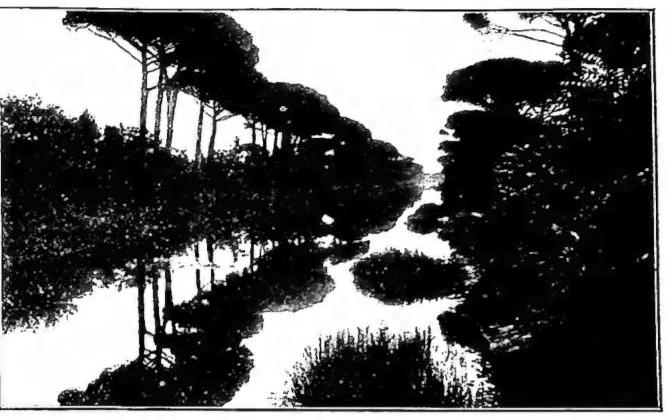
The city seems almost absent from the roll of notable places. The immense plain surrounds II. The Naviglio Corsini canal still unites it to its sea, which for it is always a source of life. The pine forest, which Dante sang and Byron loved, though much ruined by the devastations of the Germans and the Allies in the last war, remains its royal crown. Serious are the ruins brought by the bombings, from which it is rising vigorously. Yet it remains the ‘sweet dead city’, and in its streets silence often reigns. It is the chief town of one of the smallest provinces of Italy (1,863 sq km, 294,782 inhabitants), while the territory of its comune (61.77 sq km, 87,000 inhabitants) is among the largest. Its walls still have the perimeter given them by the last theoretical enlargement, while on its outskirts those suburbs are rising again that once crowned it in antiquity.

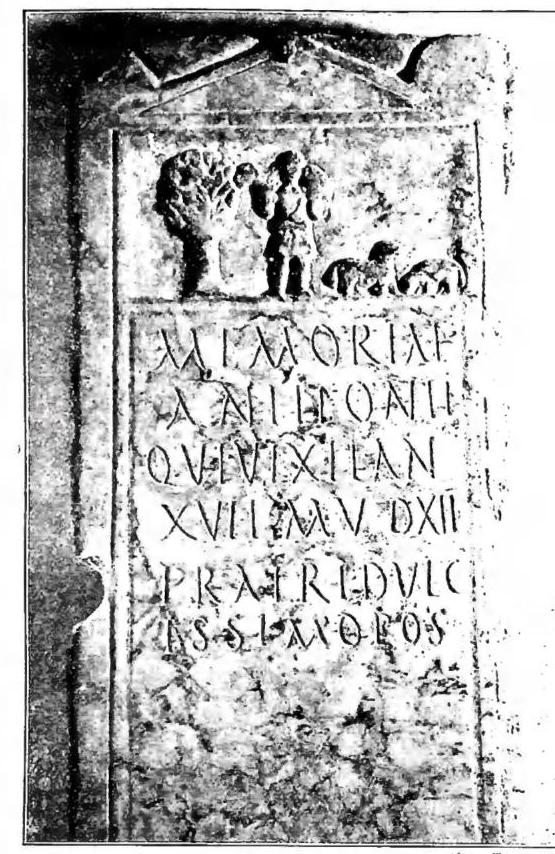
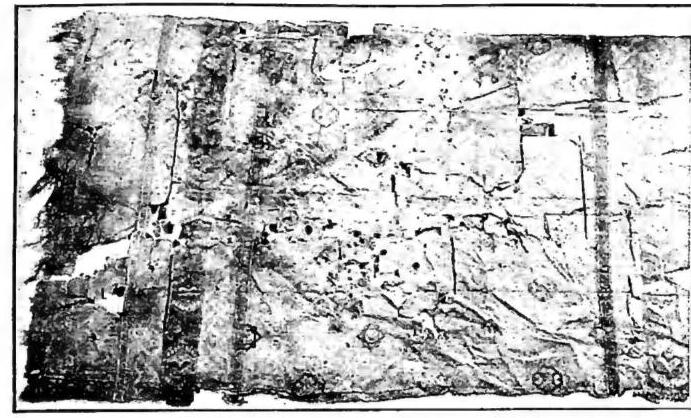
The National Museum houses precious pieces: ancient and medieval fabrics, Byzantine ivories, ceramics, Roman and paleochristian sculptures, among which, as precious items, are the ancient transennae of S. Vitale and S. Michele in Africisco. The coin collection is very rich, with all the coins minted by the mint of Ravenna. More limited is the Archiepiscopal Museum, which houses pieces of exceptional importance: the cathedra and the bier of Maximian; a processional silver cross, perhaps of the 11th century; classical stelae; music and transennae from the ancient Ursiana. Precious is a collection of liturgical fabrics, among which two chasubles (the oldest dating to around the year 1000); liturgical gloves with studs of the 14th century; and some fragments discovered in 1949 in sarcophagi at Classe, including a veil for liturgical offerings, fragments of a cincture, and, intact, a maniple, the only one known from antiquity. These fabrics are to be assigned to the end of the 7th or the beginning of the 8th century.

Of the greatest value is the archival material of high antiquity. The Ravenna section of the State Archives gathers all the fonds of the suppressed religious corporations, with an immense quantity of material, including about 8,000 parchments older than the 8th century. The Archiepiscopal Historical Archive, the ‘scrinarium’ of the Church of Ravenna, besides the ‘castelli diiaccenti’ and the 200 ‘diversorum’, houses about 13,000 parchments dating from the 8th century onwards; five papyri remain: most of the Ravenna papyraceous archival heritage is now dispersed. Notable is the great diploma of Paschal I (819), the oldest papal diploma preserved intact. The Chapter Archive also preserves a good number of ancient parchments and a codex with miniatures by Giulio Clovio, a missal of Cardinal Della Rovere (16th century).

Among the provincial Italian libraries, the Classense of Ravenna holds a place of primary importance. It began as a Camaldolese monastic library. As a public library it was founded by the Cremonese abbot Pietro Canneti at the beginning of the 18th century. From this period dates the fine main hall, with carved wooden shelves and stucco and painted decoration. Becoming a municipal library in 1804, it was enlarged with the fonds of suppressed religious libraries; then subsequently its book heritage was continually increased to the present number of about 150,000 volumes. It also possesses 700 incunabula, precious codices, among which a 11th-century manuscript with 11 comedies of Aristophanes, and a group, in number and quality more unique than rare, of early Italian and German xylographs of the 15th century. The Ravenna bibliography may be considered complete in ancient and modern works. Notable is the collection of editions and publications on Dante, including a codex of the Divina Commedia of 1369. A great aid to scholars is the rich Ravenna card index, compiled through years of patient work by the librarian S. Muratori.

Specialised in political subjects and contemporary history is the modern Biblioteca Oriani.

Article illustration

The Archiepiscopal Seminary gathers young aspirants to the priesthood for the entire course of their studies, from the gymnasium to theology. The public schools have all the institutes of secondary education. The Academy of Fine Arts houses the Artistic Lyceum and the school of the museum, and possesses a good picture gallery, in whose halls are preserved the statue of Guidarello and precious paintings, not least the S. Romualdo by Guercino. The Ca’ Matha, the only one of the ancient institutions still existing, continues the ancient Scholae Romanae. It is an ancient society of fishermen, one of the oldest companies in Europe, of which mention is already found in a parchment of the Archiepiscopal Archive of 1943.

BIBL.: the Ravenna bibliography is so extensive that it is impossible to provide a complete list. We shall therefore limit ourselves here to listing the most important general studies. G. Gerola and S. Muratori, Bibliogr. di R. e regione: Ministero della Pubblica Istruzione, Elenco degli Edifici monumentali, XXIX, Provincia di Ravenna, Rome 1916; Felix Ravenna, indices of the first series 1911-29 (Ravenna 1933; F. Saporetti); Santi Muratori, elenco delle pubblicazioni: Il Comune di Ravenna, nuova serie 1947; C. Ricci, R. e i suoi dintorni, R. 1878; C. Diehl, Etudes sur l'Administration byzantine dans l'Exarchat de R., Paris 1888; C. Sangiorgi, Il battistero della Basilica Ursiana in R., Ravenna 1900; K. Goldmann, Die ravennatischen Sarkophages, Strasbourg 1906; V. FEDERICI, GIACOMO, Regesto di S. Apollinare Nuovo, Rome 1907; F. Lanzoni, Il Liber Pontificalis di Agnello, Saronno 1909; V. Federici - G. Buzzi, Regesto della chiesa di R., Rome 1911; G. Loreta, Papi, cardinali, arci e vescovi ravennati, Bagnacavallo 1912; P. D. Pasolini, R. e le sue grandi memorie, Rome 1912; P. Lanzoni, S. Severo vescovo di R., in Atti della R. Deputazione di storia patria per la Romagna, Bologna 1911-12; J. Kurt, Die Wandmosaiken von R., Munich 1912; F. Lanzoni, Le fonti della leggenda di S. Apollinare di R., Atti R. Deputazione di storia patria per la Romagna, Bologna 1915; S. Ghigi, Il battistero degli Ariani in R., ibid. 1916; S. Muratori, Dante e R., in Il IV Centenario dantesco, 4 (1921), pp. 74-95; G. Gerola, L'architettura deutero-bizantina in R., in Ricordi di R. medicea, Ravenna 1921; id., Il restauro del battistero ariano in R., in Studien zur Kunst des Ostens, Dresden 1923, p. 117 ff.; C. Ricci, Guida di R., Bologna 1923; L. Rava, La pineta di R., Rome 1926; E. Hutton, The Story of R., London 1926; L. Miserocchi, R. e ravennati nel sec. XIX, Ravenna 1927; W. Barbiani, La dominazione veneta a R., ibid. 1927; G. Galassi, L'architettura protoromanica nell'Esarcato, ibid. 1928; C. Diehl, R., Paris 1928; A. Torre, Notizie sui rapporti tra R. e l'Istria nel Medioevo, in Annuario 1926-27 del R. Liceo scientifico A. Oriani, ibid. 1928, pp. 38-80; A. W. Byvank, De Mosaiken te R. en het Liber Pontif. eccl. Ravennatis, in Mededelingen van het Nederlands Historisch Instituut te Rome, 's-Gravenhage 1928, p. 61 ff.; G. Galassi, Roma o Bisanzio, Rome VIII [1920]; C. Ricci, Tavole storiche dei mosaici di R., ibid. 1935; C. Cecchelli, La cattedra di Massimiano, ibid. XIV [1935]; E. Will, St. Apollinare de R., Paris 1936; P. Verzone, L'architettura dell'XI sec. nell'Esarcato, in Palladio, 6 (1940), pp. 68-112; G. Lucchesi, Note agiografiche sui primi vescovi di R., Faenza 1941; F. Dygge, Ravennatum Palatium sacrum. La Basilica Iptetriale per le cerimonie, Copenhagen 1941; G. Lucchesi, Nuove note agiografiche sui primi vescovi di R., Faenza 1943; M. Lawrence, The Sarcophagi of R., s.l. 1945; S. Muratori, I mosaici ravennati della chiesa di S. Vitale, Bergamo 1945; O. G. von Simson, Sacred Fortress, Chicago 1948; G. Rodenwaldt, Bemerkungen zu den Kaisermosaiken in S. Vitale, in Jahrbuch des Deutschen Archäologischen Instituts, vol. 59-60 (1944-45, 1949), pp. 80-110; F. Crosara, Le «scole» ravennati dell'alto medioevo e la Carta piscatoria del 1943, Modena 1949; L. Gambi, Cos'era la Padusa, Faenza 1950; M. Mazzotti, Massimiano di Pola, in Pagine istriane, 3rd series, I, 4 (1950), pp. 1-21; id., Questioni portuensi, in Studi romanzi, II, Faenza 1951; A. Benini, La basilica rinascimentale di S. Maria in Porto e i suoi cimeli, Ravenna 1950; G. Bovini, Il cosiddetto mausoleo di Galla Placidia in R., Vatican City 1950; id., Guida del Museo nazionale di R., Ravenna 1951. Further abundant notices and studies, including reviews of works on Ravenna, appear in Felix Ravenna, a journal published in Ravenna since 1911. The same is true of Il Comune di R., a bulletin of administrative news published irregularly. S. Muratori, s.V. ENOCH. Ital., XXVIII, pp. 868-79; id., s.V. in Appendice, I, pp. 661-62 with extensive bibliography; L. Gambi, s.V. in Appendice, II, p. 668.

Mario Mazzotti

V. SCUOLA DI DIRITTO DI RAVENNA – Although not all scholars accept the existence of a law school, Ravenna was certainly an important legal centre. Emperor Lambert issued a capitulary there in 869, in the drafting of which Ravenna’s experts may well have played a part; under the Ottonians, major councils were held there, as well as the imperial tribunal with judges and advocates representing the imperial, papal and episcopal parties, presided over by the emperor, the pope and the archbishop, or in the latter’s presence. Even if the existence of a school is not proven, the participation of Ravenna’s jurists and their influence on the law in the Exarchate and beyond (for example, in Tuscany) is undeniable. Ravenna was always a favourable environment for culture and did not suffer the severe crises experienced by Rome and other regions. At the imperial court, notaries were grouped in a schola under a primicerius; one such figure, John, was elected emperor but not recognised by Byzantium and was executed as a usurper in 425. Later, scribes or forenses are recorded, followed by tabelliones or civic notaries; the Church of Ravenna boasted its own scriniarii, including Michael, who became an intrusive archbishop in 770-71, as well as a schola tabellionum and a schola defensorum. Thus, there existed both a civic and an ecclesiastical centre of culture, alongside the famous school of the liberal arts, where, however, legal instruction was superficial. Ravenna’s judges and notaries nevertheless carried out an important reform between the late 9th and early 10th centuries, securing the definitive predominance of Justinianic over Theodosian law (Leicht). In the 11th century, the sapientes civitatis were Romanist experts who defended the Roman system of degrees of kinship against the canonical system upheld by St Peter Damian (1045), and Florentines consulted them, though it is uncertain whether they were doctores, i.e., masters. During the Investiture Controversy, Ravenna and its archbishop sided with the imperial party, and the jurist Peter Crassus, author of a lost treatise De actionibus, composed his Defensio Heinrici IV regis in 1080. Ravenna was thus a legal centre, or, according to Gaudenzi, a school formed like that of Pavia by an assembly of judges acting as legislators. Odofredus alludes to this when he states that legal books were transferred from Rome to Ravenna and from Ravenna to Bologna: thus between 1106, the Synod of Guastalla, and 1116, Henry V’s reconciliation with Bologna. But this may have been a device to give Bologna a Roman tradition, or an allusion to the influence of Charlemagne in the founding of the schools (Schupfer), or to the transmission of Roman law and the imperial idea from its original centres, now in decline, to the Glossators who became their interpreters and supporters at Roncaglia (v.). The diploma of Frederick I (1162) confirmed Ravenna’s pre-eminence “for its ancient times, the dignity of its honours and the sincerity of its faith above all other cities of Italy,” and although the document does not mention the School, it clearly alludes to the merits of Ravenna’s jurists and statesmen in defending the Empire. In 1268, a doctor, Pasio della Noce, and thirty students were sent to Ravenna to revive a declining Studium Generale. It was not until 1561, however, that a brief of Pius IV granted the Studium its privileges, later confirmed by Benedict XIII. Its existence was often precarious due to Bologna’s proximity; nevertheless, Ravenna did not lack distinguished jurists. After the Studium Generale faded, the Camaldolese Academy of the Concordi and, until recent times, the College of Nobles maintained some cultural institutions in the city.

BIBL.: A. Tarlazzi, La scuola del dir. romano in R. e in Bologna, in Atti del dott. st. patria per la Romagna, 3° serie, 4 (1881-82); V. Rivalta, Discorso sopra la scuola delle leggi romane in R. ed il collegio dei concorsuli ravennati, Ravenna 1888, pp. 3-75; F. Schupfer, Man. di stor. del dir. ital., Le Fonti, Città di Castello 1908, pp. 205-207; A. Gaudenzi, Lo svolgimento parallelo del dir. longobardo e del dir. romano a R., in Mem. Acc. scienze dell'ist. di Bologna, cl. sc. mor. sez. giur., 1° serie, 1 (1906-1907), pp. 3-106; A. Sorbelli, R. e le origini dello Studio bolognese, in Il Comune di R., III (1936), pp. 3-14; P. S. Leicht, Bologna e il centenario delle Pandette, in Scritti vari, II, 1, Milano 1948, pp. 204-215; id., R. e Bologna, ibid., pp. 216-26.

VI. STATUTES OF RAVENNA – Ravenna was one of the first communes in Italy. The Capitanei are mentioned in 1111, and with Frederick I their podestàs imposed by him, while the lands on the Po had their subjects subject to those of Ravenna. With a diploma of 1162 the emperor also established the oath of the Capitanei, the election of the consuls through imperial investiture, the renewal of their oath every five years, the regalia and administration of justice, the regulation of emphyteusis; he then undertook to uphold the rights of the churches, the Capitanei, and the citizens of Ravenna in other cities and in lands taken from them by force, and vice versa; finally, he pledged not to reside in Ravenna with his army but only with the Empress and the princes. The earliest known statutes are attributed to the period 1180-1260 (ed. Zoli-Bernicoli), and the opening provision is the oath of the podestà to defend the Church, to fight heretics, and to follow the Constitution of Frederick I. Belonging to the government of Lamberto, who had already made himself perpetual podestà, are the statutes of the Maggior Consiglio (1304-1360, ed. Tarlazzi) and also those new statutes of the Ca’ Matha (1304) dedicated in honor of God, the Virgin, Archbishop Rainaldo, and Lamberto as his successors in the governance of the city, he being as podestà the Defensor of the said Order. To the government of Ostasio di Bernardino da Polenta belong the capitaneal statutes, perhaps from 1327, recently discovered; to Venetian rule the statutes proposed in 1461 and completed shortly after a decade (ed. Tarlazzi); to papal rule those of the Consiglio di Giustizia (1515, ed. Tarlazzi) with a preface in Latin and text in the vernacular and the reform of Gerolamo Ruggini printed posthumously in 1590; finally, the statutes of the Novanta Pacifici (1687). Important political rubrics are found in those of Ostasio, who ruled the city with the title of Capitaneus et Defensor, reserving to himself the plena custodia of the city and district, the right to pursue enemies of the commune and his own, to govern and lead and defend the citizens and districtuals, to guard the city and its gates and establish his own fortresses there. Against the various tyrants of Romagna the Holy See opposed the edicts of the Rectors: the fierce protest of Cardinal Aimerico of Chalus dates to 1321; but in 1327 Ostasio, feeling himself in danger because he was in rebellion against Cardinal Bertrando del Poggetto, bound the commune to his defense with the statutes then composed. The Holy See, which had never ceased to claim sovereignty over the Exarchate nor granted to the communes the right to create a permanent magistracy, since this was true tyranny, only later and by imitation of the Empire legalized the Signori as vicars pro Romana Ecclesia, until it could mark the victory over vicariates, lordships, and communal autonomies, establishing, after the Borgia experiment, the Papal State on a firmer basis and reintegrating it within the limits of the Donation of Pepin with the definitive annexation, after the Venetian interlude, of Ravenna and the Exarchate. – Vedi tavv. XXIV-XXVII.

BIBL.: P. D. Pasolini, Gli Statuti di R., Firenze 1868, pp. 11-67; A. Tarlazzi, Statuti del Comune di R., in Monum. stor. perti- nenti alle prove. di Romagna, I. Ravenna 1886, pp. 3-76; V. XLVII; G. De Vergoti, Lezioni di stor. del dir. ital., Il dir. pubblico ital. nei secc. XII-XV, II, Bologna 1931, pp. 121-147; F. Crosara, I poteri di Ostasio da Polenta, Capitaneus et Defensor civitatis, in Felice Ravenna, fasc. IV-V (LV-LVI), apr.-ag. 1951.