
CORSINI, FAMIGLIA. — It is recorded in Florence as early as 1271 (enrolled in the Wool Guild); in the following century it attained great wealth, providing the city with gonfaloniers and priors. From it came, in the 14th century, s. ANDREA C. (v.), bishop of Fiesole (d. in 1374); his brother NERI, who succeeded him in the bishopric, was likewise venerated as a blessed (d. in 1377).
The family gave illustrious men in those years and in the following ones both to the city and to the Church; particular attention must here be given to that PIETRO C. who was bishop of Volterra on 16 March 1362, then of Florence on 1 September 1363, created cardinal by Urban V at Montefiascone on 7 June 1370, and appointed bishop of Porto in 1374. He was one of the four Italian cardinals who took part in the election of Urban VI, together with the transalpine cardinals. When the rebellion of the latter began to take shape, C., together with his colleagues Borsano and Orsini, withdrew from Urban and, although he had not given his vote in the election of Clement VII, joined his side; only after long hesitation did he go to Avignon to the antipope on 13 September 1381; there he d. on 16 August 1405.
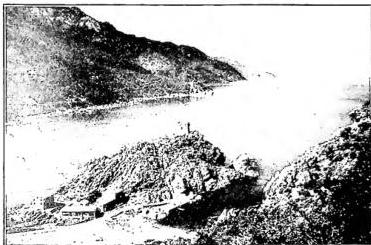
(photo by Vran)
CORSICA – Gulf of Porto.
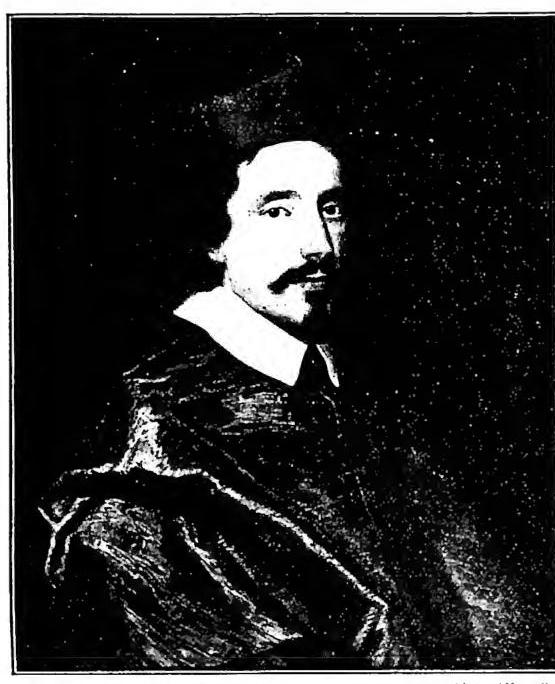
NERI C. senior, n. nel 1624, seguì la carriera curiale, quale chierico di camera prima e poi quale tesoriere generale; fu nominato arcivescovo titolare di Damiata il 12 ag. 1652 e nunzio in Francia; ma giunto a Marsiglia fu per ordine del re di Francia arrestato ed impedito di esercitare il suo ufficio (Pastor, XIV, I, p. 52; G. Moroni, op. cit., XVII, p. 285); fu creato da Alessandro VII cardinale il 16 genn. 1664, ma fu pubblicato solo il 15 febbr. 1666 con titolo dei SS. Nereo ed Achilleo. Fu vescovo di Arezzo dall'8 febbr. 1672 all'8 marzo 1677, data in cui rinunciò. Morì a Firenze il 19 sett. 1678; nella cappella C. della basilica Lateranense, un bel sepolcro, nella nicchia di fronte a quella di Clemente XII, ne tramanda la memoria. E opera di G. B. Maini (1742).
L'elevazione alla sede papale del card. LORENZO nipote del card. Neri (v. CLEMENTE XII), portò al sommo splendore la casa C.; BARTOLOMEO, figlio di Filippo, fratello del Papa, fu nominato comandante della cavalleria pontificia, principe di Sismano (1731), grande di Spagna, presidente dei ministri di Carlo III re di Napoli, vicerè di Sicilia (1737). Fu anche assistente al Soglio. M. il 30 sett. 1747 (Forcella, op. cit., VIII, p. 85, n. 232).
Fratello di lui fu NERI MARIA iunior, n. a Firenze il 19 maggio 1685, m. a Roma il 6 dic. 1770. Ricevuto giovanissimo alla corte di Toscana, fu quindi rappresentante di Cosimo III all'Aja, a Londra, a Parigi ed a Cambrai. Dopo la morte di quel granduca passò a Roma presso lo zio card. Lorenzo C. Allorché questi fu innalzato al pontificato nel 1730 con il nome di Clemente XII, s'indusse ad abbracciare lo stato ecclesiastico. Nominato segretario dei memoriali, fu quindi creato cardinale il 14 ag. e pubblicato l'11 dic. 1730 quale diacono di S. Adriano; passò poi a S. Eustachio, fu prefetto della Segnatura di giustizia. Amabile e disinteressato, non parve ai contemporanei l'uomo più adatto agli affari, e nelle con-
troversie teologiche non mostrò molta comprensione, sebbene giungesse sino ad essere segretario del S. Uffizio; ebbe ambizione di avere per casa letterati e dotti, ma ebbe poca conoscenza diretta di lettere e di erudizione. Ricostruì sotto la sorveglianza del Fuga il palazzo dei Riario alla Lungara alle falde del Gianicolo, e vi trasportò la raccolta di stampe, di quadri e la rinomata Biblioteca (acquistata nel 1884 dallo Stato e oggi sezione della biblioteca accademica dei Lincei) che aveva cominciato a raccogliere lo zio pontefice, dando al tutto grande incremento e mettendolo a disposizione dei dotti e degli artisti. Si mostrò anche mecenate nel restauro di alcune chiese, come S. Eustachio e S. Isidoro, e munifico verso l'ospedale di S. Gallicano del quale fu protettore. Chiamò a Roma Giovanni Gaetano Bottari e Pier Francesco Foggini i quali ebbero su di lui illimitata influenza come consiglieri; fu in contatto con il card. Domenico Passione che con quei due era legato da tenace amicizia; e questo fece sì che dagli avversari dei Gesuiti e dai giansenisti romani fosse considerato ed invocato quale sostegno e protettore. Questa sua tendenza lo condusse ad immischiarsi nelle faccende del noto p. Norberto cappuccino e dei giansenisti olandesi. Non ebbe molto favore sotto Benedetto XIV ed ancor meno sotto Clemente XIII. Morì a 86 anni e fu sepolto al Laterano, dov'era stato arciprete, nella cappella di famiglia.
ANDREA C., nipote del card. Neri, n. a Roma l'11 giugno 1735, m. ivi il 19 genn. 1795. Ammesso giovanissimo alla corte pontificia, fu creato cardinale diacono di S. Angelo in Pescheria a 24 anni da Clemente XIII il 19 dic. 1759. Passò al titolo presbiterale di S. Matteo in Merulana l'11 sett. 1769, al vescovato di Sabina il 16 luglio 1776. Fu educato dal Bottari e dal Foggini amicissimi dello zio. Non eccelleva per ingegno e seguì la corrente dello zio nell'atteggiamento verso i giansenisti romani. Si mostrò molto attivo nel procurare la soppressione dei Gesuiti, e procedette senza alcun riguardo nel dare esecuzione alla soppressione. Protesse Scipione de' Ricci e favorì la sua nomina a vescovo di Pistoia; ma sull'ultimo si staccò da lui. Fu prefetto della Segnatura di giustizia ed arciprete di S. Maria Maggiore.
Andrea fu l'ultimo grande prelato della casa, la quale continuò a dare uomini di governo al granducato di Toscana e poi al Regno d'Italia. Cf. G. B. Picotti, s. V. ENOCH. Ital., XI (1931), p. 525 seg.
TOMMASO. – Politician, born in Florence on 7 November 1767, died in Rome on 6 January 1856. Cultivated, prudent, and skilled in public affairs, he expanded the splendid library and the valuable ancestral collections of Rome and Florence, and played a not insignificant part in the events that characterize the history of the Papal States during the past century.
A member of the courts of the grand duke of Tuscany and of Maria Luigia di Borbone, he undertook diplomatic missions to the Republic (1796) and to the First French Empire (1805). Summoned to Paris in 1809, he was appointed by Napoleon senator, chamberlain, and count of the Empire, with the task of establishing the electoral colleges in Rome and installing the supreme Court of Imperial Jurisdiction in the Palazzo della Cancelleria. For a brief period he was senator of the City during the time of Pius VII; later he accompanied Cardinal Marini in demanding an explanation from the Austrian general Welden for the neutrality of the Roman State (1848), which had been brutally violated.
When Pius IX departed for Gaeta, he took part in the provisional governing junta; but subsequently, having opposed the convocation of the Constituent Assembly, he was forced to flee to his native Florence. After the restoration, Pius IX appointed him to the new Council of State for finance, and during the few years that remained to him he contributed greatly to the rehabilitation of the treasury and the reorganization of the public administration.
BIL.: L. Passerini, Genealogia e storia della famiglia C., Florence 1838; F. Sartini, s. V. in Enc. storico-mobiliare it., directed by Spretti, II, Milan 1920, p. 550 SGE.; E. Michel, s. V. in Diz. Ris. Nac., II, p. 755; G. B. Picotti, s. V. in Enc. Ital., XI (1931), p. 526; P. Dalla Torre, L'opera riformatrice ed amministrativa di Pio IX, tra il 1830 ed il 1870, Rome 1945. Paolo Dalla Torre
NERI, brother of Tommaso, Tuscan minister, born in Florence on 23 November 1771, died there on 25 October 1845. After the outbreak of the French Revolution, he was charged with seeking a modus vivendi with Paris (1796), but failed in this mission. When Tuscany was occupied by Napoleon, he was summoned, chiefly because of his particular financial expertise, to serve on the Council of State in Paris (1809). At the restoration of the Lorraine dynasty, C. became Tuscan plenipotentiary at the Congress of Vienna, conducting himself with tact and moderation—qualities that did not fail him even at the Congresses of Ljubljana (1821) and Verona (1822), where he likewise represented his court. Director of the Secretariat of State from 1814, collaborator and successor of Fossombroni, he gave his name in large part to the Tuscan policy of the Restoration.
The economic and financial measures adopted during this period, the strenuous resistance offered to Austria’s attempts to intervene in the internal affairs of the grand duchy—in short, that moderate Tuscan policy which shunned both reaction and revolution—are to C.’s credit.
In relations with the Holy See, C. adhered firmly to the Josephinist theories embodied in the old Leopoldine legislation. During the pontificates of Pius VII, Leo XII, and Pius VIII, relations between the Holy See and Tuscany were, on the whole, cordial, although disagreements occasionally arose over certain jurisdictional claims by the Florentine authorities. Relations instead deteriorated significantly toward the end of the pontificate of Gregory XVI. On the one hand, this was due to certain governmental provisions (the prohibition against printing pastoral letters whose text had not previously been approved by the civil authorities, etc.); on the other, to C.’s refusal to extradite individuals sought by the Holy See under a special convention concluded in 1827. - Vedi tav. XXXIV.
BIRL.: E. Michel, s. V. in Diz. Risorg., II, p. 754. See also A. Zobi, Storia civile della Toscana, IV, Florence 1852, passim; G. Baldasseroni, Leopoldo II granducato di Toscana e i suoi tempi, there 1871, p. 58 SGE.; E. Piola Caselli, Un ministro toscano al congresso di Vienna, in Bassegna nazionale, 194 (1913), pp. 487–509; 195 (1914), pp. 48–70; 196 (1915), pp. 39–70. For relations with the Holy See, see J. Schmidlin, Papstgeschichte der neuesten Zeit, I, Munich 1933, pp. 195 and 605. Silvio Furlani