
CLEMENTE XII, PAPA. – Lorenzo Corsini, born in Florence on 7 April 1652; died in Rome on 6 February 1740. He studied in Rome at the Collegio Romano and received his doctorate in both laws at Pisa. Titular Archbishop of Nicomedia in 1691, he was general treasurer and governor of Castel S. Angelo under Innocent XII (1696), then Clemente XI’s commissioner in Ferrara; he became Cardinal of S. Susanna on 17 May 1706. At the age of 79, he was elected successor to Benedict XIII on 12 July 1730.
He restored the diminished dignity of the court; he undertook to suppress long-standing abuses, deprived the many murderers of the immunity of sacred places, took measures to remedy the disordered finances, and supported agriculture. A zealous and solicitous pastor, he extended the missions in Tibet and among the Tartars and the Maronites of Lebanon. The War of the Polish Succession (1733) gave the neutral Pontiff an opportunity to establish the principle of recognizing as sovereign whoever had reached the pa-
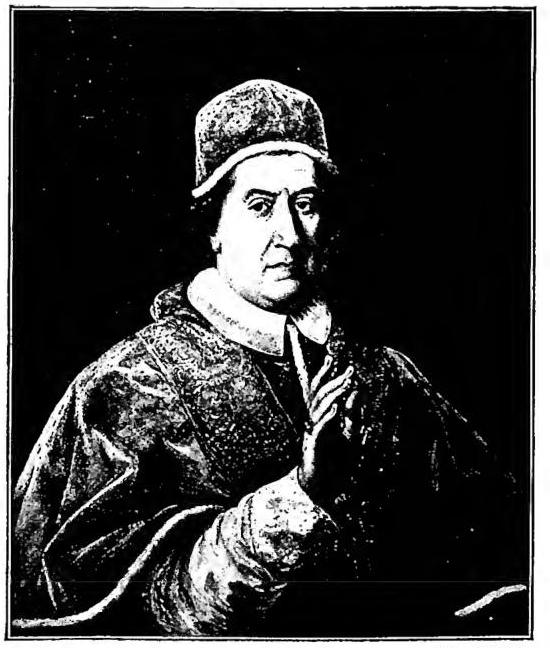
He employed both patience and firmness in overcoming successive attacks and complicated disputes over the free exercise of ecclesiastical jurisdiction in Spain (1734–38); in Naples, where the anticlerical policy of Bernardo Tanucci prevailed; in France (1737), where, in addition, the Parliament of Paris even dared to prohibit the reading of the bull of canonization of S. Vincenzo de' Paoli; in Portugal and then also in Piedmont, where the frictions of the preceding period continued. To him belongs the first condemnation of Freemasonry, in the two bulls of 28 Apr. 1738 and 14 Jan. 1739. Meanwhile, he did not neglect to encourage learning; despite financial straitness, from an artistic standpoint his pontificate was one of the most glorious and productive. To him are owed the principal façade of the Lateran Basilica, the sumptuous Corsini Chapel in the same basilica, where C. is buried, and the façade of S. Giovanni dei Fiorentini, all works by the architect A. Galilei.