
TITULAR CHURCHES. — Official designation assigned to a church or an oratory.
I. PRESENT-DAY PRACTICE
Every church, consecrated or solemnly blessed, every public or semipublic oratory, and every fixed altar must have a titular, that is, a title, which may be a saint, an angel, a divine person, or a mystery of Christ or of the Madonna. In this regard, can. 1168 of the CIC establishes the following: § 1 an assigned title may not be changed; § 2 the feast of the titular must be celebrated every year; § 3 a blessed may not be chosen as titular without a special apostolic indult.The title is generally established by the consecrating bishop, but also upon the proposal of the community or of the person who erects the church, at least before its consecration. Both the Pontificale and the Roman Rituale, in describing the rite of laying the foundation stone, provide in the principal prayer a place for the inscription of the saint who is to be the titular; in the solemn consecration, the same name must also be inserted in the litany of the saints; and in the document to be enclosed in the altar, the title of the church must likewise be indicated (Pont. Rom., De bev. et impos. primae lapidis; Rit. Rom., Tit. IX, n. 16, n. 17).
Certain decrees of the S. Congr. of Rites further specify that the saint chosen as titular should be a saint entered either in the Roman Martyrology or at least in the relevant proper calendar, whether diocesan or religious.
The titular may also be the Madonna, under one of her particular but liturgically approved titles, such as, for example, Mater gratiae, Auxilium christianorum, Virgo admirabilis, etc., or under one of her particular mysteries (Immaculate Conception, Nativity, Assumption, Sorrows, etc.). The person of Christ may be titular under liturgically approved titles such as, for example, Saviour—the oldest and most venerable Christological title in use—Redeemer, Christ the King, Sacred Heart of Jesus, Most Blessed Sacrament, Nativity of the Lord, Transfiguration, etc. As for the other divine persons, the Holy Spirit may also be titular; the Father, however, is not customarily assigned as a title, but rather the Most Holy Trinity.
As regards the saints of the Old Testament, in the Middle Ages it was not uncommon for Job, Daniel, David, and Simeon the prophet—the Simeon of the Gospel who prophesied to the Most Holy Mary concerning her sorrows—to be chosen as titulars; and, very frequently, John the Baptist, and later also Anne and Joachim. The latter may still be assigned as titles today, because of their connection with the New Testament.
Once imposed upon a consecrated church or altar, a title may not be changed except by pontifical indult; another titular may, however, be added, likewise by pontifical indult, and it will then be celebrated liturgically with equal right. Any profanation of the church does not remove the title, which is annulled only by complete destruction, formal deconsecration, or conversion to profane use. If the church, or the same building, or a new reconstruction on the site is subsequently reopened, the old title automatically becomes operative again. On such an occasion it is not lawful to change the title or add another without an express apostolic indult. If a titular has more than one feast in the calendar, as, for example, St Michael, St John the Baptist, the Madonna, or Christ, then at the time of consecration the date to be celebrated as the titular feast must be indicated. The titular feast, instead, of all the churches of Christ the Saviour is that of the Transfiguration (6 Aug.); for the Madonna, when otherwise not established, it is her Assumption (15 Aug.).
The titular feast of a church is a first-class feast with a common octave, to be celebrated by the clergy actually assigned to it; otherwise only the solemn Mass is celebrated.
It should be noted that until the decrees of Pius X in 1911–13
the technical term “titular of the church” was not particularly precise; more commonly, titular saints were called the “patrons” of the church, and people preferred to speak of the patronal feast, or patronage. When, however, the titular was not a saint—or an angel or the Madonna—the designation title or titular was preferred, since titular mysteries could not be regarded as “patrons.” Today, therefore, in the strict technical liturgical sense, the word “patron” is reserved for the patroni loci and for the particular patronages of the saints (v. PATRONATO).
II. HISTORY
The use of holy titles, or rather of the titles of churches, is extremely ancient and derives from the civil (pagan) custom of designating houses and various landed properties by the name of their owner or protector. The title guaranteed protection of the property; s. Agostino, in the Enarrationes in psalmos (In ps., XXI, enarr., II, n. 31: PL 36, 180), expressly relates how some people, in order to give greater importance to their house, placed it under the title of another, more powerful personage; just as the Donatists, instead of the name of Christ, preferred the name of Donato. In any case, at least in Rome, and in all probability elsewhere as well, the first houses of the Church (the Christian community) retained the title of the donor or founder. This was also true of the great basilicas: the Constantinian, Liberian, and Sessorian basilicas; certain designations, however, derived from the outset either from the locality or from a particular sacred element: S. Croce in Gerusalemme, S. Maria ad praesepe, s. Giovanni al Fonte, etc. It is certain that during the period of the great reconstructions of the Roman parish churches (the “titles” in the strict sense), that is, in the 4th and 5th centuries, the practice arose of dedicating the churches themselves to a saint as the t., or protector and almost owner, of the church; yet for some time the old original title often remained in use as well: S. Lorenzo in Damaso, that is, the church of s. Lorenzo, built within the old title founded by Damaso; S. Lorenzo in Lucina, that is, the church of S. Lorenzo built within the earlier title of the matron Lucina, etc. As the number of churches increased, they simply took their title from the saint in whose honor they had been built and dedicated; it cannot nevertheless be denied that this was also influenced by the fact that, in the cemetery churches, a particular saint had been venerated from the beginning and had given the church its name. In any case, from the 6th century onward canonical legislation began to sanction the use of the holy t. of churches, in the form then practiced of assigning them no longer the name of the founder or donor, but that of a saint or a mystery. In the Middle Ages, given the idea of feudalism and protection, the holy t. enjoyed the greatest veneration, and titular feasts became popular and civic festivals of great importance, occasions for markets and public gatherings. Offerings of every kind made to the church were presented to the patron, that is, the t. of the church, in order to place oneself under his particular protection: violations of ecclesiastical property were regarded as insults inflicted directly upon the holy t.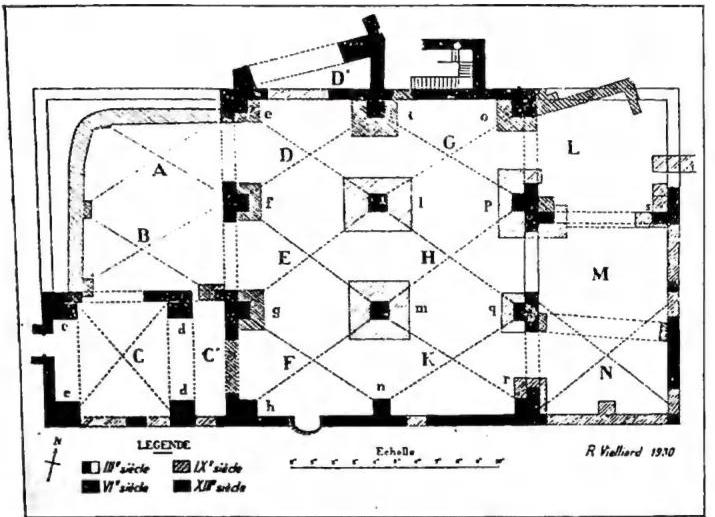
In this way, it is possible to reconstruct the periods of particular veneration of certain saints (the example of
(from R. Vieillard, Les origines du titre de Saint-Martin aux Monts à Rome, Roma-Parigi 1931, plan no. 1)
TITLES OF THE ROMAN CHURCH — Ground-floor plan of the house of the t. of Equitius — Rome.
s. Niccolò, studied in depth by Meisen [V. op. cit., in bibl.], who from the eleventh century became extraordinarily popular, as is shown precisely by the chronological and topographical spread of his churches. S. Giacomo maggiore, as patron of pilgrims and travelers, often has his churches along the great roads frequented by them, at certain difficult points (passes); churches of S. Michele and S. Giovanni Battista, moreover universally widespread and venerated ab antiquo, also benefited from the veneration of the Archangel as patron of the dead, and of the Baptist as patron of the many baptisteries. Certain saints indicate the center from which Christianity radiated: Ermagora of Aquileia, Stefano of Passau as far as Hungary, and similarly Ruperto and Pietro of Salzburg, Volfango of Regensburg; Martino often indicates Frankish missionaries. Giorgio, patron of knights, frequently appears as patron in churches founded by nobles or under noble patronage; certain t. reveal the foundation of, or the church’s affiliation with, medieval craft fraternities (Omobono: tailors; Eligio: jewelers; Lazzaro: leprosariums; Caterina was patroness of various trades, etc.). The t. s. Lorenzo deserves some attention, because it not infrequently reveals a foundation dating from the early Christian period, when that saint, most highly venerated in Rome, enjoyed an especially widespread cult. It is highly significant that many churches dedicated to the Madonna bear the title of the Assumption, and this from very ancient times (at times as far back as the fifth and sixth centuries). A second flourishing phase of this title occurred in the High Middle Ages, chiefly through the work of the Cistercians, who by rule dedicated all their churches to the Madonna. In short, the vast field of the saints’ t. has by now proved extraordinarily fruitful from the most varied points of view, although its investigation requires rigorous preparation and extensive experience; otherwise it can easily degenerate. Particular attention should be paid to certain t. that have often, without sufficient basis, been believed to be successors of, or rather substitutes for, earlier pagan divinities, whether from the classical world or from the Celtic, Germanic, Slavic, and other worlds.
I. ORIGINI
Il Liber Pontificalis parla deit. fin dalla più alta antichità: Cleto, per ordine di s. Pietro avrebbe ordinato 25 preti romani (Lib. Pont., I, p. 122), Evaristo avrebbe distribuito i presbiteri nei t. (ibid., p. 126), Urbano avrebbe sostituito le patene vitree con 25 argentee (p. 143), Marcello avrebbe ordinato 25 presbiteri in Roma (p. 164). Oltre a questo distribuì fra diversi papi e personaggi del sec. IV la fondazione di diversi t., per cui Lucina fondò il t. di Marcello (p. 164), papa Silvestro quello di Equizio (p. 170), Marco la basilica iuxta Pallacinas (p. 202), Giulio S. Maria in Trastevere (p. 205) e Damaso S. Lorenzo in Damaso (p. 212); all'inizio del sec. V Innocenzo I fondò il t. di Vestina (p. 220). Secondo G. P. Kirsch i t. furono i più antichi edifici sacri cristiani di Roma, costituiti in case di private abitazioni, in cui risiedevano i presbiteri romani, con una ampia sala per le adunanze liturgiche; in parte risalgono al sec. III, alcuni al sec. IV e ai primordi del sec. V; il numero di 25 rimase poi per vari secoli. Sempre secondo G. P. Kirsch il nome del proprietario avrebbe stato scritto (titulus) sulla facciata. Ma tale ipotesi non ha conferma in alcuna delle case rinvenute ad Ostia od a Pompei. Fuori di Roma la denominazione di t. è sconosciuta; a Cartagine il clero viene indicato secondo le regioni: « arcidiaconus eccl. Carthag. regionis sextae; diaconus regionis quintae; lector regionis quartae o quintae »; perfino le basiliche hanno un'indicazione regionale, i Concili del 403 e del 410 furono tenuti « in regione secunda »; nella terza era una basilica dedicata a s. Pietro, mentre nella VI era quella di S. Paolo. Viene dunque fatto di pensare che lo stesso sia avvenuto a Roma, dove un « lector de Pallacine » è dell'anno 348 (G. B. De Rossi, Inscr. christ., I, Roma 1857-61, p. 62, n. 97). Nella metà del sec. IV ca. è ricordato un « lector de Fultonices » (J. Wilpert, in Beiträge zur Christlich. Archäologie in Römische Quartalschr., 22 [1908], pp. 162-63, tav. 2). Un « lector de Pudentiana » morì nel 384 (E. Diehl, Inscr. christ. lat. veteres, n. 1270). Inoltre a Roma le iscrizioni più antiche di presbiteri portano solo l'indicazione di tale dignità e non del t. (G. B. De Rossi, Roma sotterr., I, Roma 1864, tavv. 19, 5; 21, 6; E. Josi, Note sul cimitero di Pretestato, in Riv. arch. crist., 13 [1936], p. 8, fig. 1; p. 9, fig. 2; pp. 10, 11, figg. 4-5; p. 12, fig. 7; p. 13, figg. 8-9; p. 14, fig. 10). S. Atanasio parlando d'un Concilio Romano nel 341 dice che più di 50 vescovi si riunirono nella casa del presbitero Vito (Apologia contra Arianos, 20: PG 25, 281).
È certa la dipendenza dei cimiteri dai t. come di-
mostrò fin dal 1877 il De Rossi (Roma sotter., III, Roma 1877, p. 520 sgg.; J. P. Kirsch, Die römischen Titelkirchen, Paderborn 1918, p. 200 sgg.). Vere case di abitazione risultano sotto SS. Giovanni e Paolo, SS. Silvestro e Martino ai Monti; S. Lorenzo in Lucina, S. Cecilia, in parte sotto S. Sabina, in minima parte sotto S. Anastasia; sotto l'attuale S. Prassede si sono rinvenuti di recente avanzi di monumenti pubblici, sotto S. Pudentiana un edificio termale, sotto S. Prisca un mitreo. È tuttora vero quanto scrisse il Duchesne nel 1887: «Non si è conservato alcun documento che permetta determinare in modo certo, dove si trovavano, prima di Costantino, gli edifici cristiani compresi dentro le mura della città di Roma» (Les titres presbitéraux et les diacones, in Mélanges d'arch. et d'hist., 7 [1887], p. 217). Ilaro (461-68) fa eseguire un servizio di vasi sacri per ogni t. (Lib. Pont., I, p. 249). Simplicio (468-83) distribuì i presbiteri titolari al servizio ebbomadoro delle basiliche cimiteriali di S. Pietro, S. Paolo e S. Lorenzo «propter penitentes et baptismum», e proprio i presbiteri della regio III, a S. Lorenzo, quelli della regio I a S. Paolo, quelli della regio VI vel VII a S. Pietro (ibid., I, p. 249).
II. DEVELOPMENT
The first certain list of the Roman t. dates from the Roman Council of 1 March 499 under Pope Symmachus. In the record, after the bishops present, the Roman presbyters signed, with an indication of the t. to which they belonged: there are 29 designations of t.; if the t. of Bizante and that of Pammachius are one and the same, if the t. of Romano is an error for that of Marcello, and if the last Laurenti is to be joined either to the t. of Damasus or to that of Lucina, the number would be 26 (MGH, Auct. antiquis., XII, pp. 410 ff.). An inscription from the cemetery of S. Pancrazio dating from 521–22 shows that in the t. of S. Crisogono four presbyters of the t. are hierarchically designated as prior, secundus, tertius, quartus (G. B. De Rossi, Inscr. cit., I, no. 975). In the Synod of 595 there are 24 t., all bearing the name of a saint; those of Bizante, Emiliana, Crescenziana, Gaio, Matteo, Pammachio, Tigrida, Romano, and Fasciola are absent: in their place are the t. of SS. Giovanni e Paolo, S. Susanna, S. Sisto, S. Balbina, SS. Nereo e Achilleo, SS. Marcellino e Pietro, and SS. Quattro Coronati (MGH, Epistolae, I, pp. 566–67). Under Hadrian I (772–95) the t. numbered 22, as attested by the 440 «vela» donated by the Pope, 20 for each t. (Lib. Pont., I, p. 504). In the list of the churches to which Pope Leo III offered gifts, around 806, there are 23 t.; notable among them are the «ecclesia Genitricis Dei in titulo Callisti», the «titulus beati Petri qui appellatur Eudoxiae», the «basilica Apostolorum quae ponitur in Via Lata», and the t. «Marci... appellatur in Via Lata»; the t. «Emilianae» also appears (instead of SS. III Coronati), as does the t. of Pammachius (instead of SS. Giovanni e Paolo); the t. of SS. Nereo e Achilleo is instead a deaconry, and the t. of Prisca is called «Aquilae et Priscae».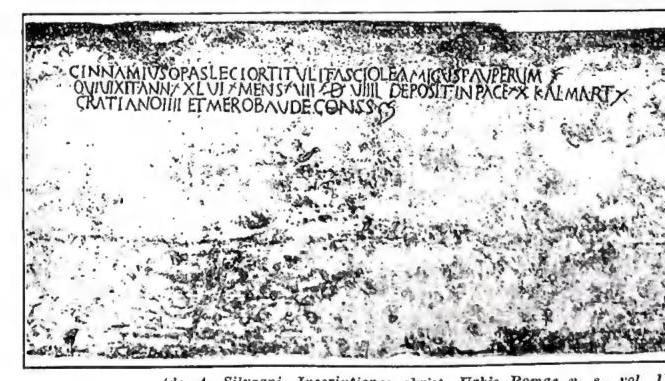
(photo Sesti)
TITLES OF THE ROMAN CHURCH - T. of S. Sisto. The bell tower dates from the beginning of the 13th century; the church was restored by the architect Rauzzini in 1724 - Rome.
triarcahal, namely: for the service at S. Pietro, the titulars of S. Maria in Trastevere, S. Crisogono, S. Cecilia, S. Anastasia, S. Lorenzo in Damaso, S. Marco, and SS. Martino e Silvestro. For S. Paolo, the titulars of S. Sabina, SS. Nereo e Achilleo, S. Prisca, S. Sisto, S. Balbina, S. Marcello, and S. Susanna; for S. Maria Maggiore, the titulars of SS. Apostoli, S. Ciriaco in Thermis, S. Eusebio, S. Pudentiana, S. Vitale, SS. Marcellino e Pietro, and S. Clemente. For S. Lorenzo, those of S. Prassede, S. Pietro ad Vincula, S. Lorenzo in Lucina, S. Croce in Gerusalemme, S. Stefano in Celio Monte, SS. Giovanni e Paolo, and SS. Quattro Coronati. In the Consistory of 1 July 1517, when creating 31 new cardinals, Leone X restored the titular church of S. Matthaei and established the new titular churches of S. Giovanni, ante Portam latinam, S. Cesario in Palatio, S. Agnese in Agone, S. Apollinare, S. Lorenzo in pane et perna, S. Silvestro in Capite, S. Tommaso in Parione, S. Pancrazio, S. Bartolomeo in insula alias inter pontes, and S. Maria in Capitolio or in Aracoeli.
S. Pio V, on 6 February 1566, created the titular churches of S. Trifone, S. Eufemia, S. Girolamo degli Schiavoni, and S. Giovanni de' Fiorentini, which, however, was never conferred and was therefore suppressed (G. F. Firmano, Diarium Caeremoniarum sub Pio V, year 1566, manuscript of the Vatican Archives, E. 29, fol. 435). Sisto V, after issuing on 3 December 1586 the bull Postquam verus concerning the Sacred College of Cardinals, raised the number of titular churches to 50 on 13 April 1587 through the apostolic constitution Religiosa sanctorum. In the Consistory of 12 January 1953, some deaconries were elevated to titular churches pro hac vice. Here now are the individual titular churches.
(from A. Silvagni, Inscriptiones christ. Urbis Romae no. 2, vol. II, Vatican City 1933, pl. 7)
TITLES OF THE ROMAN CHURCH — Inscription of Cinnamio Opa, lector of the t. of Fasciola, friend of the poor (late 4th century) — Rome, Monastery of S. Paolo.
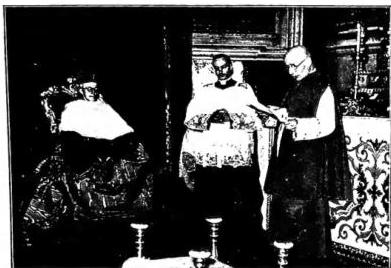
TITLES OF THE ROMAN CHURCH - His Eminence Cardinal Valeri takes possession of the title of S. Silvestro in Capite (8 March 1953). The Apostolic Protonotary reads the papal Brief assigning the title. - Rome.
Cardinal Roberto is called SS. XII Apostolorum (ibid., p. 496). Its cardinal titulars included Alessandro V and Clement XIV. BALBINAE (Synod of 595): an inscription of the sixth century recalls «tituli Sancte Balbinae» (G. B. De Rossi, Roma sott., III, Rome 1877, p. 515). G. P. Kirsch thinks that it may be the title Tigridae of the Synod of 499 (Römische Titelkirchen, cited in the bibliography, p. 129). It appears again in the biographies of Leone III (Lib. Pont., II, p. 20) and Gregorio IV (ibid., p. 78), in the catalogue of P. Mallio and that of 1492. Its titular was Innocenzo VIII. BIZANTIS: the presbyters Proclinus et Ursus belonged to this title in the time of Innocenzo I (401–17); it is mentioned only in the Synod of 499 (v. PAMMACHII). CALLISTI: from the Libetan Catalogue it is known that Pope Giulio (337–52) erected a basilica in Trastevere «iuxta Callistum». But it was later confused with the title Iulii (v.); it reappears from 1517, and its titulars included Pio VII and Gregorio XVI. CACCILIAE (Synod of 499): S. Cecilia in that of 595, b. Cecilia in the catalogues of P. Mallio and of 1492; its titulars included Stefano III, Vittore III, Martino IV (in commendam Paolo II), Innocenzo VIII and Gregorio XIV. CIRIACI (Synods of 499 and 595, then in the biographies of Adriano I and Leone III): it is called in Thermis in the catalogue of P. Mallio; suppressed by Sisto IV, who transferred it to the ss. Quirico and Giulitta. CLEMENTIS: in 392 s. Girolamo attests that «nominis eius memoriam usque hodie Romae extructa ecclesia custodit» (De viris illus., 15: PL 23, 634). The title s. Clementis occurs in the Synods of 499 and 595; b. Clementis in the biographies of Adriano I and Leone III; s. Clementis in the catalogues of P. Mallio and of 1492; its titulars included Pasquale II, Eugenio IV, Clemente VII and Paolo IV. CRESCENTIANAE (Synod of 499): it would be identical with the «Basilica Crescentiana» erected by Anastasio I between 399 and 401 (Lib. Pont., I, p. 218); Duchesne and Kirsch thought it should be identified with S. Sisto, of which s. Gregorio, in a letter of 5 October 600, mentions a Bonifacio, presbyter of the title S. Xisti (MGH, Epp., II, p. 275). S. Sisto occurs in the biographies of Adriano I and Leone III and in the catalogues of P. Mallio and of 1492. Its titulars included Paolo IV, Gregorio XIII, Clemente IX and Benedetto XIII. CHRYSOGONI (Synod of 499): S. Chrysogoni in that of 595; b. Chrysogoni in the biography of Leone III; S. Crisogoni in the catalogues of P. Mallio and of 1492. Its titulars included Stefano II, Stefano X, Paolo V and Leone XIII. DAMASI (Synods of 499 and 595): «S. Laurentii qui appellatur Damasi» in the biographies of Adriano I and Leone III; S. Laurentii in Damaso in the catalogues of P. Mallio and of 1492; its titulars included Urbano III and Clemente VII. The latter, by the bull Etsi ad singula of 1532, established that the said title should belong «pro tempore» to the vice-chancellor of the Holy Roman Church. EQUITII: its foundation is attributed to the time of Pope Silvestro (Lib. Pont., I, p. 170); it is the title Equitii in the Synod of 499; s. Silvestri in that of 595 and in the biography of Adriano I; it is the deaconry «Sanctorum Silvestri et Martini quae ponitur iuxta Orphea» in the biography of Leone III; it is the title Martini et Silvestri in the catalogue of P. Mallio, and the title s. Martini in that of 1492; its titulars included Sergio II, Bonifacio VIII and Pio XI. EUSERI: it is indicated as «tituli conditoris» on 14 August in the Geronimiano. It occurs in the Synod of 499, in the biographies of Adriano I and Leone III, and in the catalogues of P. Mallio and of 1492. Its titulars included Paolo V and Innocenzo X. Suppressed by Gregorio XVI on 12 July 1839, it was restored by Pio IX on 25 June 1877. PASCIOLAE (today SS. Nereo e Achilleo): an «Opas lector t.» dates from 377 (G. B. De Rossi, Inscr., I, no. 262); a presbyter Felice died in 471 (ibid., no. 831). It appears in the Synod of 499; in 595, the title SS. Nerei et Achillei; in the biography of Leone III, it is a deaconry; it returns as a title in the catalogues of P. Mallio and of 1492; its titular was Clemente VI. GAII-SUSANNAE: it is indicated as «ad duas domos iuxta Diocletianas» in the Geronimiano. In the Synod of 499 it is the title Gai, in that of 595 S. Susanae, as also in the biography of Adriano I, where «qui appellatur duas domus situm iuxta S. Quiriacum» is added; it returns in the life of Leone III and in the catalogues of P. Mallio and of 1492; its titulars included Conone, Sergio I, Leone III, Niccolò V and Clemente XII. IULII (Synod of 499): «Iulii et Callisti» in that of 595; the title «S. Dei Genitricis semperque virginis Mariae quae vocatur Calisti trans Tyberim» in the biography of Adriano I; «ecclesia ipsius Genetricis Dei in titulo Calixti» in the biography of Leone III; «S. Maria in Trastevere» in the catalogues of P. Mallio and of 1492. Its titulars included Benedetto III, Eugenio IV, Paolo IV, Leone XI, Alessandro VIII and Leone XII. LUCINAE: from the Gesta inter Liberium et Felicem it is known that Damaso was elected pope in 566, in Lucinis (CSEL, 35, 2). The title of Lucina is mentioned in the Synod of 499; it is called «Beati Laurentii m. qui appellatur Lucinae» in the life of Adriano I and that of Leone III; S. Laurentii in Lucinae in the catalogues of Adriano I, P. Mallio and of 1492; its titulars included Gregorio VIII and Innocenzo IV. MARCELLI (Synods of 499 and 595): with the addition Via Lata in the life of Adriano I; it returns in the biography of Leone III and in the catalogues of P. Mallio and of 1492. Its titular was Urbano VII. MARCI (Synods of 499 and 595): in the lives of Adriano I and Leone III; in the catalogues of P. Mallio and of 1492. Its titulars included Alessandro III, Celestino IV, Gregorio XII, Eugenio IV, Paolo II and Clemente XIII. SS. MARCELLINI ET PETRI (Synod of 595, and recurring in the catalogues of P. Mallio and of 1492): its titular was Pio IX. S. MATTHAEI (Synod of 499): it then disappears. Restored by Leone X on 6 July 1517, it was suppressed by Pio VI in 1776 when the church was demolished. NICOMEDIS (Synod of 499): the inscription of a presbyter «Victor t. Nicomedis» dates from the fifth century (G. B. De Rossi, in Bull. arch. crist., 1st series [1865], p. 50), after which it disappears. Duchesne and Kirsch thought that it should be identified with the new title of SS. Marcellino e Pietro (v.) of the Synod of 595. PAMMACHII (Synod of 499): mentioned in an inscription of 566; it is the title SS. Johannis et Pauli in the Synod of 595; Pammachii sanctorum Johannis et Pauli in the biography of Adriano I; Pammachii alone in that of Leone III; it is SS. Johannis et Pauli in the catalogues of P. Mallio and of 1492; its titulars included Onorio III, Innocenzo VI, Adriano VI, Leone XI, Paolo V and Pio XII, happily reigning. PRAXEDIS (Synod of 499): S. Praxedis in that of 595 and in the biography of Adriano I; b. Praxedis in that of Leone III and in the catalogues of P. Mallio and of 1492; its titulars included Lucio III, Giulio III, Leone XI and Alessandro VIII. PUDENTIS or de Pudentiana, as it is read in the inscription of a lector who died in 384 (E. Diehl, Inscr. christ. lat. vet., Berlin 1924–31, no. 1270); as the title s. Pudentis in the Synod of 595; in the biographies of Adriano I and Leone III («Pudentis id est s. Puden-
tianae), in the list of Pietro Mallio (s. Potentianae) and that of 1492 (idem). Its titulars included Innocent III, Niccolò IV and Pius IV. PRISCAE: mentioned in an inscription of 489; in the Synods of 499 and 595; in the life of Hadrian I; in that of Leo III it is t. Aquilae et Priscae; it returns as t. Priscae in the catalogues of P. Mallio and of 1492; its titulars included Benedict XII and Pius IV. SS. IV CORONATORUM, V. AEMILIANAE. ROMANI: only in the Synod of 499. Duchesne considered it a copyist’s error for «Romanus tit. Marcelli». SABINAE (Synod of 499): S. Sabinae in that of 595; B. Sabinae in the biography of Leo III; S. Sabinae in the catalogues of P. Mallio and of 1492; its titulars included Eugenius II, b. Benedict XI, Pius II and s. Pius V. S. SISTI, V. CRESCENTIANAE. TIGRIDAE: only in the Synod of 499. Kirsch doubts whether it should be identified with the t. S. Systi or with the t. S. Balbinae of the Synod of 595 (Die römischen Titelkirchen, cited work, pp. 94, 129). VESTINAE: from the name of the matron who founded it under Innocent I (Lib. Pont., I, p. 220); thus in the Synod of 499; it is S. Vitalis in the Synod of 595; B. Vitalis in the biography of Leo III; in the catalogues of P. Mallio and of 1492; its titular was Julius III; suppressed by Pope Clement VIII in 1596, it was re-established by Leo XIII on 16 December 1880 under the designation SS. Vitale, Gervasio e Protasio in Vestina.
The more recent t. are:
S. STEPHANI IN CAELLO MONTE: in the biography of Gelasius II (1118–19) there appears: «Saxo de Anagnia sancti Stephani in Celio monte» (Lib. Pont., II, p. 312). Its titular was Pius IV. S. CRUCIS IN HIERUSALEM: under Gelasius II (1118–19) there appears an «Amicus cardinalis Sanctae Crucis» (Lib. Pont., II, p. 312); under Innocent II, a Jerhardus (ibid., p. 380), later Lucius II (ibid., p. 383); it is found in the catalogues of P. Mallio and of 1492. Its titulars also included Innocent VII, Marcellus II and Benedict XIV. SS. QUIRICI ET IULITTAS: founded by Sixtus IV; its titulars included Leo XI and Innocent XIII.
On 6 July 1517, Leo X created the following t.:
S. AGNETIS IN AGONE: suppressed by Innocent X on 5 October 1654 and transferred to S. Agnese fuori le mura. S. BARTHOLOMEI IN INSULA O INTER PONTES. S. APOLLINARIS: suppressed by Sixtus V in 1587, it became a diaconia, then a t. in 1946 pro hac vice. S. CAESARI IN PALATIO: suppressed by Sixtus V in 1587, it was a diaconia from 1600. S. JORANNIS ANTE PORTAM LATINAM. S. LAURENTII IN PANISPERNA: titular Clement XIV. S. MARIAE IN CAPITOLIO O DE ARACOLI: suppressed by Clement VII on 17 April 1527, it was re-established by Julius III on 4 December 1551. Its titular was Clement XIII. S. PANCRAZIO: on 28 February 1550 it was united by Julius III with the t. of S. Clemente under the designation of SS. Clemente e Pancrazio, but it was separated from it by the same Pope on 4 December 1551. Its titulars included Paul IV, Clement VIII and Innocent XII. S. SILVESTRI IN CAPITE. S. THOMAE IN PARIONE: Pope Pius XI, by the apostolic constitution Quum S. Thomae in Parione, suppressed the t. and transferred it to S. Maria in Vallicella (AAS, 30 [1938], p. 191).
The t. created by Julius III on 4 December 1551 follow: S. BARBARAE: suppressed by Sixtus V on 20 April 1587. S. MARIA IN VIA. S. SIMONIS: its titular was Sixtus V, who suppressed it on 20 April 1587.
S. MARIA SUPER MINERVAM: founded by Paul IV on 24 March 1557. Its titular was s. Pius V. S. MARIA ANGELORUM: elevated to a t. by Pius IV on 18 May 1565.
On 16 February 1566, s. Pius V established the following t.:
S. EUREMIA: suppressed by Sixtus V on 20 April 1587. S. HIERONYAM DE ILLIRICIS: its titular was Sixtus V. S. TRIPHONIE: suppressed by Sixtus V on 20 April 1587.
On 20 April 1587, Sixtus V elevated the following to t.:
S. AUGUSTINI: by suppressing that of S. Trifone. S. BLASI DE ANULO, suppressed by Paul V on 17 October 1616 and transferred to SS. Biagio e Carlo ai Catinari. SS. BONIPACI ET ALEXI IN AVENTINO. S. MARIA A POPULO: its titular was Alexander VII. S. MARIA A PACE. S. MARIA IN TRASPONTINA: its titulars included Gregory XV and Pius VIII. S. ONOPHRI: its titulars included Urban VIII, Innocent XI and Pius VI. S. PETRI IN MONTORIO: its titular was Urban VIII. S. SALVATORIS IN LAURO: its titular was Alexander VIII. It was suppressed on 19 May 1670 by Clement X, who transferred it to S. Bernardo alle Terme. S. MAE TRINITATIS IN MONTE PINCIO.
Later the t. of the following were founded:
SS. BIAGIO E CARLO AI CATINARI: founded by Paul V on 17 October 1616, transferred by Urban VIII on 16 August 1627. SS. AMBROGIO E CARLO AL CORSO: suppressed by the same on 24 August 1639. S. AGNETIS EXTRA MUROS: created by Innocent X on 5 October 1654, after S. Agnese in Agone had been suppressed. S. BERNARDI ALLE TERME: founded by Clement X on 19 May 1670, after S. Salvatore in Lauro had been suppressed. S. MARIA DELLA VITTORIA: founded by Pius VII in December 1801. SS. ANDREAS ET GREGORIUS IN CELIO MONTE: founded by Gregory XVI on 11 July 1839, who transferred there the t. of S. Eusebio. S. MARIA NOVA: created by Pope Leo XIII on 17 March 1887. S. MARIA IN COSMEDIN: diaconia elevated in 1935 pro hac vice to a presbyteral t.; S. MARIA IN VALLICELLA: created by Pius XI (apostolic constitution Quum s. Thomae in Parione of 8 December 1937, after the t. of S. Tommaso in Parione had been suppressed; AAS, 30 [1938], p. 191). In the Consistory of 18 February 1946, the diaconia of S. MARIA IN PORTICU was elevated to a t. pro hac vice.
In the Consistory of 17 January 1933, the following diaconiae were elevated pro hac vice to t.: S. AGATA DEI GOTI; S. ANGELO IN PESCHERIA; SS. COSMA E DAMIANO; S. MARIA DELLA SCALA; S. MARIA IN AQUIRO; S. MARIA IN VIA LATA. - Vedi tav. XVI.