
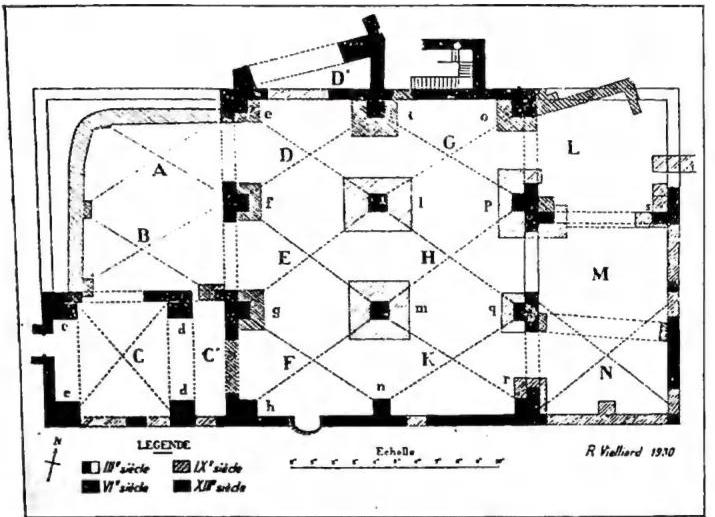
TITLES OF THE ROMAN CHURCH. - This term today designates the churches of Rome over which a cardinal of the Order of Priests is placed.
I. ORIGINI
Il Liber Pontificalis parla deit. fin dalla più alta antichità: Cleto, per ordine di s. Pietro avrebbe ordinato 25 preti romani (Lib. Pont., I, p. 122), Evaristo avrebbe distribuito i presbiteri nei t. (ibid., p. 126), Urbano avrebbe sostituito le patene vitree con 25 argentee (p. 143), Marcello avrebbe ordinato 25 presbiteri in Roma (p. 164). Oltre a questo distribuì fra diversi papi e personaggi del sec. IV la fondazione di diversi t., per cui Lucina fondò il t. di Marcello (p. 164), papa Silvestro quello di Equizio (p. 170), Marco la basilica iuxta Pallacinas (p. 202), Giulio S. Maria in Trastevere (p. 205) e Damaso S. Lorenzo in Damaso (p. 212); all'inizio del sec. V Innocenzo I fondò il t. di Vestina (p. 220). Secondo G. P. Kirsch i t. furono i più antichi edifici sacri cristiani di Roma, costituiti in case di private abitazioni, in cui risiedevano i presbiteri romani, con una ampia sala per le adunanze liturgiche; in parte risalgono al sec. III, alcuni al sec. IV e ai primordi del sec. V; il numero di 25 rimase poi per vari secoli. Sempre secondo G. P. Kirsch il nome del proprietario avrebbe stato scritto (titulus) sulla facciata. Ma tale ipotesi non ha conferma in alcuna delle case rinvenute ad Ostia od a Pompei. Fuori di Roma la denominazione di t. è sconosciuta; a Cartagine il clero viene indicato secondo le regioni: « arcidiaconus eccl. Carthag. regionis sextae; diaconus regionis quintae; lector regionis quartae o quintae »; perfino le basiliche hanno un'indicazione regionale, i Concili del 403 e del 410 furono tenuti « in regione secunda »; nella terza era una basilica dedicata a s. Pietro, mentre nella VI era quella di S. Paolo. Viene dunque fatto di pensare che lo stesso sia avvenuto a Roma, dove un « lector de Pallacine » è dell'anno 348 (G. B. De Rossi, Inscr. christ., I, Roma 1857-61, p. 62, n. 97). Nella metà del sec. IV ca. è ricordato un « lector de Fultonices » (J. Wilpert, in Beiträge zur Christlich. Archäologie in Römische Quartalschr., 22 [1908], pp. 162-63, tav. 2). Un « lector de Pudentiana » morì nel 384 (E. Diehl, Inscr. christ. lat. veteres, n. 1270). Inoltre a Roma le iscrizioni più antiche di presbiteri portano solo l'indicazione di tale dignità e non del t. (G. B. De Rossi, Roma sotterr., I, Roma 1864, tavv. 19, 5; 21, 6; E. Josi, Note sul cimitero di Pretestato, in Riv. arch. crist., 13 [1936], p. 8, fig. 1; p. 9, fig. 2; pp. 10, 11, figg. 4-5; p. 12, fig. 7; p. 13, figg. 8-9; p. 14, fig. 10). S. Atanasio parlando d'un Concilio Romano nel 341 dice che più di 50 vescovi si riunirono nella casa del presbitero Vito (Apologia contra Arianos, 20: PG 25, 281).
È certa la dipendenza dei cimiteri dai t. come dimostrò fin dal 1877 il De Rossi (Roma sotter., III, Roma 1877, p. 520 sgg.; J. P. Kirsch, Die römischen Titelkirchen, Paderborn 1918, p. 200 sgg.). Vere case di abitazione risultano sotto SS. Giovanni e Paolo, SS. Silvestro e Martino ai Monti; S. Lorenzo in Lucina, S. Cecilia, in parte sotto S. Sabina, in minima parte sotto S. Anastasia; sotto l'attuale S. Prassede si sono rinvenuti di recente avanzi di monumenti pubblici, sotto S. Pudentiana un edificio termale, sotto S. Prisca un mitreo. È tuttora vero quanto scrisse il Duchesne nel 1887: «Non si è conservato alcun documento che permetta determinare in modo certo, dove si trovavano, prima di Costantino, gli edifici cristiani compresi dentro le mura della città di Roma» (Les titres presbitéraux et les diacones, in Mélanges d'arch. et d'hist., 7 [1887], p. 217). Ilaro (461-68) fa eseguire un servizio di vasi sacri per ogni t. (Lib. Pont., I, p. 249). Simplicio (468-83) distribuì i presbiteri titolari al servizio ebbomadoro delle basiliche cimiteriali di S. Pietro, S. Paolo e S. Lorenzo «propter penitentes et baptismum», e proprio i presbiteri della regio III, a S. Lorenzo, quelli della regio I a S. Paolo, quelli della regio VI vel VII a S. Pietro (ibid., I, p. 249).
II. SVILUPPO
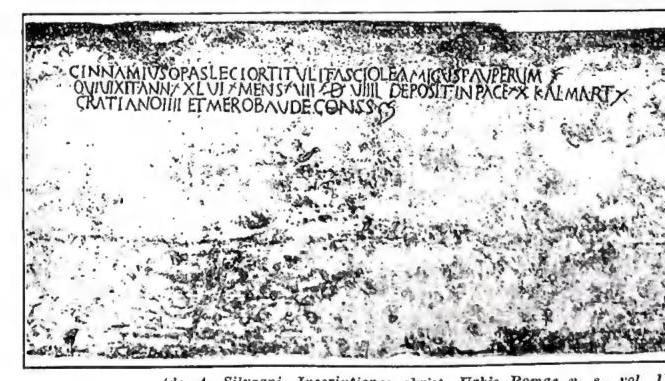
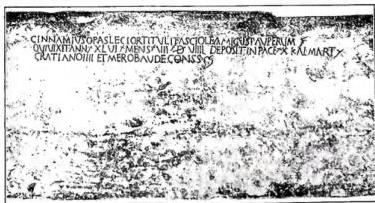
The first reliable list of the Roman t. comes from the Roman Council of March 1, 499 under Pope Symmachus. In the minutes, after the bishops present, the Roman presbyters signed, with an indication of the t. to which they belonged: there are 29 designations of t.; if the t. of Byzans and of Pammachius are one and the same, if the t. of Romanus is an error for that of Marcellus, if the last Laurenti is to be joined either with the t. of Damasus or with that of Lucina, one would arrive at 26 (MGH, Auct. antiquis., XII, p. 410 ff.). From an inscription of the cemetery of St. Pancras of 521-22 it emerges that in the t. of St. Chrysogonus four presbyters of the t. are hierarchically indicated with prior, secundus, tertius, quartus (G. B. De Rossi, Inscr. cit., I, n. 975). In the Synod of 595 there are 24 t., all with the designation of a saint; those of Byzans, Aemiliana, Crescentiana, Gaius, Matthew, Pammachius, Tigrida, Romanus, Fasciola are missing: in exchange there are the t. of Sts. John and Paul, St. Susanna, St. Sixtus, St. Balbina, Sts. Nereus and Achilleus, Sts. Marcellinus and Peter, Sts. Four Crowned (MGH, Epistolae, I, pp. 566-67). Under Hadrian I (772-95) the t. were 22, as is attested by the 440 "vela" donated by the Pope, 20 for each t. (Lib. Pont., I, p. 504). In the list of churches to which gifts were offered by Pope Leo III, in about 806, there are 23 t., among which it is worth noting the "ecclesia Genitricis Dei in titulo Callisti", the "titulus beati Petri qui appellatur Eudoxiae", the "basilica Apostolorum quae ponitur in Via Lata", the t. "Marci... appellatur in Via Lata"; there is still the t. "Emilianae" (instead of Sts. III Crowned) and the t. Pammachi (instead of Sts. John and Paul); the t. of Sts. Nereus and Achilleus is instead a deaconry and the t. of Prisca is called "Aquilae et Priscae".The catalogue of P. Mallio made under Alexander III (1159-81) gives 28 t., 7 for each of the 4 patriarchal basi-
(phot. Sesti)
St. Pius V, on February 6, 1566 created the t. of St. Tryphon, of St. Euphemia, of St. Jerome of the Slavs, and of St. John of the Florentines which, however, was never conferred and therefore suppressed (G. F. Firmano, Diarium Caeremoniarum sub Pio V, year 1566, ms. of the Vatican Archive, E. 29, fol. 435). Sixtus V, having issued on December 3, 1586 the bull Postquam verus concerning the Sacred College of Cardinals, on April 13, 1587 with the apostolic constitution Religiosa sanctorum raised the t. to 50. In the Consistory of January 12, 1953, some deaconries were elevated to t. pro hac vice. Here now are the individual t.
AEMILIANAE (Synod of 499): Duchesne believed he recognized it in the t. Sts. IV Coronatorum of the Synod of 595 and of the biography of Hadrian I, while in that of Leo III Aemilianae returns; in the catalogues of P. Mallio and of 1492 it is Sts. III Coronatorum. Its titulars were Leo IV, Stephen VI, Callistus II, Innocent IX and Benedict XV. ANASTASIAE (Synod of 499): the church had been decorated with paintings by Damasus and the apse with mosaics by Hilary (De Rossi, Inscr. christ., II, p. 150); it returns in the biography of Leo III, in the catalogues of P. Mallio and of 1492; its titulars were Boniface IX and Pius IV. APOSTOLORUM (Synods of 499 and 595): "qui appellatur Eudoxiae ad Vincula" in the biographies of Hadrian I and of Leo III; S. Petri ad vincula in the catalogues of P. Mallio and of 1492; its titulars were Sixtus IV, Julius II and Clement X. APOSTOLORUM: it is the "Iulia" basilica founded by Julius I (337-52) in region VII "iuxta forum divi Traiani", recalled in the Liberian Catalogue. It is also called "prope via Lata" (Lib. Pont., I, pp. 465, 500, 504; II, pp. 20, 28, 31, 345). It is called Sts. Apostolorum at the time of Paschal II (1099-1118) in which the card. Gregory was titular (Lib. Pont., II, p. 371); under Urban VI
(from A. Silvagni, Inscriptiones christ. Urbis Romae n. 2, vol. II, Vatican City 1933, pl. 7)
(phot. Olordan)
More recent are the t.:
S. STEPHANI IN CAELLO MONTE: in the biography of Gelasius II (1118-19) there appears: "Saxo de Anagnia sancti Stephani in Celio monte" (Lib. Pont., II, p. 312). Pius IV was titular of it. S. CRUCIS IN HIERUSALEM: under Gelasius II (1118-19) there appears an "Amicus cardinalis Sanctae Crucis" (Lib. Pont., II, p. 312); under Innocent II a Jerhardus (ibid., p. 380), later Lucius II (ibid., p. 383); it is found in the catalogues of P. Mallio and of 1492. Innocent VII, Marcellus II and Benedict XIV were also titulars of it. SS. QUIRICI ET IULITTAS: founded by Sixtus IV; Leo XI and Innocent XIII were titulars of it.
By Leo X on 6 July 1517 the following t. were created:
S. AGNETIS IN AGONE: suppressed by Innocent X on 5 Oct. 1654 and transferred to S. Agnese fuori le mura. S. BARTHOLOMEI IN INSULA O INTER PONTES. S. APOLLINARIS: suppressed by Sixtus V in 1587, it became a deaconry, then a t. in 1946 pro hac vice. S. CAESARI IN PALATIO: suppressed by Sixtus V in 1587, deaconry from 1600. S. JORANNIS ANTE PORTAM LATINAM. S. LAURENTII IN PANISPERNA: titular Clement XIV. S. MARIAE IN CAPITOLIO O DE ARACOLI: suppressed by Clement VII on 17 Apr. 1527, it was re-established by Julius III on 4 Dec. 1551. Clement XIII was titular of it. S. PANCRAZIO: on 28 Feb. 1550 it was united by Julius III to the t. of S. Clemente with the name of SS. Clemente e Pancrazio, but it was separated by the same Pope on 4 Dec. 1551. Paul IV, Clement VIII and Innocent XII were titulars of it. S. SILVESTRI IN CAPITE. S. THOMAE IN PARIONE: Pope Pius XI with the apostolic constitution Quum S. Thomae in Parione suppressed the t. and transferred it to S. Maria in Vallicella (AAS, 30 [1938], p. 191).
There follow the t. created by Julius III on 4 Dec. 1551: S. BARBARAE: suppressed by Sixtus V on 20 Apr. 1587. S. MARIA IN VIA. S. SIMONIS: Sixtus V was titular of it, and he suppressed it on 20 Apr. 1587.
S. MARIA SUPER MINERVAM: it was founded by Paul IV on 24 March 1557. St. Pius V was titular of it. S. MARIA ANGELORUM: it was elevated to a t. by Pius IV on 18 May 1565.
St. Pius V on 16 Feb. 1566 instituted the t.:
S. EUREMIA: suppressed by Sixtus V on 20 Apr. 1587. S. HIERONYAM DE ILLIRICIS: Sixtus V was titular of it. S. TRIPHONIE: suppressed by Sixtus V on 20 Apr. 1587.
Sixtus V on 20 Apr. 1587 elevated to t.:
S. AUGUSTINI: by suppressing that of S. Trifone. S. BLASI DE ANULO, suppressed by Paul V on 17 Oct. 1616 and transferred to SS. Biagio e Carlo ai Catinari. SS. BONIPACI ET ALEXI IN AVENTINO. S. MARIA A POPULO: Alexander VII was titular of it. S. MARIA A PACE. S. MARIA IN TRASPONTINA: Gregory XV and Pius VIII were titulars of it. S. ONOPHRI: Urban VIII, Innocent XI and Pius VI were titulars of it. S. PETRI IN MONTORIO: Urban VIII was titular of it. S. SALVATORIS IN LAURO: Alexander VIII was titular of it. It was suppressed on 19 May 1670 by Clement X, who transferred it to S. Bernardo alle Terme. S. MAE TRINITATIS IN MONTE PINCIO.
Later the t. of the following were founded:
SS. BIAGIO E CARLO AI CATINARI: founded by Paul V on 17 Oct. 1616, transferred by Urban VIII on 16 Aug. 1627. SS. AMBROGIO E CARLO AL CORSO: suppressed by the same on 24 Aug. 1639. S. AGNETIS EXTRA MUROS: created by Innocent X on 5 Oct. 1654, after S. Agnese in Agone was suppressed. S. BERNARDI ALLE TERME: it was founded by Clement X on 19 May 1670, after S. Salvatore in Lauro was suppressed. S. MARIA DELLA VITTORIA: founded by Pius VII in Dec. 1801. SS. ANDREAS ET GREGORIUS IN CELIO MONTE: it was founded by Gregory XVI on 11 July 1839, who transferred to it the t. of S. Eusebio. S. MARIA NOVA: it was created by Pope Leo XIII on 17 March 1887. S. MARIA IN COSMEDIN: deaconry elevated in 1935 pro hac vice to a presbyteral t.; S. MARIA IN VALLICELLA: it was created by Pius XI (apostolic constitution Quum s. Thomae in Parione of 8 Dec. 1937, after the t. of S. Tommaso in Parione was suppressed; AAS, 30 [1938], p. 191). In the Consistory of 18 Feb. 1946 the deaconry of S. MARIA IN PORTICU was elevated to a t. pro hac vice.
In the Consistory of 17 Jan. 1933 the following deaconries were elevated pro hac vice to t.: S. AGATA DEI GOTI; S. ANGELO IN PESCHERIA; SS. COSMA E DAMIANO; S. MARIA DELLA SCALA; S. MARIA IN AQUIRO; S. MARIA IN VIA LATA. - See plate XVI.
BIBL.: sources