
PRETESTATO, CIMITERO di. – Situated at the second mile on the left of the Via Appia (the entrance is currently at Via Appia Pignatelli 1). The name appears in the Depositio martyrum for the tombs of the martyrs Gennaro on 10 July and Felicissimo and Agapito on 6 August, all three of whom are also commemorated in the same cemetery by the Leonine Sacramentary and the Hieronymian Martyrology, which always places in P. Pope Urbano (25 May) and the martyrs Quirino (30 April), Valeriano, Tiburzio, and Massimo (14 April), and Maior (10 May).
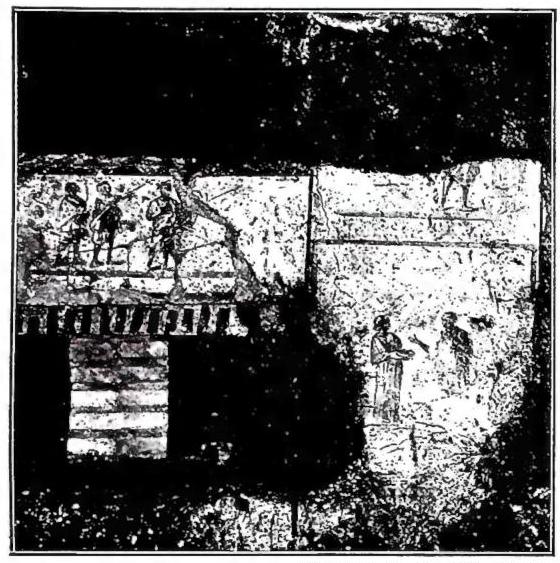
Damaso embellished the tomb of the martyr Gennaro (A. Ferrua, Epigrammata Damasiana, Città del Vaticano
(fot. Pont. comm. arch. sacra)
The cemetery consists of an open burial area, originally used for pagan burials, owing to the large number of sarcophagi found there, which were later broken up by peasants and used to close skylights and collapses (M. Gütschow, Das Museum der Prätextat-Katakombe, in Atti della Pont. accademia rom. di arch., 3ª serie, Mem., 4 [1938, 2]). In the Christian cemetery area are indicated the tombs of the martyrs Valeriano, Tiburzio, and Massimo, in an oratory or a converted mausoleum, near which Pope Giovanni III lived for some time (561–74; cf. Lib. pont., I, pp. 305–306). The underground cemetery appears to consist of various groups of hypogea, originally separate from one another, later enlarged and connected together. The oldest region (2nd century) originally consisted of a staircase descending to a gallery and to a large cubiculum frescoed with the Good Shepherd on the vault and a large mensa tomb on the rear wall, with tombs in the side walls decorated with scenes of the Resurrection of Lazarus, the Lord conversing with the Samaritan woman, the Hemorrhoissa, and the Crowning with Thorns, interpreted by some instead as the Lord after his Baptism in the Jordan. The whole region was later deepened and extended; at a third stage formae were made in the floor, one of which belonged to an Urania, daughter of Erode, and sarcophagi were introduced into the cubiculum, now in the Lateran Museum.
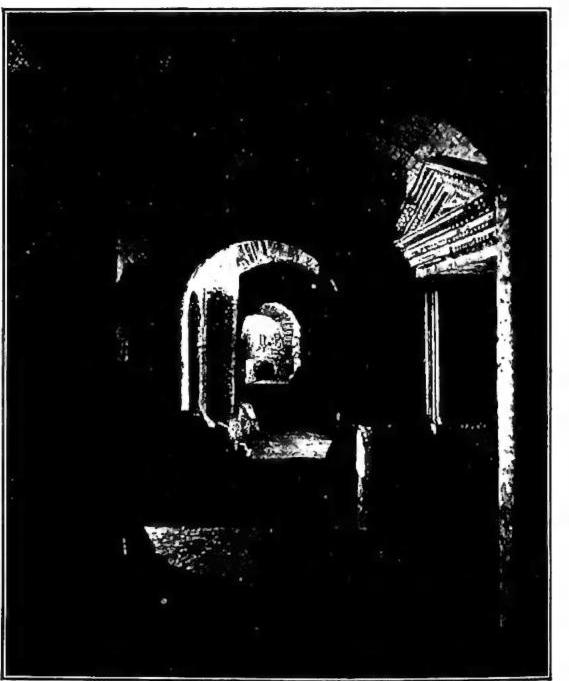
A second region (3rd century), east of the first, consists of its own staircase and an extensive network of galleries, likewise deepened and containing some polyandria; a third region from the same century consists of a large gallery (later called spelunca magna), opening onto richly appointed cubicula with entrances of distinctive architecture, similar to that of above-ground mausoleums. One of them had a vault and walls containing marble-clad niches for sarcophagi, with frescoes representing the seasons and their symbols, Jonah cast into the sea, the Miracle of the Spring, and the Good Shepherd, cut through by a rear loculus in which the inscription was scratched: (Maxi)mi refrigeri (per refrigeret) Iannarius, Agatopus (per Agapitus) Felicissimus martyres, that is, “may the martyrs Gennaro, Agapito, and Felicissimo grant refreshment to the soul of Massimo” (G. B. De Rossi, Scoperta d'una cripta storica nel cemetero di P., in Bull. arch. crist., 1 [1863], p. 15 ff.). In this cubiculum G. B. De Rossi believed that the tomb of the martyr Gennaro might be recognized, having found nearby fragments of Damaso’s large dedicatory inscription (G. B. De Rossi, Iscrizione damasiana scoperta dinnanzi la cripta quadrata nel cemetero di P., in Bull. arch. crist., 1 [1863], pp. 17–22). Another cubiculum also presents the same external architectural decoration, while the interior was faced with marble and mosaics. M. Armellini, G. B. De Rossi, and P. Styger held that the two martyrs Felicissimo and Agapito, deacons of Sisto II, had been deposited in two loculi of the large gallery, later decorated and protected by a marble transenna; the opposite wall was cut away in order to construct an apse. There is also a very regular second level with its own staircases; an intermediate level with graffiti inscriptions from the year 384; and a region of a first level in which the arcosolium is noteworthy, where, after the middle of the 4th century, a certain Celerina was buried. There Susanna is represented as a lamb between the two wolves identified as the elders (seniores).
(fot. Pont. comm. arch. sacra)
PRETESTATO, CIMITERO di – Spelunca magna (3rd century) – Rome, cemetery of P.
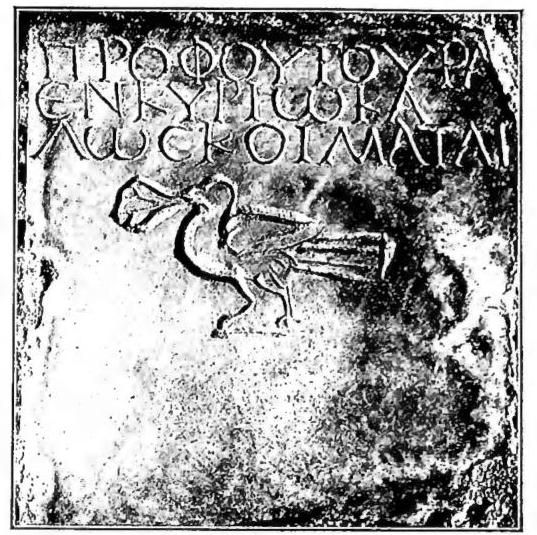
An inscription from 405 recalls a certain Superbo, so called in name only, whom the blessed saints knew to be innocent and meek. A certain Aurelia Marula asks her gravediggers ut massa calcetur; if they do so, the Lord will hear their prayers. – Vedi tav. CXXXVI.
(Int. Pont. comm. arch. sacra)