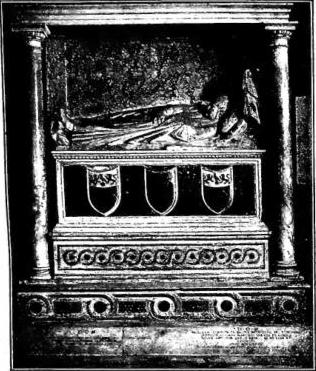
ONORIO III, POPE. – Cencio Savelli, cardinal camerlengo, author of the liber censuum (v.), succeeded Innocent III in July 1216. He died on 18 March 1227. Conciliatory and peaceful by temperament, because of his advanced age and his conception of the mission of the Papacy, O. knew how to secure for the Church, on the spiritual plane, what the political realism of the Emperor caused it to lose on the temporal plane.
In reality, however, the Papal States were surrounded, because Germany, through the regency, Lombardy, by means of imperial legates, and Sicily, administered almost without regard for papal sovereignty, were governed by the same sovereign. Moreover, the Emperor indefinitely postponed his departure for the East, despite O.’s insistence, impressed as he was by the poor results of the Crusade in Egypt (the fall of Damietta in 1221). Furthermore, Frederick II held papal policy in the East in check as well, because he supported the Emperor of Nicaea, Vatatzes, toward whom he directed the Greek clergy in its tacit refusal to unite with Rome under the aegis of the Latin Empire.
The Church nevertheless succeeded in obtaining the support of the secular arm for the implementation of the decrees of the Fourth Lateran Council of 1215 and the suppression of heresy. In compensation for his faults, Frederick II applied in his States the rigor of the Constitutiones of 1220 and ordered his legates to impose the punishment of burning on those who resisted.
In Aragon and in France, the sovereigns offered their assistance; the conquest of Languedoc carried out by Louis VIII not only gave the Capetians the key to the south, but was accompanied by a royal ordinance, promulgated in 1226, against heretics, and by the organization of the Inquisition.
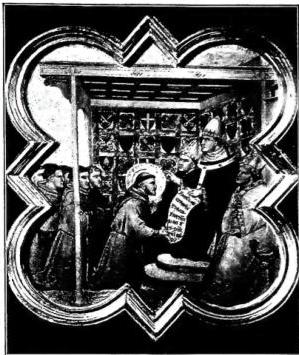
At the same time that Roman orthodoxy was gaining ground, the religious life of the Church was enriched through the development of the mendicant Orders. From the first years of his pontificate, O. III lavished favors on the Friars Preachers, whom he recommended to the bishops and whose entry into the universities he promoted, especially in Paris, where he retained direct authority independent of the diocesan chancellor. In 1217, the Pope considered entrusting the new University of Toulouse to the Preachers. Even more rapidly, the Friars Minor spread, to whom O. III gave their distinguished protector, Cardinal Ugolino, the future Pope Gregory IX, and approval of their Rule (23 November 1223).