
GIULIO II, POPE. — Giuliano della Rovere, born at Albissola near Savona in 1445 to an obscure family. His youth was spent in poverty; probably through the care of his paternal uncle, the Franciscan Cardinal Francesco della Rovere, he became a student at the Convent of S. Francesco in Perugia. The fact that he acquired at that time a manuscript of Justinian’s Institutes suggests that he devoted himself to legal studies, although he later said that he had applied himself to literature. In Perugia he also entered the clerical state; but he remained in obscurity until his uncle, having become Pope Sisto IV, first gave him the bishopric of Carpentras and then, on 16 December 1471, the purple with the title of S. Pietro in Vincoli.
The cardinal subsequently held, in title, in administration, or in commendam, for longer or shorter periods, a large number of bishoprics, abbeys, and benefices: among them, the abbey of Grottaferrata (from 1472), the bishopric of Bologna (1483–1502), the archbishopric of Avignon (1474–1503), the cardinalitial episcopal sees of Sabina (1479–83) and Ostia and Velletri (1483–1503); from 1474 he was major penitentiary. And already under Sisto IV he received highly important assignments: he was legate in the Marches (1473); with an exceedingly firm hand he restored order in Umbria, at Todi, Spoleto, and Città di Castello; as legate in Avignon and the Comtat Venaissin and throughout the Kingdom of France (1476), at a moment when relations between the Pope and Luigi XI were strained, he succeeded in strengthening papal rule over the coun-
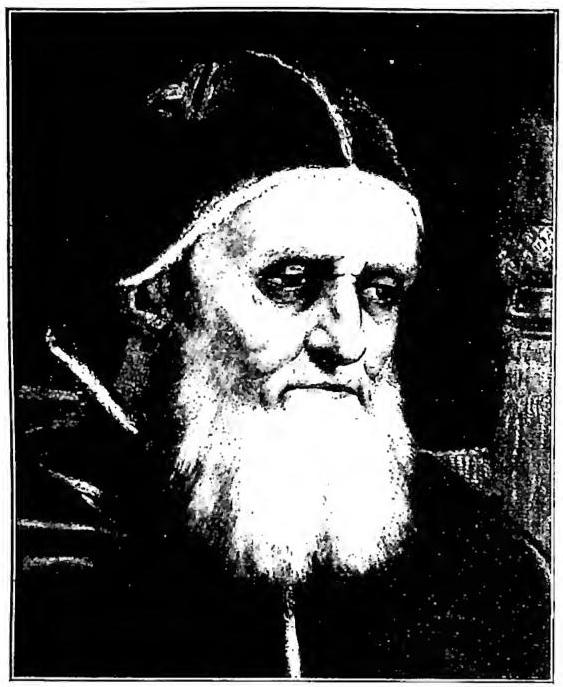
tyside and nevertheless in being regarded as « très cher et grant amy » by the king of France. Once again he was legate a latere (1480–82), to restore peace between Luigi XI and Massimiliano d’Austria, who were disputing the inheritance of Carlo il Temerario, and to promote the Crusade; although he failed in his purpose, his fame increased, and on his return to Rome he received unusual honors. Yet in the mind of Sisto IV, more influential than the harsh and angular « Vincola » were, first, Cardinal Pietro Riario, another nephew of the Pope who died in 1474, and then the latter’s brother, the shrewd and ambitious Count Girolamo, Giuliano’s open rival. But in the Conclave that followed the death of Sisto IV (1484), Giuliano, although not shrinking from simoniacal maneuvers, succeeded in securing the tiara for one of his creatures, Giovan Battista Cibo: Innocenzo VIII, and for several years he was the weak Pontiff’s « padrone », « papa et plus quam papa ». Fiercely opposed to Ferrante of Naples, perhaps for personal and family reasons, certainly because of the King’s rebellious and threatening attitude toward the Church, he advised the Pope to wage war, taking the barons’ conspiracy as his occasion; and at a moment of the greatest danger he was a courageous defender of Rome and the Pope. He was indignant when the Pope, in his absence, concluded peace with the King (1486), and seemed to have lost his authority over Innocenzo. But he regained it immediately; and, despite another temporary eclipse of his fortunes, he remained supremely powerful for as long as the Pontiff lived. Significant during these years were his close friendship with Cardinal Marco Barbo, perhaps the finest man then in the Curia, and the opposition of both men « come ostro e tramontana » to Rodrigo Borgia and Ascanio Sforza, representatives of the more worldly tendencies in the Sacred College: Giuliano already represented, even if not disinterestedly, the reaction against the corruption of the Church, the weakening of papal power, and the predominance of narrowly political interests.
In the Conclave of 1492, relying too openly on Ferrante, who had been reconciled with the Church, partly through his efforts, he attempted to bring a cardinal of his faction to the pontificate; the intrigues of Ascanio Sforza and simony raised the Borgia to the papacy, as Alessandro VI.
At the last moment Giuliano too had bowed to the election, obtaining concessions in return. But, despite an ephemeral reconciliation, during which he seemed to have become « secondo papa » (August 1493), he remained not only a fierce opponent of the Borgia, when opposition could in many cases be justified, but his immoderate hater; and, living now at Marino, the territory of the Colonna, now in his heavily fortified Ostia, he adopted « modi de uno antipapa ».
When, in anticipation of Carlo VIII’s descent into Italy, the Pope drew close to the Aragonesi, the « Vincola » included them in the same hatred. Fearful, not without reason, for his life, he fled from Ostia (23–24 April 1494) and took refuge in France, where he became highly influential; he urged Carlo VIII to undertake the conquest of Naples and remained at his side during the invasion, sharing the illusion, common at that time to not a few, even distinguished, men, that the king of France might promote the necessary reform of the Church. For a time he drew closer to the Pope (1498) and helped procure for Cesare Borgia the hand of Carlotta d’Albret; but he soon again broke with the Borgia because of their enterprises against his kinsman, the duke of Urbino, and his nephew Francesco Maria della Rovere. And he remained far from Rome, now in France, whose King, who regarded him as entirely his own, granted him (1499) the wealthy abbey of Chiaravalle near Milan, now at Savona, where he was bishop, or in other Italian lands, feared and fearing.
He returned to Rome after the death of Alessandro, on 3 September 1503; and, perhaps because of the painful experience of his long exile and his unreliable foreign support, certainly interpreting the sentiments of a large part of the Italians, he declared that he wished to be « bono italiano ». He succeeded in preventing the election as pope of the Frenchman Amboise, although he did not then obtain the tiara, which went to the aged Pio III. Upon the latter’s death, he secured the support of the still powerful Valentino through promises that he could neither fulfill nor intended to fulfill; and, not without simoniacal maneuvers, he obtained unanimous election to the pontificate (1 November 1503). He assumed the name of G. II, almost as if to indicate his intention of carrying out a work of restoration not unlike that which Giulio Cesare had accomplished.
The ultimate goal of his uninterrupted labor was that religious restoration which was then the first necessity. He indeed undertook to raise the prestige and spiritual authority of the pontificate and the Church. By a bull, which he published in 1510 with the date 14 January 1505 and had reconfirmed at the Lateran Council on 16 February 1513, he declared null the papal election made through simony and decreed the loss of dignity and possessions for anyone who participated in II. By another bull, which renewed the Exsecrabilis of Pio II, he excommunicated anyone who opposed the free exercise of pontifical authority or appealed from the pope to a council. He reformed the bull In coena Domini, by which each year, on Holy Thursday, those under excommunication were denounced; he resolutely defended the rights of the Church before the Catholic powers; he combated heresy, while also facilitating the conversion of heretics and seeking to moderate the severity of the Spanish Inquisition.
He supported the religious Orders and promoted their reform; he fostered devotion to the Blessed Sacrament and to the Passion of Christ; he attended to the dignity of sacred functions and, for those celebrated in S. Pietro, established a chapel of singers, which took from him the name Giulia. He erected dioceses in the lands overseas and encouraged the work of missionaries. He issued bulls against dueling and against the custom of appropriating objects brought ashore by the waves. He also attempted a reform of the Curia, which the difficulties of the times and human resistance prevented from being implemented; and he proposed a radical reform as the purpose of the Lateran Council opened on 3 May 1512, although the Council, absorbed in the difficult task of bringing about the extinction of the schism and the abolition
of the Pragmatic Sanction of France, could do little for reform, since the Council was absorbed by the difficult task of providing for the extinction of the schism and the abolition. He spoke often of the Crusade and gave it serious thought, collecting money and guarding it jealously, fitting out ships, and promising to take part in it himself, although he did not believe the Crusade possible until peace had been restored throughout the world.
A religious activity, certainly, not to be overlooked. But at a time when political and cultural interests prevailed over religious ones, G. II saw the Church’s salvation less in a spiritual renewal than in the affirmation of its political power and outward splendor: he wished to raise the temporal dominion of the papacy as a bulwark of its spiritual independence, to gather Italy around it against foreign ambitions, threatening Italy and the Church alike, and to make himself—or rather the papacy—“il dominus et maistro del mondo” (M. Sanuto, Diari, X, Venice 1883, col. 80).
He therefore devoted himself first of all to the renewal, security, and expansion of the Papal States. He kept the turbulent barons in check, or bound them to himself through marriages with his natural daughter or with his nephews and relatives; he brought order and tranquility to Rome, also making use of the new institution (1506) of the Swiss Guard, rigorously disciplined and commanded by captains chosen by the pope. He left the senator, the conservators, and the other city magistracies as much authority as seemed to them useful in the interests of the State, and supervised their work through the governor and the vice-chamberlain, whom he selected. He strengthened the powers of the legates and castellans in the lands of the Patrimony; and in the various cities he worked, even personally, to make peace among the factions.
He reorganized the administration of justice: in accordance with the common procedure of the age, he did indeed keep separate the cases of ecclesiastics, or of those who, even if laymen, were attached to the Curia, from those of other laymen, and submitted the former to the auditor of the Camera, who was a high prelate; but he eliminated every other variety of jurisdiction and entrusted the hearing of lay cases to the “magistrates of the Capitoline Curia,” whose sentences could be revised by the new appellate magistracy. In questions concerning salaries, the governor was empowered to cut short the ordinary procedure and assume the decision himself. A strict audit at the end of each year, from which not even the governor was exempt, was intended to prevent or repress abuses. G. also reorganized the college of notaries and provided for the regular performance of their duties and the custody of documents, creating a college of “scriptores archivi Curiae Romanae,” whose principal function was supervision. For the courts and notarial offices, he entrusted Bramante with the design and began construction of a building of truly Roman grandeur: the palace on Via Giulia remained unfinished because of the Pope’s death.
The same conception of a strong and firmly ordered State inspired G. II’s measures in the fields of finance and economics, even though some of them were determined by the prejudices of the age and not all appear worthy of praise. He restored the papal treasury, almost exhausted by the extravagance of the Borgias, without, however, pressing too heavily with taxes or resorting to extortion: when he became aware—and this was not always the case—of embezzlement, he punished it mercilessly. He instituted strict control over revenues and expenditures; he was frugal for himself and his family, prudent in saving, and careful in spending. He increased ordinary revenues through a bold monetary reform, restoring the currency to its real value and ordering that rents be paid in the new silver coins, for which Leonardo da Vinci gave advice and perhaps the design, and which took from the Pope the name of “giuli.” Extraordinary revenues came from the inheritances of cardinals and high officials of the Curia, from the proceeds of confiscations, and, according to a practice then common to all States, from the sale of offices, which at times bordered on simony.
The frequent granting of jubilees and indulgences, too, was overly similar to a sale. By these means the Pope met the enormous expenses of wars, administration, and patronage; nevertheless, the papal treasury rose to perhaps half a million ducats, which the Pontiff intended for future Crusades.
Aware that the prosperity of the State was bound up with the well-being of its citizens, he provided for them by ensuring, in times of famine, the supply of grain (for which he created 141 “presidents of the grain supply”), the revival of agriculture, the development of industry, especially the alum industry, and the growth of trade.
While attending to this complex and, on the whole, successful work of internal reorganization, G. II turned his attention to restoring papal authority in those cities of the Papal States that depended on the Pontiff in little more than name. During the dissolution of the personal dominion of the Valentino, he reconquered several cities of Romagna for the Church; he wrested from the duke the fortresses that had remained loyal to him and did not return them to their former lords; in the duchy of Urbino he secured the succession for his nephew Francesco Maria della Rovere. With an expedition that he personally led, he obtained, without fighting, the submission of Gian Paolo Baglioni, lord of Perugia (Sept. 1506), forced Giovanni Bentivoglio to leave Bologna, and entered it acclaimed as its “liberator from tyranny” (11 Nov. 1506).
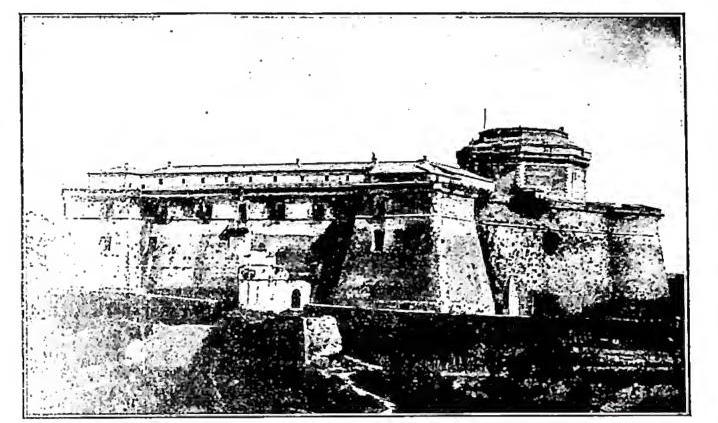
(Ist. Alinari)
GIULIO II. pope — The fortress of Civita Castellana (1494–1510), erected by Alessandro VI. Pope G. II had A. da Sangallo the Elder add the octagonal keep.
Then, fearing that he might be reduced to being the “capelan” of the French (Sanuto, loc. cit., col. 631), who lorded it over Italy, he joined forces with the Venetians in order to “free Italy from the barbarians,” a program summed up in the famous cry, perhaps not his own, “out with the barbarians.” He personally moved against Ferrara, the “root of the French” (cf. A. Luzio, Isabella d'Este di fronte a G. II, in Arch. stor. lomb., 39 [1912, II], p. 120), of which he was the overlord; he took Modena from the duke; but at Bologna, dangerously ill, he narrowly escaped falling into French hands: he was saved by the people, whom he knew how to rouse to revolt (Oct. 1510). Unconcerned by the dangers of war and the harshness of winter, he besieged Mirandola, the key to the Ferrarese territory, and entered it through a breach (20 Jan. 1511). But he had the sorrow of losing Bologna because of the unpopularity, or perhaps the treachery, of the legate Alidosi, who was far too dear to him, and of seeing him killed, almost before his eyes, by his own nephew, the duke of Urbino.
A grave political error by the king of France, who, having revived the ancient Gallican doctrine at the Synod of Tours (Sept. 1510), had reached an agreement with the Emperor to convoke, in the name of certain rebellious cardinals, a Council at Pisa (16 May 1511), gave the Pontiff the opportunity to link the struggle against the “barbarians” with the defense of the unity and freedom of the Church. While he in turn convoked a Council in the Lateran (25 July 1511), he negotiated a league with Venice and Spain; and, regaining strength after an illness that had seemed fatal, he concluded with them the “Holy League” (4 Oct. 1511): England joined it; the Emperor lost interest in the Pisan Council, which was displeasing even to the German prelates.
The defeat of the League at Ravenna (11 Apr. 1512) and the occupation of Romagna by the French seemed for a moment to crush the Pope, whom the schismatic Council, transferred from Pisa to Milan, declared suspended (21 May). But the indomitable G. quickly recovered his strength: on 3 May he opened the Council in the Lateran, where the supreme authority of the Pontiff was reaffirmed. To the coin struck by the king of France with the motto “Perdam Babylonis nomen,” he responded with a medal depicting him on horseback, driving away the barbarians with a whip and trampling upon the arms of France. And indeed the French were driven back from Romagna and shortly thereafter from Italy: G. was able to raise a cry of triumph; the Romans paid him honors such as “never Caesar, nor any other Roman captain” had received (Sanuto, op. cit., XIV, Venice 1886, col. 458).
The congress of the League at Mantua (Aug. 1512) gave Milan to Massimiliano Sforza, as the Pope wished in order to save the Duchy from Spanish ambitions, and decided on the return of the Medici to Florence, which was too closely tied to France. But to G. this appeared to have been done “to his dishonor and detriment” (A. Luzio, op. cit., p. 120), because it saved the duke of Ferrara and left the foreigners too powerful in Italy. He now wished to take Ferrara from the rebellious vassal, to limit Spanish power, and to “see Italy in the hands of Italians” (op. cit., p. 136). But for this reason, and even more in order to have the Council recognized by the Emperor, he was forced to sacrifice Venetian interests to imperial claims, while the Venetians were drawing closer again to France. Amid these designs, death, after a long resistance, broke his strength.
The same aim of glorifying the Church inspired his magnificent work as a patron. He was not a man of great culture, although he knew law and Latin literature and enjoyed having the Commedia read to him, perhaps because of some resemblance between his nature and Dante’s. But he was highly intelligent, possessed very refined taste, and was an excellent connoisseur and judge of artists and works of art. While still a cardinal, he had assembled a library, which he later transferred to the Vatican, and had the basilicas of S. Pietro in Vincoli and of the SS. Apostoli restored, the archiepiscopal palace of Avignon erected, and solid and magnificent fortresses built at Grottaferrata, Ostia, and Chiaravalle. After becoming Pope, he supported scholarship and the university; he founded the first Arabic printing press at Fano; and he was familiar with illustrious men of letters such as Sadoleto and Bembo.
Above all, however, he was a remarkable inspirer and protector of artists. As early as the spring of 1505, he commissioned Michelangiolo to create the gigantic funerary monument, which was soon interrupted. Later he entrusted him with the task of modeling his statue, which was placed in February 1508 above the door of S. Petronio in Bologna and destroyed in 1511 by the fury of the rebellious Bolognese. But, with an extraordinary intuition of a value unknown even to the artist himself, he induced him, against his will, to represent on the vault of the Sistine Chapel (autumn 1508–31 Oct. 1512) the gigantic poem of the ancient world, extended in expectation of the coming of Christ. Raffaello, who portrayed his manly features several times, expressed, at G.’s command, in the Vatican Stanze the great concept of the Christian Middle Ages: the harmony between human and divine knowledge; and in various episodes he celebrated G.’s faith in divine assistance and his victory over the enemies of the Church and the barbarians. Over the tomb of the first Roman Pontiff, G. wished to have erected, in place of the ancient Basilica, which was in danger of collapse but rich in treasures of faith and art—many of which were deplorably scattered—the new church designed by Bramante, which was to surpass every other building in the world in size and beauty. He laid its foundation stone on 18 Apr. 1506 and already saw the arches raised upon the piers, over which the dome was to rise.
In the Vatican Palace, the courtyards of S. Damaso and the Belvedere were likewise beginning to be built according to Bramante’s designs; and in the latter were being gathered the Apollo, the Venus, and the Laocoön, the first nucleus of the future Museum. A new Rome was rising, with its straight streets flanked by rich buildings, the most beautiful of all being the Via Giulia. The church of S. Maria del Popolo, dear to the della Rovere, was being adorned with frescoes by Pinturicchio and sculptures by Andrea Sansovino. Truly, Rome appeared to be what G. wished it to be: the center of the world. Outside the city, Civitavecchia received its mighty fortress from Bramante; Loreto, the portico of the Basilica, the Apostolic Palace, and the marble facing of the Holy House. Churches, palaces, and fortresses attested to G.’s munificence.
G. was tall, with a round head, prominent cheekbones, large dark eyes, a deep and severe gaze, and tightly closed lips. The beard with which he is usually represented, he wore for only a year and a half (late 1510–Apr. 1512), as a sign, it was said, of his firm determination to defeat the French. Even physically, he seemed to be “by nature stronger than all others” (Sanuto, op. cit., XI, Venice 1884, col. 741); but he subdued great suffering through iron willpower. He had no small character defects: to a Florentine who had known him in his youth, he appeared “headstrong and not very prudent” (cf. Picotti, op. cit., p. 180); he was impetuous, hot-tempered, often violent, intemperate, or rather disorderly, in eating and drinking, and consequently acquired the perhaps unjust reputation of being an “old drunkard” (A. Luzio, loc. cit., p. 29, n. 1). Morally, at least in his youth, he was not incorruptible, and perhaps to this may be attributed a dishonorable illness that tormented him until his final years; but he was better than most prelates or pontiffs of his age. Whatever was said of a most repulsive vice of his when he was already old and Pope was in all probability malicious and unfounded.
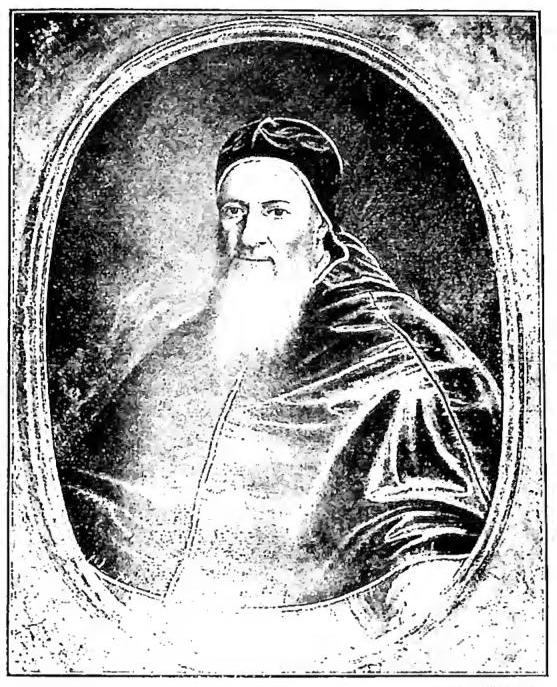
But he possessed a “great heart and spirit” (A. Luzio, loc. cit., p. 110), rugged frankness, unyielding tenacity, prodigious activity, and “terrible” physical and spiritual energy (Sanuto, loc. cit., col. 725, and elsewhere on many occasions), that is, as the epithet was then understood, superior to the ordinary; this was nevertheless not divorced from delicacy of feeling and, in his better moments, from festive affability. Although his enemies cast shadows even upon his orthodoxy, he was a man of firm faith and genuine piety: his motto, “Dominus mihi adiutor : non timebo quid faciat mihi homo,” was sincere testimony to his unshakable trust in God.
Shortly before G. II, on the night of 20–21 February 1513, met death “with such devotion and contrition that he seemed a saint” (A. Luzio, loc. cit., 416), the Roman people had celebrated him as the liberator of Italy and the triumphant victor over the schism; after his death, honors were paid to him such as perhaps to no other pontiff: even his adversaries mourned him with abundant tears because he had wrested all Italy, all Christendom, from the yoke of the French and the barbarians. He himself, in conversations with his master of ceremonies Paride de Grassi, said that he had been plus quam martyr because he had fought and suffered for Christ.
One may doubt whether his titanic effort to drive one foreigner from Italy by means of another foreigner was not futile; one may lament that he too often confused the means with the end and made the spiritual authority of the papacy, which he sought to strengthen by human means, serve temporal interests; one may regard as exaggerated the praise bestowed on him by Burckhardt and others down to Pastor, as the “saviour of the papacy,” since Providence intended the papacy to find salvation by wholly different paths amid the impending storm; one may also think that he bore some responsibility for this storm through his involving the papacy in incessant earthly disputes.
Nevertheless, before history he remains a man of upright intentions and exceptionally strong character. A great prince and a great Italian, if not a great Pontiff; a gigantic figure, such as Michelangelo admirably idealized in the Moses of his funerary monument. - Vedi tav. LIV.