
FANO, DIOCESE OF. - In the province of Pesaro. The ancient Fanum Fortunae stands on the Adriatic coast at the point where the Via Flaminia reaches the sea and dominates the fertile valley of the Met-
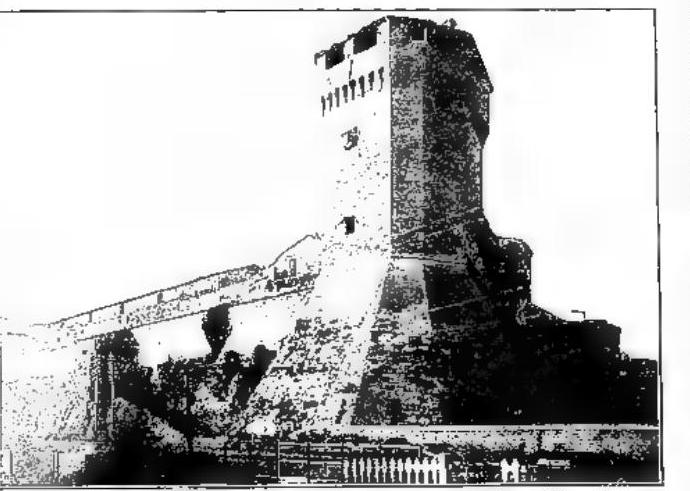
The ancient modest center, which arose around the pre-Roman temple in an important strategic position, is mentioned for the first time by Caesar, who occupied it in 49 B.C. after crossing the Rubicon. Not far from F., in 207 B.C., the famous Battle of the Metauro took place, which was decisive in the Punic Wars and where Hasdrubal met his death. The city was a municipium, and Augustus established a colony of veterans there, among whom the countryside was distributed (colonia Iulia Fanestris). Augustus surrounded it with walls, which are still largely preserved, and in gratitude the municipality erected a triple-arched gate in honor of the prince on the side facing Rome—an arch that is still well preserved and was modified in the time of Constantine. Vitruvius erected a basilica at F. which he describes in his De architectura.
After the fall of the Western Empire, F. became part of the maritime Pentapolis, was destroyed by the Goths in 538, and was restored by Belisarius. The donations of Pepin and Charlemagne gave it to the Church (755-74), under which the city enjoyed broad autonomy, becoming a free commune with its own statutes and magistracies, and extending its rule into the surrounding countryside as far as the area towards Fossombrone, amidst frequent disputes and wars both against neighbors and among powerful Guelf and Ghibelline families
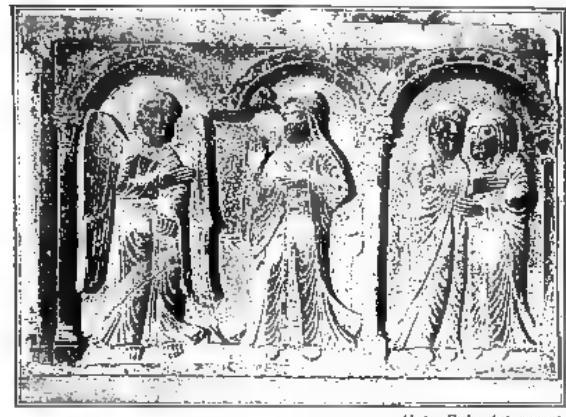
Christianity must have been quite widespread in F. at the time of the Constantinian peace, during which lived Bishop St. Paterniano, patron of the city, whom Lanzoni also finds it not unlikely lived in the first half of the 4th century. The saint's tomb was located along the Via Flaminia slightly outside the walls and became the site of a famous Benedictine abbey. When this was ruined by wars, on July 10, 1551, the body of the patron was transferred to the specially erected classical-style urban basilica, where it still rests.
Among the early bishops are recalled: Vitalis, who in 498 participated in the Roman Synod; St. Eusebius, who subscribed to the Synod of 504 at the time of Pope Gelasius I and is buried in the high altar of the Cathedral; Leo, who was living in 589 and is mentioned by St. Gregory the Great; St. Fortunato, to whom St. Gregory the Great sent letter 13 of book V, approving the sale of sacred vessels he had made to redeem slaves. He too, along with St. Eusebius and St. Orso, co-protectors of the city, is buried in the Duomo. Among the subsequent bishops, the following deserve mention: Cosimo Gheri of Pistoia (who died at age 24 in 1537); Pietro Bertano of Modena, a Dominican, who was sent by Paul III as nuncio to Charles V and created cardinal (d. 1558); Ippolito Capilupi of Mantua, who participated in the Council of Trent in 1563 (d. 1580); Angelo Ranuzzi of Bologna, who was nuncio to Louis XIV and later cardinal (d. 1689); Gabriele Severoli of Faenza, who was nuncio in Vienna (d. 1808). Pope Clement VIII Aldobrandini was born in F. on February 24, 1536.
Notable from a historical and artistic standpoint are, above all, the Duomo, with its adjoining bishop's residence, dedicated to the Assumption and consecrated in 1111, attributed to Rainerio, in early Romanesque style with ancient fragments and paintings by Domenichino, Van Dyck, etc.; S. Maria Nuova of the Franciscan Friars Minor, with splendid paintings by Perugino and Giovanni Santi; the 14th-century churches of S. Domenico, with frescoes by Ottaviano Nelli of Gubbio, and S. Agostino, ruined by the late war, with the famous Guardian Angel by Guercino, which inspired the poem of the same name by Robert Browning; the majestic classical basilica of S. Paterniano, with its Michelangelo-designed doorway and the bell tower by Sansovino, now under reconstruction; S. Pietro in Valle, in a rich and exemplary Baroque style with paintings by Reni. Other precious works of art removed from the churches are preserved in the Civic Museum of the Malatesta court, which is accessed through the arch of Ecclesiastical Liberty next to the majestic Palazzo della Ragione erected in