CARLO V, IMPERATORE

Article illustration

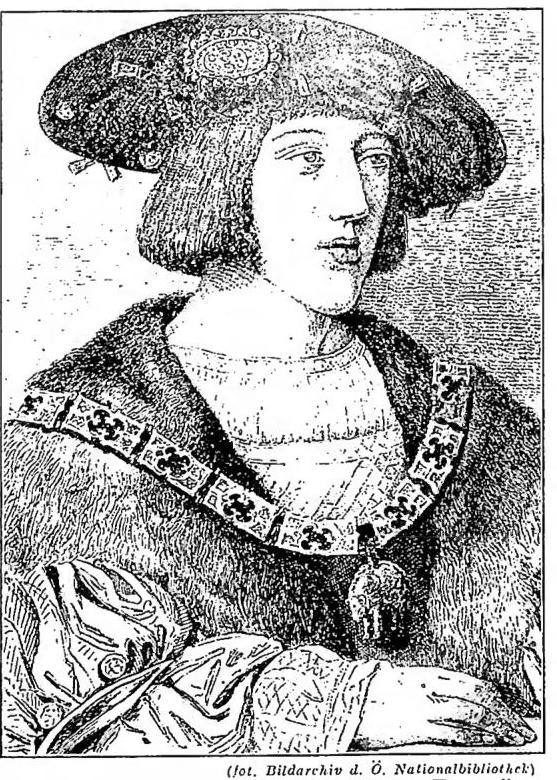
CARL V, Emperor. – Born in Ghent on 24 Feb. 1500, died at San Jerónimo de Yuste on 21 Sept. 1558. Son of Philip the Fair, Archduke of Austria, and Joanna the Mad, he inherited the Habsburg possessions from his paternal grandfather Maximilian of Austria (d. 1519), the Burgundian lands from his paternal grandmother Mary of Burgundy (d. 1482), the kingdom of Aragon with its Italian territories from his maternal grandfather Ferdinand the Catholic (d. 1516), and the kingdom of Castile with its American dominions from his maternal grandmother Isabella of Castile (d. 1504). His father Philip had predeceased his own father in 1506, and Joanna had fallen into insanity in the same year.

His early upbringing took place in the brilliant Burgundian court (among his principal counsellors was William of Croy, Lord of Chièvres). His first stay in Spain left him disoriented by the formalism and severity of the court and by the opposition of the nobility, which was strongly attached to its own national concerns. His political formation continued under the guidance of Mercurino Arborio di Gattinara, who exercised a decisive influence on his spiritual and moral-political development, directing the young prince’s high sense of pride and thirst for honour and reputation toward the grand ideal of empire. Gattinara, who opposed the interests and sentiments of the Spanish court, urged the sovereign to shape European politics around the “garden of the empire,” namely Italy, where Gattinara himself had been born. The most concrete result of this policy was Charles’s imperial election (28 June 1519), secured through bribery of the electors and not without threats. By this time, the myth of a universal monarchy—both theorized and pursued by every means—had taken deep root in Charles’s mind.

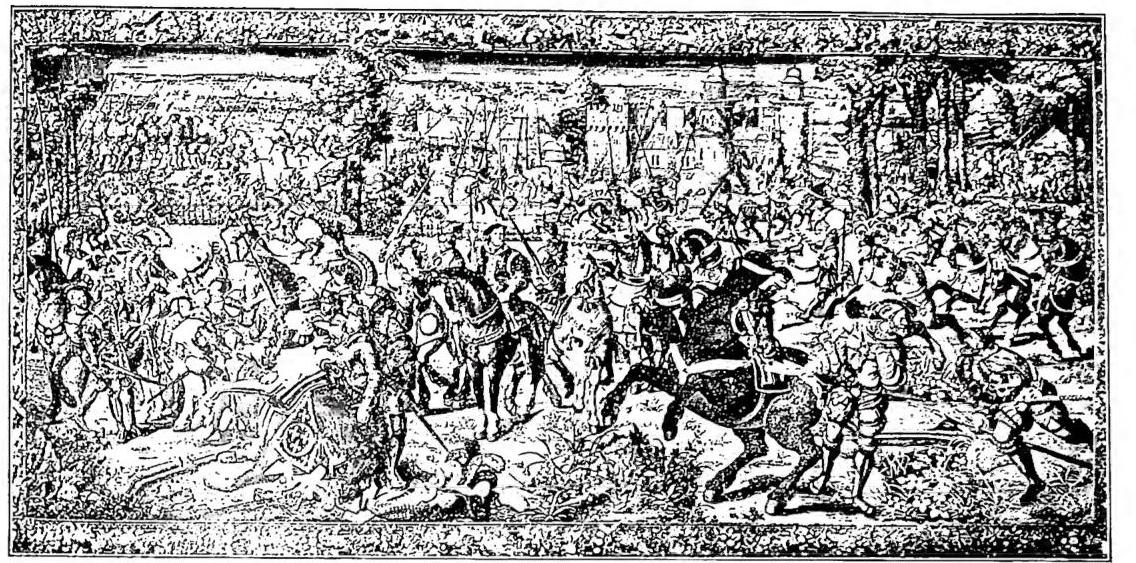
The imperial election definitively set the two great rivals face to face: Charles, intent on sustaining the imperial dream, and Francis I, who defended a more realistic policy of balance aimed at preserving at least the kingdom of France. The struggle between the two protagonists was not merely a clash of personalities but a decisive chapter in European history: the Battle of Pavia (1525), in which Francis I was taken prisoner; the Treaty of Madrid (1526), by which the French king was released on condition of ceding his claims to Italy and surrendering Burgundy to Charles; Francis’s repudiation of the treaty and his alliance with Venice and the Pope; the Sack of Rome (1527) by the imperial mercenary lansquenets; Andrea Doria’s switch from the French to the imperial camp and the failure of the French expedition to Naples; Francis’s alliance with the Turks, which alarmed Charles and led him to sign the Peace of Cambrai (1529); Charles’s coronation by Clement VII and the restoration of the Medici in Florence (1530); the resumption of war and Charles’s growing weakness, pressed by Francis, the Barbary corsairs, the Turks, and the expanding Protestant Reformation; the containment of the Turks, followed by peace with them and then with Francis at Crépy (1544).

Article illustration

Charles’s stance toward the Protestant Reformation wavered between the ideals of Christendom and the exigencies of European politics, between a desire to defend Catholic tradition and the pursuit of raison d’état, which in the 16th century was beginning to find its theorists and advocates. On the one hand, he sincerely wished as a Catholic to destroy heresy; on the other, as a politician he made concessions in the name of balancing power and weakening the German princes (for to weaken them he had to avoid provoking a powerful counteroffensive that would place him in a desperate position). He dreamed of being the definitive exterminator of Luther, yet he did not act on this fierce resolve; he proclaimed himself guardian of orthodoxy yet did not oppose Henry VIII for fear of driving him out of his political-military neutrality; he declared himself and was devoted to the papacy, yet—though the actual fault lay with undisciplined troops—his anti-curial policies indirectly brought about the devastation of Rome in the terrible Sack of 1527. At the Diet of Speyer in 1526 he pledged to allow Lutherans to practise their reformed confession until the convocation of a council; in 1529 he sought to withdraw this concession but then reaffirmed it out of fear of war. He showed great indecision over the council as envisaged by Rome, and even after the collapse of the Schmalkaldic League he desired the restoration of religious unity yet wished to retain a “civil” supremacy over Christendom.

A genuinely religious spirit and a man of honour: so he is described in a splendid passage by Marino Cavalli, Venetian ambassador to his court: “His Majesty is very religious: he attends two Masses every day, Vespers and sermons only on feast days; he says many prayers, confesses and communicates four times a year; and as far as one can see, he lives as a Christian and a private gentleman. He is free from every vice and in all his actions, even the smallest, he is so composed and orderly, so prudent and judicious that no one could ask for more. His movements and words are so measured that they deserve everyone’s admiration. He always speaks courteously, never loses his temper or raises his voice, but always has justice on his lips, hope in God, and grounds his undertakings in reason. He is strict on points of honour and on every minor detail contained in peace treaties and alliances with others. He overlooks or defers punishment for injuries done to himself or by himself when it suits his convenience. He is firm in his opinions; he never does anything under apparent duress, and he would rather let the world collapse than act under compulsion.” (E. Alberi, Le Relazioni degli ambasciatori veneti al Senato durante)

CHARLES V, EMPEROR — CHARLES OF SEZZE

(The article is taken from the Enciclopedia Italiana, vol. X, Rome 1931, col. 822-824). The passage from the ambassador dates from 1551, when a complex mystical mood, an intimate and penetrating awareness of human frailty, had gained ascendancy over the emperor’s mind; that sad sense of death which he had breathed in the youthful unrest of the Burgundian environment had grown with the years and disappointments. This sense had been veiled by his ardent knightly spirit, by his constant desire to “ganar honra y fama perpetua,” which he inculcated even in his son (K. Brandi, *Berichte und Studien zur Geschichte Karls V.*, XII, in *Nachrichten der Gesellschaft der Wissenschaften zu Göttingen*, 1935, p. 58). He must certainly have drawn much from the vast and sometimes underground Spanish mystical movements, but the question should be re-examined thoroughly (for example, it appears that under him the *alumbrados* movement was fiercely opposed: cf. Alonso de S. Cruz, *Crónica del Emperador Carlos V*, III, Madrid 1922, pp. 19 ff.). It is certain that the atmosphere was also saturated with non-heretical mystical revivals: Francesco de Ossuna, Bernardino da Laredo, etc. Above all, when the hope of the universal monarchy dream faded, a sense of crushing transience took hold in the heart of the weary emperor, who abdicated in 1556 and retired to a monastery. Even if the spark of his former valor had not entirely died, he continued to offer political advice to his son Philip II, a method that moreover perpetuated the meticulous instruction he had given on his son’s education when young (cf. J. M. March, *Niñez y juventud de Felipe II*, Madrid 1941, pp. 81-212, 271-335; II, 1942, pp. 5-39). — See Pl. L.

BIBL.: P. Kalkoff, *Die Kaiserwahl Friedrichs IV. und Karls V.*, Weimar 1925; P. Rassow, *Die Kaiser-Idee Karls V.*, Berlin 1932; K. Brandi, *Kaiser Karl V.*, I, Munich 1937; II, 1941 (a work of the utmost importance, the fruit of perfect knowledge of published sources and extensive archival research in the principal European repositories; see vol. II of Brandi’s work for guidance through the vast bibliography on C. V.); R. Menéndez Pidal, *Idea imperial de Carlos V*, Madrid 1941, pp. 7-35 (an excessive thesis that resolves the examination of the emperor’s figure on a “nationalistic” plane). On relations with the papacy: Pastor, IV, I and II, V, VI (with an abundant bibliography); C. Capasso, *Paolo III*, 2 vols., Messina 1923-24. On C. V and Italy, the old but still valuable work of G. De Leva, *Storia documentata di C. V in correlazione all'Italia*, 5 vols., Venice 1863-94; F. Chabod, *Lo Stato di Milano nell’Impero di C. V*, Rome 1934; id., *C. V nell’opera del Brandi*, in *Studi germanici*, 4 (1940), pp. 1-34; E. Ponsieri, *Nei tempi grigi della storia d’Italia*, Naples 1949, p. 1 ff.

CHARLES VI, EMPEROR. — Born in Vienna on 1 Oct. 1685, died there on 20 Oct. 1740. His name is linked to the War of the Spanish Succession, to the war against the Turks concluded by the Peace of Belgrade in 1739, to the struggle for the Pragmatic Sanction and the diplomatic complications that followed. By the Pragmatic Sanction of April 1713, C. regulated the succession to his states; with the death of his eldest son Leopold, the problem became acute because the succession was to pass to his daughter Maria Theresa. The Pragmatic Sanction was proclaimed only in 1724 after approval by the diets of the imperial lands, but it received practical recognition only in 1748 with the Peace of Aix-la-Chapelle. Within his domains, C.’s reign signified the flourishing of Austrian culture in the broadest sense—religion, art, commerce—and the great residences of Vienna and Prague were renewed in the splendor of the Baroque, which remained their characteristic feature.

BIBL.: M. Mayer–R. F. Kaindl–H. Pircherger, *Geschichte und Kulturleben Deutschösterreichs*, II, Vienna 1931, pp. 231-81; G. Mecenseffy, *Karls VI. spanische Bündnispolitik, 1725-29*, Innsbruck 1934; A. de Saint-Léger, Ph. Sagnac, *La prépondérance française. Louis XIV (1661-1715)*, Paris 1935; P. Muret, *La prépondérance anglaise (1715-63)*, 2nd ed., ibid. 1942. Giuseppe Löw

CHARLES I, KING OF ENGLAND AND SCOTLAND. — Born on 19 Nov. 1600 at Dunfermline, died on 30 Jan. 1649 in London, son of James I and Anne of Denmark. In 1625, upon becoming king, he married Henrietta Maria, sister of Louis XIII of France. In a secret article annexed to the marriage treaty, C. undertook to guarantee Catholics freedom of worship, at least in private; but fear of the powerful opposing party, which sought enforcement of existing laws against “papists,” and the desire to avoid any rapprochement with Rome and the Pope, led him to make adaptations and concessions that also produced martyrs. The true importance of the marriage was above all political. Through it, Richelieu removed the threat of a Spanish-English alliance that might have opposed France’s reconquest of the Valtellina, while on the English side there was hope of restoring the Elector Palatine, who was related to C. After the wedding, profound divergences arose between C. and his wife, the king refusing to grant any protection to Catholics. On the pretext of proselytizing on behalf of the Catholic Church by the members of Henrietta’s entourage, C. expelled them from the kingdom. The result was war with France: C. attempted to aid the Huguenots besieged at La Rochelle, but all efforts failed. Meanwhile, wartime necessities required substantial financial resources (C. was also at war with Spain and subsidized his maternal uncle Christian IV of Denmark), which the king procured through extra-parliamentary means after Parliament had denied him funds. After concluding peace with France and Spain (1629 and 1630), C. persisted on this unconstitutional path. In 1637, anti-Presbyterian measures alienated the Scots, who finally rebelled openly. After the death of the Duke of Buckingham (1628), C. reconciled with the queen and on several occasions showed understanding toward the Catholics of the realm, though he always refused to convert. The king’s violation of parliamentary immunities led in 1642 to civil war, in which the strong personality of Oliver Cromwell came to the fore. C. was defeated and condemned to death.

BIBL.: S. R. Gardiner, s.V. in *Dictionary of National Biography*, IV, pp. 67-84. On Catholicism in England under C.’s reign see A. J. Destombes, *La persécution religieuse en Angleterre sous Élisabeth et les premiers Stuarts*, 3 vols., 1883. On relations with the Holy See, in addition to vols. XII, XIII, XIV of Pastor, see especially G. Albion, *Charles I and the Court of Rome*, London 1935.