
CESARINI, GIULIANO. — Cardinal, born in 1398, he pursued his studies at Perugia and taught canon law at Padua (where Nicolò di Cusa and Domenico Capranica were among his students). Cardinal Branda presented him to Pope Martino V, who, having recognized his outstanding gifts of judgment and learning, created him a cardinal on 24 May 1426 (the appointment, however, was not published until 1430). On 1 January 1431, Martino V appointed him legate of the Apostolic See to direct the Crusade against the Hussites, and a month later designated him to preside over the Council of Basel.
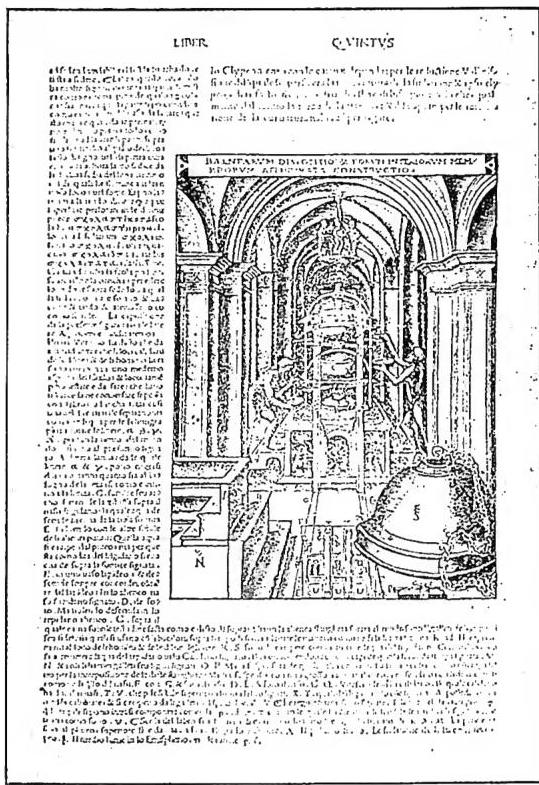
(from Vitruvio, De architectura, ed. Cumo 1581)
CESARIANO, CESARE – Page from the commentary on Vitruvius’s De architectura.
After an unsuccessful attempt at conciliation and the Pope’s order to transfer the Council to Ferrara, he left Basel. At the new seat in Ferrara and subsequently in Florence, C. worked with extraordinary energy and great authority toward the act of union with the Greeks. C.’s eventful life concluded with his leadership of the Crusade against the Turks, whom he defeated at Nisch on 3 November 1443; owing to the separate peace made by the Hungarians with the Turks at Szegedin (July 1444), C. found himself in a difficult situation, so much so that the Turks succeeded in defeating the Christians at Varna (10 November 1444); C. was killed while fleeing after the military disaster. A man of action and a refined humanist, he was among the finest figures of his age, as Vespasiano da Bisticci describes him.