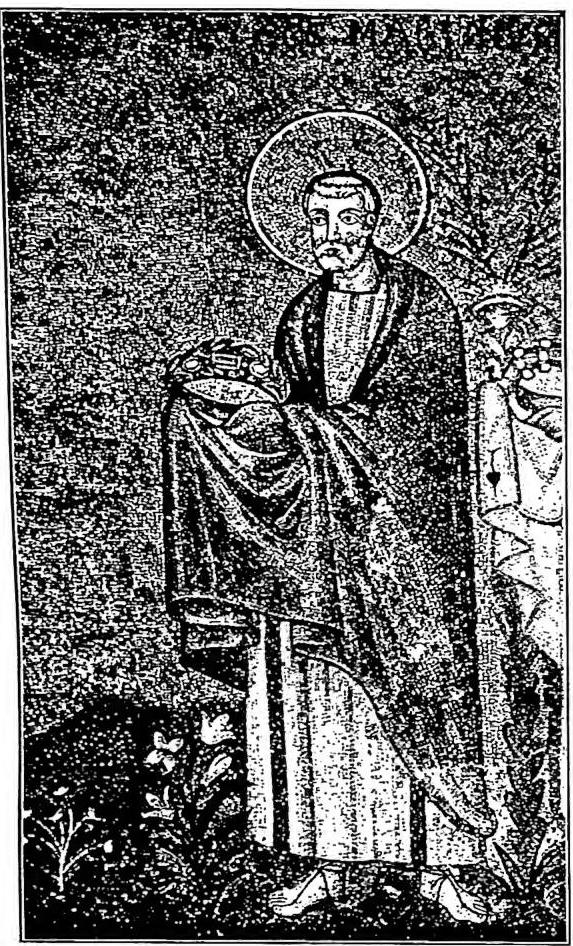
MARTINO V, POPE. — Born in Rome in 1368, died there on 20 February 1431. Constance (v.), unable to proceed with the necessary reform of the Church, resolved to proceed to the election of the Pope, an electoral commission, which, by an unusual procedure, included, alongside the 23 cardinals, six prelates or doctors for each of the five nations, elected as pontiff on 11 November 1417, the feast day of St. Martin, the cardinal deacon Oddone Colonna, of the noble Roman family. An expert in canon law, created a cardinal by Innocenzo VII on 12 June 1405, Colonna had taken part in the Council of Pisa (1409) and in the election of Alessandro V and subsequently of Giovanni XXIII; at Constance he had been among the supporters of the superiority of the Council over the Pope.
But, having ascended to the pontificate, M. sought to restore the authority of the head of the Church in both the spiritual and temporal spheres: on 26 February 1418 he promulgated new regulations for the Papal Chancery, re-establishing
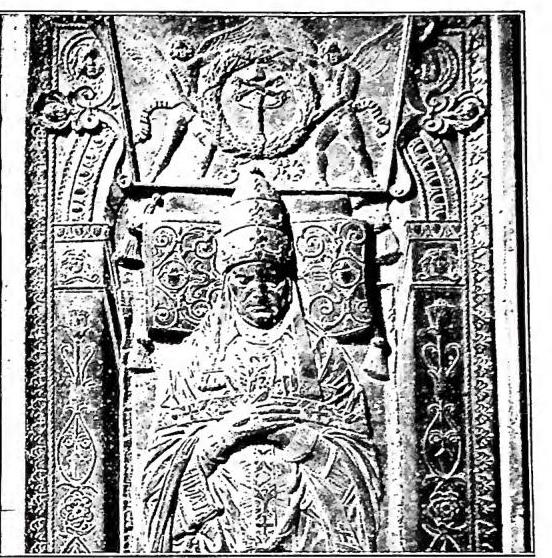
MARTINO V, PAPA — Detail of the bronze monument of M. V. Work of Simone Ghini (1433) — Rome, Basilica of S. Giovanni in Laterano, formerly in the Colonna Chapel, now in the Confession.
in part the rights of the Holy See in the collation of benefices, without, however, entirely abolishing abuses; and, although he was compelled to conclude with the nations concordats that limited papal power to the advantage of cathedral chapters and monasteries, he also took care that, except in the case of England, they should be temporary, thereby making them somewhat more favourable to the Holy See. He orally ratified the Council’s deliberations, provided that they had been adopted « in materia fidei » and « conciliariere » (22 April 1418). He then dissolved it (22 April 1418), and in a constitution that was not published (10 June 1418), forbade appeals from the Pope, « supreme judge », to the Council.
Having meanwhile departed from Constance on 16 May 1418, he made a long stay in Mantua and Florence in order to prepare the way for his return to Rome, where he re-entered in triumph on 30 September 1420. After difficult negotiations with Alfonso V d’Aragona, he obtained (1429) the resignation of the antipope Clemente VIII and brought the schism to an end. Although, because of his experience of it, he abhorred « in immensum nomen concilii », in obedience to the decrees of the Council of Constance he convened the new Council at Pavia within the prescribed five years (22 September 1423); but he soon had to transfer it, because of the plague, to Siena, with few and divided prelates, and had it dissolved by his legates (1424). At the insistence of the conciliar party, he reconvened it at Basel for 1 February 1431, assigning the legate a latere in Germany, Cardinal Giuliano Cesarini, the task of presiding over it, with authority, if necessary, to transfer and dissolve it; he died before its official opening.
He made largely good use of the increased authority of the papacy: he created worthy cardinals, among them Capranica, Cesarini, and Albergati; he granted the jubilee for 1423; he had the bones of S. Monica solemnly transported to Rome; he vindicated S. Bernardino di Siena against the accusations of his adversaries, approving the cult, introduced by him, of the Holy Name of Jesus (1427). He was lenient toward the Jews, forbidding violent preaching against them and the baptism of their children under twelve years of age without the consent of the parents or the request of the grandfather. But he lacked either the will or the strength to carry out the hoped-for radical reform: a bull of 16 June 1425 and other decrees were insufficient to correct avarice and corruption in the Curia.