Machine translation of the 1948–1954 Italian original. The original text is authoritative.
ALBERGATI, NICCOLÒ, blessed. – Cardinal, born in Bologna in 1375 to Pier Nicola, of a noble local family; died in Siena on 9 May 1443. In 1395, after having enrolled at the University, he embraced the Carthusian religious life at S. Girolamo di Casara, where he became a priest in June 1404. Elected prior of the same charterhouse in his native city in 1407, in 1412 he became visitor of the monasteries of Italy and worked for the reunification of the Order under a single obedience. On 4 January 1417, by acclamation of the Council of the Six Hundred and
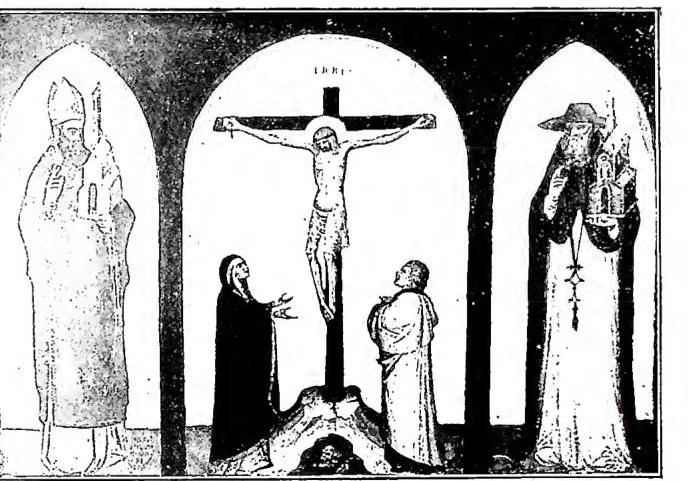
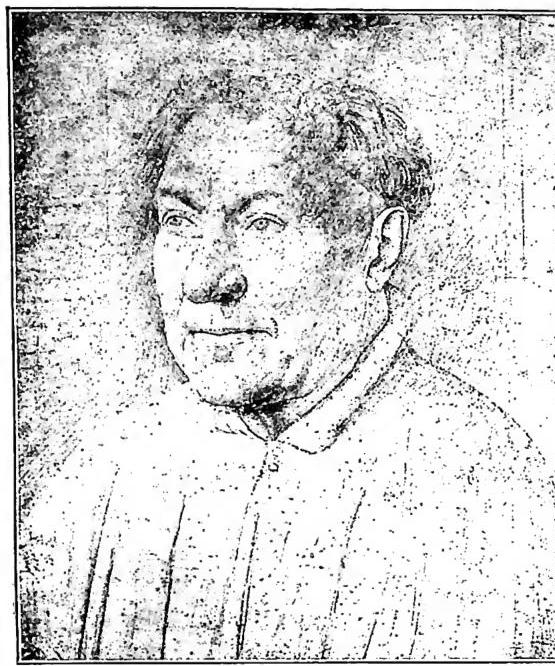
ALBERGATI, NICCOLÒ, blessed — Drawing from life by Giovanni van Eyck — Dresden, Museum. (property of B. Deprahart) ALBEREGNO, JACOBELLO — Triptych (late 14th century) — Accademia of Venice.In the diocese he vigorously undertook the reform of the clergy and the people, and induced the Comune to restore the episcopal lands of Cento and della Pieve. Entrusted by his fellow citizens with negotiating with the Pontiff concerning the political status of Bologna in relation to the Holy See, he obtained agreed capitulations, by which the rights and privileges of the Comune were determined in exchange for recognition of papal sovereignty (Jan.–Feb. 1419). When the city rebelled in 1420, the bishop intervened once more to restore obedience, which nevertheless was not re-established except by force of arms (July 1420). In 1422, as «a latere» legate, he was sent by Martin V to France to conduct peace negotiations between that nation and England, which had been at war for many years; he devoted himself to this mission until Feb. 1423. In May 1426 he was appointed cardinal of the title of Santa Croce in Gerusalemme. In September of the same year he was entrusted with another political legation, intended to secure peace in Italy by settling the disagreements among the Milanese, Venetians, and Florentines; and he achieved this aim, through numerous journeys and negotiations, persuading the belligerents to reach a settlement (May 1428). Having returned to Bologna, he attempted in vain to avert a new revolutionary movement, which in fact broke out on 1 August 1428; when the papal governor, Cardinal Aleman, was imprisoned, he himself was forced to leave the city. He returned in September 1429, but departed from it again not long afterward. He was then appointed papal legate (Jan. 1431) to negotiate Bologna’s agreement with the Church and settle new disputes between the Venetians on one side and the Visconti on the other. Eugene IV, who succeeded Martin V in March 1431, confirmed him in that mission; which, however, was interrupted by another. In July 1431, in fact, he was sent once again to France to resume negotiations between the French and the English. He had repeated meetings with Charles VII of France and Henry VI of England and with their ambassadors, and arranged subsequent peace congresses at Auxerre, Seine-Port, and Corbeille; but his efforts, which continued for two years, were not crowned with success. By order of the Pope he then left France and went to the Council of Basel, to assume its presidency in the name of the Apostolic See (Sept. 1433): before that turbulent assembly, A. courageously defended the rights of the Roman Pontiff. Having joined Eugene IV in Florence, where the latter had withdrawn because of the rebellion of the Romans, a few months later he once again received from him the mission of legate in France, for the Congress of Arras (Aug. 1435), where the reconciliation between the two Western Christian nations was again unsuccessfully discussed. Reconciliation was instead achieved between the Duke of Burgundy and the King of France, chiefly through A.’s merit. Having returned to Florence, he was shortly afterward invested with a new legation to the Council of Basel; but, despite the efforts he made there (Apr.–May 1436), he could not overcome the obstinacy of the council members, who persisted in their anti-Roman resistance.
In this harsh doctrinal struggle, he continued to assist Eugene IV, who in Jan. 1438 appointed him president of the Council transferred to Ferrara; and the victory won there by the doctrine of primacy is attributed in large measure to his labors. After one final mission beyond the Alps, to preside over the diet of the German princes at Nuremberg (Oct. 1438), he returned to Florence, the council’s new seat. From there, in March 1443, he set out for Rome, accompanying Eugene IV on his return journey; but, upon reaching Siena, he was struck by the final attack of the stone disease from which he suffered. He died there shortly afterward, bringing to a holy close his austere and laborious life, spent entirely in the apostolic ministry and in faithful service to the Holy See. The Supreme Pontiff himself wished to attend the solemn funeral. The body was taken to Florence and buried in the charterhouse of Monte Acuto. A. enjoyed a widespread reputation for holiness among his contemporaries; but the proceedings instituted in 1651–52 did not, for reasons beyond their control, reach completion. Resumed through the diligence of the Bolognese Benedict XIV, they led to his beatification on 25 Sept. 1744.
BIBL.: P. De Tóth. Il b. card. Nicola A. e i suoi tempi, 2 vols., Acquapendente 1934 (a work of sound information); G. Hofmann, Per il V centenario della morte del beato Niccolò A., in L'Oriente Cristiane e l'Unità della Chiesa, (by various authors). Rome 1943, pp. 50–63; id., in La Civiltà Cattolica, (1944, 1), pp. 337–47. Nello Vian
Cite this article
“ALBERGATI, NICCOLÒ, BEATO.” Enciclopedia Cattolica, vol. I (1948), p. 407. Azione Romana digital edition, https://azioneromana.com/article/albergati-niccolo-beato.