
EBREI. - The people descended from Abramo and Giacobbe, chosen by God through a particular “covenant,” in preparation for the economy of universal salvation. In the Israele (v.) or bānā Jīrā'el (sons of Israele). Its history and language are outlined here. For religion and philosophy, V. GIUDAIEMO; for law, V. TAMMÙZ.
I. HISTORY
The name “E.” is preferred in the Hebrew Bible when Israel is placed in relation to other peoples; “Bhrim” (“E.”) is considered by some to be a gentilic name, referring to “Ebher, a descendant of Sem and remote progenitor of the Terahites, to whom the patriarch Abramo belonged. Others think of “abher,” “beyond,” people who came from beyond there (the Euphrates River). Debatable are the connections of the name “E.” with the “Aperu,” mentioned in Egyptian documents, or with the name of the Habiru of el-'Amāmah.The country which the E. called the “land of Israel” Canaan (v.); the Egyptians called it “t-n (retenu)”; the Assyrians, with reference to the Hittite conquerors, “land of the Hatti,” or, already in the Old Babylonian period, Amurru, “western region”; the Romans, Judea, later Palestine. The peoples inhabiting it did not constitute an ethnic unity. The language spoken in the region from the second millennium B.C. onward is called Canaanite.
The E. came from Chaldea, where Thare (Tērah), Abramo (v.), had been born. Thare emigrated to Haran, whence Abramo set out toward Canaan. The conquest of Canaan took place Arameans (v.) were in motion: one group of them spread along the banks of the Euphrates and toward Assyria; shortly afterward another moved toward southern Syria, where it came into conflict with the E.
Isacco (v.), son of Abramo; Giacobbe (v.), father of the 12 heads of the 12 tribes of Israel; one of these, GIUSEPPE I (v.), became high commissioner for provisions in Egypt, and there he was joined by his aged father and his brothers; they were assigned the land of Gessen (Gāfen). There the E. suffered ill-treatment, and the Lord, through Mosè (v.), brought them forth from that land. In the third month after the exodus, they encamped at Sinai Decalogue (v.) took place; the Tables of the Law were Ark (v.), which accompanied the people throughout all their wanderings. In this COREA (v.). The E. took possession of their territory by force of arms; they defeated Moab, although Balac, king of Moab, resorted Balaam (v.). Mosè, shortly before dying, concerned for the dangers that the religion of his people might encounter among idolatrous nations, repeated, on the plain of Moab before Gerico, the ancient legislation in a new act of covenant. By order of the Lord (Num. 21, 18 ff.), Giosuè (v.), son of Nun, an Ephraimite, was chosen as Mosè’s successor; together with Caleb, he was the only survivor of the desert generation; under him the war of conquest continued, until the complete defeat of Israel’s enemies (cf. Iude. 5: the song of Debora).
The period following that of Giosuè Judges (v.), a series of charismatic leaders called to save the people from their enemies and to conquer their territory, thus carrying out the work of God’s justice. The political organization
of this period may be compared with that of the Greek amphictyonies; the various groups found their common centre in the sacred place where the Area was. The first station of the Area was Silo (Iudic. 20, 26; I Sam. 1, 31; when this city was destroyed by the Philistines, the Area was transferred to Nob. Perhaps not all the tribes were under the same leader, so that at times there may have been two “judges” simultaneously. Judges (v.) were Othoniel, Aod (Ebdh), Samgar, Debora (v.), Gedeone, whose son sought to establish a monarchy at Sichem, Thola, Iair, Iephte (v.), Abesan, Ahialon, Abdon, Sansone (v.).
Eli (v.) Samuele (v.) belong to the times that herald the monarchical period in Israel. Samuele was at first personally opposed to the monarchical institution, insofar as it differed from the purely theocratic regime (I Sam. 8, 5.18), but he preferred to comply with the will of a portion of the people, drawn by the example of the neighbouring peoples already under monarchies; the pressure exerted by the Philistines, inhabitants of the coast, favoured the idea of concentrating the national forces in a single hand.
Saul (v.), in whom the theocratic idea and monarchy meet and clash. His failure to observe the law of the hērem (the sacred extermination of the enemy and of war booty) deprived him of the moral support of the prophet Samuele, and after the latter’s death the priestly class ranged itself against him, while on the horizon the proud figure of the young David appeared. Saul was constantly engaged in fighting the Philistines, Gelboe (v.) he sought voluntary death, unable to endure the dishonour of the defeat they had inflicted upon him and the grief caused by the extermination of his own people. David (v.) was first anointed king of the tribe of Giuda, and only later of all Israel. He then conquered Gerusalemme and transferred his residence there. He had to fight against the Philistines, the Ammonites, and the Arameans; after defeating the latter, he occupied their territory; despite this, the Aramean Razon organized guerrilla warfare and succeeded in having himself elected king of Damasco. David perfected liturgical chant and composed psalms. Conflicts over his succession bloodied the final years of his Kingdom; he had Salomone anointed king.
Salomone (v. 971-931) enjoyed a peaceful reign. He opened the country to commerce and revealed to the Hebrew mentality the interest of universal human experience; the sapiential literary genre then arose. Gerusalemme assumed the appearance of an international city and saw the Temple erected.
The division between north and south and the rise of two distinct Kingdoms were determined chiefly by two fac-
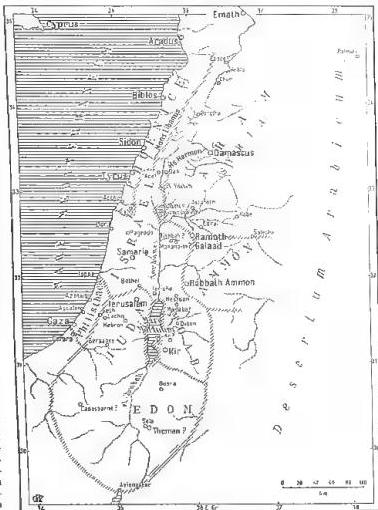
EBREI - Kingdoms of Israel and Judah in the time of Elijah (c. 860 B.C.).
took the name of the Kingdom of Israel, with its capital first at Shechem and then (under Omri) at Samaria; the Kingdom of Rehoboam was called the Kingdom of Judah, with Jerusalem as its capital. The northern Kingdom soon, for political reasons, abandoned Mosaic religion and returned to Canaanite paganism, thus losing the support of the prophets. Idolatrous infiltrations also occurred in Judah. Frequent disputes arose between the two Kingdoms, from which the enemies of both, and especially the Kingdom of Damascus, profited.
Rehoboam was succeeded by his son Abijah (917–915), and he by Asa (915–875); Jeroboam by Nadab (912–911). In Israel, after various struggles for succession, Omri (887–889) ascended the throne; he settled accounts once and for all with the Philistines, checked the invasion of the Aramaeans of Damascus, and formed an alliance with the Phoenicians, an alliance that proved beneficial to both parties. He was succeeded by Ahab (875–853), who married Jezebel, daughter of the king of Tyre. He fully introduced idolatrous worship, which
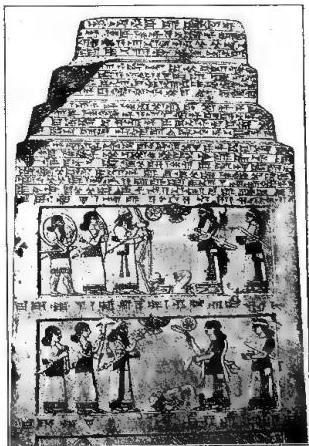
provoked Elijah (v.). Together with Jehoshaphat king of Judah (885–851), despite the warnings of the prophet Micaiah (v.), he attacked Damascus and was killed in battle. Jehoshaphat was again allied with Joram king of Israel (852–843) against Moab, and this time too with adverse fortune. The dynasty of Omri, which had established Phoenician idolatrous worship in the land of Israel, ended in a horrible massacre organized by a general named Jehu, who was anointed king by a prophet sent by Elisha (v.).
In Israel Jehu soon lost the favor of the puritan party, and under him and under his son Jehoahaz (816–
(from La Sacra Bibbia edited by the Pont. Ist. Biblico, II, I libri storici, Florence 1911, sec. 3)
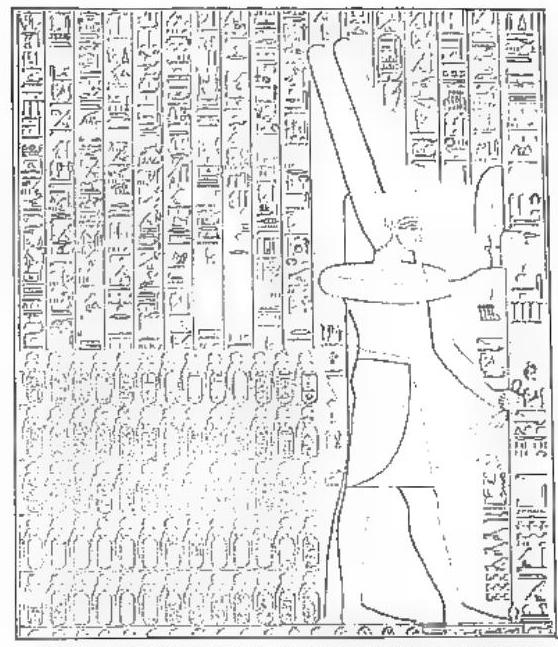
EBREI - The god Amôn presents Pharaoh Sissac (Sefank) with a group of prisoners bound by the neck, each one symbolizing a city of Palestine. Drawing of the bas-relief (9th cent. B.C.) in the temple of Amôn at Karnak (Thebes).
800) the Kingdom of Israel saw very sorrowful times. The kings of Damascus, Hezzel and Benhadad, inflicted serious defeats upon it, unleashing against it also the Ammonites, Moabites, Idumeans, Philistines, and Tyrians, who plundered a large part of the country; the king of Judah likewise saw Jerusalem in danger and purchased the enemy’s withdrawal with gold. Finally, Assyria came to the aid of the E., and the Aramaeans of Damascus were forced to return much of the occupied territory. Israel and Judah breathed freely under Assyrian protection.
After Ioachaz died in Israel, Ioas was elected king (800-785); he broke off good relations with Judah and, during the reign of Amasia (798-780), son of Ioas of Judah, entered Jerusalem and stripped the temple of its treasures.
From the reign of Ozia of Judah (780-740) and Ieroboam II in Israel (785-745), a half-century of peace began. The great powers, Assyria and Egypt, were in a period of reorganization that presaged a great revival. Damascus was weakening under repeated Assyrian blows. The period of peace brought great prosperity, culture spread, luxury increased, and wealth was unequally distributed, which provoked CAMOS (v.), Osea (v.), Isaia (v.).
In Judah the scene is now dominated by the prophet Isaia (v.). The pious king Ezechia (720-692) sought to centralize worship in Jerusalem and purify it of idolatrous elements; contrary to Isaia’s counsels, he allowed himself to be drawn in by the anti-Assyrian party, so that Judah saw Sennacherib’s army come against II. Sennacherib had already defeated the Phoenician cities from Sidon to Acre, while Ammon, Edom, and Moab were suing him for peace. Having surrounded Jerusalem with a siege, Sennacherib suddenly withdrew through the agency of a destroying angel (II Reg. 19, 35). Judah nevertheless remained subject to Assyria. Despite this, Nahum (v.) and Sophonias (v.) foresaw the end of Nineveh: Egypt, which had been forced to abandon Memphis (671) and Thebes (666) to the victor, was rebelling, while Assyria was engaged in Elam and threatened by the Medes. Nineveh fell in 612 under the blows of the Babylonians, Scythians, and Medes.
The Egyptian danger then rose before Judah. The pious king Isaia (d. 609) completed the reforms begun by Ezechia and abolished by his successor Manasse (629-638); among the supporters of the restoration of pure Mosaic religion was Jeremiah. Isaia was mortally wounded at Mageddo, in the battle in which the Jews who attempted to oppose the advance of the Egyptians were defeated. The Egyptian danger, however, was short-lived: after the Egyptians were defeated at Charcamis (605) by the Babylonian king Nabuchodonosor and the Medes, the Babylonian danger arose instead. The policy of Judea oscillated between the two opposing poles: Babylon and Egypt. In 598 the pro-Egyptian party prevailed, but Nabuchodonosor himself appeared beneath the walls of Jerusalem; King Ioakim surrendered immediately. In 597 the first deportation to Babylon took place; among
(from La Sacra Bibbia edited by the Pont. Ist. Biblico, II, I libri storici, Florence 1911, sec. 3)
EBREI - Iohu, king of Israel, pays homage to Salmanassar III. Drawing of a detail of the obelisk of Salmanassar III (9th cent. B.C.).
among Ezechiele (v.). Nabuchodonosor placed King Sedeccia on the throne of Judah. Despite the warnings of Geremia, he allowed himself to be drawn into a coalition of states (Edom, Ammon, Moab, Tyre, and Sidon) against Babylon, and then came the end: in 587 Jerusalem was destroyed, the sacred vessels were carried away, and the Temple was burned. The Babylonian general who had led the campaign formed a community with the Jews who had been supporters of Babylon; some Israelites from the northern Kingdom joined them. The governor of this community was Godolis (v.). But the king of Ammon had Godolis assassinated, and the population—among them Geremia—then took refuge in Egypt, where Jewish colonies, established for commercial reasons, had existed since the time of Solomon.
In 539 CIPRO (v.) seized Babylon and granted the E. freedom to return to their homeland. The territory assigned to them was very small: it included Jerusalem and its environs as far as Maspha and Jericho to the north, and Ceila, Bethsur, and Thecus to the south. At the head of the E. was a governor, assisted by a council of elders.
Zorobabel (v.), the second governor after the return, was urged by the prophet Aggeo to rebuild the Tem-
ple and to remain ready to assume royal dignity, while the prophet Zaccaria advised the election of two leaders. The reconstruction of the Temple began in 520 and was completed in 515. The conditions of the restored community, however, were very wretched: poor harvests, locust invasions, and burdensome taxes impoverished the country, while Edom, Ammon, and the Samaritans, who inhabited the northern Kingdom, viewed it with hostility. The community of Esdra (v.), who arrived in Jerusalem in 458. What struck him most was the great number of mixed marriages, and these were abolished. The measure aroused especially strong resentment among the Samaritans. Esdra, fearing some attack, then decided to rebuild the walls; but the governor of Samaria denounced him to the Persian government, which ordered the destruction of whatever had been built. Neemia (v.) then asked to be sent to Jerusalem as governor (445). He urged the rebuilding of the walls and, together with Esdra, worked so that the Török might truly enter into the practice of everyday life and that worship might be purified.
was placed on the altar of Jerusalem, and the temple of M. Garizim was dedicated to Jupiter.
The Hellenizing party took refuge in a quietist attitude, while active resistance was supported by Giuda Maccabeo, one of the five sons of Mattatia l'Asmoneo. Giuda organized the struggle and succeeded in occupying the Temple hill, which he found in deplorable condition; on 25 Aislew 165 its rededication (v.) took place. The governor Lisia, in agreement with the young prince Antioco V (Eupatore), granted religious freedom. The struggle did not therefore cease: the Idumeans joined forces with the Hellenizing party, while the Nabataeans sided with Giuda; the Ammonites were preparing to exterminate those Jews who had gathered in the fortress of Ramoth-Galaad; but Simone Mac-
(from La Sacra Bibbia edited by the Pont. Ist. Biblico, II, I libri storici, Florence 1917, inv. 5)
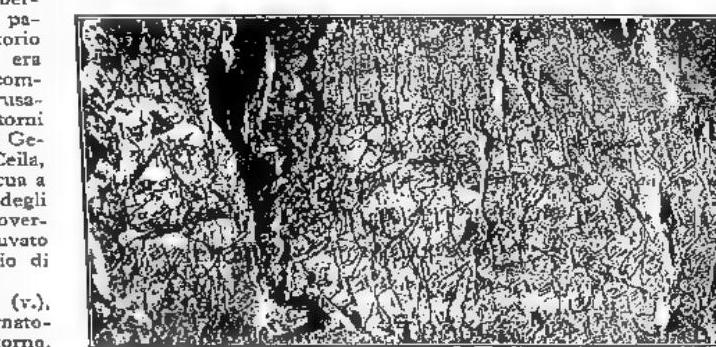
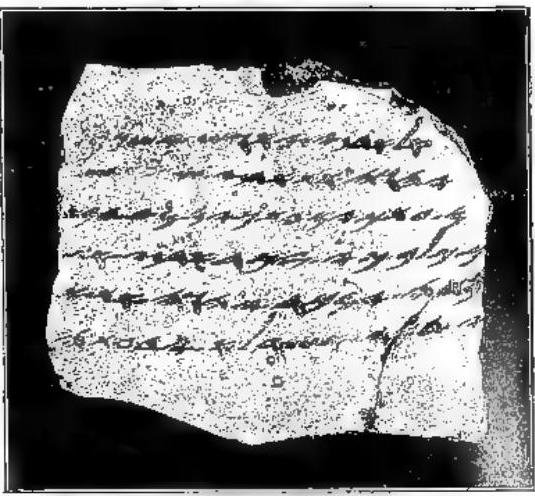
EBREI - Hebrew inscription of the Siloam channel (ca. 700 B.C.).
cabeus was achieving successes in Galilee. In 163 Lysias resumed the war against Judas, and Eleazar, the fourth of the Maccabees, died in battle; but in 162 Lysias and his royal ward had to make way for Demetrius I, son of Seleucus IV. The latter continued the war against Judas, but his general Nicanor was defeated. Judaea was recognized as a nation by Rome; despite this, Demetrius resumed the war with favorable results, and Judas Maccabaeus met his death in battle. The Jewish nationalists rallied around Jonathan, the youngest of the Hasmoneans, Alexander I Balas (v.), claimant to the throne against Demetrius. In Syria the discontented people went over to Trypho, an officer of the king; he was at first Jonathan’s friend, but, becoming jealous, treacherously took him prisoner and killed him. The last of the brothers, Simon, entered into negotiations with Demetrius, the legitimate king of Syria, who granted him independence (142). He was appointed prince, general, and high priest for life. He renewed the treaty of friendship with Rome, and his reign was a happy period for the people. But soon the king of Syria changed his policy and war broke out again; Simon was treacherously killed (135), together with his wife and sons, through the agency of the general Ptolemy (v. MACCABEI). From 135 to 63 B.C., Palestine was governed by the Hasmonean dynasty (v.): John Hyrcanus I (134–104), Aristobulus I (104–103), Alexander Jannaeus (103–76), Alexandra Salome (76–67), Aristobulus II (67–63). In 63 Pompey subjected Judaea to Rome. Through the cunning machinations of Antipater (“Idumaean”), his son Herod the Great (35–4 B.C.) obtained the royal power granted him by the Romans, before whom he bowed servilely, carrying out a program of Hellenistic culture that sometimes placed the Jewish conscience in an awkward position.
From as early as 722 B.C., and especially from the Babylonian exile (sixth century B.C.), Israel had been reduced to the single tribe of Judah; the Israelites therefore came to be called “Jews” (Jer. 40:11–15; 44:26; Zach. 8:23; Esch. 2:5; 3:6; 9:29, etc.; Esd. 4:12, etc.; Neh. 4:2; 5:17; 6:6, etc.; especially in I–II Mach. and in the New Testament).
Brac. R. Kittel, Geschichte des Volkes Israel, I. Stuttgart 1932; II, ibid. 1928; III, 1–2, ibid. 1927–29; M. L. Margolis and A. Marx, Histoire de peuple juif, Paris 1930; A. Alt, Die Staatsbildung der Isr. in Faldstine, Lopera 1930; G. Ricciotti, Storia d'Israele, I. Turin 1932; II, ibid. 1934; W. F. Albright, From the stone age to christianity, Baltimore 1940; id., Archeology and religion of Israel, 2nd ed., ibid. 1946; B. Jacob, La tradition historique en Israël, Montpellier 1946; A. Dupont-Sommer, Les Avandens, Paris 1949.
With the death of Herod the Great, Rome’s authority over the E. was exercised through procurators (v.) and also through Herod’s various descendants (v. II).
At the rise of Christianity, Pharisees (v.) and the leaders of the people (v. SADDUCEI), on the one hand, and Jesus’ teaching, on the other, chiefly regarding the interpretation of the messianic hope (v. MESSIA) law (v.) of Moses. The Apostles, and especially St. Paul, brought the process of separation between Christianity and Judaism to completion through the exclusion of circumcision and the law Gentiles (v.); this process was begun by Peter (v. CENTURIONE), then Jerusalem (v.), and defended by St. Judaizers (v.), especially in Galatians (v.).
From 66 to 70 the Jewish war took place, marking the end of the political unity of the E., unless one wishes to extend it to the messianic uprising of Bar Kokhēbhā' (v.). The fall of the sole Temple of Jerusalem in the year 70 entailed the cessation of the priesthood and of worship. The study of the law, however, already honored after the Babylonian exile by the scribes (v.), continued to flourish; in the synagogues (v.) this study found its center. Since after 70 the entire people had fallen into dispersion, diaspora (v.), the synagogue, with its reading and study of the law, became the sole visible religious bond among the E. The era of the rabbis (“teachers”) began. The principal initiators of Israel’s new spiritual phase were R. Jōhānān ben Zakkaj, R. 'Aqibā', and the tannaim (v.). The fruit of the tannaim’s work is the Miānāh (v.), compiled by R. Jēhādhāh, the Holy One, which presents chiefly, by citing the teachers, the legal doctrine (hālāhāh, v.), whereas the moral and hortatory section is gathered in the midhrāfīm (v. MIDHRĀS). The commentaries on the Miānāh text by later teachers (third–fifth centuries), called amoraim (v.), constitute the gēmārā'; the union of the gēmārā' with the MiānāTalmud (v.).
Once the “generations” of the western and eastern amoraim had come to an end, saboreans (v.), while the Masoretes carried out critical work on the biblical text. From the eighth century onward, the succession of the gē'ānīm was established; they guided the E. culturally and socially amid the Arab world. Of the greatest importance was Moses Maimonides (v. 1135–1204), who resolved the religious doubts that had arisen through Jewish-Arab philosophical speculation and formulated the thirteen articles of faith ('iṣqārīm). More important for the life of the people than the great exegetes were the “decisors.” A synthetic collection of the ritual and legal tradition of the preceding centuries was provided in the fifteenth century by the Šulḥān 'ārūkī of Jōsēph Caro.
From the flourishing period of their activity under the Umayyad caliphs of Córdoba, and especially under 'Abd ar-Raḥmān III, the E. came to be divided into two groups: the sēphardhīm and the 'aṣbēnācīm (v. AŠKENAZ), with certain traditions of their own in rites and customs.
Currents opposed to the Pharisaic-rabbinic tradition emerged with the Karaites, who established themselves even among the Khazars, whose king converted to Judaism in 1140. They also produced distinguished exegetes.
The origins of the Kabbalah (v.), which became prominent in the Middle Ages, seem to be even more ancient. In the sixteenth century Isaac Luria gave it new vigor, which manifested itself, among other things, in the various messianic outbreaks of David Rā'ābhēnī, Sabbēthaj Ṣābhī, and Franck.
With Moses Mendelssohn, the “liberal” tendency within the E. was openly inaugurated; they began to emerge from their traditional isolation and tended to assimilate themselves with the Gentiles. At the same time, however, the opposite tendency of the hārīdhīm became established, especially in the communities of Eastern Europe. Emancipation, officially granted to the E. in 1791 during the French Revolution, favored assimilation and consequently liberalism and modernism. Modern or liberal Jews follow the traditions of their people from a more national than doctrinal standpoint. One might also Zionism (v.), though this has been reduced today by the establishment of the State of Israel, which remedies, at least symbolically, the gālīth.
Antonino Romeo
II. LANGUAGE
Represented, before the Christian era, first by the Bible and by rare extrabiblical texts, the Hebrew language is not exhausted by Biblical Hebrew. Indeed, Biblical Hebrew, that is, the body of Hebrew texts that have come down to us in the Masoretic Bible, represents only one stage of this language, owing to a linguistic “planning” to which the biblical texts were subjected over the centuries up to the time of the Masoretes (v. MASORA E MASORETI, secc. VIII-X d. C).It was a curious opinion among rabbis and some Fathers of the Church that the Hebrew language was the language of primitive humanity; the other languages were supposedly derived from II. Today, however, it is known that Hebrew has its place within the Western Semitic branch; it is the development of the Canaanite language spoken by the Semites (?) who occupied Palestine before the E.
The earliest Canaan (v.) are known from the so-called Canaanite glosses contained in the letters of el-'Amārnah, from the abundant linguistic materials discovered at Rās Samrah, from other Phoenician inscriptions, and from the great inscription recently discovered near Karatepe (though only from the 9th–8th century B.C.).
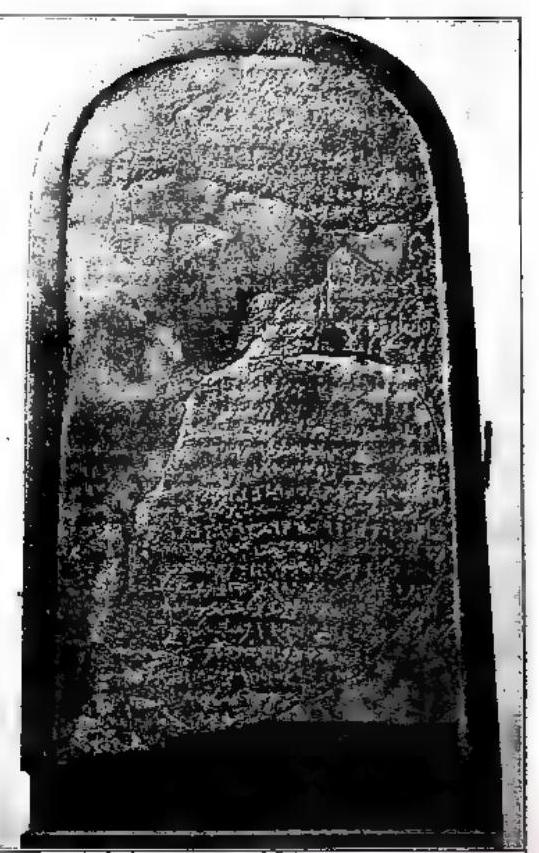
(from: La Sacra Bibbia a cura del Pont. Ist. Biblica, II, 2 libri storici, Firenze 1917, vol. 1)
EBREI - Stele of Mesa, king of Moab (9th century B.C.).
Rās Šamrah (v.) likewise provides significant indications of the stage (15th–14th centuries B.C.) of the Canaanite-Phoenician language in the pre-Israelite period. In these texts, for example, one finds a significant use of the so-called inverted tenses, which constitute such a characteristic feature of the syntax of Biblical Hebrew.
From these comparisons it may be deduced that the Hebrew language was not introduced by the E. when they occupied the land of Canaan, but already pre-existed. If one wished to formulate a hypothesis concerning the language spoken by the E. at that time, one might think of Aramaic (perhaps there is an allusion to it in Deut. 26:5, “a wandering Aramaean was my ancestor”: thus the Israelite must say when offering the first fruits to the Lord; cf. also Gen. 31:20, 24, 47) or Amorite (an eastern Canaanite dialect, known above all from the texts of Mari [v.]). It is not unknown in the history of peoples for the invading people, while suppressing the invaded people, to inherit its language. This would have happened with the E. On entering the land of Canaan, they evidently adopted, gradually, the pre-existing language and, with the contribution of their own linguistic patrimony, transformed the language of Canaan into Proto-Hebrew. This Proto-Hebrew, a typical result of a linguistic mixture, based on Canaanite (so much so that Jr. 19:18 can speak of a language of Canaan), developed during the following centuries. But there is not much material with which to follow this development. Extrabiblical texts are very few (the inscriptions of Siloam and Mesa, the Lachis letters, and other brief documents). Now, these texts, which belong more or less to the golden period of Hebrew prose (9th–6th centuries B.C.), do not show significant differences from Biblical Hebrew: this is especially true of the Lachis letters, contemporary with the prophet Jeremiah. It is established, however, that the pronunciation and vocalization were often different from those fixed by the Masoretes, and that within the same linguistic period there were dialectal differences (cf. šibbāleth and sibbāleth, Iudc. 12:6; in the north the relative pronoun was fe-, whereas in the south it was 'āfer).
Among the characteristics of this language, at least the following should be noted: 1) in phonetics, a long Proto-Semitic ā is rendered in Hebrew by a long o (Arabic salām = Heb. šālām); 2) in morphology, the masculine plural ending is -šm (whereas in Aramaic and Arabic, and even on the stele of Mesa, it is -šn); 3) in syntax, the classical use of the “inverted tenses,” whereby a narrative of past events begins with a so-called perfect and continues with verbal forms that outwardly are futures, while their meaning is that of a perfect; conversely, in narrating a future event, one begins with a future or continues with an apparent perfect.
The spoken Hebrew language suffered a mortal blow from the events of the Babylonian exile (6th–5th centuries B.C.). Upon the return, the slow process of transition to the Aramaic language had already begun. Hebrew nevertheless remained the language of the sacred texts, read weekly in the liturgy. Around this Hebrew (which, in terms of its preservation, might be compared with the Latin of the Roman liturgy), the scribes, and later the rabbis in the Christian era, devoted all their care. The “planning”—that is, the conscious or unconscious linguistic adaptation of the texts, especially the oldest ones, to current usage—had its final and definitive act in the vocalic pointing carried out by the Masoretes (v.). Masoretic vocalization possesses very great authority, but represents only one branch of the linguistic tradition, the Tiberian one. It is known that other traditions also existed: the Babylonian, with its own system of vocalic pointing, and the Palestinian; witnesses to different traditions are likewise the Greek version of the Septuagint (in the transcriptions) and St. Jerome.
On noting the characteristics and degrees of linguistic planning as they emerge from the Masoretic text, one observes that, in treating the sacred text, the aim seems to have been to bring it into harmony with the speech of Jerusalem. Considering, moreover, the very long historical period over which the various books of the Bible must be arranged, one notes: 1) maximum uniformity in vocalization (and therefore maximum planning intervention); followed, in descending order of uniformity, by: 2) consonantal variations; 3) morphological variations; 4) syntactic variations; 5) lexicographical variations. For example, the construct plural of dābhār, from the Mosaic writings through the last biblical writing, is given as dābhrē; yet it is known from St. Jerome that even in his time it was dābhrē.
After Hebrew ceased to be a living language, it continued to receive the care of scholars. Works intended for the educated class were composed in a language that was to imitate the classical Hebrew of the Bible. Thus arose (perhaps still under the influence of the spoken language?) the collection of writings containing the extrabiblical religious code: the Mišnah, the Tōsephtā' (a collection of traditions not preserved in the Mišnah), and other texts. This is Rabbinic Hebrew, whose tendency is to reproduce the biblical language; but many Aramaisms, Graecisms, and Latinisms entered II. From the grammatical point of view, it is enough to recall that the inverted tenses are no longer used, that the masculine plural has the ending -šn (no longer -šm), and that a nitpa'el is formed (instead of the biblical hitpa'el).
In the Middle Ages, Rabbinic Hebrew underwent considerable development: from this long period there are valuable works by rabbis, including liturgical poems (called pējūš, from the Greek ποδῆτα), scientific treatises, and above all exegetical or philosophical works. It was during this period that Hebrew grammar and lexicography were created (v. ΗΑΠΌΗ [10th century], who discovered the law of triliterality even in Hebrew; ΟΙΜΗΗ, a family of distinguished philologists [12th century]).
From this Hebrew language, so lovingly cultivated, Neo-Hebrew finally arose.
The Zionist movement, which has now led to the establishment of the State of Israel, had to confront the question of a common language to be imposed upon the E. who had “come up” (the expression they use to designate immigrants) from all parts of the world and who spoke different languages. And it returned to the language of the fathers: Hebrew. Since Hebrew had been a dead language for two millennia, however, it had to be adapted to the needs of modern civilization. The imposing work of a Jew from Odessa, Eliezer Ben Iebūda (1858–1922), with the extensive Thesaurus totius Hebraitatis (Berlin 1908 ff.), bent the language of the Bible to the needs of the 20th century. Thus today one can say in Hebrew “electric light,” “radio,” “aviation,” etc. In this way a new fecund period is opening for the Hebrew language, which has once again become a living language.
Hebrew literary activity is now considerable, through scientific publications (centered especially at the Hebrew University of Jerusalem) and publications of a popularizing nature in Tel Aviv.
Further reading: Introductions to Hebrew grammars of a scientific nature, especially F. Bauer–P. Leander, Historische Grammatik der hebräischen Sprache des Alten Testaments, Halle 1918, and G. Bergsträuser, Hebräische Grammatik, I, Leipzig 1918. Cf. also: W. Baumgartner, Was wir heute von der hebräischen Sprache und ihrer Geschichte trüsen, in Anthropos, 35–36 (1940–1941), pp. 305–316 (with a biblical supplement).
More accessible grammars: J. Tonnard, Grammaire hébréisme abrégée, Paris 1905, new abridged edition by A. Robert, ibid. 1949; I. Passi, Elementa grammaticae hebraicae, Turin 1909; F. Scorbo, Gramm. della lingua ebraica, Florence 1909; P. Jolion, Grammaire de l'hébreu biblique, Rome 1923, reprinted 1947 (especially useful for syntax). Concerning Hebrew literary possibilities: U. Cassuto, Storia della letteratura ebraica posibiblica, Florence 1938.