
TEBE. - City of ancient Egypt called Θῶσι by the Greeks; the Egyptian name is Wóse and later Nī'e, “the city” par excellence; in Hebrew N' is incorrectly vocalized Nō'; the versions often confuse it with “Alexandria” (cf. a. Girolamo: PG 25, 289).
It was the capital of Egypt under the XI dynasty and for long subsequent periods, so that the kings adorned it with sumptuous buildings, whose ruins still constitute (at Luxor and Karnak) the wonder of visitors, and extended its circuit until it became one of the largest cities of the ancient world. After the XXII dynasty T. became the holy city of Egypt. During the struggle between the Ethiopian king Tantamane (663-656) and Assurbanipal, it suffered immense damage; the prophet Nahum (3, 8-10), who alludes to it while preaching the imminent ruin of Nineveh, recalls this. The prophets Geremia (46, 25) and Ezechiele (29, 10) prophesy the defeat of Nechao in 605.
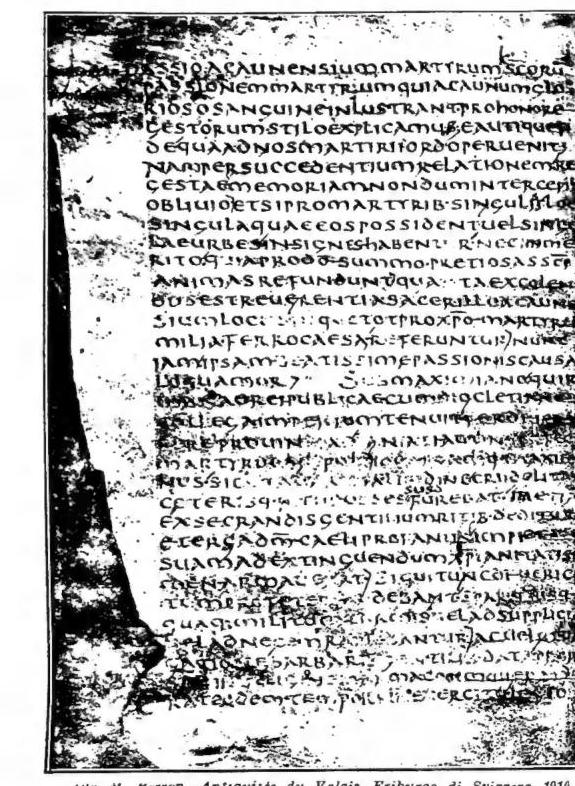
(ou. al. oseum, Antiquità du Valais, Friburgo di Svizzera 1915, fasc. 82)