
BOCCACCIO, GIOVANNI. —
I. LIFE
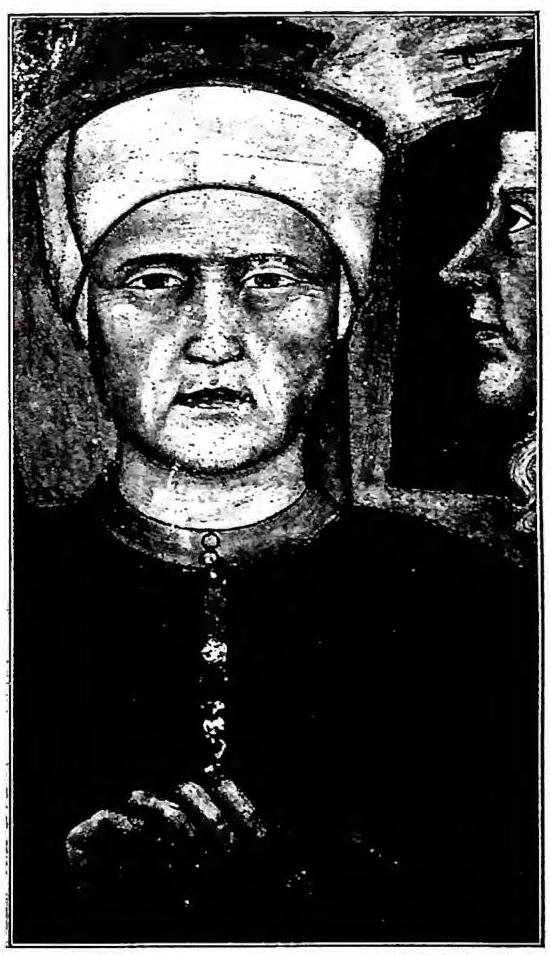
Until quite recently, biographers, following the example of many purported autobiographical pages, had made B.’s life, at least up to about his thirtieth year, a somewhat fabulous one, combining true events with events that later proved to be imaginary. Thus, it was believed that he had been born in Paris to a Giovanna of royal lineage (called by some De La Roche, on the strength of the subscription B. appended to one of his letters in the Neapolitan dialect); it was also believed that, brought to Florence by his father at a very early age, he had known not the affection of his mother, abandoned by his father in France, but the hostility of a stepmother, Margherita de’ Mardoli, and later also of a half-brother, Francesco; and it seemed certain that he had been sent to Naples to engage in commerce while still very young (in 1323 according to Della Torre, in 1325 according to Torraca, or in 1328 according to Hauvette), and it was said that in Naples, as the years passed, he—a bastard, but of royal and French blood on his mother’s side—had fallen in love with a young woman who, like him, was a bastard, but, like him, of royal and French blood on her father’s side: Maria de’ Conti d’Aquino, natural daughter of King Roberto d’Angiò, wife of a nobleman at court, the Fiammetta celebrated in verse and prose, in fanciful tales of love and suffering, beautiful, seductive, and finally also faithless, despite all the protests and entreaties addressed to her by the enamoured poet. But it has now been persuasively demonstrated that such information is characteristic of an entire illustrious literary tradition, by which B., perhaps already by nature eager for distinction and nobility, was ultimately overcome. Thus the more reliable facts ofhis youth are reduced to these few: the illegitimacy of his birth, even if he was not born in Paris but in Tuscany, perhaps in Certaldo rather than Florence; the year of his birth, 1313; his name, which came to him from his paternal uncle; his father, Boccaccio di Chelino, of Certaldo in the Val d’Elsa, a merchant by profession; the name of his stepmother and half-brothers, Michele, Iacopo, Minacoda, a Donato (?) and perhaps a Francesco who died prematurely; his journey to Naples (though not at the age of ten) and his practice of commerce (until 1330?) followed by the study of canon law (until 1336?); his attendance at the Neapolitan court and his friendship with people of high society, or with learned men, such as Andalone del Negro, an extremely expert astronomer, and Paolo Perugino, the king’s librarian and a lover of the classics and mythology; his farewell, around 1340, to the unforgettable city that had offered him, in the springtime of life, an unrepeatable flowering of joys, perhaps also disturbed by much suffering in love, but certainly so in art, since at Naples he had tested his abilities and received full praise as a poet. After leaving Naples and settling in Tuscany, between Florence and Certaldo, he continued his studies and works, and continued to love; he alternated art and love with journeys undertaken on his own initiative and with assignments offered by others. In 1346 he was in Ravenna with Ostasio da Polenta, and in 1347–48 in Forlì with Francesco degli Ordelaffi; in 1350 he went as Florence’s ambassador to Romagna, and from there returned to Ravenna to deliver, on behalf of the Compagnia di Or S. Michele, ten gold florins to Sister Beatrice, the daughter of Dante Alighieri; that same year he had the good fortune to meet Petrarch in person. In 1351 he was among the Camerlenghi of the Comune of Florence; and from Florence he was sent first to Naples to negotiate the purchase of Prato, then to Tyrol, to Lodovico di Baviera, in order to win him as an ally against Milan; and finally to Padua, to Petrarch, to announce the restitution of his property and offer him a chair at the Florentine Studium. In 1353 he was again in Ravenna; in 1354 he twice served as Florence’s ambassador to Innocent VI at Avignon; in 1355 he was called to join the Ufficio di Condotta, and in 1359 he met Petrarch again in Milan. In 1362 he allowed himself to be enticed by an invitation to Naples from Francesco Nelli, «spenditore», and Niccolò Acciaioli, «gran siniscalco» of that court; but he fared badly both in Naples and at Tripergoli, near Baia, and once again departed disappointed; he nevertheless found comfort from Petrarch in Venice in 1363, and from Venice withdrew to his native Certaldo. But in 1365 and 1367 Florence once again sent him as ambassador to Urban V, first at Avignon and then at Rome; in 1367 he was also in Venice to meet Petrarch, but did not find him, and instead received the most affectionate welcome from the poet’s daughter, Francesca, his son-in-law, Francescuolo da Brossano, and his little granddaughter Eletta, who reminded him of his own daughter Violante, herself illegitimate and tenderly loved by him, and later always painfully mourned after her premature death. In the autumn of 1370 he allowed himself to be attracted to Naples once more; from there he was to move on to Calabria as the guest of an old friend of his, Niccolò da Montefalcone, who at that time had been appointed abbot of S. Stefano in Calabria. But the latter, after making the offer, had regretted it and had slipped away quietly, taking with him, moreover, a notebook of Tacitus lent to him by B. And B., disappointed once again, refused every other offer, including that of Ugo, count of S. Severino, made in his own name and in that of Queen Giovanna, that of Giacomo di Maiorca, the queen’s husband, and that of Niccolò Orsini, count palatine; and in the spring of 1371 he withdrew once more to Tuscany, perhaps indeed to Certaldo, from which he did not leave again except for approximately one year, when he was summoned to Florence in October 1373 to read the Commedia of Alighieri in S. Stefano di Badia; and he died at Certaldo on 21 December 1375.
He died solitary and poor, as he had been for almost his entire life, in order to preserve his freedom in the face of compromises in his relations with men and the intrigues of courts. And he died a good Christian, gradually detached from the world and from the taste for the licentious world already exalted in the Decameron; and for fifteen years (since 1360) he had been deemed worthy, though perhaps already a cleric, of an ecclesiastical benefice granting him the faculty to obtain prebends and the care of souls even in a cathedral church—something that would not have been granted had his sentiments and manner of life not been upright; and for thirteen years (since 1362) he had been increasingly thoughtful about this life and the next, following the stern and fearful admonitions that the monk Ciani had delivered to him on behalf of the Carthusian Pietro Petroni, who had recently died in the odour of sanctity, and because of which he would even have cast his masterpiece into the flames had Petrarch not succeeded in dissuading him.
11. THE WORKS
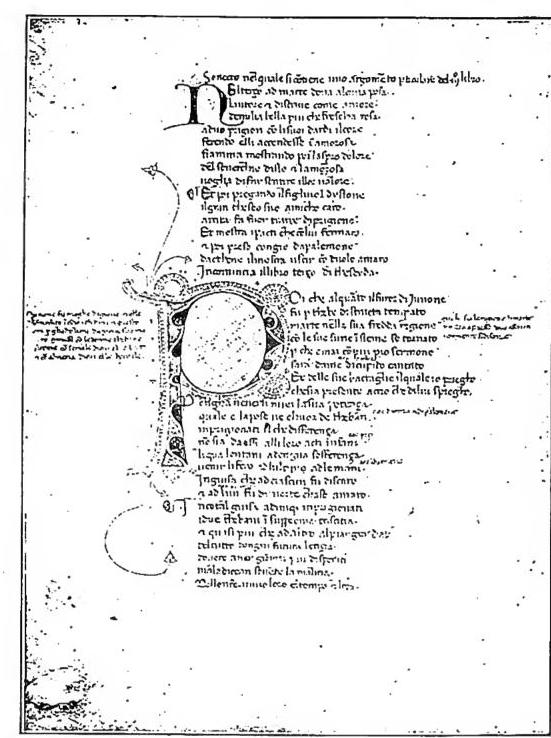
With regard to the works as well, critics, following in the footsteps of De Sanctis and Carducci, had made B. the singer of the comédie humaine, in contrast to Dante’s, which was divine, and the representative of a new age, a distant precursor of the modern and contemporary age, which for some represented the triumph of secularism and idealism together. Thus his figure and his work have been, and continue to be, either condemned in toto by some Catholics or exalted by non-Catholics, both in the name of that alleged secularist attitude and in the name of art, which, if it is true art, is always moral according to the idealists. But now more than one scholar has shown that matters are not quite so. It is entirely true that in his works of invention B. always exalted ingenuity, with a constant sympathy for those who possessed more of it, and with a consequent justification of cunning and shrewd actions, even when shameless; and it is entirely true that he often proclaims the legitimacy of love free from every law, with a constant sympathy for those who love freely and with a consequent polemic against all those who would condemn excesses and licence, and especially against religious men, who are presented with evident relish as hypocritical, self-serving, and lustful people. But just as the exaltation of free love and satire against religious men are not isolated voices in the Middle Ages and are not peculiar to B., so B. cannot be taken as the standard-bearer of an anti-medieval movement, still less as a Voltaire ante litteram, both because he possessed neither speculative qualities nor aspirations and because, instead, he experienced only moments of unbridled and unprejudiced morality; and just as the immoral and irreligious pages do not at all fill the works in question from beginning to end, but alternate with pages rich in noble and exquisite sentiments, so too B.’s condemnable attitude came to a halt and found redemption while his bodily and mental powers were still vigorous.If one then wishes to define the characteristics of B. as a writer, one must say that, in style, he aspires to give the vernacular the elegance, clarity, and harmonious architecture of the Latin and Ciceronian period; and that, in genre, he is, in works of invention as in those of erudition, the storyteller par excellence. In substance, if not in form, his works before his return to Florence—that is, until about 1340—are novellas: the first, in 18 cantos and tercets, the Caccia di Diana (c. 1336), describes a hunt conducted under Diana’s guidance by several graceful women, among whom is the woman loved by the poet; as soon as the undertaking is over, she no longer wishes to have anything to do with Diana and consecrates herself, together with her companions, to Venus; the second, the Filocolo, in 5 long prose books, recounts the initially opposed but ultimately happily concluded love of Florio, son of Felice, king of Spain, and Biancofiore, daughter of Quinto Lelio Africano, descendant of the Scipios, and Giulia Topazia, descendant of Julius Caesar, with many other tales interspersed; the third, the Filostrato (1338?), in ottava stanzas distributed among 9 parts, sings of the ill-fated love of Troilo, son of Priam, for Crisella—that is, Briseida—daughter of Calcante and a prisoner of the Trojans, frivolous and treacherous; and the fourth, the Teseida (1339–40?), in 12 books in ottava stanzas, presents the sad and undeserved amorous fortunes of Arcita, and the happy and undeserved ones of Palemone, two young Theban prisoners in love with Emilia, sister-in-law of Theseus, duke of Athens and conqueror of the Amazons and the Thebans. In each of these works, and more plainly in the Filocolo, whether through direct narratives or through the allusive experiences of the protagonists, those so-called autobiographical pages are interwoven in which episodes from B.’s life and his love affairs are presented through a skilful mixture of truth and falsehood.
Novellas, too, are the works after his return from Naples: the first, a mixture of prose and tercets, the Ameto or Commedia delle Ninfe fiorentine (1341–42), celebrates the loves of Ameto and the nymph Lia, interwoven with moralizing allegories and
Novels, finally, include the whole Decameron (c. 1348–53), the masterpiece: 100 stories told by 7 beautiful young women and 3 young men over 10 days, on the hills north of Florence, where the company had sought refuge from the plague of 1348; stories now tragic, now burlesque, now noble, now improper, now long and adventurous, now swift and concentrated in a sudden and felicitous witticism; sometimes drawn from literary sources and sometimes from oral traditions and episodes of contemporary life, but always freely reworked; and presented within a frame of refined vagueness, involving persons, settings, ornaments, and landscapes, according to a taste that first appears in the Caccia and later more extensively in the Filocolo and the Ameto. A novel, finally, is the Corbaccio (1354–1355), in which, amid visions, representations, and divine interventions, the preceding misogynistic themes are brought to a furious climax: an atrocious vengeance against a beautiful widow with whom B. is said to have fallen in love and by whom he is said to have suffered betrayal. Completed, though not all begun, after the works of imagination are those of erudition. But even the
9 books of the De casibus virovum illustrium (1355–60 and revised up to about 1374) are themselves tales and stories of fortune, with a moral purpose, concerning ancient and contemporary figures who had made poor use of prosperous circumstances; and the treatise De claris mulieribus, written immediately after the De casibus and revised up to about 1374, containing 104 biographies of women from ancient or recent times famous for their virtues or vices, has a moralizing purpose as well as one of pleasant narrative dissemination; and the 15 books De genealogis deorum gentilium (begun before 1350, completed in 1360, and subsequently revised) likewise reveal the author’s combined narrative and moralizing interest in ancient fables; and a similar interest should also be ascribed to the De montibus, silvis, fontibus, lacubus, fluminibus, stagnis seu paludibus, et de nominibus maris liber, a collection of information and tales written almost as an appendix to the De genealogis; and the numerous glosses that B. added to some of his works should likewise be attributed for the most part to the same taste and the same interest in learning about and making known the stories recounted by others, at a time when his imagination no longer possessed such a brilliant creative fervor. This, however, never entirely died out, because even the works of erudition, including the passages in which the author claims to be a direct witness, prove to be a mixture of truth and fantasy, as does the Vita di Dante itself (written in an initial and longer version between 1337 and 1362 and then recast in a shorter and more effective form), if not also some part of the Comento alla Commedia (which reaches the beginning of canto XVII of the Inferno).
Among the other works, besides the Argomenti, in terza rima, and the Rubriche, in prose, of the Divina Commedia; and the 24 surviving Epistole, some of them fragmentary and two translated into the vernacular, of some stylistic interest and no more; and besides the other minor Latin and vernacular writings, including 155 certain Rime and 12 uncertain ones, we should recall the Buccolicum carmen, 15 eclogues written between 1351 and 1366. In some of them he treats subjects concerning the kingdom of Naples (III–VI) or Florence (VII and IX); in others he touches more closely upon his own life (I, II, VIII, XIV) or the Christian faith (X–XI); but alongside XIV, which laments the premature death of Violante, attention is also drawn to XII, which contains the intention, under Petrarch’s guidance, of abandoning vernacular poetry for Latin, and XV, which praises Petrarch as a teacher of virtuous and religious life; and then XIII, which demonstrates the superiority of poetry over every other earthly good, and XVI, which, together with the dedication of the work to Albanzani, expresses the sense of disheartened weariness that A. experiences when contemplating his poor life, and reaffirms faith in the ancient aspiration, the dulcis et ingens libertas. These pages, together with the others scattered throughout the works of imagination that exalt learning, intellect, and poetry, and together with those of the De genealogis or the Vita di Dante or the Comento written in defense of poetry and of his love for it, as the soul of the world and a gift from God and a means of redemption and elevation, should be kept especially in mind in order to understand the man, the poet, and also the Christian, who is moreover well represented in the epitaph that seems to have been his own and that was engraved on his tomb in the church of S. Iacopo at Certaldo: Hac sub mole iacent cineres ac ossa Johannis. / Mens sedet ante Deum, meritis ornata laborum / mortalis vitae. Genitor Boccaccius illi, / patria Certaldum, studium fuit alma poesis. – Vedi Tav. CII.
For the reception of B. and his works v.: F. Zambrini and A. Bacchi della Lega, Bibliografia boccacensa. Serie delle ediz. delle opere di G. B., latine, volgarì, tradotte e trasformate, in Propugnatore, 8 (1875); G. Traversari, Bibliografia boccacensa. I: Scritti intorno al B. e alla fortuna delle sue opere, Città di Castello 1907; V. BANCA, Linee di una storia della critica al Decameron, Milan 1939; and, as an excellent example of the reception of the Decameron, albeit limited to the first story, V. L. Fassò, Saggi e ricerche di storia letteraria, there 1947, pp. 31–90.
For the biography v.: H. Hauvette, B. Etude biographique et littéraire, Paris 1914; C. Grabher, B., Turin 1941; and, for many new corrections, G. Billanovich, Restauri boccaceschi, Rome
1945, and V. BANCA, Schemi letterari e schemi autobiografici nell'opera del B., in La bibliofilia, 40 (1947).
For an understanding of the man and the work, besides the books already cited, see: B. Croce, La novella di Andreuccio da Perugia, Bari 1911; id., Il B. e il Sacchetti, in Poesia popolare e poesia d'arte, there 1935, pp. 81–105; U. Bosco, B., Rieti 1929; A. Schiaffini, Il B., in Tradizione e poesia, Genoa 1934, pp. 243–87, and also pp. 218–42 (2nd ed., Rome 1943, pp. 167–97, and also pp. 151–166); N. Sapegno, Il B., in Il Trecento, 2nd ed., Milan 1942, pp. 276–400; A. Chiari, Polemica sul B., in Indagini e letture, Città di Castello 1946, pp. 35–87; G. Billanovich, La leggenda dantesca del B., in Prime ricerche dantesche, Rome 1947, pp. 20–86. – Among the commentaries: A. Momigliano, Quarantassone novelle commentate, Milan 1924, and L. Russo, Venticinque novelle del Decameron, Florence 1939. Alberto Chiari