
PETRARCA, FRANCESCO. -
I. LIFE
He was born in Arezzo on 20 July 1304 to ser Petraccolo di ser Parenzo and Eletta Canigiani. His was an old Florentine family with deep cultural traditions: notaries his father, grandfather, and great-grandfather; yet reduced to straitened circumstances by the exile of ser Petraccolo, whom the victorious Blacks banished from Florence on 20 October 1302, nine months after Dante’s condemnation.
(da Quarterly of Depart. of Antiquities in Palestine, 7 [1938], rev. 10) PETRA - Royal tombs.
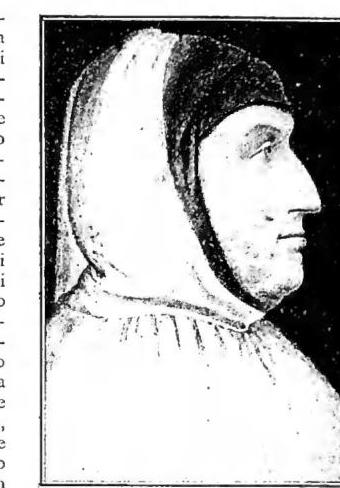
(per cortesia del dott. B. Degenhart) PETRARCA, FRANCESCO - PORTRAIT. Miniature of the 15th century, from cod. Vat. lat. 3198, f. 1°, containing in the first part works by Petrarch, with the life written by Leonardo Bruni Aretino - Vatican Library.
broad school of minds bound by shared cultural interests. This Provençal period was decisive for Petrarch’s definitive formation. First and foremost, for the amorous experience: on 6 April 1327 he met Laura in the church of S. Chiara in Avignon and was inflamed by that love which was to remain the only one of his life. The woman’s virtue soon tempered his ardour, and gradually that love faded; yet he always retained its vivid memory and regret; indeed, in it he ultimately reflected, through long yearning, his entire spiritual life. Then Petrarch could hold other women dear; but not love them. No less important were his cultural and artistic experiences: he expanded his culture both through tireless study of the books abundantly provided by the Avignonese environment and through frequent travels. Among several minor ones, two were significant, both for instruction: the first took him in 1333 to Paris, Flanders, and southern Germany; the second, in 1337, to Italy. And alongside his ever-growing and perfected culture, there developed a literary activity, in the vernacular and in Latin, through which he gradually attained that artistic maturity which may be considered achieved after his thirtieth year, as evidenced by the writings of the second half of his life—the only ones, with few exceptions, that he allowed to reach us. The year 1337 was of great weight: his visit to Rome, fundamental for the humanist Petrarch; the birth of his son Giovanni; and his residence in the sweet solitude of Valchiusa. The year 1341 inaugurated a third period in Petrarch’s life: that of alternating residences in Italy and Provence. The first residence in Italy was occasioned by the journey Petrarch undertook to receive in Rome, on the Capitoline, the laurel crown, merited by his fame as a poet and most learned man of letters (8 April 1341). For nearly a year he accepted the hospitality of Azzo da Correggio, lord of Parma, and here he came to know and cherish the secluded dwelling of Selvapiana, his Cisalpine Helicon. Then back to Provence, in a biennium dense with significance: the birth of Francesca, his second natural daughter; his brother Gherardo’s entry into the Carthusians; and signs of a spiritual crisis that led Petrarch to meditate on the vanity of the passions to which he had long yielded. Yet no decisively new orientation can be discerned in his life. He crossed the Alps again in September 1343 as the Pope’s ambassador to the court of Naples; and again he stayed long in Parma. But due to the siege laid by the Visconti, Petrarch abandoned it in February 1345 with a dramatic and perilous flight. At the end of that same year he returned to his beloved Valchiusa, where he remained tranquil and industrious for nearly two years. In 1347 he greeted with enthusiasm the news that the Roman people had risen against the nobles and elected Cola di Rienzo as tribune, and he soon seized the opportunity to return to Italy; but from Rome came reports depicting Cola differently from what he had hoped. He then went to Parma, where he held a benefice, and from 1348 served as archdeacon; but he often travelled: to Verona, Mantua, Rome, Padua, where he obtained a canonry. In 1348, in Parma, the news of Laura’s death, which had occurred on 6 April, was a new invitation to meditate on the vanity of worldly things. In 1351 he wished to revisit Valchiusa, to which he was bound by the sweetest memories, but he did not stay long. In 1353, having definitively left Provence, Petrarch accepted the invitation of Cardinal Giovanni Visconti and settled in Milan, first in a small house near S. Ambrogio, then in the monastery of S. Simpliciano outside the walls. From Giovanni and later from Bernabò and Galeazzo, Petrarch received several solemn commissions as secretary and orator: he negotiated with Genoa, Venice, the Novaresi, Emperor Charles IV, the rebel Iacopo Bussolari, and the King of France; yet he never wished to accept a clearly defined office, so jealous was he of his freedom. Petrarch remained in Milan for nine years; he left in 1361 to escape a plague, and, at the invitation of Francesco da Carrara, took refuge in Padua, where he soon received news of his son Giovanni’s death. The spread of the plague compelled him to move again. He then went to Venice and remained there for five years, honoured by the Republic’s government and comforted by the presence of his daughter Francesca, who had married Francescuolo da Brossano. After brief residences in Pavia and Padua, he chose as his final dwelling a small villa in Arquà, on the Euganean Hills. Here too, as once in Valchiusa and Selvapiana, he could live as he preferred: « fully tranquil in spirit, far from tumults, noises, and cares, continually reading and writing ». But his health was much weakened: from 1369 tertian fevers, in 1370 a severe syncope from which he never fully recovered. On the morning of 19 July 1374 his household found him dead.
G. B.
II. THE WORKS
1. In verse
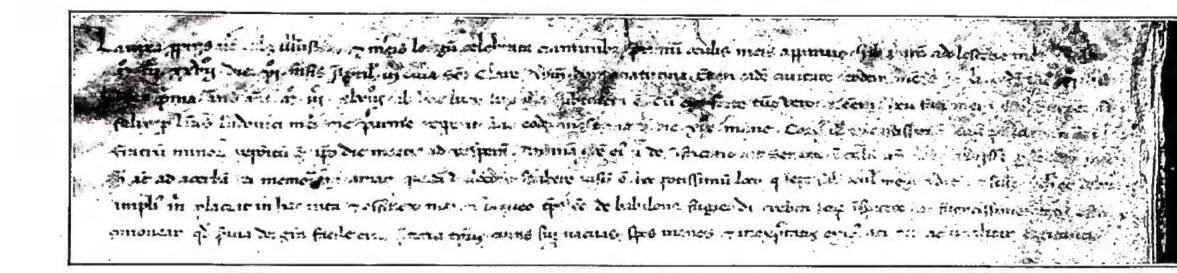
a) Rerum Vulgarum Fragmenta. This is the title Petrarch intended; however, the collection is commonly known as the Canzoniere or as Rime Sparse, derived from the first line ("Voi ch'ascoltate in rime sparse il suono"). As early as 1336, Petrarch began working on a selection of his poems; he continued to refine it intermittently throughout his life, constantly increasing the number of compositions and modifying the overall arrangement of the collection. In total, nine distinct stages can be identified, the last of which is preserved in cod. Vat. lat. 3195, partly transcribed by Giovanni Malpaghini and partly by Petrarch himself. In this final stage, which is the one reproduced in all modern editions, the collection is divided into two parts and comprises 366 compositions (317 sonnets, 29 canzoni, 9 sestinas, 7 ballads, 4 madrigals), the earliest dating from around 1330, the most recent from the poet’s final years. In pre-Petrarchan collections, it was customary to arrange poems by separating sonnets from canzoni; Petrarch, however, chose to adopt a primarily chronological criterion, though he departed from it when necessary to preserve the organic character he wished to impart to each of his works. b) Triumphi: this is a poem, also in the vernacular, divided into six parts (Triumphus Cupidinis, Pudicitie, Mortis, Fame, Temporis, Eternitatis), to which Petrarch was unable to give a definitive form. The manuscripts preserve traces of the work’s complex elaboration, attesting to multiple drafts, among which it is difficult to determine a text that reflects Petrarch’s final intentions. The poem is written in tercets in the form of a vision, following a structure that links it to Dante’s Commedia. It is not yet certain when Petrarch began its composition, but it is known that he worked on it for twenty, perhaps thirty, years, revising it repeatedly, and that he was still engaged in it just months before his death. c) Not all the poems written by Petrarch were included,PETRARCA, FRANCESCO - The autograph note by Petrarch on Laura in the Virgil known as Petrarch’s - Milan, Biblioteca Ambrosiana.
as is well known, in the Canzoniere. Admirers of the poet preserved the so-called extravaganti. d) Africa: Like the Trionfi, this poem also remained unfinished and was published posthumously by Pier Paolo Vergerio. It consists of nine books, some quite fragmentary, in hexameters, and its subject is Scipio’s campaign in Africa. The poem, in Latin, begun in 1338 or 1339, was advanced considerably before the death of Robert of Anjou (1343), to whom it was to be dedicated. Later, Petrarch worked on it repeatedly, with additions and revisions, but did not complete it, despite the insistence of friends and great expectations. e) Epystole metrice: As early as 1350, Petrarch considered compiling a collection of poems to dedicate to Marco Barbato of Sulmona; he worked on it extensively with multiple revisions over several years. However, the collection did not receive its definitive arrangement from Petrarch. It comprises 66 Latin epistles in hexameters, in three books, following a roughly chronological order. Yet, beginning with epistle III, 12, all rules cease for the remaining 22 epistles, evidently added haphazardly. Excluding verses on his mother’s death, the epistles all belong to the twenty-year period 1333-54. f) Bucolicum Carmen: These are 12 Latin eclogues, collected in their definitive transcription by Petrarch himself (cod. Vat. lat. 3358). Such compositions always concealed, as tradition required, an allegorical meaning; this is also true for these Petrarchan eclogues, though today we are not always able to discern clearly beneath the pastoral fiction. g) A few Latin poems that did not find a place in the collections begun or completed by Petrarch have been preserved by his admirers.
2. In Prose
a) Secretum meum: The subtitle De secreto conflictu curarum mearum libri tres clarifies the work’s content, which is autobiographical in nature. It is an introspective inquiry concerning the moral and religious problem, which Petrarch intended solely for himself and did not disclose. The work was composed between the autumn of 1342 and the winter of 1343. b) De vita solitaria: A treatise in two books dedicated to Philippe de Cabassoles, bishop of Cavaillon. Written in 1346, it underwent revisions and expansions much later, and its publication was delayed by two decades. The first book illustrates the advantages of a life far from the anxieties and discomforts of those who partake in worldly ambitions and disputes; the second provides examples of illustrious figures who experienced life in solitude. c) De otio religiosorum: A treatise in two books, composed in 1347 and dedicated to the Carthusians of Montrieux. It revisits the theme of the previous work but with particular reference to the contemplative life of religious. d) Psalmi penitentiales: Seven prayers consisting of prose verses. Their composition certainly predates 1347. e) Itinerarium breve de Ianua usque ad Ierusalem et Terram Sanctam: A brief guide to the lands Giovanni di Mandello was to traverse on his journey to the Holy Land. It dates from 1358. f) De viris illustribus: A major historical work left unfinished. Research by G. Martellotti (v. Linee di sviluppo dell’umanesimo petrarchesco, in Studi Petrarcheschi, 2 [1949], pp. 51-80) suggests that Petrarch initially conceived the work as a series of biographies from Romulus to Titus, and later expanded the plan to begin with Adam. Of the first design, 23 biographies remain; of the second, 12. Francesco da Carrara, to whom the work was dedicated, requested a compendium from Petrarch, but even this included only the first 14 biographies. Also unfinished and late is the extensive biography of Caesar (De gestis Cesaris), probably not intended for inclusion in De viris. g) Rerum memorandarum libri: Another historical work of vast design, also left incomplete. Petrarch had proposed to collect examples of the cardinal virtues but managed to prepare only a rough draft of a small portion: the first four books, composed between December 1343 and February 1345, when Petrarch fled besieged Parma. h) De remediis utriusque fortune: A vast manual written for anyone wishing to conduct themselves well in every circumstance of good or bad fortune. The work is dedicated to Azzo da Correggio and divided into two parts, respectively containing 122 and 132 dialogues between Reason, Joy, Hope, and between Reason, Sorrow, Fear. This moral encyclopedia offers, for every life circumstance, the example of a great figure from the past, thus inviting one to align existence with the classical ideal. Based on a testimony by Boccaccio, it is believed the work was published at the end of 1366. i) Invectiva contra quendam magni status hominem sed nullius scientie aut virtutis: This is the exact title of the brief work, long known by the erroneous title Invectiva contra quendam Gallum innominatum sed in dignitate positum. The personal enemy against whom Petrarch vents his fury is Cardinal Jean de Caraman. The invective was composed during his stay with the Visconti, between 1354 and 1359. l) Invectiva contra medicum: A work in four books of violent polemic against an unidentified physician of Pope Clement VI. More than for the venting of personal resentment, the work is notable for its defense of poetry against science and practical activities. The first book (originally a letter in which Petrarch responded to a writing by the physician) was composed in 1352; a reply from the physician provoked another lengthy response from Petrarch (books II-IV), composed in 1353. m) De sui ipsius et multorum ignorantia: In this opuscule, dedicated to Donato degli Albanzani, Petrarch reaffirms his aversion to any science that does not strictly adhere to the moral problem and reacts against blind and excessive deference to Aristotle. The occasion for the opuscule was four Venetian Averroists who had called Petrarch a good man but ignorant. Completed in 1367, De ignorantia later underwent several revisions, as attested by the two surviving autographs: Vat. lat. 3359 and Hamilt. 493. n) Epystola contra eum qui maledixit Italie: Petrarch argued, in a letter to Urban V, for the advisability of returning the Church’s seat to Rome. Friar Jean de Hesdin responded, interpreting the views of those who preferred residence in Avignon. Petrarch replied with this letter, composed in 1373 and addressed to Uguccione da Thiene, in which he extols Rome and the superiority of the Latins. Since the 16th century, the letter has been erroneously titled Apologia contra cuiusdam Galli calumnias. o) Rerum familiarium libri: A collection of 350 letters, written over four decades. The idea for such a collection arose in Petrarch as early as 1349, but its definitive arrangement was achieved only in 1366. Petrarch dedicated the collection to his friend Ludovico di Campania. p) Rerum senilium libri: A collection of letters in 17 books, dedicated to Francesco Nelli. It comprises approximately 125 epistles, written between 1361 and 1374. Death prevented Petrarch from giving the Senili the definitive arrangement that the Familiares received. q) Liber sine nomine: A collection of 19 epistles of political-religious content and harsh criticism against the Avignon curia. By making public letters in which unpleasant truths were openly stated for many, Petrarch sought to protect the recipients by omitting their names. r) About seventy letters that did not find a place in the collections prepared by Petrarch have been preserved by his admirers. These are the so-called Variae. s) Unfinished is the epistle Posteritati, in which Petrarch recounts his life up to 1351; it was probably written in 1371-72, though some consider it twenty years earlier.BIBL.:
Per le opere latine: F. Petrarca, Opera omnia, Basilea 1554; Prose, a cura di G. Martellotti, P. G. Ricci, E. Carrara, E. Bianchi, Milano-Napoli 1955; Epistole metriche, a cura di D. Rossetti, Firenze 1850; Le Familiari, a cura di V. Rossi, Firenze 1933-42; Le Senili, a cura di E. Nota, Firenze 1933-42; Le Variae, a cura di A. Foresti, Brescia 1941; Il Bucolicum carmen, a cura di A. Avena, Firenze 1906; L'Africa, a cura di N. Festa, Firenze 1926; De viris illustribus, a cura di G. Martellotti, Firenze 1964; De remediis utriusque fortune, a cura di C. Segre, Milano 1954; De vita solitaria, a cura di G. Rotondi, Città del Vaticano 1950; Secretum, a cura di E. Carrara, Firenze 1944; De otio religiosorum, a cura di G. Rotondi, Città del Vaticano 1958; De sui ipsius et multorum ignorantia, a cura di L. M. Capelli, Bologna 1906; Invectivae, a cura di P. G. Ricci, Milano 1950; Itinerarium, a cura di L. M. Capelli, Bologna 1906; Psalmi penitentiales, a cura di D. Pieraccioni, Firenze 1937; Rerum memorandarum libri, a cura di G. Billanovich, Firenze 1943. Per le opere volgari: Canzoniere, a cura di G. Contini, Torino 1964; Trionfi, a cura di M. Ariani, Milano 1988; Le Rime extravaganti, a cura di A. Solerti, Firenze 1909. Studi: G. Billanovich, Petrarca letterato, Roma 1947; E. H. Wilkins, Life of Petrarch, Chicago 1961; G. Martellotti, Linee di sviluppo dell'umanesimo petrarchesco, in Studi Petrarcheschi, 2 (1949), pp. 51-80; N. Sapegno, Il Trecento, Milano 1934; U. Bosco, Francesco Petrarca, Bari 1946; E. Carrara, La poesia pastorale del Petrarca, Torino 1930; G. Toffanin, Storia dell'umanesimo, Bologna 1950; K. Foster, Petrarch, Poet and Humanist, Edinburgh 1984.
G. GALBATTI
III. THE PERSONALITY
The lyrics of the Canzoniere are almost all of amorous subject; yet Petrarch expresses, beneath the words of love's sorrow, that broader sadness which constitutes the secret of his personality. This aligns perfectly with the literary tradition, particularly that of the stilnovisti, which advised reducing every other experience to love and woman. He was not a philosopher; and one of the traits that most distinctly sets him apart from the stilnovisti is precisely the absence of that theorizing with a scholastic background that permeates their verses. But he was a psychologist; and here, instead, the connections between Petrarch and the stilnovisti are evident: the psychological inquiry into the entire course of his own spirit constitutes the very matter of the Canzoniere. In the Secretum, Petrarch admits to having cultivated earthly passions; two above all: love for Laura and the desire for glory. Yet in him the moral sense was no less awake, and he felt keenly the problem of human destiny; all in full accordance with his sincere religious faith and with his attitude—indeed, his taste—for meditation. What pleases him on earth thus acquires, in his eyes, the character of a sinful bond, and anguished questions spontaneously arise within him, aware as he is that attachment to earthly things is irreconcilable with full devotion to God. His brother Gherardo reached that point; he did not: "I hate my sins, but I am crushed by the mountain of miseries, and it takes my breath away. Many times I have sought to flee and have thought to shake off the ancient yoke; but I have it fixed in my bones." In reality, he does not love the good as much as would be necessary to resist the allure of what is sinful. What remains for him? To prostrate himself before God, implore His aid, and tenaciously seek to free himself, striving to break one by one the many bonds that keep him tied to earth. The hope was for complete liberation, but since this does not occur, the Canzoniere remains as testimony to the conflict between the human and the divine. Such is the essential character of Petrarchan sadness; but that which arises from the never-resolved conflict intertwines and complicates itself with other veins of sadness. Consider, indeed: Petrarch's position is not that of one who, while deploring his own weakness, fully enjoys earthly things; on the contrary, he is far from finding complete satisfaction in them. To prevent this, there is in Petrarch, obsessive, the sense of life's transience. In every work of his, one may find allusions to time that flies, to our life which is a headlong rush toward death, to the world which also moves toward its inevitable end. Profound and varied are the consequences: first, a dismay that saddens his entire life, then a concern to use intensely the little time granted, and by contrast the fear of suddenly seeing disappear what is dear, and the desperate reaching out toward something that is not ephemeral. All this provokes a state of anxiety that immensely wearies Petrarch: a state of anxiety to which are linked a sense of fatigue and a desire for restful peace. Only two paths are possible: to find quiet either in the human or in the divine (and the latter has been seen to be unrealizable), or to entrust oneself to death. But not even this: in death, Petrarch sees the supreme evil of life, the seal of transience that dismays him, the definitive renunciation of that earthly happiness which in him is a powerful desire. This, in its most apparent lines, is the definition of the sentimental material of which the Canzoniere is woven, though other annotations may easily be gathered when one wishes to specify the character of Petrarchan poetry. It has often been noted in the Canzoniere the almost absolute absence of realistic details; as Mazzoni puts it, there is lacking "a closer approach of the poet to a precise reality." The explanation is not difficult. Petrarch wished to entrust to the Canzoniere those secret thoughts which are not tied to the various events of daily life, but constitute the intimate substance of spiritual life; they lie latent, but emerge in meditation when the individual is in dialogue with his own conscience. Fantasy then brings to light not the events of daily life, but another course, that which corresponds to the master lines of our personality. This is why in the Canzoniere we always see the same evanescent landscape: it is that single one which Petrarch dreamed of and which alone perfectly harmonized with his spiritual climate. The same may be said of the image of Laura: her attitudes, words, and appearance are not those of reality, but represent a figuration constantly cherished by Petrarch's imagination. And indeed, the Canzoniere expresses the longing for a deep and distant love, whose memory and regret have ended by personifying the broader sadness that lies in the very nature of the poet. What Petrarch contemplates does not exist in reality, and lives only, immutable, in his spirit. This is the reason why no difference is perceived between the lyrics of the first and second parts of the Canzoniere, which therefore cannot be considered as the history of an amorous affair; rather, as testimony that Petrarch's desires, hopes, anxieties, and sadnesses were always the same, at thirty as at sixty. An important observation, for it reveals that Petrarch's spiritual climate underwent no development, even if the arrangement of the lyrics in the Canzoniere would seem to show a progressive ascent from the human to the divine; which is confirmed by the Triumphi, which likewise manifest the intent to underscore how that "restful port" always yearned for was finally reached. Death is there at last accepted as a serene detachment from earthly things and a calm repose in eternal rest. But in the(per cortesia del prof. Pier Giorgio Ricci)
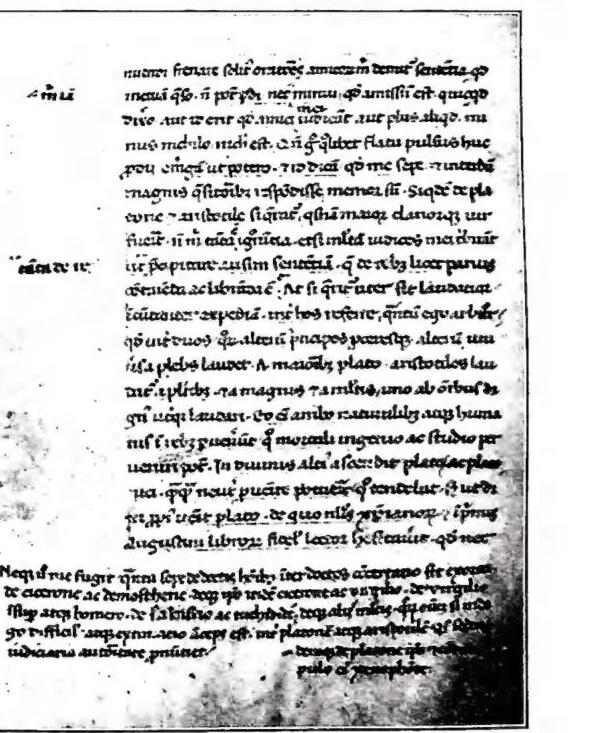
PETRARCA, FRANCESCO - Autograph. Page from the Hamilton codex 493 - Berlin, State Library.
On the other hand, it would be mistaken to seek in the Canzoniere the immediacy and anguished urgency of the spiritual problems that tormented Petrarch. What has often been noted, instead, is true: when Petrarch analyzes, judges, and engages in the literary expression of the conflict and restlessness that arise from it, he observes from above and, so to speak, masters his suffering. Thus, the passions that constitute the emotional substance of the Canzoniere are filtered through a controlled confession, characteristic of one who examines himself to rationally account for his own spiritual vicissitudes. And rightly so, for literary elaboration constitutes an aspect of this mastery over passion: the only true joy granted to Petrarch. He himself was well aware of this, as he has St. Augustine say of one of his poems in the Secretum: « Io mi dilettava della sua dolcezza e stupiva come potesse prorompere un così dolce canto di fra le procellie dell'animo ».
Petrarch’s doctrine, which sought refuge in the ancient world, deeming the time in which he lived contemptible, and the sympathy with which he approached that great past, brought an enormous quantity of material derived from classical sources into his writings. Four groups can be distinguished: there are quotations from others with explicit attribution of the source; then reminiscences: embedding in the sentence some expression from a classical author in pursuit of elegance; then derivations from others’ works subjected to profound verbal transformation; finally, and this is the group that closely concerns the vernacular poet, elements that Petrarch deeply relived and which, filtering through his taste, culture, and spiritual climate, emerge in his writings as something new and entirely Petrarchan. Thus, he endeavors to bestow upon vernacular poetry that new dignity which would place it alongside Latin. To give it regularity, composure; a flow that is not harsh or convoluted, but smooth and lucid; to select the lexicon, making it refined and harmonious; to envelop it in a new music that would have the soul of a melodious elegy. In this way, Petrarch bequeathed to the centuries the Italian poetic language, accompanied by a taste for noble and modulated expression, in an aristocratic and somewhat precious climate.
The aspiration toward an ideal world, removed from the insufficiency of concrete reality, lies at the root of Petrarchan humanism: the study of antiquity out of hatred for the present and the search for a spiritual perfection that Petrarch sees neither in himself nor around him.
In a letter to Boccaccio, Petrarch proudly asserts: « Credo che ai tempi d'oggi nessuno abbia avuto più di me tanto interesse per ciò che è antico ». Yet this is not mere antiquarian interest, but a living love for an era that he seeks to understand in spirit, restoring to it, with the warmth of his own enthusiasm, plasticity and immediacy, and clarifying its details in a pursuit that is not that of the collector or the scholar, but of one who strives to revive a lost world. Hence, his constant effort to fully possess the ancient world he loved is evident: the endeavor to adapt his Latin to ancient models; the care in subjecting the information he gathers about the classical world to critical scrutiny; the diligence in seeking to uncover lost texts. His philological activity condenses in these three directions: the three that humanism would bring to perfection.
Meanwhile, his method, the joy of discoveries, the regret for what has been lost, the disdain, annoyance, and impatience for what obstructs and harms, are in Petrarch the same as in the generations that inherited his humanistic legacy. Not only that: but everywhere he seeks those who might support him. His dense network of friendships allows him to create a school: he, the master, with many enthusiastic disciples, among whom the greatest: Boccaccio. Petrarch’s friendship with the Certaldese thus constitutes something fundamental for the history of our literature: in their work, a taste and cultural orientation take shape that would for centuries be the very soul of literary civilization. But Petrarch’s humanism stands out particularly in the rigorous criterion with which he selects his books. Petrarch is averse to dialectics, to scholastic treatises, to science that forgets the problems of man; he distrusts medieval authors who, lacking critical discernment, cannot distinguish truth from falsehood and report inaccurate or fanciful information; he detests, finally, writers who offend his ideal of a Latin purified of medieval harshness through the study of classical models: Seneca and Cicero, in particular. Therefore, despite the vastness of his culture, Petrarch is a man of few books; few, at least, those he cites: the ancients, all those he can (but how many he longs for that remained inaccessible to him), the Church Fathers, and some medieval works that constituted indispensable study tools.
V. BANCA, Boccaccio medievale, Florence 1956
G. GETTO
This effort of Petrarch toward antiquity is not manifested solely in his philological activity; there is another fundamental aspect of his humanism: his love for the lost antiquity traces the master lines according to which he constructs his life. The arrangement of his personal diary is modeled on the example of Cicero; with the Africa he intends to renew the epic genre, already so grand in Rome; his polemical works offer him the opportunity to demonstrate his mastery in every literary genre, like certain of his ancient models; in his historical and moral works, he achieves the reconciliation of ethical and Christian intent with classical material; in the De viris he wishes to be a historian like Livy and to display style and critical spirit. Constant, moreover, is the care with which Petrarch compares the events of his own life with the examples provided by the ancient world: whether it be to justify with an illustrious precedent some aspect of himself or some ineluctable fact, or whether he is induced to act in a certain way by the classical example before him. It is no coincidence that Petrarch is the author of that most fortunate book throughout the Renaissance, the De remedii utriusque fortunae, which offers for every vicissitude of life a counsel validated by the example of a great figure. Thus literature serves life; indeed, thus literature and life end up merging in that synthesis which is typical of the humanistic movement. On the other hand, there is no conflict between his humanism and his Christianity. The ancients lacked true faith, it is true; but the old and the new worlds are not in conflict when it comes to virtue. The moral problem is therefore the field in which Petrarch feels he can find continuity between classicism and Christianity. The humanistic conception of life is particularly evident in the taste for the otium of the ancients. Petrarch entrusted the praise of solitude to many of his pages: from the De vita solitaria to the De otio religiosorum, from the Invectives contra medicum to the Seniles; and his long stays in Vaucluse, Selvapiana, and Arquà confirm in practice what his pages declare: the tendency toward a solitary life, in the quiet of the countryside, far from the busy and noisy cities. He loved solitude, then; not, however, that of the misanthrope who hates and flees men, nor that of the ascetic who realizes his contemplative ideal in the hermitage. He desired it comforted by literary studies, gladdened by the sight of beautiful nature, made human by the frequent visits of friends. On the whole, an aristocratic and humanistic ideal that singularly accords with certain traits of Petrarch’s personality: his egoism, first of all, which seeks every comfort; his taste for what is beautiful and harmonious; his moral sense, which abhors vice and despises every cupidity; his love of glory, finally, since in otium the writer realizes the ideal conditions for his literary activity. And here, too, fifteenth-century humanism owes everything to Petrarch.
The connections between humanism and Petrarch’s stance on political problems are also close. In a Romantic and Risorgimento climate, a very severe judgment arose:
his thought lacked a precise line, his practical activity was contradictory, his assertions of patriotism insincere. Little credence was given to the accents of love for Italy and the laments for its wounds, judging them the fruit «of inspiration that was not serious and largely literary». Even today it is repeated that Petrarch, enclosed in the egoism of his humanistic and cenobitic ideal, subordinates everything to it and praises whatever may favor it, raging against what may disturb II. But in the numerous pages of political argument, which constitute no small part of his Latin production, it is not difficult to find evidence of a clear thought and a most ardent sentiment. More than once he proclaims himself a Roman citizen with pride, and sets forth that faith and reverence which induce him to venerate and love Rome above every other city. To those who observe how decayed the Rome of his times is compared to the ancient one, he responds: «The walls and palaces have fallen into ruin, but the glory of her name remains immortal». And he exalts Rome as «capital of the world, queen of all cities, seat of the Empire, stronghold of the Catholic faith, source of every memorable example». Only the dominion of Rome, restored as mistress of the world with the aid of all Italian forces, can, according to Petrarch, provide for the well-being of peoples in universal peace and the wisdom of just government. Detestable, therefore, in his eyes is everything that delays or impedes the restoration of the ancient Empire: the discords among the citizens of Rome itself, the struggles among Italian cities, fruit of local ambitions that do not consider the general interest, the exile of the Church, kept far from Rome by the predominance of the French clergy, the resistance of the «barbarian» peoples to the august Roman dominion, the indolence and somnolence of the Italians. Laudable and inspiring, by contrast, seemed to him every attempt to restore dignity and power to Rome and Italy. At the news of Cola di Rienzo’s attempt, which had renewed the ancient Roman republic, he extolled the enterprise and lamented it until the last days of his life. He recalled how «by his counsel and deed alone not Rome alone, but all Italy arose to such hope, and the Italian name resounded high, and the glory of Rome shone with new light». Thus in 1352; and more than twenty years later, likewise: «How suddenly all Italy arose; how illustrious and dread the Roman name reached to the ends of the earth!». Petrarch thought that the first step toward the restoration of the ancient Empire, indispensable for the ordered coexistence of men, was the calming of discords in Rome itself; and that dignity and power should be restored to the city, both classical and Christian, by the presence of the Church no less than of the Empire.
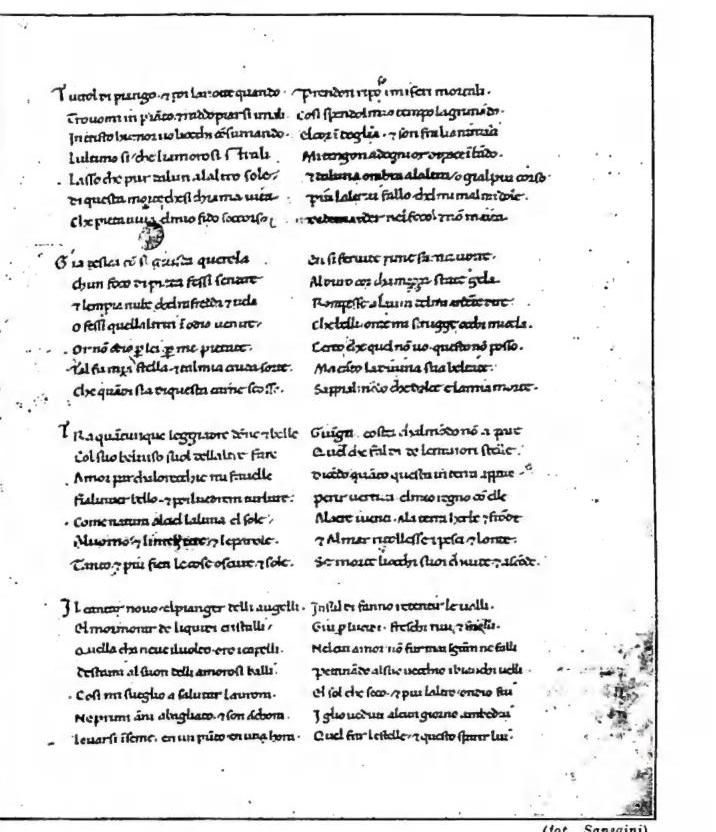
PETRARCA, FRANCESCO - Autograph. Page from the Canzoniere. From ms. Vat. lat. 3196 f. 43° with sonnets CCVI to CCXI - Vatican Library.
tyranny is everywhere; if there are no tyrants, the peoples tyrannize."
When attempting to grasp panoramically the influence exerted by Petrarch on the shaping of literary civilization, one has the sensation of standing before one of the most remarkable currents in the history of the human spirit. To Petrarch, poet and humanist, Renaissance Italy owes everything: the poetic language, taste, the way of conceiving life, the character of culture. In our nineteenth century, the myth of Dante as the tutelary deity of much of our literature was created; this is an error: it is to Petrarchism, instead, that those resonances are due which, across the centuries, have constituted a profound unifying character. - Vedi tav. LXXXIII.
Pier Giorgio Ricci