
I. THE THEOLOGY OF FAITH
SUMMARY:
I. Presuppositions
II. The Catholic notion of faith
III. Heterodox notions of religious faith
IV. Theological explication of the Catholic notion of faith and its act
V. The formal motive of faith
VI. The necessity of faith for salvation
VII. Sins against faith.Faith, in the technical sense, is the assent of the intellect, under the influence of Grace, to a Truth revealed by God, not on account of its intrinsic evidence, but due to the authority of Him who reveals II.
I. PRENOTIONS
The word fede (faith) is here taken in the sense of belief founded upon testimony that presents sufficient certainty.Thus, one believes in human testimony when it is evident that the witnesses know what they affirm and are truthful. It is then commonly said that they are worthy of fede and that their testimony fa fede (carries faith), because it is evidently credible.
Faith founded upon such human testimony is inferior to vision and to science, because it does not provide the evidence of the thing, which is neither seen nor known, but only believed. This faith, however, is superior to opinion, because it does not merely offer probability, but the moral certainty of what is believed. Thus, one is certain of many historical facts that are not known de visu, but only on the testimony of men worthy of fede (cf. Sum. Theol., 2ᵃ-2ᵃᵉ, q. 1, n. 4; q. 2, n. 1).
Here we are concerned with faith in divine testimony of Revelation, but we do not speak of the manner in which the existence of Revelation (v. REVELATION) is confirmed by sure signs, such as miracles, fulfilled prophecies, the admirable life of the Church, the fruitfulness of its influence, the satisfaction of our highest aspirations through the practice of the perfect Christian life, because this topic is treated under the entries: APOLOGETICS; CREDIBILITY (v.).
II. CATHOLIC NOTION OF FAITH
The Church, in its councils and particularly in the Vatican Council (Denz-U., 1811), defined faith as «a supernatural virtue by which, preceded and aided by the Grace of God, we believe the things revealed by Him to be true, not on account of their intrinsic truth perceived by the natural light of reason, but on account of the authority of God revealing, who cannot be deceived nor deceive us». Faith, indeed, according to the Apostle, is «the substance of things hoped for, the evidence of things not seen» (Hebr. 11, 1). Consequently, supernatural or infused faith is specifically distinct from the natural knowledge of God and moral truths. As St. Paul says (Eph. 2, 8): «faith is a gift of God». Normally, it is united with charity or love of God above all things, and is then called «living faith», but it also exists without charity in many Christians who are in a state of mortal sin; it remains as the principle of a salutary, though not meritorious, act, by virtue of which, under the influence of an actual grace, they freely believe what God has revealed (Denz-U., 1791, 1814).
As for the act of faith, the Church has declared that it is a supernatural assent of the intellect, free but absolutely certain, by which we believe the truths revealed by God on the authority of God revealing. Such a supernatural act presupposes a rational judgment, at least morally certain, of the evident credibility of the mysteries of faith, which is based upon the divine signs of Revelation, such as miracles, fulfilled prophecies, and the admirable life of the Church (cf. Denz-U., 1791, 1794, 1637, 1814, 2025, 2106).
III. HETERODOX NOTIONS OF RELIGIOUS FAITH
The first Protestants rejected the infallible authority of the Church in proposing Revelation and replaced it, in each believer, with private inspiration, which later led to free examination. This doctrine has been called a pseudo-supernaturalism, because, according to the Church, it diminishes God’s gratuitous gifts and the strengths of our nature, as can be observed, to a lesser degree, in Baianism and fideism (v. FIDEISMO), in which insufficient account is taken of natural strengths and reason in proving the existence of God and in knowing the certain signs of Revelation.Kantian rationalism, with its agnosticism, tends to reduce religious faith to a moral faith, by means of which we believe the postulates of practical reason, deduced from the categorical imperative: the existence of free will, of future life, and of God. This moral faith, according to Kant, has a certainty that is subjectively sufficient but objectively insufficient, and its motive is no longer the authority of God revealing, but the demands of practical reason.
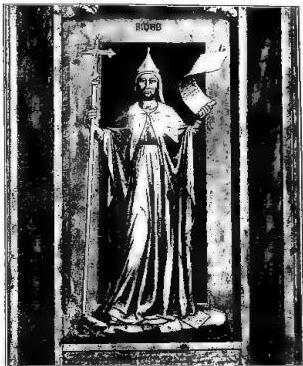
FEDE — The Fides — Fresco by Giotto in the Scrovegni Chapel in Padua (1308-1306).
in all religions. For them, Catholicism is reduced merely to a higher form of the natural evolution of religious sentiment (cf. Denz-U., 2072, 588).
According to the semi-rationalism of Günther and Fröhschammer, all the mysteries of Christian faith can be demonstrated by reason, at least after the Revelation that has been given to us, and are thus reduced to truths of a philosophical order, which the world accepts with faith. Hermes was led, through Kantian agnosticism, to another form of semi-rationalism: for him, the motive of faith does not consist in the authority of God revealing, but in a certain demand of practical reason; through it, philosophers can demonstrate the mysteries, but must nevertheless admit divine Revelation as necessary for the people, who could not understand their demonstrations.
IV. THEOLOGICAL EXPLANATION OF THE CATHOLIC NOTION OF FAITH AND ITS ACT
1. The object of faith comprises all that has been revealed by God, including natural and demonstrable truths concerning religion; but its proper object consists of the essentially supernatural and indemonstrable mysteries concerning the intimate life of God in Himself and in us: the mysteries of the Most Holy Trinity, the Incarnation, the Redemption, Grace, the Sacraments, eternal life. The formal motive of faith is the authority of God revealing, that is, His omniscience and veracity; and this refers not only to God as author of nature, but to God as author of Grace, the seed of eternal life. According to the Thomists, the uncreated act by which God reveals already belongs to the motive of faith, whereas the infallible formulation of the truths proposed by the Church is only a sine qua non condition of faith, since it does not formally influence our intellect and will but merely applies to us the already existing Revelation.2. On the part of the subject, the act of faith is an act of the intellect, moved by the will to give its assent (cf. Sum. Theol., 2a-2ae, q. 2, a. 1; De Veritate, q. 14, a. 1). An influence of the will is necessary, not only for the attention already required in the scientific act of demonstration, but also to determine the intellect to affirmation rather than negation, since the object to be believed is neither seen nor demonstrated but remains obscure. This object, therefore, does not suffice to determine intellectual adhesion, but the will can and must intervene, since the obscure object proposed is presented as revealed by God, and it is presupposed that the signs of divine Revelation are certain, at least morally, for reason. Thus, we have the act of faith, not doubt, not merely opinion or probability, but certainty—not scientific certainty, but that of belief—since it is reasonable and good for man to firmly adhere to an object revealed by God, who can neither deceive nor be deceived.
However, natural good will is not sufficient for this; the Grace of faith (the infused virtue of faith and actual Grace) is required, as the Church defined against the Pelagians and Semi-Pelagians (Denz-U, 178, 1791). The reason is that the object to be believed, at least its principal object, is essentially supernatural; it comprises the mysteries of the intimate life of God, above the rational order, and the act itself of the infused virtue of faith is likewise essentially supernatural. Natural good will, therefore, is not sufficient to will and produce II. The will, like the intellect of the believer, must be proportionate to the object in order to adhere firmly to II. For this reason, the Council of Orange defined (Denz-U, 178) that the « initium fidei »—that is, the « pius credulitatis affectus »—does not proceed from nature but from Grace.
The act of infused faith, therefore, proceeds from this supernatural virtue, under the influence of an actual Grace that inclines the will to move the intellect to adhere firmly to the divine testimony and its content, despite the obscurity of the revealed mysteries.
This act remains free due to the obscurity of the mysteries, especially since some may displease the sensual and proud man, but the act of faith is firm both objectively, because of the authority of God revealing, and subjectively, due to Grace, which disposes the will—and, consequently, the intellect—to an adhesion that is not merely probable but certain.
V. THE FORMAL MOTIVE OF FAITH
According to some theologians, the believer knows only in a natural manner the formal motive of faith, that is, the authority of God revealing and the signs of Revelation. This was the view held by the Scotists, the nominalists, L. Molina, G. Franzelin, and L. Billot.A difficulty then arises, for the majority of the faithful were not witnesses to the miracles, signs of Revelation, and many could not ascertain their supernatural origin; thus, they naturally possess only a moral certainty of the fact of Revelation, that is, the certainty that comes from human testimony in history. Therefore, if the certainty of Christian faith were formally based on this moral certainty of the fact of Revelation confirmed by sufficient signs, it would no longer be infallible except hypothetically, that is, supposing that it is truly God who has revealed the mysteries of the Trinity, the Incarnation, and the infallibility of the Church, which proposes them, and supposing, therefore, that the preaching of these mysteries does not stem from the natural evolution of religious sentiment in the subconscious of the prophets and of Christ, as the modernists claimed. Hence, the
Thomists, and with them Suárez, have always maintained that the faithful adhere supernaturally and infallibly (with infused faith) to the formal motive of this virtue, that is, to the authority of God revealing. According to St. Thomas, we believe in God (revealing) and in God (revealed) with one and the same supernatural and infallible act: « Uno et eodem actu credimus Deo (revelanti) et Deum (revelatum) » (Sum. Theol. 2a-2ae, q. 2, a. 2 ad 1). Just as in the natural order, with a single visual act, we perceive light and colors, and at the same time, light manifests them. The formal motive of faith is believed together with the mysteries « concreditur mysteriis ». All Thomists say: « ipsa revelatio est id, quod creditur » (cf. Cajetan, In 2aa-2ae, q. 1, a. 1, u. 2; also D. Báñez, Giovanni di S. Tommaso, J. B. Gonet, C. R. Billuart). This act is not discursive but simple, supernatural, and infallible, far superior to the antecedent apologetic reasoning by which the fact of Revelation is at least morally certain in the rational order. The reasons on which this doctrine is based are as follows:
1) The fact of Revelation is proposed not only by the human history of the preaching of Jesus Christ and His miracles but by the Church, which has defined infallibly that it was due to a properly said Revelation, supernatural and not merely the fruit of a natural evolution of religious sentiment in the subconscious of the prophets and of Christ. Now, what has been thus infallibly defined by the Church must be believed supernaturally by the faithful; that is, they must believe supernaturally in divine Revelation together with the revealed mysteries. Hence, St. Thomas says: « Uno et eodem actu credimus Deo (revelanti) et Deum (revelatum) » (Sum. Theol., 2a-2ae, q. 2, a. 2, ad 1; q. 4, a. 5, and 8). Otherwise, the certainty of faith would no longer be absolutely infallible. Now, St. Paul wrote: « You received from us the word of God, not as the word of men, but as it truly is, the word of God » (1 Thess. 2:13).
2) The formal motive of infused faith is essentially supernatural: the authority of God revealing; it concerns, therefore, God, the author of Grace, who cannot be naturally known. Now, what is essentially supernatural cannot be known except supernaturally through faith. The essential supernaturality of the mysteries and of invisible Grace far surpasses the supernaturality of sensible miracles, which are naturally knowable; in the miracle of the resurrection of Lazarus, the life that is supernaturally restored to the corpse is natural life, not the supernatural life of Grace.
3) Faith is a gift of God (Eph. 2:8); it is the « reality (that is, the germ) of the things we hope for » (Heb. 11:1); it is an « essentially supernatural virtue » (Vatican Council, Denz-U, 1791). Now, a supernatural virtue finds its specification in a formal object (or formal motive) of the same order, inaccessible to reason. Therefore, the formal motive of faith cannot be attained except by this infused virtue, for if it could be attained without it, faith itself would no longer be necessary.
Lacordaire, in his 17th conference at Notre-Dame, well highlighted the absolute and supernatural certainty of faith: « Here is a scholar who studies Catholic doctrine and repeats endlessly: you fortunate ones who have faith, I would like to have it like you, but I cannot. And he speaks the truth... And behold, one day this wise man kneels, feels the misery of man, raises his hands to heaven, and exclaims: from the abyss of my misery, O God, I cry to You! In that moment, something happens in him, a scale falls from his eyes, a mystery is accomplished: he has conquered the truth. » This is theologically true: « a mystery is accomplished », that is, the infusion of the Grace of faith, which gives a supernatural certainty far superior, despite its obscurity, to rational or scientific certainty and to all the apologetic reasoning that preceded II.
Infused faith can thus be considered a spiritual sense, a superior musical sense that allows one to perceive the harmonies of Revelation and to reach infallibly, through the letter of the Gospel, the word of God, the verbum Dei. Faith is thus truly the « reality of the things we hope for » and the germ of eternal life: « sic fides est in nobis quaedam inchoatio vitae aeternae » (St. Thomas, De veritate, q. 14, a. 2). Its supernatural certainty excludes every deliberate doubt, and when illumined by the illuminations of the gifts of understanding and wisdom, living faith becomes penetrating and savory and deserves the name of contemplation of the revealed mysteries.
VI. THE NECESSITY OF FAITH FOR SALVATION
It is written in the Epistle to the Hebrews (11:6) that « without faith it is impossible to please God, for whoever would draw near to God must believe that He exists and that He rewards those who seek Him diligently ». Here, it is not merely a question of the natural belief in God, as when considering the order of the universe, but of faith, which is a « gift of God » (Eph. 2:8), and by which we know God as the author of salvation and the supreme rewarder in the order of Grace.The reason is that all men are called to a supernatural end, the immediate possession of God through the beatific vision, and they must strive toward this end not without knowing II. Since it is supernatural, they can know it only through faith in divine Revelation. Infused faith is therefore necessary for salvation (cf. the Councils of Trent and Vatican I, Denz-U, 801, 1793, and St. Thomas, Sum. Theol., 2a-2ae, q. 2, a. 3-8). Indeed, as the Council of Trent states (Denz-U, 801), « faith is the beginning of salvation, the foundation and root of all justification », for without it, one cannot have hope, nor charity, which is inseparable from the state of Grace.
It exists as an infused virtue in the baptized child who cannot yet emit an act of faith, which is necessary in adults for salvation (Council of Trent; Denz-U, 799). Adults must believe all the revealed truths sufficiently proposed to them. Those who have not yet learned the mysteries of the Trinity and the Incarnation must at least believe explicitly in these two « primordial » truths: that God exists and that He rewards those who seek Him (Hebr. 11:6). To believe explicitly in these two revealed truths is to believe implicitly in the others, but one must be sincerely disposed to believe explicitly in the others when they are sufficiently manifest.
The testimony of God is not lacking to adults who follow the voice of conscience; as St. Thomas well said, and with him theologians in general: « If a pagan raised in the forests followed the guidance of natural reason in loving the good and fleeing evil, certainly God would reveal to him through an interior inspiration the truths necessary to believe for salvation, or He would send him a preacher, as He sent Peter to the centurion Cornelius » (De Veritate, q. 14, a. 2, ad 7). See also on this subject the teaching of Pius IX (Denz-U, 1647, 1677) and V. INFEDELI.
VII. SINS AGAINST FAITH — These are heresy (v. HERESY), apostasy (v. APOSTASY), and infidelity (v. INFIDELS); with the first two, infused faith is lost.
II. ETHICS OF FAITH
What allows the act of faith to fall within the realm of moral values is the psychological freedom inherent to it: in believing, man is not merely passively moved by Grace but is also actively self-moving. The act of faith is fundamentally a voluntary and free acceptance of the truth revealed by God and proposed as such by the Church; it is a free choice, an assent that man can freely give or refuse, should he find himself in the required conditions. Now, while the act of faith is psychologically free, according to Catholic teaching it is not morally free: when confronted with revealed truth, man "must" self-determine to accept II. The man who believes fulfills an obligation, performs a duty, and renders himself worthy of praise and reward; the man who freely does not believe transgresses an obligation, commits a fault deserving of blame and punishment. In short: faith is a matter of conscience, a virtue.
SUMMARY: I. The obligation of faith - II. The obligation to profess faith - III. Sins against faith - IV. Rights and duties of reason in relation to faith.
I. THE OBLIGATION OF FAITH -
1. Origin
The obligation of faith is rooted in natural law, specifically in that stratum of natural law which encompasses the primordial duties of man, as they immediately arise from his essential relationships with God, the supreme principle and end of man.Man is man by virtue of his spirit; and the first essential activity of the spirit is the intellectual knowledge of reality, the possession of truth. Now, the ultimate term toward which the natural impulse of human intelligence tends is God, infinite reality and truth. St. John, in the prologue of his Gospel, conceives the life of man, insofar as he is spirit, as a participation in the divine Truth subsisting in the Word. Therefore, the first fundamental duty of man is to seek and accept God as Truth, in all the forms in which He manifests Himself. By virtue of this duty, man is bound first and foremost to accept the natural manifestation of God, ascending with reason from effects to their ultimate cause; rational theodicy, whether in the spontaneous and elementary form of common sense or in the reflective and elaborated form of philosophical demonstration, is the first homage due from human intelligence to divine Truth. And it would have been the sole and exclusive homage, had God chosen, as He was free to do, to confine His manifestation of Himself to man within the limits of nature and reason. But in fact, God, in His infinite wisdom and goodness, has deigned to manifest Himself to man in a direct and supernatural manner, thus making him a participant in the intimate and exclusive knowledge that He has of Himself. This supernatural Revelation of God unfolds in two successive phases: in the first, God reveals Himself to man by behaving like a teacher who asserts a truth but does not demonstrate it; like a friend who confides and asks for trust in his words. Faith is the acceptance of God’s supernatural Revelation in this first phase of authoritative testimony. In the second phase, God reveals Himself to man by immediately showing him His essence in the beatific vision. God’s conduct in manifesting Himself supernaturally to man, first in the form of faith and then in vision, implies a most delicate regard for the personality of man. For if God had shown Himself with the immediacy of evidence to man, the latter would have been necessitated to recognize and accept Him as Truth; faith, however, even in the splendor of its proofs, remains an assent psychologically free, motivated as it is not by the intrinsic evidence of the revealed Truth, but by the authoritative word of God revealing. By this, if we may say so, device, faith, which in itself is an act of intellectual cognition, a cold contact with Truth, is subjected to the dominion of the will and becomes an impulse of love. For love, indeed, must one look to find the ultimate genesis both of God’s supernatural Revelation and of the obligation to accept it with faith. The supernatural Revelation of God, in the sources of Revelation itself, is presented not so much as a lesson imparted by a teacher from the height of his chair, but rather as a confidential outpouring from friend to friend, from father to children, from spouse to spouse: «Deus enim dilexit mundum ut Filium suum unigenitum daret» (Io. 3, 16); «Iam non dicam vos servos, quia servus nescit quid faciat dominus eius; vos autem dixi amicos, quia omnia quaecumque audivi a Patre meo, nota feci vobis» (Io. 15, 15). Just as Revelation is a free donation that God makes of Himself, as Truth, to man, so faith is perfect when it is the acceptance of God as Truth inspired by the love of friend, child, or spouse toward God. The obligation of faith, therefore, falls within the obligation of love, which remains, as Jesus defined it, the first and greatest obligation, from which all others depend. A faith not inspired by love is indeed true faith, but imperfect and dead. Regarding the relationship between faith and charity, what was said elsewhere about the relationship between charity and the other virtues applies (v. CARITÀ). It should only be noted that in the hierarchy of virtues, under the command and service of charity as sovereign empress, faith holds the first place, by the very nature of things: the life of the spirit begins and unfolds first in the form of knowledge, and spiritual vitality, though it reaches its fullness in love, cannot surpass the degree of knowledge that initiates and frames II.
2. Gravity
From the above, it follows immediately that the obligation of faith is, by its nature, grave. In the language of moral theology, those obligations are called grave which constitute the essence of the moral order, by observing or violating which man essentially tends toward or renounces his ultimate end, thereby becoming guilty of mortal sin. Indeed, among grave obligations, that of faith is, from an objective point of view, the gravest; so that, always from an objective point of view, the voluntary refusal of faith is a sin more grave than sacrilege, homicide, adultery, theft, etc. In the teaching of Christ, faith figures as the fundamental obligation that men must fulfill to be saved: «Qui crediderit et baptizatus fuerit, salvus erit; qui vero non crediderit, condemnabitur» (Mk. 16, 16); faith, according to Christ, is equivalent to resurrection from the spiritual death of sin: «Qui credit in me, etsi mortuus fuerit, vivet; et omnis qui vivit et credit in me, non morietur in aeternum» (Io. 11, 26; 5, 24; 6 passim); in the eyes of Christ, the sin par excellence is the voluntary rejection of faith (Io. 16, 9), and men thus become just or remain sinners according to whether they believe or do not believe (Io. 3, 18; 8, 24; cf. 1, 34; 3, 31).It was natural that the teaching of Jesus Christ on this point should occupy a primary place in apostolic catechesis; indeed, it can be said that the first act of solemn magisterium of the Church, gathered in council at Jerusalem under the presidency of Peter, had as its object the primacy of the obligation of faith over all other obligations (Act. 15:7 ff.; cf. 10:34-43). St. John also declares this expressly: «This is the commandment God imposes on us: to believe in the name of his Son» (1 John 3:23); faith is the victory over the world (ibid., 5:4 ff.). But the strongest assertion of the absolute necessity of faith for salvation and of its justifying value comes from St. Paul; his preaching was a thorough struggle against Pharisaic formalism, which had infiltrated even the nascent Christianity and sought to keep conscience enslaved under the burden of a thousand external norms. It is no wonder that, clashing with a widespread and inveterate mentality upon which the entire religious life of Judaism rested, he attracted the hatred and persecution of his fellow countrymen, including Judaizing Christians. In the Letter to the Romans, St. Paul, in uncircumcised Abraham, found righteous before God solely through faith active in his word, presents the prototype and progenitor of all believers, regardless of race, and concludes that it is not the practice of external works that makes a man righteous, but the submission of his spirit to God, substantiated in faith in His word. On the same theme, he returns with polemical accents in the Epistle to the Galatians, and then again at length in the Letter to the Hebrews, in which one finds the well-known Pauline assertions on faith: «He who would draw near to God must believe that he exists and that he rewards those who seek him»; «without faith it is impossible to please God» (Hebr. 11:6). Faithful guardian and interpreter of this teaching, the Church has defined faith as the beginning, root, and foundation of Christian justice (Denz-U, 790). The total collapse of the moral conscience of an individual or a people is reached only when faith disappears: «Peccatum infidelitatis est maior omnibus peccatis quae contingunt in perversitate morum» (Sum. Theol., 2a-2ae, q. 10, a. 3). Every zeal for the Christian reform of morals is blind, vain, and ruinous if it does not constantly aim to safeguard or reconstruct faith, which by its nature takes precedence over all virtues (ibid., q. 4, a. 7).
3. Extension
a) From the viewpoint of the believing subject. - The aforementioned Catholic doctrine on the absolute necessity of faith for salvation implies the objective obligatoriness of faith for all men of all times and places. However, this objective obligatoriness becomes subjective only if men are given the possibility of having faith.It is not clear, for example, how infants who are not baptized can subjectively possess faith, whether as a virtue or as an act; thus arises the problem of their salvation, which is not addressed here. For adults capable of reasoning, the opinions of patristic and theological thought differ: some Fathers and theologians, starting from the principle that saving faith means adherence to a supernatural Revelation of God, and from the fact that this Revelation is found only in the Judeo-Catholic Christian religion, have denied to all men involuntarily ignorant of the Christian Revelation the possibility and thus the subjective obligatoriness of faith; other theologians, including St. Thomas, grant to all adult men the possibility of attaining faith, even outside of actual contact with the Christian Revelation; in contemporary theology, this latter opinion is widely accepted. However, even in this case, faith would be an implicit and virtual adherence to the Truth revealed by God and proposed by the Church. In any case, it is certain that, with the Incarnation of the Son of God and the institution of the Church, all men are objectively subject to the obligation of embracing the Catholic faith.
b) From the viewpoint of the object. - The Catholic Christian must believe everything that is revealed by God. Faith is an indivisible virtue, as it is absurd to accept the same authority of God on one point and reject it on another. However, it is not necessary that all the Truths revealed by God be individually and explicitly known and believed by each believer. Theologians declare absolutely necessary and therefore obligatory for all explicit faith in the existence of God as rewarder; they are not equally in agreement on the absolute necessity and obligatoriness of explicit faith in the mystery of the Trinity and the Incarnation. The duty to make faith explicit falls upon all believers, but its fulfillment is conditioned by their subjective possibilities, their level of culture, and the responsibilities of their position within society and the Church; it is clear, for example, that a pastor of souls must explicitly know the content of faith to a much greater extent than a simple believer (Cf. Sum. Theol., 2a-2ae, q. 2, a. 6). According to moralists, an adult believer is, in principle, gravely obliged to know explicitly the substantial content of the Apostles' Creed and the Decalogue, the Sacraments most necessary for salvation, and the prayer of the Pater Noster. Innocent XI condemned the following assertions: «A Christian is capable of sacramental absolution, whatever his ignorance of the content of faith, and even if he ignorantly neglects the mysteries of the Most Holy Trinity and the Incarnation» (Denz-U, 1214).
The obligation of faith is not restricted solely to the Truths revealed by God but extends also to all those truths which, though not in themselves revealed, are nevertheless connected in any way with the revealed data, such as truths of natural religious order and the so-called dogmatic facts (v. PATTO DOGMATICO). Proposition 22 of the Syllabus (ibid., 1722) and the 5th of the decree Lamentabili (ibid., 2005), as well as the Vatican Council (ibid., 1798), reaffirm the extension of the obligation of faith beyond the directly revealed data.
c) From the viewpoint of the proximate norm of faith. - Catholic Christian faith is, by positive divine institution, social and hierarchical; the faith of the individual believer is nothing but a participation in the official faith of the teaching Church. To the latter belongs the task of determining and proposing the content of faith, whether it concerns revealed Truths or those connected with the revealed. The private certainty that a given truth is revealed or necessarily connected with the revealed data obliges only the individual conscience to faith, but not that of all other believers; nor is it an infallible certainty. Only the public certainty of the teaching Church represents the obligatory and infallible norm of faith for all the faithful. Where and how is the public certainty of the Church regarding the content of faith manifested? To what extent does the public certainty of the Church bind the conscience of individual believers to faith? These questions, raised in the Catholic conscience in recent times under the influence of rationalism and modernism, have received precise answers from theology and ecclesiastical magisterium. The CIC (can. 1323), repeating verbatim the Vatican Council (Denz-U, 1792), establishes that, with regard to the Truths revealed by God, whether in writing or orally, the norm of faith is the solemn and ordinary magisterium of the Church.
The first is concretized in papal and conciliar dogmatic definitions, the second consists in the unanimous teaching of the episcopate united with the pope. A dogmatic definition, to bind faith as such, must be certain and manifest; a doubtful definition is practically a null definition. A recent papal doctrinal pronouncement of doubtful definitional value is found in the encyclical Casti connubii, regarding the intrinsic grave malice of anti-conceptive practices (cf. A. Vermeersch, Catechismo del matrimonio cristiano, 3rd ed., Turin 1944, pp. 134-136). If the definitional character of a papal or conciliar teaching is not always evidently certain, it may be even more doubtful, in certain cases, whether a particular point of doctrine is the object of the Church's ordinary magisterium. Already St. Irenaeus noted the difficulty of ascertaining the unanimous consent of bishops on this or that doctrinal point, and therefore indicated in the teaching of the Church of Rome a facile and secure norm of faith (S. Ireneo, Adv. Haeres., III, cap. 3: PG 7, 848-49). Not always, indeed in relatively rare cases, does the teaching Church express its doctrinal judgment by definitively engaging its full authority; many times the ecclesiastical magisterium approves or disapproves a doctrine without pronouncing definitively on its absolute truth or falsity. These acts of the magisterium are also issued, with the approval of the pontiff, by the Roman Congregations and Pontifical Commissions in the form of decrees or constitutions. Even to these acts of the ecclesiastical magisterium, the Catholic believer must give in conscience an assent that is not only externally compliant but also internally sincere. The duty of sincere submission to such acts of the ecclesiastical magisterium was reaffirmed by Clement XI against the Jansenists (Denz-U, 1350), by Pius IX against certain semi-rationalist currents in German theology (ibid., 1679), by Pius X against the Modernists (ibid., 2008, 2113), and in the CIC (can. 1324).
The obligation to give internal assent even to these acts of the ecclesiastical magisterium is founded on the already recalled principle that not the private judgment of individual faithful, but the authoritative judgment of the teaching Church is the proximate norm of certainty in matters of faith; therefore, the duty of faith includes the obligation to adhere to all judgments of the ecclesiastical magisterium. It is clear that the assent due to the judgments of the teaching Church will correspond to their merit: if they are certain and definitive judgments, the assent will be most firm and unconditional; if, instead, they are non-definitive judgments, the assent will be less firm and conditional. At this point, it is logical to ask: is it rational for the ecclesiastical magisterium to approve or condemn a doctrine without pronouncing definitively on its truth or falsity? Is it rational for the faithful to give internal assent to these acts of the ecclesiastical magisterium? One must not forget that the
infallibility and indefectibility assured by Christ to His Church make it impossible for a total and constant discrepancy to arise between the teaching Church and the learning Church; therefore, the unanimous certainties of the learning Church in matters of faith have the value of public and social certainties of the whole Church, that is, they are at the same time certainties of the ecclesiastical magisterium; thus, these certainties are also a norm of faith. They are concretized in the unanimous consensus of the Fathers, theologians, and the faithful.
II. THE OBLIGATION TO PROFESS FAITH
To profess faith generally means to manifest externally in any manner the intimate adherence of one’s soul to the Truths revealed by God, and submission to the magisterial authority of the Holy Church that proposes them. The external manifestation of faith is obligatory, in principle, for all believers. The obligation is fundamentally of natural law, reconfirmed by positive divine law and regulated, in certain cases, by ecclesiastical law.From the perspective of natural law, the profession of faith is a duty for individual and social reasons. The substantial dualism of the human being, spirit-matter, is necessarily reflected in its operations; therefore, a faith that never and in no way translates into external signs is practically to be considered non-existent.
The profession of faith, besides being the natural complement of faith itself, preserves and strengthens it, in accordance with the general psychological law of the mutual genetic interdependence between internal sentiments and external acts. Even more evident and urgent is the obligation to profess faith from a social perspective. Faith as a purely individual matter is a mere abstract hypothesis, perhaps unacceptable even as a hypothesis. In fact, God has disposed that supernatural Revelation be a public and social good; and therefore, it should come as no surprise that the profession of faith is considered by Christ and the Apostles as equally necessary and obligatory as faith itself. Christ conceives His mission as a public attestation, made in the presence of all men, of the Truth received from the Father (Is. 12:40; 18:4-8; 18:37); the Church founded by Him is, in His eyes, this very testimony prolonged through the centuries and extended to all mankind, a perennial public and social profession of faith in Him and in the Father; the apostolic mission consists essentially in the task of publicly testifying to faith in Jesus Christ (Lk. 24:48; Jn. 15:27; Acts 1:8; 5:32); His disciples, to be saved, must profess their faith in Him before men (Mt. 10:32), enduring their persecuting hatred (Jn. 15:18-21). St. Paul also links the apostolic mission to the public testimony rendered to the truth by Jesus Christ before the tribunal of Pilate (1 Tim. 6:12-14), and, expressly distinguishing internal assent of faith from external profession, declares both necessary for salvation (Rom. 10:8-10). Aggregation to the Church through Baptism demands and implies an act of profession of faith, and Confirmation, making the Christian a soldier of Christ, specifically obliges and enables him to the courageous public profession of faith. However important, the profession of faith is not an absolute moral value; it is, rather, a means for the realization of the ultimate end of the entire moral order, which consists in the love of God and neighbor. It follows that the believer is bound to profess faith not at any moment and in any circumstance of life, but only in those cases where hesitation and the manner of acting would amount to denial of faith, contempt of religion, insult to God, and moral harm to one’s neighbor (CIC, can. 1325 § 1). In other cases, however, the love of God and neighbor may counsel or impose silence regarding the profession of faith. It is the task of casuistry to contemplate the individual concrete cases in which it is or is not dutiful to profess faith. When, for example, legitimate civil authority, following legal procedure, inquires about religious faith, the profession of faith is not only advisable but, in principle, obligatory; this follows from the condemnation of the contrary assertion by Innocent XI (Denz-U, 1168). It is not praiseworthy, however, asserts St. Thomas, to publicly profess faith when this offends the unbeliever without any advantage to faith or the believer (Sum. Theol., 2a-2æ, q. 3, a. 2, ad 3). Ecclesiastical law requires the profession of faith, according to formal norms, from certain persons in special circumstances (v. PROFESSIONE DI FEDE).
### III. SINS AGAINST FAITH
Sins against faith take various forms and degrees of gravity. They can be classified into three categories: 1) sins against the obligation to believe; 2) sins against the obligation to profess faith; 3) sins against the obligation to cultivate faith and preserve it from dangers. The brief analysis of sins against faith is conducted from an objective and general standpoint. The analysis of sins against faith from a subjective perspective involves assessing the degree of responsibility—a difficult and complex evaluation that varies from case to case. It is sufficient to recall that the subjective malice of any sin against faith depends on voluntariness, which in turn depends on awareness and free consent. Ignorance, passion, fear, and violence can suppress or limit the subjective culpability of sins against faith no less than that of all other sins.
#### 1. Sins Against the Obligation to Believe
a) Infidelity – This term designates the state of one who has never had and does not have faith. Even today, unbaptized individuals are called "infidels," regardless of their religion. In the present order of providence, the lack of faith is a most grave moral deficiency, constituting guilt only insofar as it is voluntary. Regarding voluntariness, moralists typically distinguish a threefold infidelity: purely "negative," that is, devoid of any voluntariness and thus of any subjective culpability; "privative," that is, indirectly voluntary, resulting from a conscious and voluntary neglect of the means necessary to attain faith; and "contrary," that is, directly voluntary, involving a conscious and voluntary rejection of revelation sufficiently proposed. It is not always easy to determine to which of these three types the infidelity of a given individual or group belongs. The assertion of Baius: "The purely negative infidelity of those to whom Christ has never been preached is sin" was condemned by Pius V (Denz-U, 1068).
Even the lack of faith among many baptized individuals in large cities, raised from childhood in environments ignorant of or hostile to faith, can be considered, at least in many cases, as negative infidelity, or at most privative. On the other hand, certain attitudes of stubborn opposition to faith and the supernatural in general—particularly those of modern immanentist rationalism—appear to be contrary infidelity. For a more precise assessment of subjective responsibility in the lack of faith, it is useful to recall that the assent of faith is subjectively obligatory only if preceded by rational certainty of the supernatural divine origin of the Christian religion, that is, by the so-called certain judgment of credibility. Doubt or probability that the Christian religion is truly revealed obliges one to further inquiry but not yet to faith (Denz-U, 1170, 1625-26, 1637). Since the judgment of faith and the judgment of credibility are essentially distinct in their object and motive, it is possible for a person, even while certain that the Christian religion is revealed, to refuse assent. However, this case is very rare; usually, the lack of faith is accompanied by the lack of the judgment of credibility. A person does not believe because faith seems irrational, puerile, or unfounded. It is therefore necessary to examine to what extent the lack of the judgment of credibility is voluntary in order to determine how voluntary and culpable the consequent lack of faith is. This exploratory probing into the often-complicated psychology of unbelief is very difficult. Faith engages what is most intimate in a person, and God alone, who searches the depths of the human heart, knows precisely how responsible a person is for their lack of faith.
Here, more than ever, the evangelical prohibition against judging and condemning one’s brother applies. While it is true that there exist numerous, splendid, and most certain objective proofs capable in themselves of convincing any human mind of the divine origin of the Christian faith, it is also true that ignorance, prejudices, environmental influences, and passions of every kind can diminish or entirely suppress the voluntariness of the lack of faith, as with any other moral disorder.
b) The Loss of Faith – The assent of Catholic faith is by its nature irrevocable, as the believer can never find objectively sufficient reasons to doubt or retract the assent once given. Therefore, the loss of faith is an objective moral disorder, which may have varying degrees of depth but is always grave by its nature. The first form of the loss of faith is heresy. This occurs when a baptized believer doubts or denies any truth revealed by God and proposed as such in a solemn or ordinary manner by the Church. In this case, the unbeliever still generally adheres to Revelation and the magisterial authority of the Church but rebels against it as applied to this or that point of doctrine (v. ERESIA).
From heresy, apostasy (v.) is logical. Indeed, heresy implicitly and virtually contains rebellion against the very principle of submission to the magisterial authority of the Church. The heretic inconsistently substitutes the judgment of the Church with their private judgment on a particular point, as Luther initially did with his new theory on faith and justification. To escape this inconsistent stance, heresy has only two possibilities: either to retract itself by submitting to the judgment of the Church’s magisterial authority or to reject this authority in principle. At this point, the heretic becomes properly schismatic. The schismatic still accepts Revelation but refuses the mediation of the teaching authority instituted by God to interpret and propose II. Rebellion against the teaching authority of the Church contains the germ of apostasy, that is, the explicit and formal rejection of divine Revelation itself—a rejection that can extend even to the possibility of Revelation. Indeed, the patrimony of revealed truths, abandoned to the fallible judgment of private examination, is sooner or later completely dissipated.
The descending parabola of the loss of faith, outlined here in the schematic logical succession of its phases, is a sad historical reality, ranging from Luther’s heresy to the apostasy of rationalism. The disintegrative process of faith is subtly analyzed with metaphysical mentality by St. Thomas (Sum. Theol., 2ᵃ-2ᵃᵉ, q. 11, a. 1-2; q. 12, a. 1). However, he reduces it to two phases: heresy and apostasy, skipping the schismatic phase, which he considered essentially contrary to the law of unity (Sum. Theol., 2ᵃ-2ᵃᵉ, q. 30) in charity and the governance of the Church. Indeed, no breach in the unity of the Church up to the time of St. Thomas presented the character of a direct and formal negation of the magisterial authority of the Church, as Protestantism later did. The CIC (can. 1325 § 2) also distinguishes heresy from apostasy in the sense indicated above and considers schismatic anyone who refuses to submit to the authority of the Church, supremely residing in the Supreme Pontiff. This can well be understood as including formal rebellion against the teaching authority of the Supreme Pontiff.
While it is easy to determine the objective malice of the loss of faith in its various degrees, it is not equally easy to judge subjective culpability. The problem of subjective responsibility for those who lose faith is among the most studied and debated in modern theology, which, unlike medieval theology, tends to analyze the phenomenon of faith and unbelief from a subjective and concrete psychological perspective, in addition to an objective and metaphysical one.
In canonical law, a heretic is only someone who renounces faith or doubts it "pertinaciously," that is, in bad faith; this applies even more so in the internal forum before the eyes of God. Now, the height of bad faith occurs in the one who revokes the faith of his Baptism with full awareness of trampling revealed truth, divine authority, and that of the Church—in a word, for a motive of direct and formal hatred against the truth. The theologians of the Vatican Council scarcely deemed possible such a monstrous defection from faith (Coll. Lac., t. VII, col. 531, a).
Usually, the guilt of one who loses faith is only indirect and consists in a more or less voluntary levity in evaluating the reasons for which the believer abandons himself to real doubt and passes to the negation of his faith. "Nemo mendax, nisi probetur," "Praesumptio stat pro veritate"; this fundamental norm of natural law forbids not only the Catholic but the believer of any religion from casting the shadow of doubt or renouncing his religious convictions without the support of motives diligently and dispassionately weighed. The violation of this norm, in turn, often depends in many cases on culpable ignorance and perversions of judgment, caused by culpable acquiescence to aberrant passional impulses. It is well known how much the culpable passion of Henry VIII contributed to determining his break from the Roman Church.
Is it possible to lose faith without any subjective guilt, neither direct nor indirect? For modern Catholic theology, this problem is predominantly exegetical; since the Vatican Council defined that "the Catholic believer can never have a just cause to abandon faith or doubt it" (Denz-U, 1794, 1815), the question has arisen whether the Vatican Council’s assertion refers to a cause "just" only from an objective point of view or also from a subjective one. The answers diverge: according to some, the Vatican Council intended to define that the Catholic believer can never have a just cause, even subjectively, to doubt or repudiate his faith, and thus the loss of faith is always, directly and indirectly, culpable; according to others, the Vatican Council had in mind only the objective point of view; still others hold that the mind of the Vatican Council indeed includes the subjective point of view but adheres to a general principle not excluding exceptional cases and, moreover, leaves unresolved the question of whether the subjective guilt of one who loses faith is always grave. Vermeersch, for example, holds that the defection from Catholic faith and adherence to the pioneers of the Reformation by the popular masses was free from "grave" subjective guilt, if not from all guilt (Theol. mor., II, 1st ed., p. 27). The solution to this intricate problem will largely depend on an in-depth analysis, guided by theological principles, of the concrete psychological processes culminating in the loss of faith. Canonical sanctions against heresy and apostasy (can. 2314 § 1) presuppose pertinacity and external manifestation.
c) Disobedience to the magisterial authority of the Church. - According to cann. 1323, 1 and 1325 § 2, only he who pertinaciously doubts or denies a truth revealed and proposed as such by the solemn or ordinary magisterium of the Church is a heretic. Therefore, every other dissent from the magisterial authority of the Church, while being a grave sin against faith, is not in itself the loss of faith. The ecclesiastical magisterium can infallibly define what is not revealed or issue doctrinal decrees that are non-definitive and thus not infallible. To dissent even only internally from infallible doctrinal decrees in non-revealed matters is always gravely illicit and is a sin of disobedience to the Church; if, moreover, the dissent is publicly manifested, the aggravating circumstance of scandal is added. The same applies to internal and external dissent from non-infallible doctrinal decrees, except in the rare case of one who, being competent and prudent, internally suspends his assent to such decrees while awaiting a definitive judgment.
4. Sins against the obligation to profess faith
a) The external denial of faith. - It is always illicit to say words, perform gestures, adopt a custom, etc., which by their nature or in the concrete circumstances of the moment certainly manifest the internal defection from faith, even if this defection has not occurred. Among the cases of external denial of faith, moralists recall the use of badges or uniforms characteristic of societies and sects declaredly anti-Catholic and anti-religious, and especially active and formal participation in non-Catholic cults. Ignorance, fear, or violence can diminish or completely remove subjective guilt.b) The concealment of faith. - This can be licit or illicit depending on the circumstances. It is illicit when it concretely amounts to the external denial of faith; otherwise, it can be licit and even commendable, as, for example, evading the persecutor’s search.
The most frequent cause that leads to the external denial or illicit concealment of faith is human respect. Even among the first disciples of Christ, there were external deniers (Peter) and fearful concealers of faith (Joseph of Arimathea: Jn 19:38; many of the Jewish ruling class: Jn 12:42), victims of human respect.
5. Sins against the obligation to cultivate and safeguard faith
The general duty for believers to develop faith is contained in the writings of the New Testament and is derived from the vital nature of faith itself. The strengthening of the inner man ardently invoked by St. Paul for the new Christians in his prayers (Eph 3:14-16; Col 1:6 ff.) is, in the Apostle’s own words, a development of faith: St. Peter imposes it categorically: "Crescite in gratia et cognitione Domini nostri I. Christi" (2 Pt 3:18). One of the essential means for maintaining and developing faith is religious instruction. The obligation of religious instruction is general and, in principle, grave; the measure and modalities of its application vary according to the circumstances of person, time, and place. It is difficult to determine in individual cases the gravity of culpable negligence in religious instruction.The loss of faith is very often the more or less direct result of imprudent and reckless steps. Therefore, natural law forbids the believer from endangering his faith. Now, the greatest immediate danger to faith is contact with opposing error. The New Testament repeatedly warns of vigilance against the snares laid for faith by the enemies of truth (Rom 16:17; 2 Cor 11:3; Eph 5:6-11; Col 2:6-8; 1 Tim 1:3 ff.; Heb 13:9; 2 Pt 3:17; 2 Jn 7-11). The Church, in strict adherence to natural law and the spirit of apostolic norms, has provided for the protection of faith with special laws concerning the press and the reading of books on religious and moral subjects (v. CENSURA; INDICE), the relations of the faithful with heterodox (v. infedeli e acattolici), and public discussions or conferences with them on matters of faith (CIC, can. 1325 § 3). Violation of these norms of ecclesiastical law is illicit, except in cases of legitimate dispensation or proportionate excuse compatible with the principles of natural law, even when, for particular reasons, there is no danger to faith.
### IV. RIGHTS AND DUTIES OF REASON IN RELATION TO FAITH
Against fideism, the Church has affirmed the right and duty of reason to procure purely rational certainty regarding the fact of Revelation and to penetrate its content insofar as possible (Denz-U, 1171, 1623-27, 1656-37, 1795-97). At the foundation of the entire apologetic, philosophical-historical apparatus of Catholic theology and the extreme prudence with which the Church proceeds in verifying any supernatural manifestation of God lies the principle: « Factum supernaturale non praesumitur, sed probandum est ». To contravene this principle is to sin against faith by excess and means to open the door to all superstitions. The right and duty to rationally demonstrate the fact of Revelation and the revealed truths themselves, within the bounds of possibility, does not rest solely upon those who are approaching faith but also upon those who already possess it; the only difference between the two is that the former, while in the phase of rational inquiry, is not obliged to believe, that is, as is technically said, systematic doubt regarding faith is permissible; the latter, however, before and during the rational justification of faith, cannot truly suspend their assent of faith; their doubt can only be "methodical." The duty to "reason" about one's own faith becomes operative in individuals when their judgment of credibility threatens to crumble under the pressure of intellectual difficulties.
Against rationalism, the Church has declared the obligation of reason to recognize its natural limitations, aggravated by original sin, and the consequent duty to accept divine revelation sufficiently proposed, giving faith to its content, even if absolutely mysterious (Denz-U, 1785, 1795, 1807-1808-10-16). The right to absolute autonomy, claimed by rationalism in favor of reason, is an absurd pretension, ultimately harmful to reason itself; nor can there ever be a real conflict between the duties and rights of reason and those of faith.
### III. FAITH AND REASON
SUMMARY:
I. The Problem
II. Historical Development
III. Catholic Doctrine - IV. Faith and Science.I. THE PROBLEM
The relationship between faith and reason corresponds to that between Grace and nature, of which it expresses the first moment and the fundamental actualization, insofar as it is through the acceptance of faith that man enters the supernatural order, and insofar as faith itself is the first Grace that effectively draws man closer to God. The act of faith, therefore, arises directly from the motion of Grace, so that the relationship between faith and reason has an intrinsically dialectical meaning: on the one hand, it represents and operates as a condition or preparation for the acceptance of faith; on the other, it operates as a consequence of the acceptance of faith itself, which is the absolute truth that saves. In both situations, faith presupposes a precise attitude toward reason—that is, toward philosophy, insofar as the latter expresses reason arrived at the maturity of reflection. In the first moment of the preparation for the act of faith, the pivot of the relationship is faith itself: it must stand firm in itself for anyone who intends to be Christian, because faith is the truth of God to man. Philosophy, instead, is human reflection or invention, in the face of which two situations are possible (and the history of theology confirms this): either one sees in the multiplicity and diversity of philosophical systems the incapacity of philosophy to lead to absolute truth, or in that uninterrupted energy of reflection by the human race to attain absolute truth, one considers the essential tendency of man to conclude the problem of truth within the limits of his possibilities and in the historical situation in which he lives. In the history of Christianity, both directions have been encountered: one, pessimistic, condemns all philosophy en bloc and thus conceives the relationship between faith and reason in a predominantly negative manner (irrationalism, fideism, traditionalism, etc.); the other, more optimistic, admits the possibility of a positive intervention of reason (and of philosophy) in the sphere of faith. This positive relationship between faith and reason has, first of all, a historical significance insofar as it recognizes in pre-Christian philosophy itself more or less clear and complete anticipations of truth; it also has a theoretical significance insofar as it employs the concepts of philosophy to reflect upon the formulas of faith and to expand them in their fullness of truth for consciousness, from which theology arises.II. HISTORICAL OUTLINE
The negative approach often invokes St. Paul’s condemnation of philosophers (Rom. 1:18 ff.) and of philosophy (I Cor. 3:9; Col. 2:8), insisting on the corruption of human nature after sin; the positive approach, by contrast, points to the presence of specifically philosophical elements in Scripture itself, both in the Old Testament (Job, Wisdom, Ecclesiastes, Maccabees) and in the New (Gospel of St. John, the Epistles of St. Paul, and the Acts of the Apostles), where the more or less direct reflection of contemporary philosophy is undeniable. When examined more deeply, however, the two approaches need not be opposed: the errors of the philosophers condemned by the first are also rejected by the second, but the latter goes further, with a keener sense of distinctions, grading the various systems according to their greater or lesser incompatibility (in principles, method, and conclusions) with the cornerstones of faith, and showing that the erroneousness of conclusions—or even of method—is not always tied to principles, so that the former may be abandoned while preserving the latter. Both attitudes admit of all gradations, and it is the task of the history of dogmas to identify the particular physiognomy of each within its historical and doctrinal context.
Yet older, more continuous, and more widespread is the conviction that reason and philosophy have a positive function with respect to faith, both because philosophers, in seeking the absolute, combated idolatry and the state religion, and because the theoretical logos is indispensable for combating heresies. This approach is worthily inaugurated by V. GIUSTINO, who, in addressing the First Apology,
To the emperors Antoninus Pius and Lucius Verus, he praises as those who "truly honor piety and philosophers alone" (κατὰ ἀλήθειαν εὐσεβεῖς καὶ φιλοσόρους μόνον ἀλλήθην τιμᾶν; I Apol., c. I, 5; ed. G. Rauschen, 2nd ed., Bonn 1911, p. 8). While acknowledging that they often erred, he considers philosophers as "organs of the divine Logos" present in all men, from whom they drew the truth of their thoughts: διὰ τὸ ἔμψατον παντὶ γένοι ἐνθρώπων υπέρχε τοῦ λόγου (Apol., II, c. 7, p. 124). Socrates, Heraclitus, and even the comic poet Menander are cited with honor, said to be Christians ante litteram even if they were considered atheists by the common people: καὶ αἱ μετὰ λόγοι βιώσαντες χριστιανοί εἰσι, κὕν ἀθεοί ἐναμίσθησαν. οὔσι ἐν Ἑλληνῷ μὲν Σωκράτης καὶ Ἡρακλείτος καὶ οἱ ὁμοίαι αὐτοῖς (Apol., II, c. 46, p. 80). It is from St. Justin that the belief, also widespread in the Middle Ages, originates that Plato had read the Holy Scriptures in Egypt (cf. I Apol., cc. 59-60, p. 94 ff.). Equally valid is the positive assistance that philosophy can provide in the exposition and defense of f. St. Irenaeus already declared: «Quaecumque illi cum labore comparant, his nos, in fide cum simus, sine labore utimur» (Adv. Hoer., IV, 50, 1). A little further on, the same Irenaeus, like St. Cyprian and with them many other Fathers and the early Scholastics, sees in the spoilation of the Egyptians' treasures by the Jews (Ex. 11:7) a «typus et imago... profectionis Ecclesiae quae erat futura in gentibus» (op. cit., IV, 30, 4; PG 7, 1067). The classic in this regard is Clement of Alexandria, who dedicates the entire first book of the Stromata to demonstrating the necessity of human science and Greek philosophy for understanding Holy Scripture: he protests against those who reject philosophy and want faith alone, bare and unadorned: μονὴν καὶ ψιλήν τὴν πίστιν ἐπαττόβων (Strom., I, 9, 43; ed. O. Stählin, II, Leipzig 1939, p. 28, 19). For one cannot gather grapes without cultivating the vine, and how then should one not philosophize if one wishes to grasp the meaning of divine power: πᾶς δὲ οὐκ ἀναγκαῖον περὶ νυχτῶν φιλοσοφῶντα διεκλαβεῖν τὸν ἐπιποθεύοντα τῆς τοῦ θεοῦ δυνάμεως ἐπιβόλων γενέσις (loc. cit., p. 29, 24)? Overbeck, a friend of Nietzsche, accused Clement of Alexandria of intellectualizing f. and distorting its nature (Fr. Overbeck, Über die Christlichkeit der unseren heutigen Theologie, 2nd ed., Leipzig 1903, p. 27 ff.). But the accusation does not hold because, first, gnosis is founded on f. and not vice versa; and second, what gives gnosis its ultimate fulfillment is not abstract speculation but charity, and the perfect gnostic is he who has completely conformed himself to Christ and confesses Him in his entire life: μαρτυρήσει νύκτωρ, μαρτυρήσει μεθ' ἡμέραν ἐν λόγῳ. ἐν βίῳ ἐν τρόπῳ μαρτυρήσει· Σύνοικος ὢν τῷ Κυρίῳ... τὸν σταυρὸν τοῦ Σωτήρας περιφέρων (op. cit., II, 20; t. II, 170, 10). This forms the particular subject of Stromata, Book VII, chapters 1-14, while Book VIII explicitly treats the necessity of philosophy and the philosophical method (cf. chapter 3, dedicated to ἑκασή) to unmask the sophisms of heretics and present the object of f. in exact terms, thus providing the first propaedeutic to theology. And it is Clement who indicates the reversal that the term πίστις undergoes in Christianity: whereas in pagan philosophy it denotes knowledge of contingent sensibles, in Christianity it denotes knowledge superior to science itself and its measure: κυριώτερον ἐπιστήμης ἢ πίστις καὶ ἔστιν αὐτῆς κριτήρων (Strom., II, 4; t. II, p. 120, 26), anticipating, in its essential moment, the very position of St. Thomas. The theology of the Greek Fathers remained faithful to this direction of sound balance, where one may admit that optimism prevails, unlike, for example, the orientation of St. Augustine, who is more mindful of the wounds that sin has inflicted even on human intelligence. Nevertheless, he too admits that philosophers have known the truth on a large scale and thereby have also worked for the City of God: «Quidquid philosophi quidam inter falsa, quae opinati sunt, verum videre potuerunt, et laboriosis disputationibus persuadere molti sunt, quod mundum istum fecerit Deus, cumque ipse providentissimus doministrei, de honestate virtutum, de amore patriae, de fide amicitiae, de bonis operibus atque omnibus ad mores probos pertinentibus rebus, quamvis nescientes ad quem finem, et quoniam modo essent ista omnia referenda, propheticia, hoc est divina vocibus, quamvis per homines, in illa Civitate populo commendant sunt» (De Civ. Dei, Bk. XVII, c. 41, n. 3; CSEL 40, p. 11). And for this their work in service of Providence, Augustine judges philosophers worthy of those divine honors that were instead paid to idols: «Vereantamen si philosophi aliquid inventant quod agendae bonae vitae beataeque adipiscendae satis esse possit: quanto iustius talibus divini honores decernentur?» (op. cit., Bk. II, c. 7; CSEL 40, pp. 1, 67). The attitude of the Fathers toward reason, therefore, is not absolutely negative but critical; for them, there are two revelations of the divine Word, one in the variety of nature and the unfolding of human culture, the other in the communication of f. and the mysteries of Grace for eternal life, so that rejecting the former in principle would amount to depriving oneself of the first manifestation of the Word itself. It is in this line that St. Peter Damian, at the dawn of the Middle Ages, despite his marked mystical tendency, reprises the principle of St. Irenaeus: «Thesaurum quippe tollit Aegyptiis, unde Deo tabernaculum construat, qui poetas et philosophos legit, quibus ad penetranda mysteria coelestis eloquium subtilis convalesat» (PL 145, 560).
The most vigorous and influential opponent of the application of philosophy to the theology of the late Middle Ages was Bernardo, as demonstrated by his struggle against Abelard: "Petrus Abelardus Christianae fidei meritum evacuare nititur, dum totum quod Deus est, humana ratione arbitratur se posse comprehendere" (Epist., CXCL. PL 182, 257 B). His anti-philosophical stance became a domestic tradition in the ancient Cistercian school, and his formula could be the fides quaerens intellectum of St. Anselm. On the other hand, before Abelard (whose orthodoxy is today almost entirely reclaimed), Berengar of Tours and Roscelin accepted the collaboration of reason, bordering on rationalism in which even Scotus Eriugena remained. Under the influence of Abelard and Eriugena, Thierry of Chartres and William of Conches tended toward rationalism, while fideism appeared in Gilbert of Poitiers. A step forward was taken by the Victorines, who distinguished natural theology, the work of reason, from sacred theology dependent on faith (f.), though the latter did not disdain the aid of reason. In a text that was decisive for the development of theology up to St. Thomas, Hugh of St. Victor distinguished three classes of objects: "Alia enim sunt ex ratione, alia secundum rationem, alia supra ratione"—and a fourth that does not count—"et præter hæc quae sunt contra rationem." And here is their differing poetic value: "Ex ratione sunt necessari, secundum rationem sunt probabilia, supra rationem mirabilia, contra rationem incredibilia." The two extremes lie outside faith: "Quae enim sunt ex ratione omnino nota sunt et credi non possunt, quoniam sciuntur. Quae vero contra rationem sunt, nulla similiter ratione credi possunt, non suscipiunt ullam rationem nec acquiescit his ratio aliquando." Faith, however, is concerned with the two intermediate sectors, but differently: "Ergo quae secundum rationem sunt et quae sunt supra rationem tantummodo suscipiunt fidem. Et (a) in primo quidem genere fides ratione adiuvatur et ratio fide perficitur quoniam secundum rationem sunt quae creduntur. Quorum veritatem si ratio non comprehendit, fidei tamen illorum non contradicit." (b) "In his quae supra rationem sunt non adiuvatur fides ratione ulla; quoniam non capit ea ratio quae fides credit, et tamen est aliquid quo ratio admonetur venerari fidem quam non comprehendit" (De Sacram., I. III, 301 PL 179, 232).
These important programmatic declarations did not have an immediate following due to the lack of an adequate conceptual tool; indeed, they suffered a setback with the repeated prohibitions by ecclesiastical authority to study the works of natural philosophy, metaphysics, and moral philosophy of Aristotle, which, by the end of the 12th century, translated from Arabic and also from the original Greek, began to infiltrate student circles. The letter that Gregory IX addressed from Perugia on July 17, 1228, to the professors of theology at the University of Paris is—with its picturesque style of biblical allusions—entirely a diatribe against the use of philosophy in theology: "Et quidem theologicus intellectus quasi vir habet praesse cuilibet facultati, et quasi spiritus in carnem exercere, ac eam in viam dirigere rectitudinis ne aberret. Denique qui verba caelestis oraculi adulterina philosophorum doctrinae commixtione a sui sensus molitur infatus et nihil sciens puritate divertere inclinans eadem ad philosophicum intellectum et quasi de corde suo profanans vire adultero adhaerere cum muliere Samaritana videtur..." (Charl. Univ. Paris., ed. Denifle-Chatelain, I. Perugia 1880, n. 59, p. 114 sg.). The conservative tendency strengthened itself with these prescriptions to apply, in the most drastic sense to philosophy and reason in general, the principle "Philosophia ancilla theologiae": this principle enjoyed special favor in the Franciscan school. St. Bonaventure not only wrote the De reductione artium ad theologiam but also warned that "in descensu ad philosophiam est maximum periculum" and, after recalling that St. Jerome lost the taste for Holy Scripture by reading Cicero, added: "Ideo magistri et doctores Scripturae non tantum appreciare debent scripta philosophorum, ut discipuli exemplo eorum dimittant oculos Siloe, in quibus est summa perfectio, et vadant ad philosophiam, in qua est periculosa deceptio" (Collat. in Hexaem., Visio III, coll. VII, 12; ed. P. Delorme, in Bibl. Franc. Schol. M. Aevi., VIII, Quaracchi 1934, p. 216 sg.). Still in the wake, not only spiritual but also doctrinal, of St. Bonaventure were Scotus and Ockham, insofar as they, with their schools, denied that theology could be called a science in the strict sense, in direct opposition to St. Thomas, who—while admitting that the other sciences are "ancillae huius" (Sum. Theol., I, q. 1, a. 5, sed contra e ad 2), that is, of theology—clearly distinguished the two orders of religion and faith. Ockham, pushing to the extreme the doctrine of intuitive (actual) knowledge of his Order, admitted a complex of truths of faith accessible also to reason, including the very mystery of the Holy Trinity: nevertheless, it must be maintained that only Holy Scripture and tradition can manifest its existence, so that theological discourse with the rational medium presupposes and clarifies it but does not constitute it or otherwise enter into the sphere of faith itself. In this sense, Ockham reacted to the rationalism of Scotus’s "distinctio formalis" in defense of the transcendence of faith: "Et ideo non debet poni (distinctio formalis) nisi ubi evidenter sequitur ex traditis in Scriptura sacra vel determinatione ecclesiae propter cuius auctoritatem debet omnis ratio captivari. Et ideo cum omnia tradita in Scriptura sacra et determinatione Ecclesiae possunt salvari non ponendo eam inter sapientiam et essentiam (divinam), ideo simpliciter nego talem distinctionem ibi possibilem (sicut inter essentiam et relationem) et eam universaliter nego in creatura" (In I Sent., dist. II, q. 1°, ed. Lyon 1495, f. F. 1, 10 sg.).
The point of view of St. Thomas on the relations between faith and reason is that of his entire theology, namely that "Gratia non tollit sed perficit naturam," developed in the commentary In Boeth. de Trinitate, q. II, a. 3: "Utrum in scientia fidei, quae est de Deo, liceat rationibus physica uti." Here are the main points: a) both the "lumen fidei" and the "lumen rationis" derive from God, and therefore "impossibile est quod ea quae per fidem nobis traduntur divinitus sint contraria his quae per naturam nobis sunt indita... : oporteret enim alterum esse falsum : et cum utrumque sit nobis a Deo, Deus esset nobis auctor falsitatis, quod est impossibile"—b) Since created things are a certain "imitatio" of the divine essence, they can well have and suggest a likeness to the mysteries of faith: "Unde impossibile est quod ea quae sunt philosophiae, sint contraria his quae sunt fidei, sed deficiunt ab eis; continent tamen quasdam similitudines eorum, et quasdam ad ea præcambula, sicut natura preambula est ad Gratiam"—c) If, however, some philosopher has opposed faith, "hoc non est philosophiae, sed magis philosophiae abusus ex defectu rationis," which the theologian can reject as not compelling against faith—d) Moreover, theology can use...
directly of philosophy in three ways: 1) to demonstrate the praeambula fidei (existence and attributes of God, creation of the world, immortality of the soul...), "which faith presupposes." 2) To clarify in some way the truth of faith through analogies and similitudes drawn from nature and reason, "as Augustine in the books De Trinitate employs many philosophical similitudes and doctrines taken to manifest the Trinity." 3) To defend faith from the attacks of false philosophy, "either by showing them to be false, or by showing them not to be necessary." Finally, the Angelic Doctor points out two dangers or errors in the use of philosophy in theology: "One way is by using those things which are against faith, which are not of philosophy, but rather its error or abuse." The other way is by including those things which are of faith within the limits of philosophy, as if one wished to believe nothing except what can be obtained through philosophy; whereas, on the contrary, philosophy must be brought within the limits of faith, according to the words of the Apostle: II Cor. 10, 5. (Opuscula, ed. De Maria, Città di Castello 1886, p. 302 ff.). The result of the collaboration between faith and reason is theology, which in the Thomistic conception has the true character of a science, indeed, it is the created wisdom par excellence (Sum. Theol., I, q. 1a, ss. 2-6). St. Thomas vigorously combated the Averroist thesis of the "double truth," according to which a philosophical truth could, as such, be in legitimate contrast with faith, so that the believer had to reject the conclusion of philosophy solely by virtue of faith. According to Averroism, necessary conclusions of philosophy are the eternity of the world, only general providence, the unity of the human intellect in all individuals... but the believer has faith that surpasses reason. Therefore, Siger of Brabant protests: "Hoc dicimus sensisse Philosophum de unione animae intellectivae ad corpus; sententiam tamen sanctae fidei catholicae, si contraria huic sit sententiae Philosophi, praeferre volentes sicut et in aliis quibuscumque... In tali dubio fidei adhaerendum est, quae omnem rationem superat!" (QQ. de anima intellectiva, ed. Mandonnet in Siger de Brabant, II, 2nd ed., Louvain 1911, pp. 157, 169). The style is more moderate in the Comm. in Metaphysicam (cf. ed. by C. A. Graiff, Louvain 1948, especially pp. 140, 153). More resolute is John of Jandun: "Quamvis haec opinio sit Commentatoris et Aristotelis et quamvis etiam haec opinio non possit removeri rationibus demonstrativis, tamen ego dico alter... Hoc autem non probo ratione aliqua demonstrativa, quia hoc non scio esse possibile, et si quis hoc sciat, gaudet. Istam autem conclusionem (individual multiplicity of human intellects) assero simpliciter esse veram et indubitanter teneo sola fide" (QQ. super libros Aristotelis de Anima, l. III, q. VII, Venetian ed. 1565, col. 282). Recent studies on the precise position of Averroes, conducted by L. Gauthier on original works of the Commentator hitherto unpublished, have shown that—under the caution of formalities—Averroes affirms the absolute superiority of philosophy over religion, whose dogmas it expounds in their ultimate and necessary sense because "only speculation leads us to the true knowledge of God" (Traité décisif sur l'accord de la religion et de la philosophie, ed. L. Gauthier, 3rd ed., Algiers 1947, p. 6). This attitude of Averroes forms the central theme of his polemic with the theologian-mystic Algazel, to whom, author of a Destruction philosophorum, he opposes his Destruction destructionum, translated and edited in the sixteenth-century edition of Averroes' works (IX, Venice 1562).
This is the genuine Averroist position of the absorption of religion into philosophy, not that of Latin Averroism, which, after the hesitations of Humanism and the open denials of Enlightenment rationalism, was taken up and deepened by modern idealism and especially by Hegelian panlogism: in this process a) faith constitutes a sphere inferior to reason; b) it can claim truth only by subordinating itself to reason. It is Kant who expressly proclaims "universal human reason (die Allgemeine Menschenvernunft) as the sovereign ruler of natural religion" and at the same time wishes it to be "recognized and honored as the supreme and sovereign principle (das oberst gebietende Prinzip) in the doctrine of Christian faith" (Kant, Die Religion innerhalb der Grenzen der blossen Vernunft, IV, part 1, sect. 2; ed. K. Vorländer, Leipzig 1937, p. 102). For Hegel, God is Spirit, the absolute Idea or Concept: faith can appeal to truth insofar as, detaching itself from authority, it enters the sphere of the concept and is thus—the eternal substantial nature of Spirit. Therefore, every faith rests solely on reason itself (jener Glaube beruht allein auf der Vernunft selbst), on spirit, that is, on a mediation that removes all mediation" (Philosophie der Religion, III: Die absolute Religion, ch. 5, sect. 3; S. W. ed. G. Lasson, Leipzig 1929, p. 190 ff.). Hence the Hegelian reduction of the principal mysteries of Christianity (Trinity, Incarnation...) to necessary stages in the development of absolute human self-consciousness. To a similar conclusion, though by an opposite method, came the proponents of the "theory of faith as immediate sentiment" (Jacobi, Schleiermacher, Fries, and more recently R. Otto with his school), insofar as faith is always and solely accomplished in the sphere of self-consciousness as a "feeling of dependence" (Abhängigkeitsgefühl), so that "the immediate inner manifestation of the simple feeling of dependence is the consciousness of God" (Gottesbewusstsein; Schleiermacher, Der christliche Glaube, ed. D. Forster, Halle a. S. 2nd ed., part 1, ch. 1, § 5 Zusatz, p. 27). In this way, the principle of Protestant subjectivism reached its true extremes in the absoluteness of reason on the one hand and of sentiment on the other, which had already been proposed by Kant, in whose line modernism also remains—and in its heterodox tendencies—the method of immanence. In the most recent "philosophy of existence," K. Jaspers advocates a philosophical faith that does not crystallize into any system but embraces the historical development of human reason in its perennial and never-ending attempt to grasp the Absolute. G. Marcel, instead, develops a conception of faith as "openness" to the sacred and as the freedom of fidelity to the absolute Other, who is God. With a more precise theological sense, Kierkegaard, explicitly referring to the formula of Hugh of St. Victor cited above, admits, together with traditional theology, the independence of the two orders of faith and reason and the subordination that the latter obtains in Christianity with the Incarnation of the Word, so that reason in Christianity becomes superior to fratricum (S. Kierkegaard, Diario, Copenhagen 1850, X², A 354; Italian trans. by C. Fabro, Brescia 1949, vol. II, p. 310. On the precise relations between faith and reason, V. the text: Speculazione e fede, ibid. 1850, X², A 434; vol. II, ibid. 1950, p. 331, which clearly distinguishes the "judgment of credibility" from the "judgment of credentitas" and expressly admits the propaedeutic work of reason regarding faith).
The preparation of reason for faith, while maintaining the absolute transcendence of faith over reason, is required both by the unity of human consciousness, which is the identical subject of reason and faith, and by the identity of certain terms in both fields (e.g., nature, person, relation, substance, accidents, etc.), which can have their precise meaning in the realm of faith only when reason has determined what they signify in natural knowledge. An immediate passage to faith cannot signify anything but a leap into the void and an abandonment to all the murky suggestions of subjectivism and pseudo-mysticism, which the Church has always rejected.
BIBL.:
Per la concezione tomista: S. Tommaso, Summa Theol., I, q. 1; Summa contra Gentiles, I, c. 1-9; De Veritate, q. 14; De rationibus fidei; Opuscula, ed. De Maria, Città di Castello 1886, p. 302 sg. Per l'averroismo: F. Van Steenberghen, La philosophie au XIIIe siècle, Louvain 1966; E. Gilson, History of Christian Philosophy in the Middle Ages, London 1955; L. Gauthier, Ibn Rochd (Averroès), Paris 1948; M. Grabmann, Mittelalterliches Geistesleben, München 1926, II, p. 210 sg. Per l'idealismo: G. W. F. Hegel, Vorlesungen über die Philosophie der Religion, ed. G. Lasson, Leipzig 1929; I. Kant, Die Religion innerhalb der Grenzen der blossen Vernunft, ed. K. Vorländer, Leipzig 1937; F. Schleiermacher, Der christliche Glaube, ed. D. Forster, Halle 1910. Per la filosofia dell'esistenza: K. Jaspers, Der philosophische Glaube, München 1948; G. Marcel, Être et Avoir, Paris 1935; S. Kierkegaard, Diario, ed. II. di C. Fabro, Brescia 1948-51.
A. Masnovo
III. CATHOLIC DOCTRINE
The extreme errors
combated by the Church regarding the relationship between faith and reason stem from rationalism on the one hand, which exalts reason to the detriment of faith, and from fideism (along with related systems such as traditionalism, ontologism, agnosticism...) on the other, which rejects reason outright. Already the Fifth Lateran Council (sess. VIII, 19 Dec. 1513) declared:
« Cumque verum vero minime contradict, omnem assertionem veritati illuminatae fidei contrariam omnino falsam esse definimus » (Danz-U, 738). The principle was developed and clarified in its main aspects by the First Vatican Council (sess. III, 21 Apr. 1870) in the dogmatic Constitution « Dei Filius », chapters 3 (De fide) and 4 (De fide et ratione). In particular, regarding the relationship between reason and faith, the Council solemnly declared:
1. The existence of a twofold order of knowledge, one pertaining to natural reason, the other to divine Revelation (Denz-U, 1795 and 1816).
2. Natural reason can assist faith by showing the connections among the mysteries of faith and their analogies with created truths, while remaining inaccessible in their intimate nature (Denz-U, 1796).
3. A real opposition between faith and reason is therefore impossible, as both have God Himself as their common principle (ibid., 1797-98 and 1817).
4. Indeed, faith and reason can mutually assist each other: reason prepares the adherence of faith, and faith preserves reason from error.
5. The genuine meaning of the dogmas of faith is safeguarded by the Church’s magisterium and not left to the shifting vicissitudes of reason and science (ibid., 1800-18).
The same doctrine is now taught in the encyclical Humani generis of 12 Aug. 1950. In the condemnation of modernism (encyclical Pascendi, 8 Sept. 1907), it is declared that phenomenalism leads to absolute agnosticism and thus to the explicit denial of an objective rational knowledge of God, who becomes solely the object of subjective religious experience (Denz-U, 2072 ff.). Consequently, the absolute separation made by modernists between science and faith is condemned, as the former would have pure phenomena as its object, while the latter would concern the unknowable, which is the object of religion and Revelation (ibid., 2084 ff.; cf. also the Oath Against Modernism of the motu proprio Sacrorum Antistitum, 1 Sept. 1910, ibid., 2145).
IV. FAITH AND SCIENCE
If science is distinguished from philosophy insofar as science pursues the knowledge of the laws governing particular objects or spheres of objects, whether in the realm of nature or of spirit (the Naturwissenschaftler and Geisteswissenschaftler of W. Dilthey), while philosophy seeks the truth and universal principles of being as such, then the relationship between science and faith is more indirect than direct. The positivist science of the second half of the nineteenth century claimed to have the final word on the origin of the world and of man, on the nature of the human soul and thought, defending the eternity of matter, the evolution of man from anthropoids, the materiality of the soul, the absolute necessity of physical laws, and thus denying the cornerstones of the Christian religion: the creation of the world and of man, the immortality and spirituality of the soul, human freedom, the possibility and reality of miracles, etc. Idealism believed it could refute positivism by denying all value to science. The reality is that positive science must limit itself to formulating its laws for the objects within its scope, without claiming to pronounce on their ultimate being, which belongs to philosophy, and even less on the truths proper to faith. In a strict sense, it must be said that science has no direct contact with faith but only with philosophy, and at most, through philosophy, it may sometimes reach the domain of faith: for example, the hypothesis of evolution requires that the nature of man be clarified in philosophical terms before pronouncing on the manner of his first origin. The most recent trends in science have reversed the situation, insofar as today, with the advances in atomic physics and the knowledge of the processes of morphogenesis and biological inheritance, the ultimate laws of phenomena have a probabilistic character (Planck’s quantum theory, Mendel’s laws of inheritance according to the developments of contemporary genetics, particularly the school of T. H. Morgan). This recalls the Thomistic conception, according to which the particular course of natural phenomena depends on contingency, which has its root in matter; likewise, the course of historical events depends on the contingency of created freedom. And above all of nature and created freedom, the divine Providence watches as the first directive principle (Summ. Theol., I, q. 22, a. 3) V. SCIENZA.BIBL. In general, the manuals of the history of dogmas, both Catholic (Schwanz, Tittenort) and Protestant (Harnack, Seeburg), as well as the articles of the encyclopedia of theology, should be consulted.
On the orientation of the early Christian tradition regarding the relationship between faith and reason, v.: A. F. Festagière, L'idéal religieux des Grecs et l'Evangile, Paris 1932 (cf. pp. 221-263); B. Rousever, La philosophie chrétienne jusqu'à Descartes, 3 vols., ibid. 1935-37; Th. Dénan, Socrate et Jésus, 3, ibid. 1944, which collects the most recent texts and literature. On Clement of Alexandria: P. Th. Camelot, Les idées de Cl. D'Al. sur l'utilisation des sciences et de la littérature profane; Cl. d'Al., et l'utilisation de la philosophie grecque, in Recherches de Science religieuse, 21 (1931), pp. 36-66, 541-69; id., Foi et gnose. Introduction à l'étude de la connaissance mystique chez Cl. d'Al., Paris 1945 (for bibliography, see p. 19 ff.); E. Ivanka, Hellenisches und Christliches im Jähbyzentinischen Geistesleben, Vienna 1948. The relationship between reason and faith is touched upon in passing by: R. Aubert, Le problème de l'acte de foi. Données traditionnelles et résultats de controverses récentes, Louvain 1945 (with extensive bibliography in the notes).
For the Middle Ages, on the conflict between Averroës and Islamic theology, v.: L. Gauthier, Ibn Roché (Averroë), Paris 1948 (p. 17 ff., and especially p. 266 ff.). For Latin scholasticism: M. Grabmann, Geschichte der scholastischen Methode, I, Freiburg im Br. 1909, pp. 125-41; id., I divieti ecclesiastici di Aristotele sotto Innocenzo III e Gregorio IX, Rome 1941; Th. Heitz, Les rapports entre la philosophie et la foi de Béranger de Tours à si Thomas d'Aquin, Paris 1909; F. Sartiaux, Foi et science au moyen âge, ibid. 1926; E. Gilson, Christianisme et philosophie, ibid. 1936; id., La Théologie mystique de Saint Bernard, ibid. 1947; R. Guelluy, Philosophie et théologie chez Guillaume d'Orbain, Louvain-Paris 1947. Modern heterodox conceptions: F. W. Hegel, Glaube und Wissen, in Erste Druckschriften, ed. G. Lasson, Leipzig 1928, pp. 221-246; D. Fr. Strauss, Der alte und der neue Glaube, in Ges. Schr., ed. E. Zeller, vol. VI, Bonn 1877; A. Messer, Glaube und Wissen, Munich 1919; E. S. Brightman, A philosophical et religion, New York 1946, pp. 117, 178 ff., 422 ff. and passim; J. Boisset et al., Le problème de la philosophie chrétienne, Paris 1949; L. Charlier, Essai sur le problème théologique, Ransart-Thuillies 1938 (denies the validity of theological conclusions. Condemned by the Holy Office).
A complete exposition of traditional principles is found in: M. J. Scheeben, Die Mysterien des Christentums, new ed. by J. Hofer in Ges. Schr., vol. II, Freiburg im Br. 1941, pp. 612-671 (with careful bibliographical updating by J. Hofer). For the existentialist conception: G. Marcel, Foi et réalité, in Etre et Avoir, Paris 1938, p. 259 ff.; id., Homo viator, Paris 1944; K. Jaspers, Der philosophische Glaube, Hameln 1946; C. Fabro, Foi et raison dans l'œuvre de Kierkegaard, in Rev. des Sciences philos. et théol., 32 (1948), pp. 169-200; B. Welte, Der philosophische Glaube bei Karl Jaspers und die Möglichkeit seiner Deutung durch die thematische Philosophie, in Symposium, II, Freiburg im Br. 1949, pp. 1-190. Cornelio Fabro