Machine translation of the 1948–1954 Italian original. The original text is authoritative.
MAX PLANCK. - Thinker and scientist, born in Kiel on 23 April 1858, died in Göttingen on 4 October 1947.
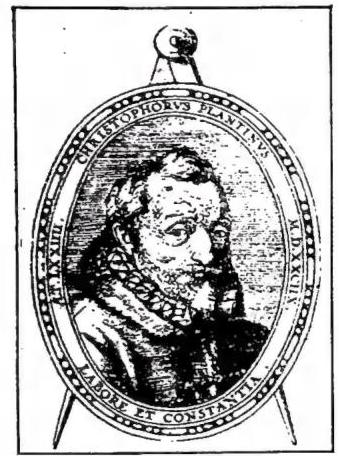
(from J. Demers, Oud nederlandsche Kunstmakers in betrekking met Plantijn, J. Anversa 1918) PLANTIN, CHRISTOPHE - Portrait at 74 years. Copper engraving.science of the physical world, Italian trans. by E. Persico, 3rd ed., Turin 1943, pp. 9, 42, 155, 188, etc.). P. is opposed to indeterminism (ibid., pp. 127, 237). He affirms that “science and religion are not in contrast but need each other to complete themselves in the mind of a man who thinks seriously” (ibid., p. 137). “Science thus leads to a point beyond which it cannot guide us” and man “once he has reached this point is therefore compelled to seek another guide, which he finds only by ... substituting religious faith for scientific knowledge” (ibid., p. 135).
BIBL.: H. Hartmann, M. P. als Mensch und Denker, Berlin 1938; B. van Hagen, Il padre della fisica moderna, in Humanitas, 2 (1948), pp. 30-40. Other indications in G. A. De Brie, Bibliographia philos. 1934-45, I, Brussels 1950, p. 545.
Roberto Masi
Cite this article
“PLANCK, MAX.” Enciclopedia Cattolica, vol. IX (1952), p. 963. Azione Romana digital edition, https://azioneromana.com/article/planck-max.
 Enciclopedia Cattolica