
CLEMENTE XI, POPE. — Giovanni Francesco Albani, born at Urbino on 23 July 1649, was educated in Rome and was not unconnected with the circle of Queen Cristina di Svezia. Appointed secretary of briefs in 1687, he was created by Alessandro VIII cardinal of S. Maria in Aquiro on 10 April 1690.
He was elected pontiff on 23 November 1700. His pontificate was troubled, because, when the War of the Spanish Succession broke out, each of the two opposing powers, France and the Empire with their allies, claimed to have the Pope on its side. Emperor Giuseppe and Filippo V of Spain recalled their ambassadors from Rome, breaking off relations with the Pope; indeed, the emperor had the Papal States harassed by his troops.
The Treaties of Utrecht, Rastadt, and Baden (1712–14) established in general terms the arrangement of Europe without taking the Pope’s rights into account; indeed, the new emperor Carlo VI did not fail to advance new claims. Better prospects, however, were indicated for Christendom by the victories achieved in Hungary by Prince Eugenio and by the Venetians at Corfu and in the Peloponnese, to which the Pontiff also contributed. A passionate debate over Jansenist questions ran throughout the pontificate of C. It began in 1701 with the famous case of conscience: namely, whether a person could be absolved who professed that respectful silence concerning the condemnations of Jansenism was sufficient, without also being required to give internal assent. The Pope condemned this assertion with the bull Vineam Domini of 16 July 1705. On 8 September 1713 he issued the bull Unigenitus, by which
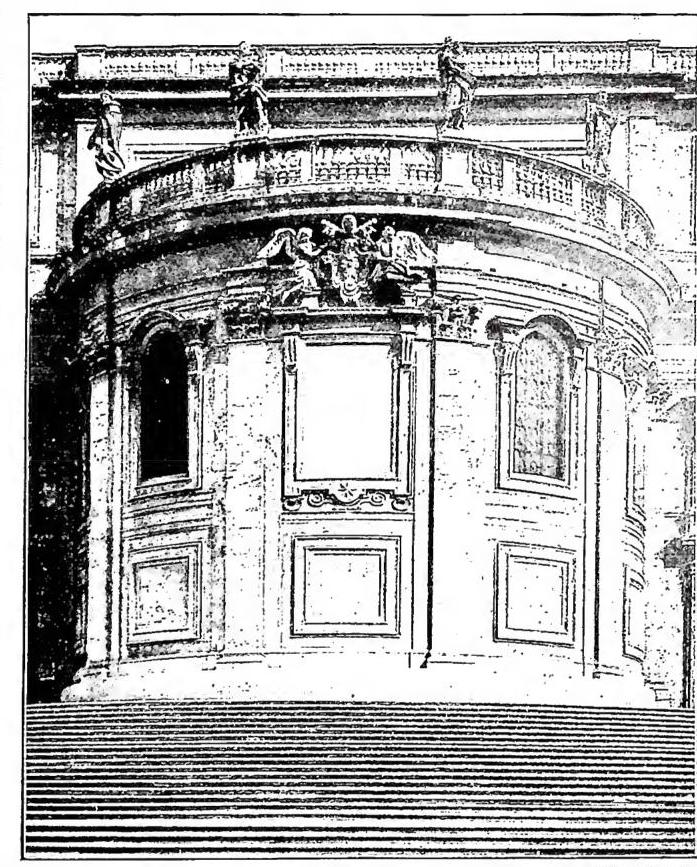
C. died on 19 March 1721 and was buried in S. Pietro.
- Vedi Tav. CXIX.