
MALINES, ARCHDIOCESE OF — Palace of Justice, formerly the Palace of Margherita d’Austria, begun in 1507 — Malines.
soon to become, for Islam, the primary source of every form of juridical elaboration.
Whereas, therefore, Abū Ḥanīfah was constructing in ‘Irāq a legal system which, alongside such texts, assigned a role to personal judgment and analogical deduction (qīḍis), Mālik based his doctrine almost exclusively on the tradition deriving from the Prophet. His teaching has come down to us through the Kitāb al-muwāṭa’ (The Smoothed Path), the oldest Islamic legal work to have reached us with a certain degree of authenticity, and one that reflects religious law, jurisprudence, and ritual as they prevailed in the 2nd century of the Hegira in the Medinan milieu. Other indirect but no less important sources for Mālikite doctrine are the Mudaw-waṇah of Saḥnūn, containing the answers of Mālik’s disciple ibn Qāsim to questions put to him by Saḥnūn himself, and the sections relating to Mālik in aṭ-Ṭabarī’s Kitāb iḥtilāf al-ḥuqahā’. The Mālikite rite, which based its authority on this geographical and environmental continuity with the example and teaching of the Prophet, spread from Medina and the Ḥiḡāz essentially westward. By the 4th–5th centuries of the Hegira (11th–12th centuries A.D.), it had conquered the Magrib in its entirety (North Africa west of Egypt) and Spain, displacing there the minor schools of al-Awzā’ī and Dāwūd al-Iṣfahānī (ẓāhirite), and establishing a primacy which it still retains there without challenge. The entire history—not only religious, but also political and social—of North Africa and Muslim Spain bears the strong imprint of the predominance, and in certain periods the totalitarian omnipotence, of Mālikism; without it, important phenomena of that history, such as the Almoravid and Almohad Empires, are difficult to explain. Outside that region, strong Mālikite groups are found today in eastern Arabia and south-western Eritrea, in certain regions of the Delta, Upper Egypt, and the Sudan (although the officially dominant system there is Ḥanafite). The total number of followers of the Mālikite rite may today be estimated at approximately thirty million.
Francesco Gabrieli
MALINES (in Flemish MECHELN), ARCHDIOCESE of. - City and archdiocese in the province of Antwerp.
I. THE ARCHDIOCESE
It extends over an area of 6,115 km², comprising the two civil provinces of Antwerp and Brabant; it has a population of 3,093,819 inhabitants, 895 parishes, served by 3,186 secular priests and 2,129 regular priests, three seminaries, 216 male religious communities and 1,099 female religious communities (Annuario Pontificio, 1951, p. 261).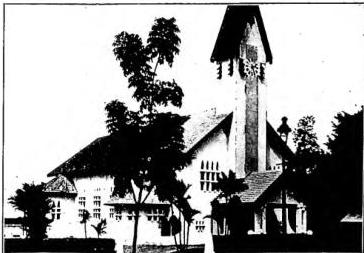
Its suffragan sees are now the dioceses of Tournai, Liège, Namur, Ghent, and Bruges.
Monuments. — The Cathedral of St. Rumbold has the nave and transept from the 13th century, and the choir from the late 14th century. Inside, the pillars of the central nave bear statues of the 12 Apostles; the wooden cathedra (1723) is carved with the conversion of St. Norbert. In the transept is a Crucifix by Van Dyck (1627), restored several times. The unfinished tower rises over 97 meters and contains a carillon with 44 bells (J. Laenen, Histoire de l'église métropolitaine de St-Rombaut à M., 2 vols., Malines 1919). The Church of St. John dates from the 15th century; the polychrome group of the Most Holy Trinity is by the sculptor Van den Wekere; on the high altar is the triptych with the Adoration of the Magi, a masterpiece by Rubens (1619), with on the inner panels to the right St. John the Evangelist immersed in boiling oil, and to the left the Decollation of St. John the Baptist; on the exterior, St. John the Evangelist on Patmos and St. John the Baptist baptizing Jesus Christ. The Church of Notre-Dame-au-delà-de-la-Dyle is in Gothic style with a transept from 1545, but was completed only in the mid-18th century. Inside, one admires the triptych painted by Rubens (1618) for the fishmongers' guild, depicting the Miraculous Draught of Fishes. The Church of the Grand Béguinage was built by the architect J. Francart (d. 1651), who also designed the Church of Notre-Dame of Hanswijck. Nivelles owes its origin to the monastery founded there in 645 by the wife of Pepin of Landen, whose daughter Gertrude was the first abbess. The Church of St. Gertrude dates from the 11th century and was renovated in the 18th century; the ancient portal remains; on the altar is a large copper chest containing the large metal reliquary of St. Gertrude, decorated with statuettes, a work of goldsmithing by Jacquemont de Nivelles and Colars of Douai (1272-92), based on a design by Jacqueney d'Auchin; in the treasury, the so-called cup of St. Gertrude (14th century) and a reliquary by Odelard (14th century) are preserved. In Tienen, the Church of St. Germanus partly dates from the 9th century, with restorations from various periods and a large square bell tower. In Lier, the Church of St. Gummarus is in Gothic style (1425-1515), with an octagonal bell tower and stained glass partly from the 15th century. In Hoogstraten, the Collegiate Church of St. Catherine, in Gothic style, was founded by Anthony of Lalaing (1540), with Flemish stained glass from the 16th century. In Diest, the Gothic Church of St. Sulpicius (1416-1456) has a carved wooden cathedra, and the Church of the Béguinage dates from the 14th century. In Halle, the Gothic Church of Notre-Dame (1341-1409). Remains of the Cistercian abbey of Villers (1147), ruined by the French Revolution.
Among the Saints of the archdiocese are remembered: St. Itta, founder of the abbey of Nivelles; the two sisters Sts. Gudula and Rainelda; St. Libertus, St. Guido, St. Albert of Louvain (1192), St. Mary of Oignies, St. Vivina, founder of the abbey of Grand Bigard, St. Boniface, bishop of Lausanne, the martyrs of Gorcum (1572), St. John Berchmans (v.). The archiepiscopal curia has published monthly since 1907 La vie diocésaine; since 1917, the Collectanea Mechlinensia.
The bull Apostolicae curae of 13 September 1896 on the invalidity of Anglican ordinations seemed to dash forever the hopes of union between the Roman Church and the Anglican Church. However, the appeal in favour of unity, launched by 252 Anglican bishops gathered in plenary assembly at the VI Lambeth Conference, held in London from 5 July to 7 August 1920, rekindled the hopes of Lord Halifax and Fr. Portal, who from 1894 to 1896 had actively worked to bring Rome and Canterbury closer (v. OXFORD, MOVIMENTO di). With the aim of fostering the union of the Churches, the Anglican bishops declared themselves "willing to accept from the authorities of other Churches a kind of commission that would approve the ministry of the Anglican clergy."
Informed by previous experiences and by the advice already given by Newman, Lord Halifax set out for the continent in October 1921, where he met Fr. Portal, and together they presented themselves to the Archbishop of Malines on the 19th of the same month. Lord Halifax addressed Cardinal Mercier with the request to organise conferences between representatives of the Catholic Church and representatives of the Anglican Church. The cardinal, somewhat surprised by the proposal made to him, asked the interested parties why they had not first turned to the English Catholic hierarchy. Lord Halifax’s reply was: "It is impossible due to the state of mind." The cardinal then accepted: "Under no circumstances," he would later say, "would I wish to place one of our separated brethren in the position of having to say that he knocked with confidence on a bishop’s door and that the bishop refused to open it."
The purpose of the Conversations of Malines was clearly expressed by Cardinal Mercier himself in a speech delivered on 25 September 1925 in Brussels: "To remove with all our effort the obstacles that stand in the way of union: this is the aim for which we work; as for union itself, it will be the work of Grace when divine Providence so wills."
1. First Conversation of Malines (6-8 December 1921). — Lord Halifax, Dr. W. Frere, Bishop of Truro and historian of liturgies, and Dr. Armitage Robinson, Dean of Wells and specialist in patristic matters, representing the Anglican group, arrived in Malines on the evening of 5 December 1921. The Catholic side was represented by Cardinal Mercier, Monsignor Van Roey, then vicar general of His Eminence, and Fr. Portal, a Lazarist. The following day, 6 December, the first conversation opened. Lord Halifax spoke first, addressing the Lambeth Appeal and then his own memorandum (cf. J. de Bivort de la Saudée, Documents sur le problème de l'Union anglo-romaine [1921-1927], Paris-Brussels 1949, pp. 9-17), a copy of which he had given to all participants in the conversations. Immediately afterwards, the cardinal began reading the memorandum, and those present offered their observations. Thus, the discussion moved successively from the question of the visible and invisible Church to that of the necessity of Baptism for becoming a member of the Church, from the question of the Council of Trent and the 39 Articles to that of the Vatican Council and its ecumenicity; and finally to the conditions required for a truth to become an article of faith in the Catholic Church.
In the afternoon of the same day, the cardinal concluded the reading of the memorandum; each article was then revisited and discussed. Both sides provided explanations on Baptism, Confirmation, the Eucharist, the Holy Sacrifice, Communion under both species, dogmas, the jurisdiction of bishops, the freedom granted up to that point to the various Churches and that which might be granted to them in the future, Extreme Unction, and Penance.
The following day, 7 December, the discussion focused on the text of the Lambeth Appeal, which the cardinal himself read. In the afternoon, the participants in the conversations heard Cardinal Mercier read paragraphs 8 and 9 of the Lambeth Appeal. It is precisely in paragraph 8 that the Anglican bishops, with the aim of achieving the union of the Churches, declare themselves willing, along with their clergy, to be reordained according to the Roman rite if this could serve to realise union with Rome, "provided that, on the other hand, the terms of agreement have already been satisfactorily reached." The final session of the first Conversation of Malines was held on 8 December. Cardinal Mercier spoke of the appropriate degree of discretion to which all participants in the conversations were to commit themselves. Before leaving the cardinal, the three Anglicans kissed his hand, saying: "Your Eminence, at least you do not drive us away."
2. Second Conversation of Malines (14-15 March 1923)
As early as 25 December 1922, Cardinal Gasparri, Secretary of State, despite certain opposition that was beginning to emerge among English Catholics, had written to Cardinal Mercier: Pope Pius XI "authorises Your Eminence to tell the Anglicans that the Holy Father approves and encourages your conversations and prays with all his heart that God may bless them."The Anglican participants also obtained the approval of the highest ecclesiastical authorities of the Anglican Church. Opening the second Conversation of Malines on 14 March 1923, Cardinal Mercier could rightly say: "This time, not only do we Roman Catholics have the written assurance that the Holy Father approves, encourages, and blesses us, but we also know that our three Anglican brothers come here with the approval of the Archbishops of Canterbury and York, who, after consulting the English bishops under their jurisdiction, send them to Malines in their name." In the first session of 14 March, Cardinal Mercier proposed taking the Memorandum drafted by the Anglicans as the theme for the discussions (cf. J. de Bivort de la Saudée, op. cit., pp. 58-60). The cardinal read the first point, in which the Anglicans emphasise the difference in conditions between the Church of England at the beginning of the 16th century and the Anglican Church of those days, both in terms of geographical extent and numerical strength. Dr. Robinson then read the first paragraph of point 2 of the Memorandum, concerning the position that the Catholic hierarchy of England would assume in the event that union between Rome and the Anglican Church were realised. The participants in the conversations then proceeded to examine together the question of jurisdiction and Orders. Monsignor Van Roey pointed out that the rectification proposed by the Lambeth Conference could be achieved by the imposition of hands sub conditione, first for the Archbishop of Canterbury himself or through his legate, and then by the archbishop for his suffragans. The participants then moved on to paragraph 2 of point 3 of the Memorandum and finally to point 4 of the same Memorandum.
3. Third Conversation of Malines (7-8 November 1923)
Five Catholics and five Anglicans took part in this conversation. On the Catholic side were: Cardinal Mercier, Monsignor Van Roey, Monsignor Batiffol, Fr. Portal, and M. Hemmer, curé of St-Mandé. On the Anglican side: Lord Halifax, Bishop Gore, Dr. Frere, Dr. Armitage Robinson, and Dr. Kidd, warden of Keble College.The highly important question of papal primacy occupied the entirety of this third Conversation of Malines: the first to speak was Dr. Robinson, who read a report he had prepared on The Position of St. Peter in the Primitive Church according to the Testimony of the New Testament (cf. J. de Bivort de la Saudée, op. cit., pp. 86-93). The discussion focused on several points of this report. Immediately afterward, Dr. Kidd read his first memorandum on The Use of Texts Relating to St. Peter up to the Year 461 (loc. cit., pp. 109-27). Mons. Batiffol responded, discussing each paragraph (ibid., pp. 118-28). In the afternoon session, Dr. Kidd presented his second memorandum entitled: To What Extent Was the Pope’s Authority Repudiated in England at the Time of the Reformation. M. Hemmer replied that there was no need to discuss the list of official texts from parliaments and ecclesiastical provincial synods. All present agreed in admitting that the new discussions had achieved positive results, but that it was nonetheless necessary to deepen the doctrine concerning the claims of the Roman pontiffs.
4. Fourth Conversation of Malines (19-20 May 1925)
On 25 December 1923, Dr. Randall Davidson, Archbishop of Canterbury, published a letter addressed to the archbishops and metropolitans of the Anglican Communion, to inform them of the Conversations of Malines as an episode in the general movement of rapprochement between the Churches following the Lambeth Appeal (J. de Bivort de la Saudée, op. cit., pp. 135-39). Cardinal Mercier and Lord Halifax were disappointed by the excessive reserve of the Archbishop of Canterbury. Various reactions appeared in the press. Dr. Davidson’s letter required clarification; therefore, on 18 January 1924, Cardinal Mercier thought it best to publish a pastoral letter on the Conversations of Malines (loc. cit., pp. 140-52). In Rome and throughout Europe, the impression was better than could have been hoped. On 7 February, Cardinal Mercier could say: « From Rome, I have received a splendid private letter from Cardinal Gasparri: it confirms the encouragements of the first, but the Holy See wishes, for the moment, not to assume an official position ». However, this reserved attitude of Rome was not to last long. In the consistorial allocution of 24 March 1924, the Pontiff expressed in a special way his entire sympathy for this new effort in favor of the union of the Churches. The day after the Consistory, Cardinal Gasparri, in a confidential letter to Cardinal Mercier, clearly spoke of the meaning of the approval given by the Holy Father in the previous allocution.The fourth Conversation of Malines, which began on 19 May 1925, thus assumed an importance far superior to that of the preceding ones. The Catholic and Anglican participants were the same as in the third. The subject of discussion was the study by Mons. Van Roey, entitled The Episcopate and the Papacy from a Theological Point of View (loc. cit., pp. 155-66), and that by Canon Hemmer: The Relations Between the Pope and the Bishops Considered from a Historical Perspective (loc. cit., pp. 175-211). It was also during this conversation that Cardinal Mercier, acting « as a private author », read the memorandum by Dom L. Beauduin on The Anglican Church United, Not Absorbed (loc. cit., pp. 212-24). The author developed what seemed to him the ideal formula for reconciliation: union, not absorption of the Anglican Church by the Roman Church. The work of Dom L. Beauduin contained truly suggestive observations: it is well to note, however, that it expressed only the private thought of a theologian and that, moreover, according to the agreements made between Catholics and Anglicans at Malines, it was not to form part of the minutes of the conversations. The fourth Conversation of Malines concluded with a discussion on the memorandum by Dr. Gore entitled: Unity in Diversity (loc. cit., pp. 225-32). In it, he proposed a distinction between fundamental dogmas and those that are not: only thus was reconciliation with Rome possible, following the faith of the first councils. Mons. Batiffol, in a report entitled Response to the Memorandum of Dr. Gore (loc. cit., pp. 233-49), rightly and explicitly affirmed the impossibility of such a distinction among the various dogmas.
5. Fifth Conversation of Malines (11-12 October 1926). — In the period between the fourth and fifth Conversations of Malines, Fr. Woodlock, an English Jesuit, published articles in the Church Times and one, on 10 August 1925, in the journal Etudes. This last article was written in the form of a « rather sharp commentary, though softened by the journal » — as Fr. Dudon, then editor of the journal, expressed it — on a speech given by Lord Halifax in the Albert Hall on 9 July 1925. The stance taken by Fr. Woodlock increasingly expressed the divergences existing between certain English Catholic personalities (supported by Cardinal Merry del Val) on the one hand, and the Catholic participants in the Conversations of Malines on the other. This situation, to which was added the death of Cardinal Mercier on 23 January 1926, soon followed by that of Fr. Portal, explains why the fifth Conversation of Malines had from the outset « almost the air of a liquidation event ». On the Catholic side, the three who were still living took part; on the Anglican side, Halifax, Kidd, and Frere participated. The other two were absent. This fifth conversation aimed to summarize the points discussed between Catholics and Anglicans from 1921 to 1926 and to draft a text that would succinctly present the results. From this text, it emerges that « Catholics and Anglicans agreed on the following points: Jesus Christ founded one true Church; it is His will that all believers live united among themselves in a society whose unity and continuity are visible and tangible; it is the duty of all to collaborate in preserving this unity »; this unity must be « a common faith ». There is also agreement on the doctrines defined by the first ecumenical councils and on the articles of the different Credo: the Apostles’ Creed, the Nicene Creed, the Creed of St. Athanasius. Tradition is not disregarded among Anglicans, for they admit that Scripture needs to be interpreted, that it is the Church’s sole prerogative to provide this interpretation, which serves as the norm for all matters concerning faith and morals.
From the exchange of explanations that took place, it also emerges that the 39 Articles do not constitute, as Catholics feared, an insurmountable obstacle to an understanding between the two Churches.
Turning to the question of the Sacraments, the mutual explanations likewise produced a highly encouraging impression regarding the doctrine that concerns them as means of Grace and spiritual life.
The participants in the Conversations of Malines also agreed in affirming that, according to common doctrine, the hierarchy must descend directly from the Apostles through the uninterrupted succession of bishops, their successors and continuators; that the pope cannot abolish the episcopate: it would be an attack on the constitution of the Church to adopt an attitude that, while not theoretically abolishing it, would nullify it in fact.
As for the special position of the pope in the Church, the divergences in beliefs and opinions are more serious and more difficult to reduce; they are not, however, so radical as to exclude the possibility of revisiting the question in the future with new elements of discussion and with good hope of facilitating agreement in spirit and sentiment.
In the dogmatic field, the Catholics of the Conversations of Malines offered no hope of possible concessions; in the disciplinary field, however, they gave great hope that certain divergences could be accepted by Rome in the event of union.
BIBL.:
J. de Bivort de la Saudée, Les Conversations de Malines, Parigi 1930; A. Palmieri, V. Malines (Conversazioni di), in Enc. Catt.; L. Beauduin, L'Église anglicane unie non absorbée, Parigi 1925; H. Hemmer, Les relations entre le Pape et les évêques, Parigi 1925; G. Kidd, The Roman Primacy to A.D. 461, Londra 1925; P. Batiffol, L'Église naissante et le catholicisme, Parigi 1927; C. Gore, Unity in Diversity, Londra 1926; A. Van Roey, L'épiscopat et le papauté, Malines 1925; The Conversations at Malines 1921-1925, Official Documents, Londra 1928; The Malines Conversations, a cura di V. McNabb, Londra 1928.
A. Palmieri
The Conversations of Malines (C. di M.) left all their participants with the impression that, as doctrinal agreement is gradually achieved, disciplinary understanding would also become easier, however delicate it may be. Anglicans are willing to make sacrifices for union. Catholics, for their part, are equally prepared to grant those who might eventually convert that freedom which would not prejudice the unity itself, of which they know the high price through a long and painful experience of four centuries of separation.
The evening of 12 October 1926 marked the end of the fifth Conversation of Malines. In the movement toward convergence between the Catholic Church and the Anglican Church, the Conversations of Malines represent a milestone whose full significance is difficult to measure. While they may have generated in some Anglican figures, such as Cardinal Bourne and Father Woodlock, the fear of a temporary slowdown in the usual individual conversions, they at least achieved the first desired goal: the points of agreement were clarified, and the path that will one day—it is fervently hoped—lead to Christian unity was laid out. Moreover, the methods followed in the Conversations of Malines are precisely those that the Sacred Congregation of the Holy Office warmly recommended in a document issued on 20 December 1949: Instruction to Ordinaries on the Ecumenical Movement. What is perhaps even more admirable is the atmosphere in which these meetings took place. As one of the representatives of the Anglican Church, Dr. Robinson, expressed it, the Conversations of Malines lasted "hours and hours on the greatest subjects that divide us," yet "not a single moment was the cordiality of relations disturbed or the trust in the future disappointed."
III. CODE OF MALINES
Within the great movement sparked by the Leonine social encyclicals, the International Union of Social Studies was founded in Malines in 1920, placed under the direction of Cardinal Mercier and, from 1926 onward, of Cardinal Van Roey. Its purpose was to study social problems in the light of Catholic morality; to communicate to the public, and especially to men of action, the directives and resolutions it had deliberated; and to establish, when necessary, a social consultation office. A similar aim had been pursued, between 1884 and 1891, by the analogous Union founded in Fribourg (Switzerland) under the direction of Cardinal Mermillod.The idea of a reconstruction dawned upon a Belgian statesman, a veteran of the first Union, Minister Helleputte, after a conversation with E. Suttoit, professor at the Catholic University of Lille and president of the "social weeks" of France. It was benevolently received by Cardinal Mercier, who undertook to gather adhesions, extended from the initial Franco-Belgian nucleus to personalities from Austria, Canada, Germany, England, Italy, the Netherlands, Poland, Spain, the United States of America, and Switzerland. After lengthy studies and provisional drafts, during the 1924 session it was decided to compile a "social synthesis from a Christian and Catholic perspective." A committee drafted it and submitted it to the session in 1925; re-examined again in 1926, it was published in 1927. This is precisely the social code commonly known as the "Code of Malines," from the city in which it was elaborated.
Although the articles were mostly approved unanimously, they often resulted from differing considerations, whose opposition, initially more pronounced, eventually disappeared into a sufficiently broad formula to leave each participant a certain freedom of opinion. This explains the generic character of several solutions. Nevertheless, the conclusions adopted—grouped into an introduction and seven chapters (family life, civic life, professional society, economic life, private associations, international life, supernatural life as the crowning of earthly life)—reveal the common doctrine by which they are permeated, along with the Christian ideas of justice and charity. Without disregarding the value of personal initiative and recognizing the State's legitimate role, the concern emerges to discipline individuals and nations through the bodies to which they belong—free associations, family, profession, League of Nations, Church—rather than through the direct and coercive union of political power.
The first edition of the code (Rovigo 1927) was followed by another, updated and adapted to the times (Rome 1933), and later revised in a third edition (Rome 1950). Furthermore, the Union published a documentary volume on approximately 1,500 acts of the universal episcopate (La hiérarchie catholique et le problème social depuis l'encyclique « Rerum novarum » 1891-1931, Paris 1931) and a Code of International Morality (15 July 1937; updated new edition, Rome 1950), meeting a felt need for clarification of ideas in this field. A similar code is the so-called "Code of Camaldoli," compiled between 1943 and 1945 by a group of Italian scholars under the guidance of Monsignor Adriano Bernareggi, Bishop of Bergamo. Then, in 1946, a "declaration" of principles regulating individual and state initiatives was promoted by the "Rural Life Conference" and signed by 28 Catholic, 35 Protestant, and 12 Jewish personalities from North America.