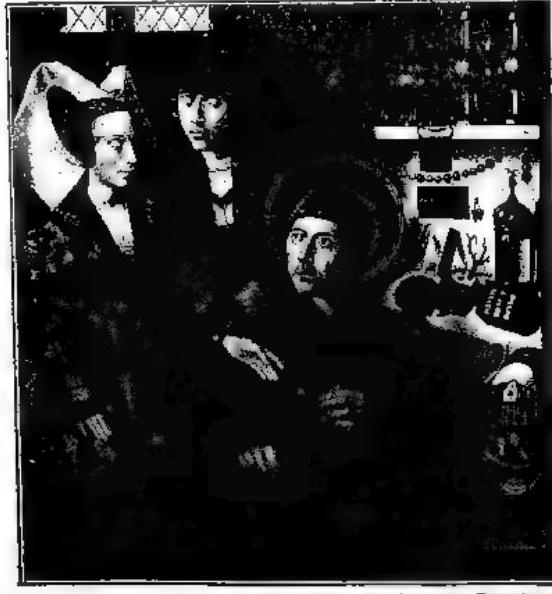
ELIGIO, saint. - Bishop of Noyon-Tournai (641–60). Born about 590 at Chaptelat near Limoges, of a Gallo-Roman family, he was goldsmith and moneyer to Kings Clotario II and Dagoberto I, highly esteemed as the king’s counsellor; he ransomed numerous slaves and founded churches and monasteries, such as Solignac, under the influence of the monastery of Luxeuil.
After the death of King Dagoberto I in 639, he left the court, became a priest, and the people elected him bishop of Noyon on 13 May 641. He converted numerous pagan Germans. Of his correspondence there remains one letter to Desiderio of Cahora. The homilies published under his name are, according to E. Vacandard, apocryphal. Not all the works of art attributed to E. are his: for example, the throne of Dagoberto. On the goldsmith’s works attributed to E. cf. Eid. in DACL, IV, cols. 2674–87. Several coins bearing his signature exist: cf. M. Prou, Introduction al Catalogue des monnaies mérovingiennes de la Bibl. nationale de Paris, Paris 1892, p. xli 1893. His feast is celebrated on 1 Dec. He is the patron of goldsmiths, farriers, and also of peasants.