
RUREMONDA, DIOCESE of – Suffragan of Utrecht; it coincides with the civil province of Dutch Limburg, with an area of 2,205 sq km and 684,105 inhabitants, of whom 646,717 are Catholics, or 94.5% (1947 census); they are distributed among 300 parishes with 808 secular priests and 94 religious. The most densely populated part is the southern area, where the coal mines are located. Around the beginning of our century, this region gradually changed from a rural into an industrial one. Timely and intensive social activity ensured that the change could take place without losses for Catholicism. The initiative was taken, until his death, by Mgr. Enrico Poels, who died on 7 September 1948. Today the miners, for the most part, belong to the Catholic trade union.
Almost all this territory belonged to the diocese of Liège, suffragan of Cologne until 1559; in that year Paul IV, with the bull Super universes, gave the Netherlands a new organization and founded the diocese of R. as a suffragan of Mechelen. On 7 August 1561 Pius IV appointed the first bishop and provided for the endowment and territorial delimitation of the diocese. Politically, it was insufficiently homogeneous and did not have the same geographical configuration as at present, since it was composed of various territories separated from one another by areas belonging to the diocese of Liège, a situation that made communications extremely difficult; Maastricht also remained outside the new diocese. The first bishop was the dean of The Hague, Guglielmo Lindanus, who took possession of his see only in 1569 because of the resistance of those bishops who had to cede parts of their territory, and of abbots whose abbeys were incorporated as an endowment; there was also resistance from the population itself, which regarded the new bishop, proposed by the king of Spain, Filippo II, as an exponent of royal authority and feared the introduction of the Spanish Inquisition. His two successors, Cuyckius and Castro, were also excellent bishops. After them, during the 17th and 18th centuries, as a result of political disturbances and also because of the poverty of the diocese, the see was vacant several times. Yet, while in the northern dioceses the Protestant “reform” prevailed, in R. the hierarchy could continue and the population remained Catholic. The Napoleonic Concordat of 1801 suppressed the diocese and incorporated most of it into the diocese of Liège. After the separation of Holland from Belgium, Limburg became a Dutch province in 1839. King Guglielmo I insisted that the parts of Limburg still under the jurisdiction of Belgian bishops be removed from II. Thus, on 2 June 1840, Gregorio XVI established the vicariate of R.; and in 1853, when the entire Dutch hierarchy was restored, it became a diocese with its present area. The first vicar and subsequently bishop was Giovanni Paredia, dean of R., who as early as 1841 had opened a major seminary in the former charterhouse of R. (famous for its twelve martyrs of 1572 and for having been the residence of Dionisio Cartusiano, known as the “doctor extaticus”), and in 1843 a minor seminary at Rolduc, a medieval abbey of Canons Regular founded in 1104 by Alberto, with a beautiful Romanesque church of the 12th century. The cathedral chapter was established in 1850.
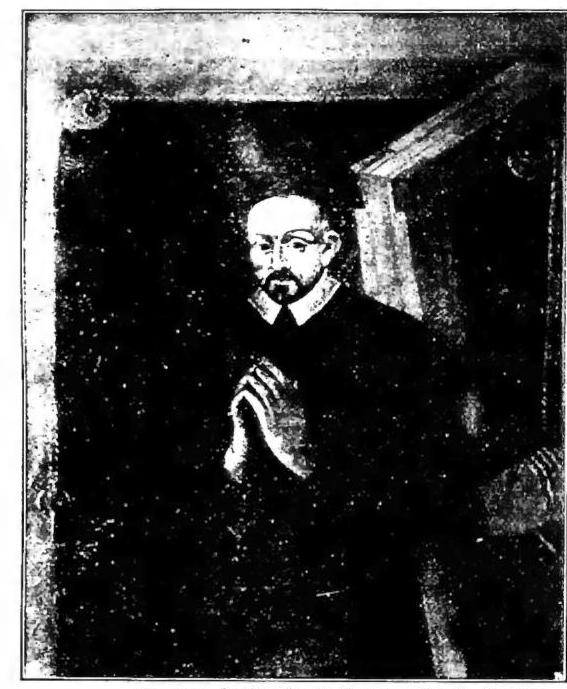
(from anon., Iconografia di N. dei nobili R. di Bedano, Como 1933, p. 3)
RUSCA. NICCOLÒ – Portrait.
St. Willibrord, the missionary of the Frisians, founded a monastery under Pippin of Heristal; St-Odilienberg, near R., where the English missionaries Wiro, Otgero, and Plechelmo founded a church in honor of St. Peter at the beginning of the 8th century.
The city of R. itself, in addition to its Gothic cathedral, destroyed during the last war but now restored, has a magnificent monastic church in the Romanesque style of the 11th–12th centuries.
During the fierce revolt of the Netherlands, the Calvinist troops of William the Silent, having seized the city of R. by a coup de main on 24 July 1572, wreaked havoc on the local clergy, putting to death amid atrocious tortures the priests Erasmo of Utrecht, Vincenzo of Herch, Mattia of Cologne, Giovanni of Liège, Guglielmo Wellen, Giovanni Leewis; the deacons Enrico Wellen and Giovanni Gresserich; and the Carthusian lay brothers Stefano Alberto Winsemio and Giovanni Sittard.
The question of the Prince of Orange’s complicity in the massacre remains unresolved; he nevertheless did not intervene to save those being tortured, nor did he take measures against the murderers.