
LIMBURG, Diocese of. - City and diocese of Germany. The diocese comprises the Duchy of Nassau and the city of Frankfurt, to which were added in 1884 the province of Biedenkopf and the territory of Homburg.
Out of 1,527,250 inhabitants, the diocese counts 606,900 Catholics, 431 parishes, 520 secular priests and 204 regular priests, 27 male and 180 female religious communities (Ann. pont., 1951, p. 247); 2 gymnasium-boarding schools and a Theological-Philosophical Faculty in Frankfurt.
The episcopal curia resides in the ancient Franciscan convent, built as early as the time of St. Francis. Currently, there are in the diocese 6 Franciscan monasteries, one Cistercian, one Capuchin, one of the Oblates, one of the Pallottines, two houses of the Jesuits, three of the PP. of the Sacred Hearts of Jesus and Mary, two of the Salesians, and 9 of the Brothers of Mercy. The diocese is home to 19 communities of sisters, among which are the Benedictine nuns of Eibingen, the Pallottine Sisters, and the Sisters of Dernbach.
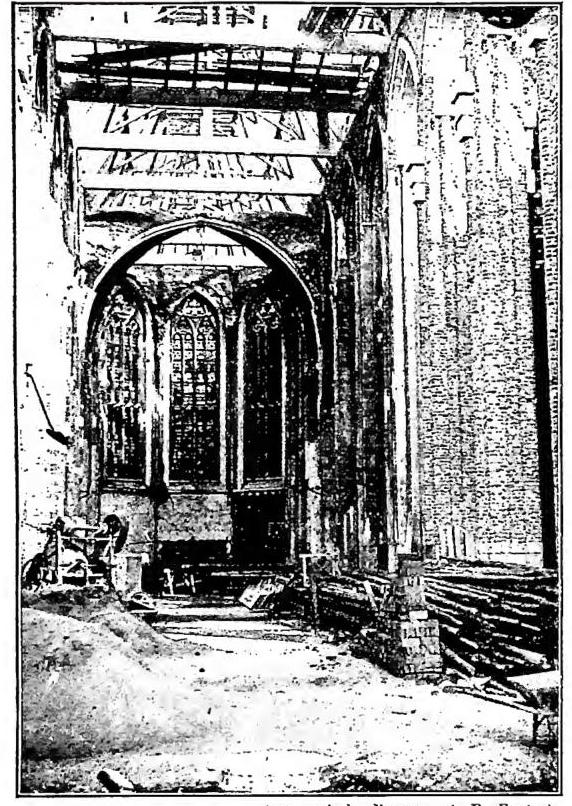
The origins of the city date back to Roman times. The first cathedral was built in the 9th century, dedicated to St. George and consecrated by Archbishop Hetti of Trier. The second basilica was built by Count Konrad Kurzibold around 910. Even today, his funeral commemoration is celebrated in the cathedral. Today's cathedral, in early Gothic forms, was consecrated in 1235. It has seven towers and is one of the finest examples of its period in Germany, and was commissioned by Count Heinrich von Isenburg. The Chapter, in its most flourishing period, numbered 58 canons, of whom 30 were resident. Common life, however, declined as early as the 13th century. Ecclesiastical administration until 1794 was directed by the office of the Archbishop of Trier located in Koblenz. In that year, the last official, Ludwig Beck, a Febronian, withdrew before the French invasion, taking refuge in Limburg, and from then on L. functioned as an ecclesiastical administration dependent on Trier for the rural deaneries of the right bank of the Rhine, Dietkirchen, with 27 parishes, Cunosteln-Engers with 51 parishes, and Camp with 9 parishes. In 1802 Archbishop Clemens Wenceslaus elevated this office of L. to a general vicarage governed by Beck. After the death of Clemens Wenceslaus in 1812, Beck administered the general vicarage as capitular vicar. After his death, in March 1816, by decree of Dahlberg, he was succeeded as regent of the vicarage by the parish priest Corden, who was later appointed apostolic vicar by Pius VII on July 8, 1818. Only with the bull Ad dominici gregis custodiam (Apr. 11, 1827) was the new diocese of L. erected, with a Chapter composed of a dean, five canons, and two vicars.