
THE HAGUE. – City of the Netherlands; royal and governmental residence. It is also called Gravenhage, “the count’s enclosure,” since in the mid-eleventh century the site was nothing more than a hunting enclosure of the counts of Holland. It currently has 522,000 inhabitants, of whom 120,000 are Catholics; its territory belongs to the diocese of Haarlem.
The Catholics have a flourishing organization, as is demonstrated by the following institutions, all based in the city, namely: Central Catholic Office for Instruction and Education; Dutch Catholic Council for Schools; National Directorate of the Pontifical Work of s. Pietro apostolo for the Indigenous Clergy; National Secretariat of the Missionary Union of the Clergy; Offices or Central Office for Missions in Indonesia; Catholic Office for Indonesia; Catholic Ecclesiastical Social Institute; Dutch Catholic Press Office; General Secretariat of the Marian Congregations in Holland; Higher Council of the Conferences of s. Vincenzo in Holland; Union of Catholic Hospitals; Council of Catholic Hospitals; National Secretariat of the General Union of Catholic Employers; Catholic Federation of Employers’ Unions; National Secretariat of the Union of Young Catholic Employers; Office of the Dutch Catholic Middle-Class Union; Office of the Catholic Union of Young People of the Middle Class; National Secretariat of the Dutch Catholic Union of Farmers and Horticulturists; National Secretariat of the Dutch Catholic Union of Young Farmers and Horticulturists; National Headquarters of the Catholic Youth Movement; National Secretariat of the Dutch Catholic Sports Union; National Secretariat of the Youth Organization of the Catholic People’s Party; National Office of the General Union of Catholic Artists; Central Federation of the Charitable Works of S. Francesco.
Among the city’s principal buildings are: the Groote Keerk (great church), dedicated to s. Giacomo Maggiore, with three naves in the Gothic style of the early fourteenth century; it preserves several sixteenth-century stained-glass windows and a pulpit from 1550. It was sacked in 1528 and set on fire in 1559 and 1702.
The hexagonal bell tower was erected in 1432 and reaches a height of 100 m. The church is now occupied by Protestants.
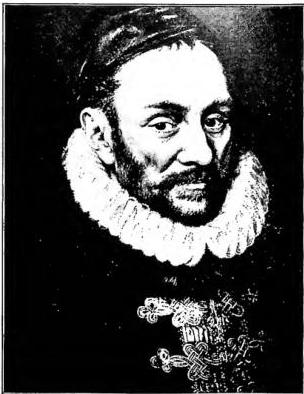
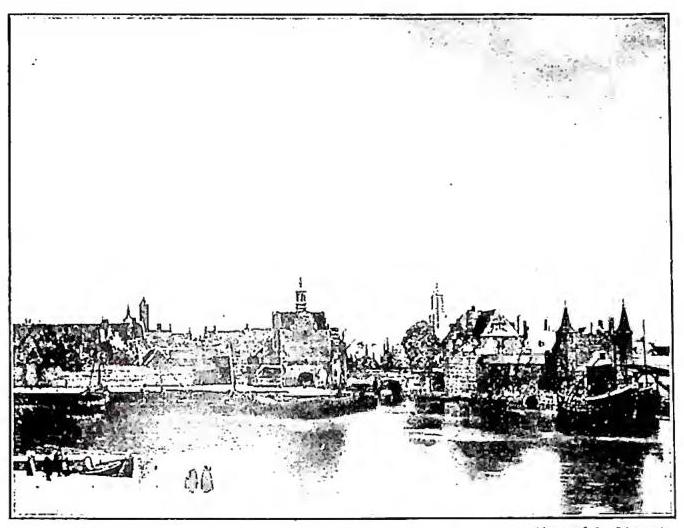
The “Mauritshuis,” the former residence of Giovanni-Maurizio di Nassau, governor of Brazil, was built by B. van Bassen and A. van's Gravensande in 1636; restored after a fire in the eighteenth century, King Guglielmo I established there the Royal Painting Museum, which houses one of the most important collections of Flemish art of the sixteenth and seventeenth centuries, together with some Italian and Spanish works. Among the 17 Rembrandts with which this Museum is richly endowed, the first to be mentioned is the Lezione d'anatomia del professor Tupl (1632). Among others, the Museum contains paintings by the following Dutch painters: D. Terniers the Younger, Jan Brueghel, A. Van Dyck, J. and A. van Ostade, C. Fabritius, J. van Ruisdael, Franz Hals, Jan Steen, P. Potter, J. Vermeer. The Municipal Historical Museum (Historich-Museum der Gemeente), housed in the former building of the Confraternity of the Archers of St Sebastian (1636), contains archaeological and historical collections.
The Kröller Museum is the most remarkable gallery of modern art in all Holland, rich in paintings not only from the Dutch school but also from foreign schools, especially the French. The H. W. Mesdag Museum, named after the painter who donated it to the State in 1903, comprises a rich collection of paintings of modern art, as well as Chinese, Japanese, Arab, and Persian vases and bronzes.
The Meermann Weestrenianum Museum contains a collection of art objects, manuscripts, incunabula, and coins bequeathed in 1816 by Count Meermann and in 1858 by Baron Weestrenen.
The Royal Library contains more than 500,000 volumes and valuable manuscripts and incunabula, together with a numismatic cabinet and a rich collection of cameos. Toward Scheveningen, the Peace Palace was erected in 1907–13, according to a design by the Belgian architect Cordonnier. - Vedi tav. L.
BIM.: A. Wild, Die Niederlande, Lipsia 1862; H. Bluik, Nederland, Groninga 1912; E. De Amicis, Olanda, Milano 1927, pp. 146–242; A. Demangeon, L'A., in Les villes de Hollande, in Géographie universelle, II, Parigi 1927, pp. 212–13; Min. of foreign affairs, Handbook of the Netherlands and overseas territories, L'Aia 1931; P. Schuling, Nederland, Zwolle 1936.