
STAMPA. — From the moral and juridical standpoint, which is of particular concern here, and in its broadest meaning, the term denotes everything published, in any form, by means of the typographical art, in order to express and disseminate human thought through the written word or through images. In a narrower sense, it is ordinarily applied to journalism (v.), that is, to the entire complex of publishing activity which has also been called the fourth power. Freedom of the press concerns this activity predominantly, but the issue arises with regard to all publications. The special importance accorded to journalism in discussions of it depends on its greater influence in shaping public opinion (v. PUBBLICA OPINIONE) and, consequently, on its political importance, particularly under a democratic system.
I. FREEDOM OF THE PRESS AND ECCLESIASTICAL CENSORSHIP
Freedom of the press is merely one aspect of freedom of thought and speech, or rather of freedom without qualification, considered in one of its particular manifestations, namely, in the faculty inherent in it of communicating one’s ideas, opinions, and conceptions through the use of speech, in this case written speech.Although in antiquity the problem did not present itself in the same terms in which it came to be formulated after the invention of the press, there are nevertheless, particularly in Roman legislation, examples that may still be instructive today.
In the Church, the introduction of the censura praevia is owed to Sixtus IV, so deserving of merit for the art of printing; it was reaffirmed and put into effect by Alexander VI in 1492 (v. INDICE DEI LIBRI PROIBITI). Here it is chiefly important to examine the juridical foundations of the question, which must be considered both from the general standpoint of freedom and from that of Revelation.
The Church has received the divine mandate to teach what Christ taught, and consequently the duty to preserve from every contamination of error the deposit of revealed truth, whose integral acceptance is a necessary condition for eternal salvation, as well as the right to watch over it so that it may not be corrupted. This duty and this right constitute the foundation of the preventive measures it has adopted, through which it also seeks to ensure the attainment of its institutional end, the salus animarum, and its social unity, which rests upon the bond of a common faith. Freedom is neither diminished nor restricted by these measures. Individually, each believer remains free to follow or not to follow its directives; social-ly, its action consists in clarifying the obligations incumbent upon the believer by the very fact of his voluntary belonging to the supernatural society founded by Christ. If in every social body freedom remains limited by the specific end toward which it is directed and by its internal laws, this must be admitted all the more with regard to the Church, within which freedom of the press must be subject to the requirement of the unity of the faith, its constitutional principle, and to the necessities of salvation, its essential end.
II. FREEDOM OF THE PRESS AND GOVERNMENT CENSORSHIP
The question presents itself as somewhat more complex with regard to civil society.Freedom of the press was first affirmed in England in 1695, when the Commons refused to approve the restrictive measures then in force, which had been particularly aggravated by the Licensing Act of 1662. The concept crossed with the colonists into North America, where it received its first legislative formulation. The Bill of rights adopted an amendment to the Federal Constitution, presented by Virginia and other States, and incorporated it into the Constitution. By this amendment, any law that might restrict freedom of speech and of the press was prohibited. The principle was affirmed in Europe in the Declaration of the Rights of Man of 1789 (art. 11); it received juridical formulation in the Constitution of 1791 and in that of 1793. It has entered almost all modern constitutions. The Statute of Carlo Alberto of 4 March 1848 declared in art. 4 that «the press is free, but a law represses its abuses». The Statute promulgated by Pio IX on 14 March 1848 followed the movement initiated by the French Revolution, inasmuch as, through art. 11, it abolished preventive or political censorship of the press, replacing it with repressive measures to be established by law. Contemporary juridical thought has continued to move along the same lines, most recently expressed in the international declaration of human rights approved by the United Nations Organization (v. DIRITTI DELL'UOMO).
An examination of even the most recent constitutional texts reveals that they invariably join the affirmation of freedom of the press to the determination of certain restrictions, intended to prevent abuses, either established by reference to morality and the common good or to be specified in a particular law. This greatly facilitates the solution of the speculative question concerning the right to freedom of the press and its limits.
The existence of such a right has never been called into question by Catholic doctrine, which respects the human person and could not fail to recognize in that person the faculty of communicating his ideas through the use of spoken or written language. Indeed, one of the principal arguments used to demonstrate man's natural sociability has been based upon language and its specific function. The right, therefore, to communicate thoughts and opinions by means of the forms of expression suited to this purpose is rooted in man's rational nature and in his original destiny to social life: it is consequently indisputable. Catholic doctrine has merely combated a particular interpretation of it, derived from the false concept of freedom defined as the total autonomy of the will. In practical terms, all legislation has vindicated it, since none has codified unlimited freedom; in theoretical terms, however, not a few have accepted that concept, resorting to the external limit of the law.
Here lies an error that must be corrected. Freedom, not in its physical aspect as self-mastery of the act but in its moral aspect, is the faculty of determining oneself independently according to the immanent laws of rationality; and since the human being has an innate tendency toward society, which is necessary for his full development, two series of laws are intrinsic to him: one regulating private conduct imperatively, and the other guiding him in the same manner in public life. Freedom is consequently a faculty intrinsically limited both by morality and by justice, which includes the imperative requirements of the political community. The law is nothing other than the positive determination of these limits, which already exist before its formulation; and in them it finds its reason for being, not, as has been asserted, in a supposed general will, a mere expression of the majority without moral value or juridical content unless it derives them from another source. Freedom of the press, therefore, is indeed a fundamental right of the person, but an intrinsically limited right, which leaves room for the regulating intervention of political authority.
The individual criterion for concretely establishing this limit is derived from the natural purpose of spoken and written language, which is intrinsically ordered to the manifestation and propagation of truth; the social criterion is derived from the common good, which must be understood to include not only the rights of others but also those of society as such: the preservation of public order and the positive protection of human, moral, civic, and religious values, which form part of its highest spiritual heritage. The only matter remaining for discussion with regard to freedom of the press is therefore whether political authority may resort to preventive measures—censorship, police seizure, authorization—or whether it must restrict itself to the adoption of repressive measures: punishing abuses.
On the theoretical plane, it is impossible to deny its right to prevent evil, if it can do so, and that prevention is preferable to punishment. This right is not opposed by the false reason alleged against it, namely that the State would be incapable of knowing the truth in order to protect it from error, since certain moral, juridical, and religious principles are so evident and so deeply rooted in the common conscience that public authority cannot ignore them. The objection presupposes a State that is morally and religiously agnostic; this is both a speculative and a practical absurdity. Greater weight is carried by the arguments against preventive measures based on the impossibility of applying them effectively, on the lack of impartiality, and on the danger of tyranny implicit in them. On the practical plane, where it is always permissible to follow the prudential rule of the lesser evil, the following conclusions may therefore be accepted.
Preventive censorship must be excluded because of the very easy abuses to which it lends itself and the danger of establishing a tyrannically oppressive regime. Seizure is appropriate and lawful, particularly when it concerns immoral and obscene publications that offend modesty and good morals; any possible abuses can be avoided if it is followed by a regular complaint to the judicial authorities and a trial. Preventive authorization shares, although to a lesser degree, in the dangers of censorship. Exceptional conditions, such as war or a particularly serious internal disturbance, may suggest departures from these norms and legitimize broader precautionary intervention by the State.
The duties of the press can be summed up in the word truth. Only by serving truth can it achieve the immediate purpose to which the use of the written word and the means of expression is essentially subordinated, and contribute beneficially to the education of the public and the formation of opinion. Service of the truth does not, however, prohibit objective and constructive criticism of political authority. It does prohibit press campaigns directed toward overthrowing order and fomenting and spreading hatred through lies. The «unchecked propaganda that does not shrink from manifest distortions of the truth» was pointed out by Pio XII, in his Christmas address of 1940, as a source of international discord. It must be condemned as political misconduct contrary to the social good, to the duty of honesty in criticism and opposition, and to the tasks of a press conscious of its lofty ends.
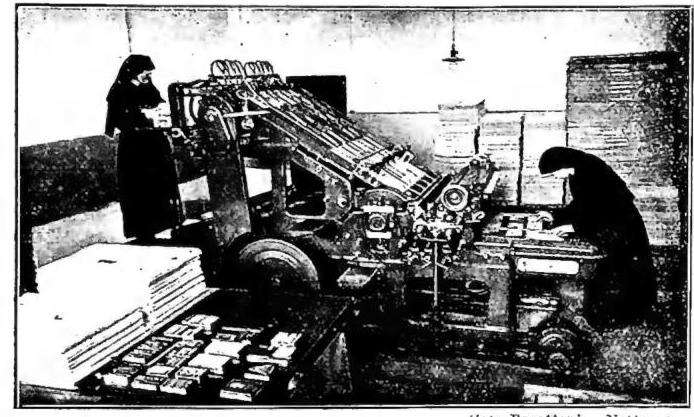
(fot. Barattini - Nettuno)