
MISSIONARY UNION OF THE CLERGY. - The distant origins of the U. M. d. C. are indistinguishable from the history of the apostolate, which priests have always exercised for the conversion of peoples, but its precursors in the strict sense go back to the end of the 19th century.
In Holland the clergy had been involved through the Apostolic League. In Germany the priest Giuseppe Schmidlin (v.) gave rise to various priestly associations for the cultural and missionary formation of the clergy. The merit, however, of having realized an organization of priests who committed themselves to an effective missionary cooperation belongs to Fr. Paolo Manna of the Pontifical Institute for Foreign Missions (v.), b. at Avellino on 16 Jan. 1872 and d. at Naples on 15 Sept. 1952. As early as 1908 Manna had launched the idea in the book: Operarii autem pauci, and at the end of 1915 he wrote the first draft of the statute of the Union, which through Msgr. Guido M. Conforti (v.) was presented to Benedict XV on 27 Apr. 1916. Propaganda approved it on 31 Oct. of the same year. The U. M. d. C. was immediately established in Italy and soon enriched with privileges and indulgences. The apostolic letter Maximum illud (1919) officially consecrated
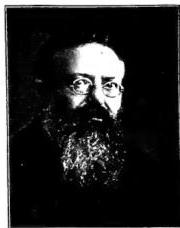
MISSIONARY UNION OF THE CLERGY. Portrait of Paolo Manna, founder of the U.
its existence, extending it to the whole world. The success of the U. M. d. C. was by then assured, and today it is established in all countries and in the missionary territories themselves. The statutes of 1916 were approved temporarily in 1921. In 1926 came the definitive statute, later modified in 1937 following the establishment of the International Secretariat, decreed in 1936. The International Secretariat, headed by the Secretary General, is the center of all the National Directions of the U. M. d. C., on which the respective diocesan Directions depend. Secular and regular priests and theology students may enroll in the U. M. d. C., and in assuming its obligations they enjoy no small number of spiritual favors, communicated also to all missionaries. By decree of 14 July 1949 Propaganda again approved the statutes concerning the action of the U. M. d. C. for lay religious and for sisters, who may join by personal or collective enrollment, enjoying special spiritual privileges.
Among the various initiatives, mention should be made of the "Day of the Sick," who on the day of Pentecost offer their sufferings for the missions.
Bibliography2 works
Saverio Paventi