
RUBENS, PETER PAUL. – Painter born in Siegen (Westphalia) on the 28th
(courtesy of Monsignor A. P. Frutaz)
RUBENS, PETER PAUL. — Detail of St. John the Baptist — Balduina (Padua), parish church.
June 1577, d. in Antwerp on 30 May 1640. Of a noble Antwerp family that had emigrated to Germany to escape the persecutions of the wars of religion and returned to Antwerp in 1587, R. completed his artistic education there, first under Tobias Verhaecht and then under Adam van Noort and Otto van Veen, a Flemish Romanist.
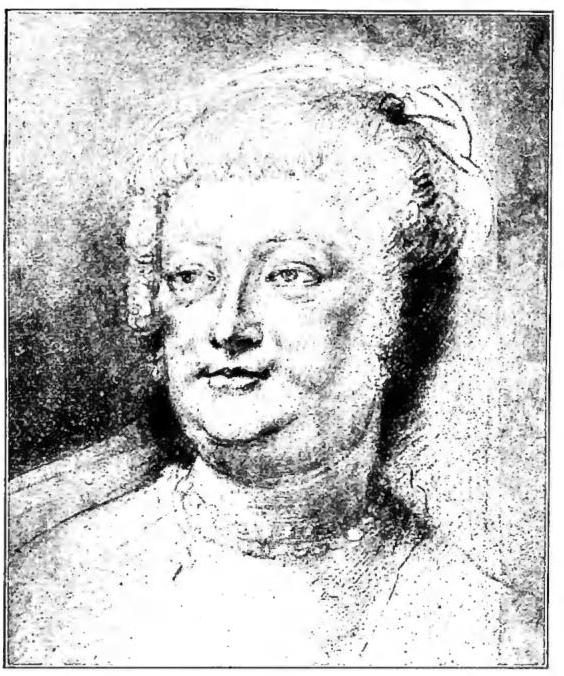
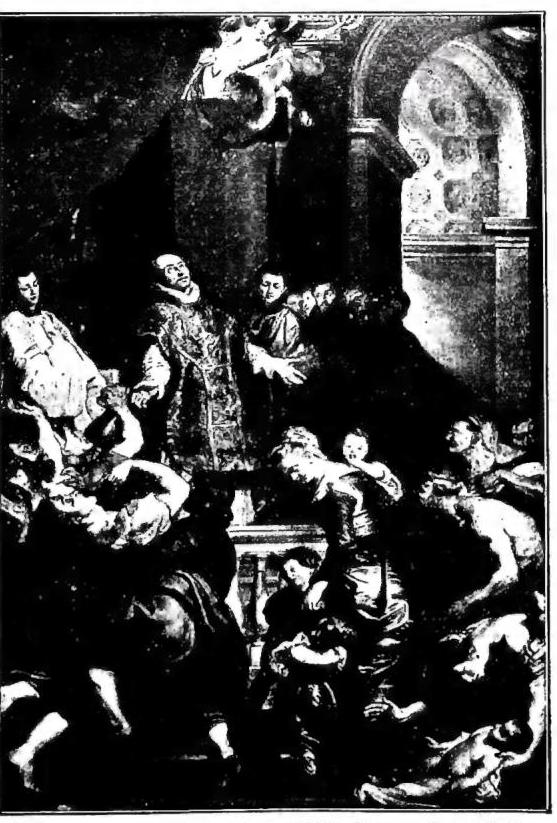
Having settled in Antwerp in 1608 (in 1609 he married Isabella Brandt there, whom he portrayed in numerous canvases, as he later did Elena Fourment, whom he married in 1630 as his second wife), he was appointed painter to the archdukes Alberto and Isabella, embarking upon that prodigious activity—not only as a painter, but also as a collector and diplomat in the service of the Infanta Isabella, on whose behalf he carried out brilliant missions to various courts of Europe, and as a writer (a great number of his letters have been preserved)—which makes him one of the most versatile intellects of the century. At the head of a flourishing workshop, surrounded by pupils and collaborators including J. Jordaens, F. Snyders and van Dyck, his production, extraordinarily varied and always bold and grandiose, progressively moved from an idealization and objectification of the image, nevertheless pervaded by exceptional vitality and stirred by a rhythm of movement and an inventive fervour that were fully Baroque, toward an increasingly pronounced formal freedom and fantastic excitation, finding its highest expression at the two extremes of thunderous large allegorical or religious compositions and lyrical representations of landscapes that were astonishingly anticipatory. Among the major undertakings of his maturity, particular mention should be made of the canvases in Antwerp Cathedral, The Elevation of the Cross (1610–11) and The Descent from the Cross (1611–14; later, in 1626, is The Assumption of Mary in the same church); The Communion of S. Francis, 1619, still under the influence of the analogous compositions of The Communion of S. Jerome by Agostino Carracci and Domenichino in Bologna and Rome, and The Lance Wound (1620), in the Antwerp Museum; the decoration of the Jesuit church in Antwerp (1620–21), destroyed in the 18th century except for the two altarpieces with The Miracles of S. Ignatius and The Miracles of S. Francis Xavier, preserved in the Kunsthistorisches Museum in Vienna; the great cycle of celebratory paintings of Maria de' Medici executed in 1621–25 for the Luxembourg Gallery, now in the Louvre (from another cycle in honour of Henry IV, never completed, canvases remain in the Uffizi, Munich, etc.); the decoration of the ceiling of the Banqueting Hall (1630–35) at Whitehall in London; the Triptych of S. Ildefonso, for the court church of Brussels (1630–32), now in the Kunsthistorisches Museum in Vienna; The Crucifixion of S. Peter, 1635–40, in the church of S. Peter at Cologne, etc. A production for the most part of the highest artistic value, always displaying astonishing ease and skill in pictorial execution, placing R.—whose appreciation long suffered on account of classicist prejudices against the art of the Baroque period (his contemporaries would have greatly extolled him, and their approval found an echo at the end of the 17th century in Roger de Piles, in the well-known Querelle des anciens et des modernes, which opposed R. to Poussin, the idol of orthodox classicists)—as the immediate precursor of the most refined achievements of 18th-century French painting, as well as a highly inspired anticipation of the painting of the last century, from Delacroix to the Impressionists. In parallel, Romantic writers, from Baudelaire to Fromentin, extolled his work, initiating the high esteem in which the painter is held today. – Vedi tav. LXXXVIII.
(courtesy of Mons. A. P. Frutas)
RUBENS, PETER PAUL — The Miracle of St. Ignatius — Genoa, church of St. Ambrose.
On the doctrine that the Fathers of the Society of Jesus teach to Neophytes in the missions of China.
With a reply to the objections of certain Moderns who oppose II.
A work by Father Antonio Rubino of the Society of Jesus, Visitor of the Province of Japan and China.
Translated from Portuguese into Italian by Father Gio. Filippo de Marini, of the same Society.
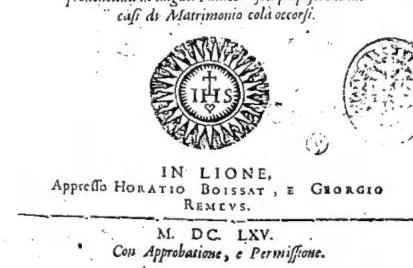
IN LYONS,
Appello HORATIO BOISSAT, AND CRORGIO REMEVE.
M. DC. LXV.
With Approval and Permission.
(photo Enc. Catt.)
RUBINO, ANTONIO – Title page of the Metodo, Lyon 1665 – Rome, copy in the National Library.
More recent works: J. Burckhardt, Die Landschaften von P. P. R., Vienna 1940; L. van Puyvelde, Les esquisses de Rubens, Basel 1940; J. Burckardt, R., Berlin 1942. Carla Guglielmi