
FILIPPO NERI, saint. - Born in Florence on July 21, 1515, in the parish of S. Pier Gattolini, to ser Francesco and Lucrezia da Mosciano.
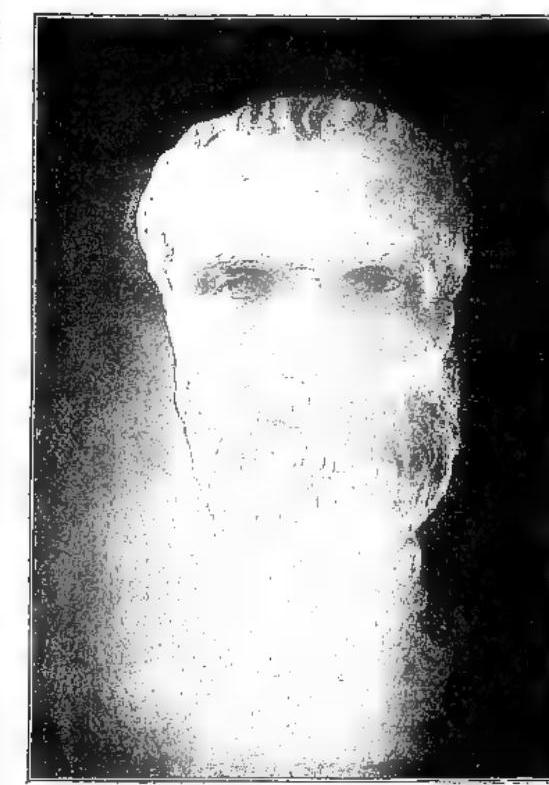
In the Eternal City, F. found lodging with his fellow citizen Galeotto Caccia, head of the customs office, dedicated himself to the education of his two young sons, and resumed his studies by attending the Sapienza under the Augustinian fathers. His activity, however, could not be exhausted by this alone, as a clear vocation for the apostolate manifested itself ever more openly within him. For example, he went about performing works of mercy by visiting the sick, especially at the hospital of S. Giacomo degli Incurabili. His mystical fervor then poured forth in familiar conversation with young people of his own age and even with mature men whom he met along the way, quickly making himself a companion of a merry band with the subtle, but almost always infallible, aim of leading them to God. In 1548, to provide for the needs of the many pilgrims and convalescents wandering the streets of Rome, F. established the Confraternity of the Most Holy Trinity near the church of S. Benedetto alla Regola, specifically called that of the pilgrims and convalescents. Continuing in his intense work of charity, in 1551 he allowed himself to be persuaded by his spiritual director Persiano Rosa that it was God's will for him to ascend to the priesthood, which he did that year on May 23 at S. Tommaso in Parione. As a priest, he withdrew to the residence of free priests living and officiating at S. Girolamo della Carità to humbly exercise his ministry, especially as a spiritual director. It was precisely there that he began, with great simplicity and not without encountering obstacles, that form of highly effective apostolate that later took the name of the Oratory (v.).
Silently, modestly, and privately, rather than from the pulpit, Father F. approached and got to know almost everyone, penetrating both humble homes and the papal court, so that among his friends he counted cardinals most sensitive to reform ideas as well as artisans from the Banchi or Parione districts, idlers and artists, nobles and common women, and even the pontiffs who succeeded one another on the chair of St. Peter. Frequent were the contacts between the Saint and the noble souls who lived in or passed through the Eternal City in his time and who dedicated themselves to the work of Catholic reform: thus we see enjoying F.'s intimacy St. Charles Borromeo, St. John Leonardi, St. Camillus de Lellis, St. Felix of Cantalice, Animuccia, Cardinals Federigo Borromeo, Cusanus, Paleotti, Valier, de' Medici, etc.; and Popes Pius IV, Pius V, Gregory XIII and XIV, and Clement VIII. Representatives of the Florentine "nation" wanted him in their church of S. Giovanni, and in 1565 he assumed its rectorate while remaining in his beloved dwelling of S. Girolamo; instead, he sent his first priest disciples there: Baronio, Tarugi, Bordini, and others. In 1575 F. received the papal bull of
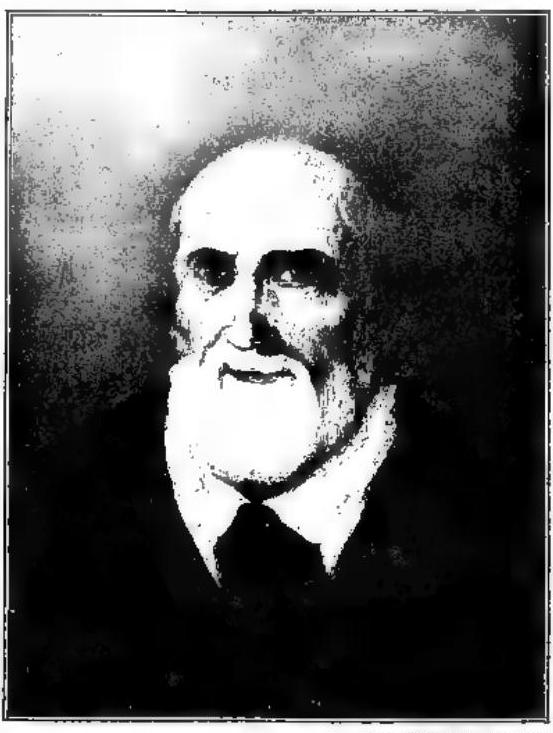
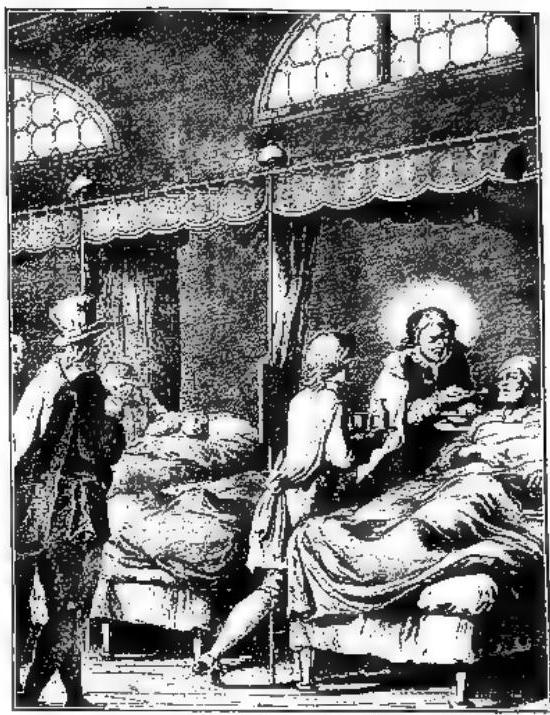
Meanwhile, in 1577, the first part of the new Vallicella church was inaugurated—still nicknamed Chiesa Nuova today—which the Saint had tenaciously desired. Around 1588, following repeated requests from his spiritual sons, he left S. Girolamo to move to the Vallicella, while the community, now rich in remarkable men, was in such full vigor that it could consider foundations outside Rome, sending members to Naples and S. Severino. In Milan, due to excessive interference in governance by Borromeo, the Oratorian foundation failed after a long and laborious correspondence between the cardinal and F., which at times involved rather dramatic episodes. A decisive reason was the fact that F. always conceived the Congregation in service to the Oratory and therefore could not permit too many subjects to be distracted at a particularly delicate moment in the Institute's development.
Rome, meanwhile, at the end of the 16th century, had spiritually changed, and undoubtedly much of the work had been slowly and silently carried out by F., sustained by that firm Christian optimism which saw, even in this earthly life, the possibility of joy and peace. At the age of 75, feeling tired in body but not in spirit, F. withdrew into his little cell, continuing a more recollected apostolate and reserving his precious hours for spiritual direction, confession, and conversation with his closest disciples. F. demonstrated fine diplomatic skill at the end of his life in persuading the Pope to accept the reconciliation
of the former Huguenot Henry IV; in this affair he had a valuable collaborator in Fr. Baronio, confessor of Clement VIII.
Opere: Lettere, rima e detti memorabili, edited by E. Magri, Florence 1922.
Among the sources, essential is: A. Gallonio, Vita Philippi Neri Florentini Congr. Orat. fund., Rome 1600.