
ALGARDI, ALESSANDRO. – Sculptor and architect, born in Bologna on 27 November 1595, died in Rome in 1654. He learned painting from Ludovico Carracci and worked in the workshop of Giulio Cesare Conventi, a mediocre sculptor and engraver. His training, rather than being traced to one or more specific masters, must be sought in the cultural milieu of Carracciism and of the Bolognese school of painting in general, with which he maintained relations even after moving to Rome. Of his early activity, which was rather closely allied to the art of the goldsmith, there remain, among other works, an Pietà in ivory, formerly in the Rospigliosi Gallery and now in the Liebermann Collection in Berlin; Jesus Falling beneath the Cross, a bronze in the Museo di Palazzo Venezia; the Flagellated Christ in the Hofmuseum in Vienna; a Madonna in the Ducal Palace of Urbino; and a Crucifix in the sacristy of S. Pietro in Perugia.
Having arrived in Rome in 1625 after a stay in Mantua, he executed for the Bandini Chapel in S. Silvestro al Quirinale the two stucco statues of S. Giovanni Battista and the Magdalene, in which a Berninian influence is unmistakable. Immediately afterward, in the Frangipane portraits in S. Marcello al Corso and in the Mellini monument in S. Maria del Popolo, A. found the exact measure of his personality.
Under the pontificate of Urbano VIII, when Bernini enjoyed his favour, the difference in style and taste reduced A.’s activity to work that was modest, if not altogether obscure; belonging to this period are the works for the church of S. Luca, marked by a vigorous classicism. Then, with his appointment as an Academician in 1640, but even more with the death of Urbano and Bernini’s fall from favour, his worth was able
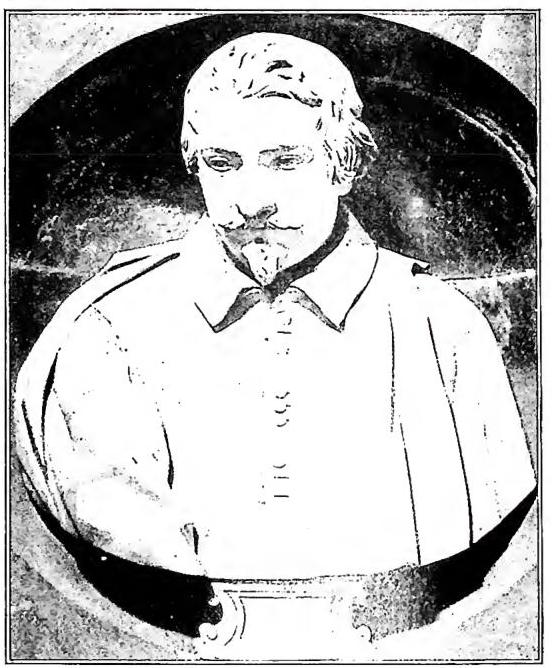
Particularly in the Vatican altarpiece of Attila, he transfers the painterly vision of the Bolognese into marble; yet he does not thereby produce a work of virtuosity, but rather sets against the Berninian manner another, no less original, individuality, itself Baroque.
Bellori takes Algardi as a typical demonstration of his theoretical position concerning ideal beauty, and for this reason dwells at length upon outlining his biography; this does not mean, however, that the Bolognese sculptor kept aloof from the taste of his time, to which indeed he fully adhered. The truth of Bellori’s assertion lies more in the sculptor’s training than in the reality of his art.
The absence of every chromatic suggestion from Algardi’s sculptures is due to the fact that his subtle sensibility as a sculptor knew how to draw from white marble itself those effects which others sought in polychromy, and not to any hostility towards the painterly and colouristic taste which he shared with the Berninian current, to which he is nevertheless customarily opposed.
He was also an architect, and among his works, besides the villa Bel Respiro, in which he showed himself a skilful and accomplished decorator, mention should be made of the high altar in S. Nicolò da Tolentino; the fountain in the courtyard of S. Damaso in the Vatican; and the door leading from the interior of S. Ignazio to the Collegio Romano. The traditional attribution to Algardi of the façade of S. Ignazio is doubtful. - See Pl. LXV.
Vincenzo Galzio - *