
CARLO BORROMEO, saint. – Cardinal, archbishop of Milan, born in the Borromeo fortress at Arona on 2 October 1538, the second son of Count Gilberto Borromeo and Margherita de’ Medici, sister of Pope Pius IV; at the age of twelve he received the clerical habit and tonsure, together with the Abbey of S. Gratiniano in Rome, which was under the patronage of the family. Enrolled at a very young age at the University of Pavia, on 6 December 1559 he obtained there his degree in canon and civil law, with Francesco Alciato present at the disputation. At the age of twenty-two he began his extraordinary activity, being summoned to Rome by his uncle, Pope Pius IV, who had perceived the active gifts with which the young man was endowed; he arrived in that city in January 1560. Created cardinal on 31 January, on 8 February he received the archbishopric of Milan, but with the obligation of remaining in Rome and governing the diocese through secretaries and representatives resident in Milan. These were Gerolamo Ferragata at first and Niccolò Ormaneto thereafter. During his Roman period C. lived amid noble scholarly pursuits and in devout dedication to his papal uncle, who lavished upon him encouragement, honors, and offices.
As cardinal, he immediately received the government of the papal legations of Bologna, Romagna, and the March of Ancona, as well as the office of protector of religious Orders, such as the Franciscans and Carmelites. These first dignities were later joined by the office of protector of the Crown of Portugal, the Netherlands, the Catholic Cantons of Switzerland, and the Order of the Knights of Malta; offices that were surpassed in importance by his appointment to the presidency of the Consulta, established by Pius IV, for which the B. may be regarded, chronologically, as the first Secretary of State of the Papal Government.
Having thus been promoted to such honorable offices, C. was able, from those youthful years onward, to deal with the highest affairs of the Roman Curia. In this he appeared perfectly prepared, above all because of his prompt yet precise understanding of the needs of the age in relation to the Church and Christendom, and because of his energetic character in implementing decisions once reached. In reality, the times were difficult. The first seed of rebellion sown by Luther in Germany had by then divided the Catholic unity of Europe into two camps, religiously and politically hostile to one another. Religious wars were already raging in France and the Netherlands; disputes were likewise fierce in Poland; in England, Queen Elizabeth had compelled her people to separate definitively from the Church of Rome. Conditions seemed less painful in Italy, Spain, and Portugal, although these regions too felt the repercussions of the northern agitation. The B. was among the first and most fervent in wishing to stem the movement that threatened the Latin countries from the north. Accordingly, alongside his uncle he first worked with untiring energy for the immediate reopening of the Council of Trent, and then from Rome actively participated in its proceedings, bearing the burden of a close and difficult correspondence until its conclusion (3 December 1563). When Pius IV wished the execution of the Council’s decrees to be entrusted to a cardinalitial congregation, C. was elected among its members and was one of the promoters of the Catechismus romanus ad Parochos, whose compilation the Council had proposed and resolved upon in order to establish a unified text for the religious formation of the people.
Meanwhile, he had received the orders of subdeacon and deacon in December 1560; but when, on 19 November 1562, his brother Federico died, some thought that he should, with the requisite dispensation, return to the secular state in order to perpetuate the family succession. Instead, he made his life still more austere, and on 17 July 1563 had himself ordained a priest; on 2 December, as soon as he had reached the appropriate age, he was made a bishop. He was now bound to fulfill the required residence in the archdiocese of Milan, which, because of the absence of its pastor, despite the sound government of wise and courageous vicars, gave the archbishop in Rome serious cause for concern, particularly because of the danger of heretical infiltrations. The B. therefore decided to assume its government personally, and entered Milan on 23 September 1565, after traveling through the central and northern regions of Italy as the pope’s legate a latere. He had, however, immediately to return to Rome to assist his dying papal uncle, and in the subsequent Conclave he cooperated in the election of Cardinal Ghislieri, who took the name Pius V. Having returned to Milan once more on 15 April 1566, he remained there until his death, apart from a few further Roman interludes, such as the Conclave from which Gregory XIII emerged and the period of the jurisdictional dispute with the Marquis of Ayamonte.
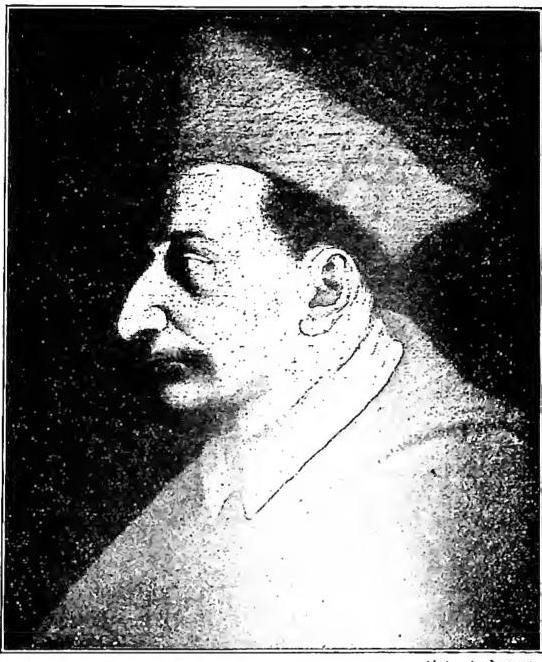
CARLO BORROMEO, saint – Portrait, painted by Giovanni Battista Crespi (d. 1632) – Milan, Ambrosiana Picture Gallery.
To a man, however, who struck the laxity of morals, even among the clergy and regulars, with such severity, opposition from the clergy itself and from the convents was not lacking. One episode of this was the resistance of the canons of La Scala when, on 24 August 1569, the archbishop wished to enter their basilica and they drove him back. A far graver incident took place on 26 October of that same year, when Fr. Girolamo Donato, called Farina, attempted to shoot him with an arquebus while he was praying. The Umiliati were to blame for this; because of the wealth they had accumulated through the wool industry, they were in profound decline and were in fact suppressed by papal bull on 7 February 1571. But C. also received comfort and profound support from the entire populace; he maintained good relations with the rulers of the period and with the Spanish conquerors and governors of Milan themselves. The princes and dukes of Italy, among them Emanuele Filiberto and Carlo Emanuele I of Savoy, considered themselves honored by the friendship of B. He was thus able to extend his beneficial zeal beyond the boundaries of his own extensive diocese, exercising a pastoral ministry in various parts of Italy not subject to him and even in Switzerland, where in 1579 he established the first nunciature with the Cremonese G. F. Bonhomini and, through the good offices of the noble knight Melchior Lussy, obtained the establishment of the Jesuits at Lucerne in 1574 and of the Capuchins at Altdorf in 1581. Particularly admirable were B.’s endeavors on behalf of his own diocese. He began to reform his secular and regular clergy through the work of the new religious institutes of the Barnabites, Jesuits, and Theatines, himself founding a Congregation of Oblates, which had its first origin in the church of the Holy Sepulchre in Milan in 1578, with rules definitively established on 13 September 1581. He reorganized worship by erecting new churches and sanctuaries that became famous, such as those at Rho and Cannobio, the Sacro Monte of Varallo, and S. Fedele in Milan. Above all, and this was one of the major merits of C. B., in connection with the Tridentine reform that he constantly sought to implement, he devoted himself to the establishment and erection of seminaries for the formation of those aspiring to the priesthood, providing the model and laying down the principles for the education and training of the students.
Thus there arose the major seminary in Milan, through the work of the architect Meda; the Helvetic College, also in Milan; and, in the surrounding area, the minor seminaries of Inverigo and Celana. He also had schools and colleges opened for lay formation: particularly famous are the College of Brèra, entrusted to the Jesuits; the Almo Collegio Borromeo of Pavia; the College of the Nobles in Milan; and the Pontifical College of Ascona on the upper Verbano. In Milan he established the refuge of S. Maria Maddalena for women of ill repute, as well as other hospices and charitable shelters, which he founded for the support and spiritual formation of various categories of citizens; he promoted the establishment of charitable pawn banks and encouraged the institution of free legal aid for the poor; he reformed the Pio Institute of S. Corona for impoverished sick people; he founded the confraternity of the Disciplini to offer comfort to those condemned by public justice; and, at his death, he bequeathed his possessions to the major hospital of Milan. Throughout Christendom, the establishment of the schools of Christian doctrine became famous; these also marked the beginning of elementary or popular schools, placed under the care of parish priests. The confraternities of the Blessed Sacrament and of the Holy Rosary in the Milanese region were likewise institutions of C. B.
B. personally visited the more than one thousand parishes of the diocese at that time, reaching even the most remote churches and chapels in the mountains, such as those of the Three Ambrosian Valleys of Switzerland. In particular, one must not overlook the care he took to preserve for the Milanese Church its most ancient liturgical rite, restoring it to its genuine traditions. For this purpose he established a special congregation and prepared a printed edition of the Rituale,
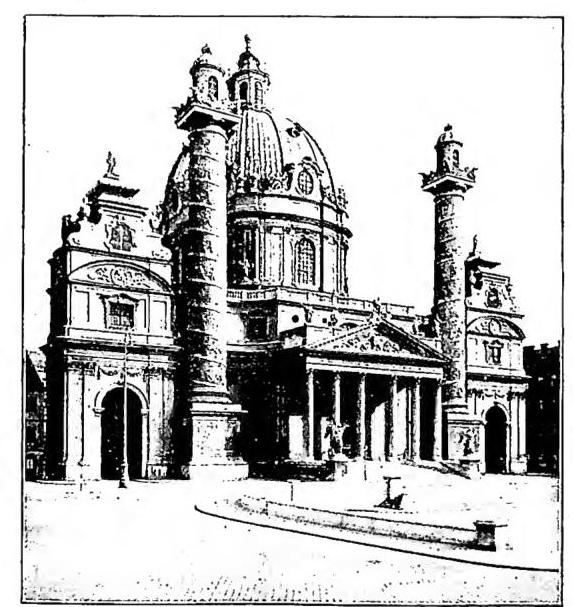
(photograph: Bildarchiv d. Ö. Nationalbibliothek)
Although our Saint distinguished himself through an admirable life of action and work, he did not for that reason neglect good literature and culture. On the contrary, he was precisely the restorer of the University of Bologna, and through his education he became acquainted with ancient philosophers such as Seneca, Epictetus, and Cicero. His rich library bears witness to this; its manuscript catalogue is held by the Ambrosian Library. During the years of his Roman period he frequented Sirleto and Alciato; moreover, he used to gather learned and cultured people, including laymen, in order to discuss scientific and literary matters in the Vatican Palace. Thus, as a learned diversion from his diplomatic duties, he had organized those “Vatican Nights,” which served as a domestic academy and as an exercise in oratory for his future. Later as well, he sought the acquaintance and friendship of scholars and men of letters: he commissioned Silvio Antoniano to compose a treatise on pedagogy and Cardinal Valerio a work on rhetoric. He attested to his culture in the Instructions fabricae et suppellectilis ecclesiasticae; to his pastoral theology in the Sermones, in his numerous conciliar and synodal sermons, in his addresses or admonitions to the people, and in the Instructions ad confessarios; to his regulations for Congregations in the Regulae; and to his activity as a governor in his important and exceptionally rich correspondence. He cultivated religious art with fervor, engaging accomplished artists as architects for churches and sanctuaries, among them the celebrated Tebaldo Pellegrini. He inscribed the motto Humilitas on his coat of arms, as if to symbolize a program of interior life.
C. B. died in Milan on the evening of Saturday, 3 November 1584, at only forty-six years of age. The day before, he had returned with a fever, after the devout days at Varallo and the opening of the college at Ascona, from the sanctuary of the Pietà at Cannobio on the Verbano, his gaze fixed upon a praying Christ by Campi, now preserved in the Ambrosiana. He was canonized on 1 November 1610, when his cousin, Cardinal Federico Borromeo, was archbishop of Milan; in 1624, the latter initiated the erection of the famous colossal statue of s. C. on the Piedmontese shore of the lower Verbano. The ecclesiastical calendar sets the Saint’s feast on 4 November.
The fame of the Saint spread so widely throughout Europe that associations and institutions arose under his name in the centuries that followed: one need mention only the Borromeiane, or Fate-bene-sorelle, of s. C. B., established in Nancy as early as 1652 for the care of the sick and the poor, with more recent branches in Trier, Prague, Trebnitz in Lower Silesia, and Maastricht in Holland (W. Hohn, Histoire des Soeurs de S. Charles, 3 vols., Nancy 1898); the extensive and culturally active Borromäusvereis in Germany (1844), headquartered in Bonn, for the dissemination of good reading and for the education, particularly of the young, through courses and cultural lectures; the Oblates of s. C. B. in Vercelli, the modern college of s. C. B. in Milan, and the Ursuline nuns of s. C. B. in Lombardy; the Pontifical Seminary of ss. Ambrose and C. B. in Rome, opened in the second half of the nineteenth century; the Congregation, under the protection of B., of missionaries for Italian emigrants in the Americas, founded in 1887 by G. B. Scalabrini, bishop of Piacenza—not to mention the
Oblates of s. C. B., long widely established in the Americas themselves; the archiepiscopal seminary of Kalocsa in Hungary, dedicated to s. C. B.; and the Societas seu congregatio Josepho-Carolina, a kind of chivalric order likewise established in Hungary by Kopik for the propagation and defense of the Catholic religion in Hungarian public life. Villages and hamlets in the Milanese region bear the name of s. C. B. The largest theater in Naples also takes its name from s. C. B. B. is likewise patron of the diocese of Lugano and of the University of Salzburg, and protector of Savoy and of the cities of Milan, Faenza, Guastalla, Arona, and Rocca di Papa.
Churches were erected in his honor everywhere; among the most celebrated are the seventeenth-century churches in Rome of S. C. al Corso and S. C. ai Catinari. Pope Pius X’s encyclical Editæ saepe, dated 29 May 1910, was issued for the celebration of the third centenary of the Saint’s canonization (AAS, 2 [1910], pp. 357–80).
ICONOGRAPHY. – The iconography of s. C. is numerous and varied in sculpture and medallic art, but particularly so in painting; it began immediately after the Saint’s death, and became a veritable competition between eminent and lesser artists to reproduce his characteristics and features, although for the most part it represents the Saint absorbed in prayer, engaged in meditation, or in the act of blessing and, often, also assisting those stricken by the plague. At first there was a tendency to portray the Saint’s features with an expression of profound mortification and exhausting emaciation, as though he were to appear consumed by apostolic labors and daily bodily penances: this tendency nevertheless ceased after his canonization, when the Saint began to be represented in fuller and more human forms, albeit with his characteristic angular and pronounced facial features. At the end of the sixteenth century and the beginning of the seventeenth, an entire school arose in Milan, rich in famous names in painting, whose members interpreted the figure of our Saint on canvas and also in bronze and marble: in painting, these included G. B. Crespi, known as il Cerano, Giulio Cesare Procaccini, il Morazzone, Guido Reni, il Borgianni, Daniele Crespi, and il Maratta, whose works on subjects relating to C. are often expressed in grand compositions on canvas and are scattered throughout Milan, Rome, Bologna, Florence, Pavia, and Arona, to mention only the principal cities; on the occasion of the Saint’s feast on 4 November, the cathedral of Milan annually displayed no fewer than forty grand compositions by il Cerano, il Morazzone, and Procaccini (who worked in Milan), all artists who worked at a mature age and were thus able to express themselves in forms that often constituted the best of their art (L. Ferretti, S. C. B. nell'area Roma 1923). But the representations of s. C. belong to the universal Church because, besides the diocese and province of Milan, they are found in every corner of the world where Catholicism is established. According to Cardinal Federigo Borromeo, s. C.’s cousin and a good judge of art, the best portrait of the Saint was the painting by Ambrogio Figini preserved in the Ambrosiana Gallery in Milan. Also noteworthy is the copper colossus known as the S. Carlone of Arona, which rises 35 meters high on a hill overlooking the Verbano: designed and conceived by il Cerano, its execution was commissioned by Federigo Borromeo himself. A rare portrait of the young Saint at the age of twenty-six, already cardinal archbishop of Milan, is located in the Borromeo palace at Senago (Milan), the work of Giorgio Solerio, for C.’s entry into Milan as archbishop; a replica is preserved in the Ambrosiana. For observations of a mystical-psychological nature on the Saint’s countenance, cf. W. Schamoni, Das wahre Gesicht der Heiligen (Lipsia 1938, pp. 134-39).
For the work of s. C., in addition to the publications on the history and acts of the Council of Trent, particular mention should be made of A. Ratti (Pio XI), Acta Ecclesiae Mediolanensis, Milano 1890-92; F. Steffens and H. Reinhardt, Die Nuntiatur von G. F. Bonhamini (1579-81), I, Soletta 1906, and the succeeding volumes: P. Herre, Papsttum und Papstwahl im Zeitalter Philipps II., Lipsia 1907; G. Susta, Die Römische Kurte und das Konsul von Trient unter Pius IV., Vienna 1909, passim; L. von Pastor, C. B., Das Muster eines tridentinischen Bischofs, in Katholische Reformatoren, Friburgo in Br. 1924, pp. 105-37; id., Storia dei Papi, VII, VIII, IX, passim; A. G. Roncalli, Gli atti della visita apostolica di s. C. B. a Bergamo (1573), in Fontes Ambrosiani, vols. 13-18 (1936-40).
Among the best-known biographies of B. we note the fundamental one by C. Bascapè (Basilicapetri), De vita et rebus gestis C. B., Ingolstadt 1591 and Brescia 1602; and the other, De vita et rebus gestis s. C. B. lib. VII qua ex G. P. Giustiano B. Rubens latine reddidit B. Oltreschi notis aberrimis illustratit, Milano 1751; A. Caillat, Vie de s. C. B., archevique de Milan, trad. et abrigée du latin du b. Basilicapetri, Parigi 1825; A. Sala, Documenti circa la sua di s. C. B., Milano 1857-61; C. Sylvain, Histoire de s. C. B., 3 vols., Parigi 1884; L. Celler, S. C. B., ivi 1912, Italian translation; C. Orsenigo, Vita di s. C. B., 2nd ed., 2 vols., Milano 1929 (German ed. by G. Brunner, Friburgo in Br. 1938); A. Rivolta, S. C. B. Note biografiche, Milano 1938; D. Franceschi, S. C. B., Torino 1938; P. Gorla, S. C. B., 2 vols., Milano 1939. A substantial biographical summary of s. C.: F. Weiner, s. V. II, cols. 2267-73, with bibliographical notes. For further biographical information, cf. Echi di s. C. B., a Milanese publication of contributions to the history of religion and culture, edited by Giovanni Galbiati, fasc. 19-20 (1938), pp. 727-829. For particular aspects of the life and work of s. C.: G. A. Sassi, Archiepiscoporum Mediolanensium series historico-liconologica, III, pp. 1117-1160, Milano 1755; K. A. Martuz, Karl B., Kardinal der Römischen Kirche und Erzbischof von Maitland, Augusta 1796; G. Boero, Risposta a Vincenzo Gioberti sopra le lettere di s. C. B., Milano 1850; F. Bertani, La Bulla Cenne, la giurisdizione ecclesiastica in Lombardia, ecc., ivi 1888; C. Camenisch, C. B. und die Gegenreformation im Feltlin, Coria 1901 (si confronti F. Segmüller, S. C. B. vindictatus, Emsiedeln 1924); Atti di s. C. B. riguardanti la Svizzera e i suoi territori, edited by V. D'Alessandri, Locarno 1909; L. Berra, L'Arcademia delle Notti Vaticane fondata da s. C. B., Roma 1915; U. Mannucci, S. C. B. e s. Francesco di Sales nella storia della Controforma, ivi 1910; G. Cahannes, Die Pilgerreise C. B.'s nach Disentis im August 1584, in Zeitschrift für schweizerische Kirchengeschichte, 18 (1924), pp. 156-64; L. Granatica, Diploma di laurea in diritto canonico e civile di s. C. B., Milano 1917; id., S. C. B. e la Terra Santa, Monza 1919; A. Castellucci, Un episodio della vita di s. C. B., Roma 1927; P. Paschini, Il primo soggiorno di s. C. B. a Roma (1560-65), Torino 1935; A. Saba, La Biblioteca di s. C. B., in Fontes Ambrosiani, 12 (1936), G. Galbiati, I Duchi di Savoia Emanuele Filiberto e Carlo Emanuele I nel loro corteggio con s. C. B. secondo gli originali della biblioteca Ambrosiana, Milano 1941; L. Prandocini, Il diritto ecclesiastico dello Stato di Milano dall'inizio della signoria vincente al periodo tridentino, ivi 1941. On ascetical aspects: A. Ratti (Pio XI), S. Charles et les Exercices de s. Ignace, 2nd ed., Parigi 1922; K. Morawski, Sw. Karel B. na le odoszzenia religijnego v XVI wieku, Varsavia 1922; C. Gorla, La più belle pagine delle Omnie di s. C., (Biblioteca dei santi, directed by G. Galbiati, 10), Milano 1928.
Richness of information and news about the Saint, his work, and his era is provided by the two periodical publications S. C. B. nel III centenario della canonizzazione, Milan 1908–10, and gli Echi di s. C. B., Milan 1937–38. The periodical La Scuola Cattolica, of Milan, likewise published an extensive miscellany in 1910; G. Galbiati, Albero genealogico della principessa famiglia Borromeo, Milan 1930. Some of the Nuntiaturberichte della Germania e della Svizzera, published in various forms, are exceedingly useful for information. We also cite K. Fry, Gina. Ant. Volpe, Nuntius in der Schweiz 1565–88, I, Freiburg 1936; II, Stans in Svizzera 1946; Fontes Ambrosiani, vols. 9–10; a work that, in this regard, completes J. G. Mayer, Das Konsul von Trient und die Gegenreformation in der Schweiz, 2 vols., Stans 1901–1903, and Ed. Wymann, Karl B. und die Schweizerische Eidgenossenschaft, ibid. 1903. To date, the most recent general biography of B. is that of G. Seranzo, S. C. B., Milan 1944, with appropriate references to the sources in the introduction. Various contributions on S. C. and the Franciscans, based on unpublished documents, were published by P. Sevesi in Studi Francescani, 22 (1923), pp. 156–86; 24 (1927), pp. 400–402; id., in Archiv. Franc. hist., 3 (1938), pp. 73–126; 387–439; 37 (1944), pp. 104–64; 38 (1945), pp. 231–33.
Sources for knowledge of the Saint and his work are to be sought in the archive of the archiepiscopal curia of Milan and in the Ambrosian Library, which, in addition to preserving since 1947 that archive of exceptional importance for the period, also preserves the extensive Carolinian correspondence, with drafts by the Saint himself, as well as other manuscript documentation, year by year, concerning the religious and political affairs handled by the Saint, not to mention collections of sermons and homilies, ascetical sketches, and designs for theological treatises. The records of the canonization process are held by the Congregation of Rites in Rome; other materials are found in the Vatican Library, the Vatican Archives, and the archives of the Barnabites of S. C. ai Catinari in Rome and of the Borromeo family in Milan; there are other…
documents, as well as at Brussels, among the Bollandist Fathers, in preparation for the life of the Saint to be published in the Acta SS. Novembris. Giovanni Galbiati