
LUTHER, MARTIN – Initiator of Lutheranism and Protestantism, born in Eisleben (Saxony), Germany, on 10 November 1483, to the miner Hans and Margarethe Ziegler, and died there on 18 February 1546.
SUMMARY:
I. Life and doctrine until 1517
II. L. and Lutheranism in Germany (1517-46). –III. The consolidation of Lutheranism
IV. Lutheranism outside Germany
V. The elaboration of Lutheran dogma
VI. Elements of dissolution in Lutheranism
VII. Numerical strength of Lutheranism
VIII. Evaluations.---
### I. LIFE AND DOCTRINE UNTIL 1517
Luther’s family was of peasant origin and possessed some modest means; from this rough rural background, he retained throughout his life a coarseness and violence of language, an almost superstitious fear of the devil in his many guises, and for many years a preoccupation bordering on scrupulosity to do what he believed he ought. Amid privations and with the help of benefactors, he attended the trivium in Mansfeld, then the school of the Brethren of the Common Life in Magdeburg from 1497, moving in 1498 to Eisenach. Subsequently, endowed with a scholarship, he entered a university college in Erfurt to study jurisprudence, as his father wished. Legal studies were preceded by a course in philosophy; Luther followed it, learning Aristotelianism with an Ockhamist imprint, and obtained the academic title of magister artium on Epiphany 1505. He had just begun his law studies when, on 2 July 1505, the feast of St. Anne, while returning to Erfurt with a friend, lightning struck his companion. Under the impression of the event, Luther vowed to St. Anne that he would become a religious. Indeed, two weeks later, against his father’s will, he entered the convent of the Augustinian Hermits in Erfurt, where in 1506 he made his monastic profession and received priestly ordination on 3 April.
The convent belonged to a “reformed” Congregation: it practiced severe discipline, had a lively interest in study, and fostered an intense life of piety and zeal for preaching. Luther accepted its Rule with the conviction that it represented the sure path to salvation. Ordained to the priesthood by order of his superiors, for the same reason he resumed his studies in philosophy and scholastic theology at the convent’s Studium generale, whose orientation was the via moderna, Ockhamism. In 1508, he became lecturer in moral philosophy at the Wittenberg convent, whence, having become a bachelor of theology in 1509, he returned to Erfurt as lector sententiarius at the Order’s Studium.
These years of intense ascetic life, study, and teaching were also years of harsh inner struggles for Luther. He had studied philosophy and theology from the then-dominant Ockhamist texts of Gabriel Biel, assimilating their themes: in gnoseology, he learned to devalue concepts as mere “names” and to contest the claims of Aristotelian metaphysics, relying instead on experience; in theology, he came to recognize the sovereign will of God as His innermost essence and thus to regard dogmas to be believed and laws to be observed as simple expressions of God’s concrete will, not deducible in any way from the supreme Divine Reason, thereby accentuating the separation between faith and science. In moral theology, Luther had embraced the principle that man is capable of doing good, of pleasing God, of loving Him perfectly, when he truly engages his will—a principle formulated by Biel as “facienti quod in se est, Deus infallibiliter dat gratiam”, which externalized the concept of Grace and rejected the Thomistic doctrine of Grace as habitus. Seriously concerned for his eternal salvation, as he himself asserted, Luther had energetically engaged in the practices of monastic asceticism (fasting, penances, pious devotions, examinations of conscience, humiliations, etc.) according to his Order’s Rule, convinced that they represented the path to perfection and could assure him peace of conscience and certainty of final salvation. Instead, he failed to attain the longed-for inner tranquility: the movements of concupiscence, despite mortifications, continued to make themselves felt; the thought of infernal punishments terrified him; sacramental confessions did not reassure him about the forgiveness of his sins; even in reading the Bible, he felt the word of God’s justice as a nightmare, believing it demanded perfection from man. The young religious thus passed through severe crises of despair, to which certainly contributed the nervous tension of meditation and continuous self-examination, a timidity dating back to childhood and now aggravated into genuine scrupulosity. In confiding in his superior, Staupitz, Luther found relief and a first step toward spiritual peace, setting out on the path of the mystics—of St. Bernard, Tauler, and above all Gerson, author of De consolatione theologiae—learning to renounce his restless activism in favor of an attitude of quietude and passivity, letting God and His Grace act, entrusting himself entirely to God’s love.
During this time, Luther also had an intense external activity: in addition to teaching and preaching, he held governance roles in the Order. In 1515, as district vicar, he oversaw eleven convents. In 1510–11, he made a journey to Rome to support his convent’s appeal against a decree of union between the Observants and non-Observants promoted by Staupitz. Later, he would give this journey a particular significance in his anti-papal polemic, but his recollections of the time show him primarily concerned with his inner perfection, making a general confession, and gaining indulgences connected to pious practices. Though he noted with scandal the ignorance and laxity of clergy and people, the worldliness of cardinals, he did not receive a disturbing impression of the papacy of Julius II. Upon returning from his unsuccessful mission, he was definitively assigned to the Wittenberg convent. At the university, recently founded by the prince-elector, he obtained his doctorate in theology in 1512 and in 1513 began his lectures on biblical exegesis as Staupitz’s substitute, commenting on the Psalms. In these years, in connection with his inner crisis, Luther’s theological system also matured, strongly reflecting his religious experience. Disillusioned with Ockhamism in ethics and theology, Luther sought to define his
his experience of the relationship with God through the study of St. Augustine, to whom the traditions of the Order naturally led him. What he now approached, however, was not the Neoplatonizing Augustine of the humanists—with whom, at Erfurt, his formative university, he had had few and superficial contacts—but the anti-Pelagian Augustine, in whom the themes of Adam’s sin, its consequences, Grace, and Predestination occupy the foreground. These motifs, if one accepts the results of Müller’s research, were already organized into a recognizable “Augustinian” system among eminent theologians of the Order in the 15th–16th centuries (Favaroni, Giovanni Perez, Simone Fidati da Cascia, and, with Occamist contaminations, Gregorio da Rimini): this system proceeded from the identification of original sin with concupiscence, affirmed the inherent imperfection of all human works, the necessity of integrating man’s “imperfect justice” with the “perfect justice” of Christ bestowed by Grace (theory of “double justice”). In this system of late scholasticism, Luther found elements to theologically justify his experience of man’s radical sinfulness, a slave to concupiscence, and of liberation through total abandonment to divine mercy, while in his meditation on the Bible during the winter of 1512–13, he became convinced that he had found the profound meaning of God’s word in the exegesis of St. Paul’s concept of the “justice of God” (Rom. 1:17), by which it is not, as he had previously understood with anguish, “the wrath of God” that punishes, but that which, by mercifully forgiving, makes sinners just.
From this “exegetical discovery of the Gospel” (Luther claimed to have made it one day in 1519 in the tower of the convent, hence the name “Tower Experience” [“Turmerlebnis”], though Denifle was able to prove that such an interpretation was familiar to the majority of medieval exegetes) and from the aforementioned mystical-quietist-Augustinian motifs, he derived not only a personal religious attitude but an entirely new orientation toward traditional religious practices, Church institutions, and monasticism, which gradually emerged in his university lectures and sermons as a critique of devotional works, vows, and ascetic commitment in general insofar as they claimed to be “meritorious,” capable of pleasing God by their own efficacy, and as an exaltation of Christ’s Sacrifice as the sole source of forgiveness and merit. This orientation became increasingly clear and defined in his Lectures on the Psalms (1513–15), those On the Epistle to the Romans (1515–1516) and On the Epistle to the Galatians (1516–17), in the disputes of 1516–17 On the Powers of the Will of Man Without Grace and Against Scholastic Theology, as well as in certain sermons and correspondence, where he condemned the excessive recourse to indulgences, the development of the cult of saints, pilgrimages, particular devotions, the pomp and worldly interests of churchmen: it found support in the circle of his disciples, among many brethren and colleagues, beginning with Staupitz.
II. LUTHER AND LUTHERANISM IN GERMANY (1517–1546) – To give broader resonance to these ideas and experiences of the cloister and the school, to render them a revolutionary ferment in the German environment—already charged with anti-papal and anti-ecclesiastical tendencies due to the multiple national, socio-economic, political, and cultural motives that constitute the general causes of the “Reformation” (v. REFORMATION)—came the publication of the indulgence for the construction of St. Peter’s in Rome, in connection with the familial and financial policies of the Brandenburgs. Albert of Brandenburg, archbishop of Magdeburg and administrator of the bishopric of Halberstadt, elected in 1514 also archbishop of Mainz, had obligated himself to the Apostolic Chamber for 24,000 ducats to accumulate these bishoprics. For payment, he had bound himself to the Fugger Bank of Augsburg, and the Curia, to facilitate it, had granted him the preaching of the indulgence for the Fabric of St. Peter for eight years in the territories of his bishoprics and those of Brandenburg, with the clause that half of the net revenue was to go to Rome.
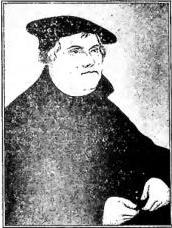
The canonical process against Luther began in Rome in May 1518; in July of the same year, he was ordered to appear in Rome within 60 days to clear himself of the suspicion of having spread erroneous doctrines; however, through the intervention of his prince, the Elector of Saxony Frederick the Wise, he was able to appear before the cardinal legate Tommaso de Vio Cajetan in Augsburg. In the interrogation that took place on 12–13 October 1518, Luther refused to recant; he then left Augsburg for fear of arrest, not without first having drafted an appeal to the Pope, ill-informed, to better inform himself. On 28 November 1518, in Wittenberg, foreseeing condemnation, he appealed from the ill-advised Pope to a “future ecumenical council.” Cardinal Cajetan had asked the Elector of Saxony to hand over the friar, but this was refused on the pretext that Luther’s heresy had not been proven. Without result was
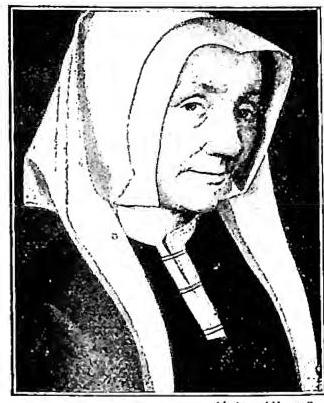
(fol. Alinari) MARTIN LUTHER - Portrait of Katharina Bora, painted by H. Holbein the Younger. Rome, Galleria Nazionale d'Arte Antica.
the mediating action of a resourceful papal emissary, the German Militia, to whom L. in January 1519 had promised only to remain silent, provided that his adversaries did the same. During the Leipzig Disputation with Eck (from June 27 to July 16, 1519), L.'s doctrinal position worsened, as he contested, in addition to the primacy of the Pope, the infallibility of councils. Meanwhile, his opposition to the Pope found new arguments in the writings
national forces for the reform of the doctrine and structure of the Church. This represented a strengthening of the movement but at the expense of its initial religious inspiration. Indeed, the social, economic, political, and personal motives then predominant in the classes he appealed to made themselves increasingly felt, and sometimes decisively, on the reform.
Meanwhile, the proceedings against L. in Rome concluded on the basis of the acts of the Leipzig Disputation. The bull Exsurge, Domine of June 15, 1520, threatened L. with excommunication unless he recanted 41 propositions declared partly heretical, partly "false, scandalous, seductive, and contrary to Catholic truth" within 60 days. These concerned the incapacity of man, faith, justification, Grace, the Sacraments, the hierarchy, and Purgatory. Furthermore, the bull condemned to destruction the books containing such errors. The bull was published with great difficulty in Germany by Aleandro and Eck. L. rejected it with the writing Against the Execrable Bull of the Antichrist (October 1520) and by publicly burning it, along with the Corpus Iuris Canonici, the Summa of St. Thomas, and writings of his adversaries, on December 10, 1520, in Wittenberg. Consequently, on January 3, 1521, the bull Decet Romanum Pontificem declared L. and his followers excommunicated, to which L. in turn responded with other, more violent pamphlets and anti-papal caricatures.
The bull, according to the laws of the Empire, had to be executed by the public authorities. However, Luther had by then gained supporters among the nobility and princes who were unwilling to sacrifice him. Thus, when at the Diet of Worms (1521) the papal nuncio demanded the ban for Luther and his followers, Luther obtained a hearing and was only struck by the imperial ban (8 May 1521) due to his refusal to recant and the decisive intervention of the new emperor Charles V. This ban entailed the prohibition of preaching his doctrine and the condemnation to the burning of his writings. However, while Luther was leaving Worms before the expiration of the imperial safe-conduct, he was kidnapped by masked knights of the Elector of Saxony, who took him to the Wartburg, where Luther lived for ten months under the false name of Jörg. In this refuge, rejecting as demonic temptations the doubts about the legitimacy of his actions that surfaced in him in the form of nightmares and hallucinations, he became increasingly convinced of a special vocation from God to combat ecclesiastical institutions and to hate the papacy, which multiplied his energies as a writer. From this period are the works De votis monasticis iudicium, which soon left monasteries deserted, De abroganda Missa privata, and On the Abuse of the Mass, which declared the sacrifice of the Mass a shameful idolatry. Above all, however, this period saw the beginning of his German translation of the Bible, which created a new tool for the diffusion of his doctrine and at the same time became a literary monument destined to decisively influence the formation of the German literary language and to supplant the pre-existing rough or incomplete translations. This translation was the first to return to the original Hebrew or Greek text; however, it was not free from errors, partly due to defects in the text and insufficient knowledge of the languages, and partly due to forced interpretations imposed on Luther by his concern to corroborate his thesis of justification by faith alone, which also led him to attribute different value to the books of the Bible and to dismiss the Epistle of St. James, which recommends works, as "straw." Meanwhile, his ideas found implementation: priests married; monks and nuns abandoned convents; Mass was celebrated in German; Communion was distributed under both species without requiring fasting; some even proceeded, like Carlstadt in Wittenberg, to the demolition of images, altars, and crosses. The revolutionary knights, united in a league (Brüdergemeinschaft) under the leadership of U. von Hutten and F. von Sickingen, assaulted the territories of the ecclesiastical Elector of Trier "to open the door to the God's word." This movement, however, was bloodily suppressed by a league of great Rhenish princes who deprived the lesser nobility of their leading role in the work of "reform" (Knights' War, 1521-22). Luther was called back to Wittenberg by
www.berlin.de
Wenn zeitlich gestrafft solt werden/
Papst vnd Cardinel auff Erden/
Ar Gesterjung verdient het/
Wie jr Recht hie gemalet siecht.
Mart. Luther R.
V. 1545
(from A. Bernareggi, I. Papi, Milano 1958, p. 16)
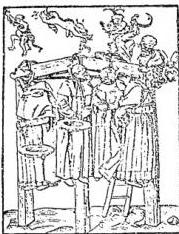
LUTHER, MARTIN - Satirical print against the Pontiff
and the cardinals (1545).
his refuge in March 1522 from Melanchthon, disturbed
by the ill-conceived agitations promoted by Carlstadt
and the Anabaptists, the so-called "fanatics"; these had
organized in the nearby Zwickau around Storch and
Münzer and rejected not only the papacy but, wholesale,
the existing religious and social order, public worship,
and private property, appealing to their own direct illumination
by the Holy Spirit while despising the biblical exegesis of scholars,
considering themselves chosen by God and demanding as proof of adherence
to the new faith "rebaptism." L. restored calm in Wittenberg
through persuasion and secular authority, exiling Carlstadt and the fanatics,
resumed his lectures at the University, and gave a new order to
worship and discipline, abolishing private Mass, private Confession,
and fasts, eliminating the Canon from the Mass,
which was still preserved in Latin with the customary vestments and ceremonies,
distributing Communion under both species, but also under one alone.
He advised the master of the Teutonic Order to suppress the Rule
of the Order and to marry; he himself, in December 1524,
abandoned the monastic habit and in June 1525 married
a former Cistercian nun, Bora (v.).
The Lutheran propaganda against "human traditions"
not founded on the Bible, against the hierarchy and monasticism,
the appeal to the "freedom of the Christian," stirred up
the restlessness of peasants intolerant of serfdom and led them
to formulate their demands in the name of the Gospel. In 12 articles,
they requested, in addition to agrarian contracts, the appointment of parish priests
and the preaching of the Gospel "without human additions." L., asked for his opinion,
initially recognized the legitimacy of the peasants' demands in large part
(Admonition to Peace, 1525). But when, under the influence of Anabaptist preaching,
they escalated to assaults on convents and castles, the destruction of churches and altars,
and the great lay and ecclesiastical lords moved against them, L. abandoned them to their fate,
condemning them as rebels against the order established by God and approving
their extermination in progress,
in the writing Against the Murderous, Thieving Hordes of Peasants (May 1525),
which put an end to the Peasants' War (1524-25) and oriented L. toward a more conservative tendency.
In these years, the first clarification also occurred in the movement sparked by L.
Some elements, who now recognized in him an innovator rather than a mere restorer of Christian life,
began to distance themselves. A portion of the humanists following Erasmus
perceived the incompatibility of the humanistic concept of human dignity
with Lutheran pessimism regarding the "bondage of the will" (polemic between Erasmus and L., 1524-26)
and sided with the old Church. The people, after the outcome of the Peasants' War,
felt betrayed by L. and either adapted to the old order of things or turned
toward the Anabaptists. The radicals reproached L. for positioning himself as a new pope
by imposing his own exegesis of the Bible. This pushed L. to proceed further
in defining the new doctrine, in organizing the new Church, and in determining the new
worship, while the general political situation prevented the Emperor and Catholics
from enforcing the Edict of Worms in practice, and the estates favorable to L.,
by requesting an ecumenical council as the sole legitimate judge of controversial doctrines,
by bargaining for aid against the Turks, by securing freedom of action in individual territories
with respect to the Edict of Worms (Diet of Speyer, 1526), and by forming a league to defend innovations,
created the best conditions for innovators to implement the new ecclesiastical orders.
In worship, the German language was introduced, ample space was given to religious hymns
sung by the people, some of which L. himself composed in both text and music.
The organization of communities, initially conceived on democratic principles,
after the Anabaptist experience was centered on the princes, as "supreme bishops of the territories,"
and by their order, "visitations" were carried out: consequently, the ecclesiastical institutions
of the respective territories were reformed. To ensure unity in preaching after Melanchthon's
Loci communes, L. compiled in 1529 a Small and a Large Catechism; for instruction,
as well as liturgical use, he had already published in 1523 a Booklet for Baptism and
in the same year a Booklet for Weddings.
In these years (1525-30), a decisive shift occurred in the direction of the "Reformation" movement.
The doctrinal and practical anarchy that had erupted in various places in the name of the freedom of the Gospel
had demonstrated the need to set certain limits on the reforming arbitrariness of individuals,
and these could only be provided by the police powers of the princes. Therefore, L. recognized
in the territorial lord who had adhered "to the Gospel" the right and duty to ensure
through his ordinances the "Reformation" and the governance of the Church "according to the Gospel,"
and accepted for himself the ultimately secondary role of reformer of doctrine, worship,
and preaching, by public commission. Thus, L.'s writings, from 1526 onward,
increasingly addressed pastoral, liturgical, and socio-ethical problems; while the "Lutheran" princes,
even before L. had elaborated the theory of their "right of visitation" as "eminent members
of the communities," attributed to themselves a directive function in the administration of the Church,
assuming the duties of summi episcopi and giving rise to the creation of autonomous regional Churches (Landeskirchen),
based on the political principle sanctioned in 1555 of cuius regio, eius et religio,
by which the prince determined the religion of his territory. From this moment, the history
of Lutheranism lost its unitary character, fragmenting into the history of individual territories,
the activity of individual reformers, and the particular evolution that organization, worship,
and even doctrine presented in each territory. Thus, the individual territorial Churches acquired their own character:
the Saxon Church under the combined influence of L. and Melanchthon; that of Hesse
with the unconstrained syncretism of Margrave Philip, who also employed Zwinglian elements;
the Church of Strasbourg under the direction of Bucer and Capito; that of Zurich under the influence of Bullinger;
while the Church of Brandenburg came under the influence of
Agricola, Bugenhagen reformed Denmark, Osiander reformed Nuremberg, Oecolampadius imposed himself in Basel,
and other lesser figures imitated them in other regions, reorganizing ecclesiastical life in a Lutheran sense,
examining and approving pastors, establishing parishes, drafting liturgical rubrics,
organizing popular education institutions, writing catechisms and pastoral instructions,
which the princes then made obligatory by virtue of the ius reformandi.
This preeminent position of the princes in defending and determining the structure of the new Churches became evident when Charles V, reconciled with the Pope and having concluded peace with Francis I, sought to impose respect for the old institutions where they still existed. Against this decision, taken by the Diet of Speyer (1529), the princes presented a formal protest (hence the name "Protestants"), appealing "to the Emperor, to the council, to good Christians"; at the same time, chiefly through the efforts of Philip of Hesse, they sought to form a united front against Charles V's intentions of restoration. In order to include the Zwinglians as well, Philip of Hesse promoted the religious colloquy of Marburg (1-4 Oct. 1529) between Luther and Zwingli to resolve the differences between Zwingli's eucharistic symbolism and Luther's theory of real presence: with no other result than that of prompting Luther to draft the 15 Articles of Marburg, which he later reworked into the 17 Articles of Schwabach and the 10 of Torgau, which would be utilized by Melanchthon in drafting the Augsburg Confession.
At the Diet of Augsburg (1530), in response to Charles V's request—who intended to resolve the German religious question through a compromise—the dissident princes presented a profession of faith, which was at once a theological-legal justification of the religious innovations: the Confessio fidei augustana, drafted by Melanchthon and reviewed by the Saxon Chancellery. It sought to demonstrate the substantial conformity of Lutheran beliefs with the Bible and with the doctrines of the ancient Church, and in general with traditional ones, mitigating divergences and criticizing unaccepted doctrines as a product of Scholasticism, insisting on the condemnation of Anabaptists as subverters of doctrine and social order, and rejecting Zwinglian doctrines. Regarding institutions, it claimed the use of the chalice for the laity, the marriage of priests, the abolition of monastic vows, extolling in contrast civil activities as service to God, the non-obligatoriness of abstinences and fasts, the suppression of the Canon in the Mass because it included the idea of the meritorious renewal of the sacrifice of the Cross. Luther could not be present at the Diet because he was under the ban: however, he had approved the Augsburg Confession from Coburg, though recommending not to go further in concessions to Catholics. The Confutatio pontificia, while recognizing positive elements in the dogmatic part, contested the justification of innovations as contrary to Holy Scripture, to the laws of the Church and of the Empire; the attempt at compromise failed: Melanchthon, against the Confutatio, wrote the Apologia of the Augsburg Confession, and the Lutheran princes renewed the protest of Speyer, organizing resistance to the Emperor and to the Diet's decisions in the League of Smalcald (near Gotha), March 1531, which Luther justified at Philip of Hesse's urging. To this League had adhered, besides the initiative of Philip of Hesse, John of Saxony, Wolfgang of Anhalt, the dukes of Brunswick, the counts of Mansfeld, several cities including Strasbourg, Ulm, Constance, Magdeburg, Bremen, Lübeck, always "for the defense of the Gospel." It constituted a broader coalition than that of the signatories of the Augsburg Confession, including wealthy northern cities, the anti-Habsburg dukes of Bavaria, and could rely on the support of Francis I of France. Taking advantage of Charles V's political-military difficulties, the League's adherents obtained a new interim at Nuremberg in 1532, which allowed them to proceed undisturbed in the suppression of monasteries, the confiscation of monastic goods, the reform of worship; to consolidate the organization of the new Churches, to strengthen their party by attracting new princes and through the secularization of other ecclesiastical territories, scarcely hindered by conservative forces, divided in aims and methods, uncertain even in evaluating the nature of the religious movement. The new political-organizational strength of the Lutherans was revealed in 1537 in the objections and demands they opposed to the Council convened by Paul III first at Mantua and then at Vicenza: the 23 Smalcald Articles, drafted by Luther in a harsh tone, emphasize, in contrast with the Augsburg Confession, the divergences of the new Churches, placing foremost the rejection of the Pope as "Antichrist" and declaring impossible an agreement with Rome. The Lutherans' appeal to the Council proved to be a mere polemical and delaying expedient: as early as 1538, Luther declared to the nuncio Vergerio that his participation in the Council was useless, because he was certain of being in the truth. Substantial reinforcement the Lutherans also derived from Charles V's policy of compromise, from the postponements of the council, from the "Religious Colloquies" of Hagenau, Worms, Regensburg (1540-41) in which the most conciliatory personalities of both sides met: Melanchthon and Bucer for the Protestants, Gropper and Pflug, though with Eck, for the Catholics, the latter supported by the papal legates Contarini and Morone. Agreement was reached on the formulas of original sin and justification, with Catholics accepting the theory of double justice; the Catholic side admitted, without encouraging it, the marriage of priests and the use of the chalice for the laity. Agreement on the number of Sacraments and the authority of the Pope proved impossible. Thus, the dogmatic agreement under imperial auspices (interim of Regensburg 1541) failed, and the interim of Nuremberg of 1532 remained, to the full advantage of Lutheran expansion. Meanwhile, the "Reformation" had reached electoral Brandenburg, Württemberg, ducal Saxony, and other cities in the south and north; it had secured the alliance with Denmark and France, the suspension of trials against usurpers of ecclesiastical goods before the Imperial Chamber Court. A moral and organizational weakening, however, had been brought to the innovators by the Anabaptist excesses "to establish the Gospel" in Münster in Westphalia ("Kingdom of Zion," 1535) and by the bigamy of Philip of Hesse, which Luther, with Melanchthon and Bucer, had justified by invoking the Old Testament in a secret opinion that instead became public and forced Luther, embarrassed, to resort to denials and to theorize "the lie of emergency and utility" (1539-40).
Charles V took advantage of this situation when, having secretly agreed with the Pope, he prepared to act by force against the innovators, after having drawn Philip of Hesse into his orbit under the threat of a trial for bigamy, the Hohenzollerns of Brandenburg, Maurice of Saxony, envious of his electoral cousin and desirous of the electoral dignity. Having restored Catholicism in the duchy of Cleves, by supporting Maurice's coup against the territories of his cousin defended by the Smalcaldics, he succeeded in defeating and capturing the elector of Saxony (Mühlberg, 24 Apr. 1547) and shortly thereafter Philip of Hesse himself. The Smalcaldic League was destroyed, and the princes committed to executing the decisions of the next diet. However, the Lutheran party remained strong in the north, and at the Diet of Augsburg (1548), Charles V had to limit himself to imposing on the Lutherans a Catholicizing ecclesiastical regime until the council's decisions, to which the princes pledged to participate (interim of Augsburg, 1548). This reform, viewed with distrust by the Pope, found no sincere adherence either among Catholics or Lutherans: it nevertheless permitted the restoration of Catholic institutions in Lutheran territories, especially in Saxony, where, however, it gave rise to a lively polemic between the accommodating Melanchthonians and the strict Lutherans (gnesio-Lutherans) regarding Catholic acts of worship considered by Melanchthon as religiously indifferent ("adiaphora").
BIBL.:
J. LORTZ, Die Reformation in Deutschland, 2 voll., Friburgo in Br. 1939-40; H. BORNKAMM, Luther im Spiegel der deutschen Geistesgeschichte, Gottinga 1955; H. STROHL, L'épanouissement de la pensée luthérienne, Parigi 1924; O. SCHEEL, Dokumente zu L.s Entwicklung, 2 voll., Tubinga 1929; H. BOEHMER, Der junge Luther, Lipsia 1925; E. WOLGAST, Die Wittenberger Theologie und die Politik der evangelischen Stände, Gütersloh 1977; P. KALKOFF, Die Anfänge der Gegenreformation in den Niederlanden, 2 voll., Halle 1903-04; G. RITTER, Die Neugestaltung Deutschlands und Europas im 16. Jahrhundert, Berlino 1950; H. JEDIN, Storia del Concilio di Trento, 4 voll., Brescia 1949-81; V. anche ANABATTISMO, CONFESSIONE AUGUSTANA, MELANTONE, SMALCALDA, ZUINGLIO.
A. MERCATI
Meanwhile, Luther had died from cardiac arteriosclerosis (the suicide is a legend spread on the basis of late documents in the 17th century). In his final years, he had increasingly withdrawn into seclusion, leaving the direction of the movement to others—both theologians and princes. Physically suffering, he was embittered by the disorders that had arisen in the new Churches, by the divisions among his followers, by the inclination of many toward Zwingli and Calvin, and by the harsh interventions of princes and city magistrates in the life of the Churches. The idea of the imminent end of the world often came to his lips and pen. He remained unshakable to the last in his conviction of possessing the true Gospel and that the papacy was the Antichrist. Regarding the convocation of the Council of Trent, in March 1545 he had written his most violent invective: Against the Papacy in Rome, Founded by the Devil, and had circulated nine of the most vulgar caricatures, drawn in the workshop of Lucas Cranach, illustrated with sarcastic verses under the title: Portrait of the Papacy by M. L.
III. THE CONSOLIDATION OF LUTHERANISM
The humiliation of Lutheranism was short-lived: a new betrayal by Maurice of Saxony revived resistance in the north; the Schmalkaldic League was reorganized, in alliance with France; Charles V, caught without an army at Innsbruck in 1552, was forced to abandon his program of Catholic restoration and allow his brother Ferdinand, appointed King of Germany, to grant, at Passau, free practice of their own religion to all adherents of the Augsburg Confession until the next Diet, which was held at Augsburg (1555). In its "recess," this Diet sanctioned such concession without time limitation; Lutherans remained in possession of the secularized goods they had acquired up to 1552; the only limitation to their political-territorial expansion was imposed by the reservatum ecclesiasticum, whereby bishops and abbots who wished to become Protestants could do so "without diminution of their honor," but would lose their office; the Chamber Court would be composed of an equal number of Catholics and Protestants. Lutheranism was thus officially recognized, though still confined to a minority in the Diet and with the generic commitment to return to religious unity, should the Council, in which Lutherans had briefly participated in 1552, succeed in restoring II.IV. LUTHERANISM OUTSIDE GERMANY
Meanwhile, Lutheranism had spread not only across four-fifths of Germany, forming compact zones or scattered enclaves according to the peculiar borders of autonomous territories, but also in the northern and eastern regions. Here, it was established more through the authoritative action of local rulers than through a vast and profound movement of conscience, thus presenting a distinctly conservative aspect in doctrine, organization, and worship, aligning itself with Luther of the German Mass phase and with Melanchthon of the Instruction to the Visitors of 1529. The first northeastern territory "reformed" was that of the Teutonic Order, Prussia, which the Grand Master Alberto of Brandenburg transformed into a duchy, later adhering to the Augsburg Confession and establishing, with Osiander, a center of Lutheran thought in Königsberg. This was followed by Livonia, under the influence of the Archbishop of Riga, brother of the Duke of Prussia, as well as Courland and Samogitia. Only partially, as it was contested by Hussites, Calvinists, and Italian anti-Trinitarians, Lutheranism took hold in Poland under King Sigismund II (Diet of Petrikau, 1556). Lutheranism in Scandinavia had an eminently political-national character. In Sweden, it was established as early as 1527 (Diet of Westerås) by King Gustav Wasa, founder of a national dynasty against the union with the Danish crown, and by the preachers Olaf and Lorenzo Petersen, retaining Catholic elements both in organization, which remained on the old episcopal foundations, and in liturgy. In Denmark and Norway, this establishment was the joint work of the monarchy and the nobility, eager for ecclesiastical goods and jealous of the clergy's autonomy. In Denmark, with the support of King Frederick III, Tausen had the doctrine and liturgy of Luther approved by the Diet of Copenhagen (1530) (Confessio havnica); the reform of the ecclesiastical structure, with the king as supreme moderator of the Church and superintendents in place of bishops, as in Saxony, took place in 1536 under Christian III and through the work of Bugenhagen. The same system was established in Norway from 1547. In other countries to the south and west, Lutheranism was reduced more to currents of ideas and groups of initiates than to forming compact Churches within defined territories. In the Netherlands, however, the initially Lutheran Churches eventually turned to Calvinism, while in Hungary, Calvinists and anti-Trinitarians soon prevailed. Lutheran groups remained, as in Poland and Croatia, among German communities, also for ethnic-national reasons. From 1540 to 1575, the expansion of Lutheranism was thus slowed by the Catholic Reformation and the increasingly active competition of Calvinism. In the 17th–18th centuries, Lutheranism saw no substantial growth but, if anything, declines, and in the 19th–20th centuries, its cultural and organizational influence was closely tied to that of German culture and politics: its expansion was due to German nuclei emigrating to non-European countries, especially the United States of America.V. DOGMA
While in Catholic countries the work of Catholic renewal and restoration unfolds, in Lutheran territories lively theological controversies soon arise to disturb the life of the Churches, which in practice is identified with that of the territories. For reasons of doctrine and social order, the generation that followed Luther and Melanchthon underscores the importance of dogmatic principles, seeks to establish a new orthodoxy, and accentuates its religious value. Thus, it not only highlights the confessions of faith formulated during the struggle (Confessio Augustana, Apology of the Augsburg Confession, Smalcald Articles, Luther’s catechisms) but also endeavors to define their meaning unambiguously. In this theological elaboration, the greater and differing religious and ecclesial experience, the pressure of opposing polemics, the demands of their own apologetics, and the contentious spirit of schools naturally make themselves felt. Thus, almost every article of the Confessio Augustana becomes the subject of controversy: regarding the adiaphora, that is, acts of worship considered indifferent in conscience, the rigid Lutherans (Flacius, Nicolaus von Amsdorf) oppose the "Philippists," the followers of Melanchthon; Osiander, supported by Brenz, revives the Catholicizing idea of intrinsic justification against the extrinsic justification of the Confessio Augustana; Major (hence the Majoristic controversy) argues against Luther and Amsdorf that good works are necessary for salvation; the antinomians Poach and Otto, Luther’s disciples, deny—vigorously contested—the obligatory observance of the Decalogue, that is, of moral law for salvation; the Melanchthonian Pfeffinger, in his Inquiries on the Freedom of the Human Will (1555), asserts against Flacius and Amsdorf the active part (synergism) of man in the work of his salvation. Regarding the "Supper," the "Gnesio-Lutherans" accuse the Melanchthonians of "crypto-Calvinism" for inclining toward a merely symbolic interpretation of the Eucharist; Calvinist suggestions provoke controversies on Predestination; even Christology is called into question regarding the communication of properties between the human and divine natures in Christ and the omnipresence of Christ in the Eucharist. Even the text of the Confessio Augustana is debated, with rigid Lutherans contesting the "varied" edition published in 1541 by Melanchthon, whose modifications were incriminated as deviating from Luther’s original thought and that of the Churches. The controversies are conducted with harsh accusations and counter-accusations of heresy, which could lead to the exile of the defeated, and not only the doctrinal unity of Lutheranism but also its political-organizational unity is threatened, precisely at the moment when Catholicism regains combative vigor. The danger is perceived by theologians, including Andreae and Chemnitz, and by princes, who succeed—though not without strong political pressures—in giving life to a series of regional "concordances" that culminated in the approval by all Lutheran princes and their theologians of a "Formula of Concord" elaborated in the monastery of Bergen, near Magdeburg, in 1577, and shortly thereafter, with the official publication of the Book of Concord containing all Lutheran dogmatic texts (1581). A compromise is reached between the Melanchthonian and Lutheran currents: concerning original sin, free will, and human faculties, Melanchthon’s concept prevails, with the recognition of some natural knowledge of God and the capacity to fulfill civil duties with natural faculties; justification is reaffirmed, against Osiander, as extrinsic; regarding good works, the conception of the Confessio Augustana is reconfirmed, namely, that they are not meritorious but obligatory by divine command and as the fruit of the Holy Spirit in us; concerning Law and Gospel, the function of the Law to cast into despair and admonish the regenerate is reaffirmed against Melanchthon; in the Supper, the body of the Lord is truly present according to Luther’s concept; regarding the person of Christ, Zwingli’s Nestorianizing Christology is rejected; the adiaphora are considered modifiable and suppressible, unless someone opposes them as a matter of conscience; concerning Predestination and divine election, divine providence, which encompasses both salvation and damnation, is distinguished from Predestination, which pertains only to beatitude, thus rejecting the Calvinist doctrine; finally, the condemnation of heresies and sects (Anabaptists, Schwenckfeldian mystics, Neo-Arians, Antitrinitarians) is confirmed.
This Lutheranism of the Formula of Concord, which is elaborated into a system in theological faculties with the aid of Aristotelian-Scholastic logic and metaphysics and with the valorization of manuals by Spanish Jesuits, increasingly integrating with a rational justification of the bases of faith-belief, remains open to Catholic influences (dogma as a truth to be believed, the foundation of belonging to the Church; the rational preambles of faith; the ethical demands of Christian life; the visible Church with a hierarchical-normative system) and to Calvinist influences (in the doctrine of the Eucharist, that of Predestination, and in certain democratic-presbyterian tendencies in ecclesiastical governance). These influences often lead individual theologians back to Catholicism or push them toward a more radical and consistent Calvinism. Doctrinal suggestions, always combined with political calculations, lead powerful princes, such as the Hohenzollerns of Brandenburg and Prussia and the Palatine Elector of the Rhine, to adhere to Calvinism, which by the 17th century comes to embrace a good third of German Protestants. The presence of this third confession in Germany will be one of the causes of the politico-religious Thirty Years' War (1618-1648), which, after endangering the economic-political foundations of Lutheranism with the Edict of Restitution of 1629, confirms the principles of the Diet of Augsburg of 1555, extending its advantages to Calvinists as well and sanctioning the further expansion of Lutheranism by shifting the normal year of amnesty to 1632.
VI. ELEMENTS OF DISSOLUTION IN LUTHERANISM
The stabilization of the legal situation and its relations with other Christian confessions did not, however, halt the internal ferment of theological tendencies and spiritual currents, nor did it constitute an effective barrier against the penetration of philosophical and political ideas from subsequent eras into the Churches. The official orthodoxy proved intolerable to mystics: Sebastian Franck (d. 1542), Schwenckfeld (d. 1561), the Neoplatonizing Weigel (d. 1588), but above all Jakob Böhme (1575-1624) and the Bohemian Angelus Silesius (d. 1677), who ultimately converted to Catholicism. More organized and widespread was the reaction against the dogmatic rigidity of theologians, the worldliness of bureaucratized territorial churches, and the Christianity of mere habit among many faithful, represented by Pietism—a movement advocating an active Christianity,characterized by affective fervor and moral commitment, embodied in a «praxis pietatis». It was a reform within the Reformation, drawing on Lutheran mystics, and in its reaffirmation of works as the substance of Christian life, it revealed the influence of post-Tridentine Catholicism, while its devaluation of dogma Enlightenment (v.).
The initiator was Philipp Jakob Spener (1635-1705) with his programmatic work Pia Desideria or Heartfelt Desire for a God-Pleasing Improvement of the True Evangelical Church (1675), which gained support from the Saxon court and dominated the University of Leipzig. The implementer was August Hermann Francke (1663-1727), who, operating from Halle, secured the victory of Pietism in northern Germany, as well as in Sweden and the Baltic countries, and established schools, orphanages, seminaries for teachers and preachers, and biblical publishing institutes. A distinct movement within Pietism was the «Community of Brethren» («Herrnhüter»), promoted by Count Zinzendorf (d. 1760) on his estate in Herrnhut, Silesia. It sought to be an «ecclesia» within the Lutheran Church, cultivating particularly affective devotion and a Christianity of the heart. The political demands of the unitary bureaucratic state, combined with an adogmatic spirit, led King Frederick William III of Prussia to forcibly impose a union of Calvinist and Lutheran Churches (the so-called «Old Prussian Union», 1817). However, many Lutherans resisted, maintaining their Lutheranism as a «Free Church» (Freikirche), i.e., without public recognition. Within these groups, the 19th-century revival movement gained particular strength, affirming revealed dogma as the foundation of the Church, in opposition to rationalist biblical exegesis and idealistic interpretations of Christian theology. This movement constituted «Neo-Lutheranism», which emphasized conservative elements in doctrine, worship, and church structure, while remaining open to ecumenical concerns—particularly active in the aftermath of the First and Second World Wars. It sought to distinguish itself from rationalist and individualistic currents, to assert full organizational autonomy from the state, and thus increasingly inclined to recognize a convergence of doctrinal and ecclesiastical-organizational interests with Catholicism, toward which many of the old suspicions had faded.
VII. NUMERICAL STRENGTH OF LUTHERANISM
From a statistical standpoint, Lutherans were estimated before the Second World War at approximately 62 million, distributed as follows: 1) Territorial Churches and Free Churches: in Germany, 16 million; in the rest of Europe: 21 million; in North America: 4 million; elsewhere: 150,000. 2) United Churches in originally Lutheran territories: 21 million; 3) Lutherans not organized into churches, in the U.S.A.: approximately 10,000.VIII. ASSESSMENTS
The contrasting elements of L.’s personality—imaginative force, vehement passion, tenderness of affection, organizational concreteness, virulence and vulgarity of language, poetic and musical sensitivity, mystical impulses and implacable hatreds, suggestibility and obstinacy, exaltations and depressions—have for centuries provided material for the apologetic exaltation of his followers and the denigration of his adversaries. The historical-theological and psychological contextualization, the fruit of studies from the last fifty years, including those by Catholics such as Denifle, Grisar, Cristiani, and Lortz, reduces the novelty of L.’s doctrine, traces its fundamental motives back to the theology of the late Middle Ages, emphasizes the psychopathic elements of his character to explain his contradictions, and distinguishes in L. what was a religious exigency, a living Christian sense, an aspiration toward a renewal of Christian piety from the formulas in which L. expressed it, the institutions he promoted, and underscores the extraneous influences that interfered with them. The multiplicity of motives in L.’s personality has thus always permitted, and will continue to permit, unilateral interpretations of him as a mystic intolerant of theology, or as an expression of the German soul, or as a subverter of the Church and destroyer of dogmatic consciousness.The Lutheranism that subsequently took shape as a ecclesiastical and dogmatic structure has imprinted the customs and life of the populations that embraced it with its biblicism, its affective piety expressed in choral music and rich hymnody, the religious prominence given to civil professions and the quasi-sacerdotal character attributed to the prince and the paterfamilias, but also with the separation between religion and morality deriving from the pessimistic conception of invincible concupiscence, with the renunciation of social action for the implementation of evangelical principles in the conviction that economy and politics are profane realities, subject to the Evil One, offering weak and often ineffective resistance to the anti-Christian forces of theoretical rationalism, political secularism, pure economism, and radical nationalism.