
TAULERO (TAULER), JOHANNES. - Dominican preacher and mystic, born at Strasbourg around the year 1300 (Auer) or 1304 (Théry), died there on 16 June 1361. His tombstone is in the Neuen Kirche. He entered the Dominicans between the ages of 15 and 18, while his sister became a Dominican nun at S. Nicola in Undis.
Although frail in health, T. began at Strasbourg a fervent religious and scholarly life which he perfected at Cologne in the «Studium generale» under master Eccardo (v.), of whom T. was one of the most devoted disciples. Having returned to Strasbourg, he distinguished himself as a preacher and in the care of souls. In deference to the interdict of Giovanni XXII, T. and his brethren moved to Basel (1339-43), where he became a central figure among the «Friends of God», showing great charity toward Enrico di Noerdingen, likewise a refugee there. From Basel he went to Cologne (June-autumn 1339), visited Medingen (1346), and returned to Strasbourg in 1346-47, where he directed a group of «Friends of God» and was confessor to Rulman Merswin. Between 1350 and 1360 he went to Cologne one last time and perhaps visited Ruysbroek at Groenendal. Nineteenth-century criticism removed the spurious additions to the memory of T., especially in the account of the Meisterbuchs. H. S. Denifle also rejected as untrue the assertion of the chronicler Daniele Specklin (d. 1589) concerning two anti-papal writings attributed to T.
Held in high esteem by contemporaries and posterity, T. is for the chronicler Giovanni Meyer (d. 1485) «homo Dei, predicator egregius, litterarum scientia clarus». When Lutero relied on certain ideas of T. (not even properly understood) concerning the lesser importance of external works, the polemicist Giovanni Eck too lightly cast suspicion of heresy upon T. But s. Pietro Canisio, L. Surio, and L. Blosio vindicated his doctrinal purity; they were followed in this by H. Spondano, Sisto di Siena, s. Roberto Bellarmino, and Bossuet, who called him one of the most solidly orthodox mystics. In 1550 the Institutiones, moreover falsely attributed to T., were placed on the Spanish Index; the Jesuits (1578) and the Capuchins (1597) pronounced against Taulerian writings on the pretext of quietism; but T. was in fact rehabilitated in the doctrine of s. Giovanni della Croce, Giovanni degli Angeli, and Michele de la Fuente. S. Giovanni della Croce too depends upon T. for substantial concepts. T.’s influence upon the «French school» of the seventeenth century and later upon s. Paolo della Croce was also noteworthy.
The doctrine of T., sometimes called «doctor illuminatus», constructed on the basis of the Gospel and tested in pastoral experience, is composed of Neoplatonic-Augustinian, Pseudo-Dionysian, Thomistic, and Eckhar-
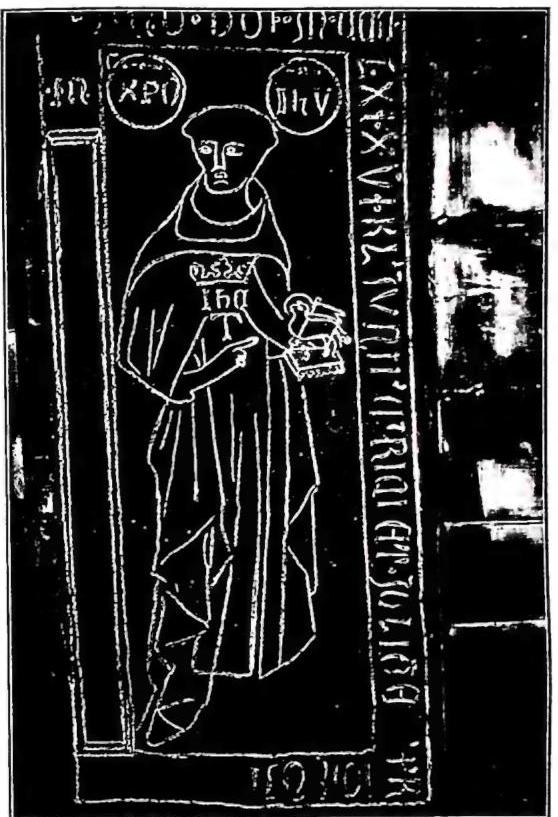
T. left no writings of his own; he preached and also improvised. A most upright and zealous preacher, an exceptionally original and powerful intellect, T. fought the «brethren of the free spirit» in their excesses and also repeatedly defended Eccardo—to the displeasure of certain hierarchical circles. Practical and ethical, T. recommends sincerity, docility, and moderation; he is uncompromising against every kind
of Phariseeism, against every form of sin, seduction, and enjoyment of creatures.
Of T. there remain the Sermons (about 83), several letters (at least that to the female friends of God, Elisabetta Scheppach, prioress, and the nun Margherita Ebner at Medingen, of 1346), and three instructions (G. Hugueny, H. Théry, A.-L. Corin [V. BIBLICA.], I, pp. 97-59; E. W. Wentzloff-Eggebert [V. BIBLICA.], pp. 307-308). Criticism denies to T. Das Buch der geistlichen Armut, the Divinae institutiones, and the Exercitia super vitam et passionem Iesu Christi.