
ECK, JOHANN. – Theologian and anti-Lutheran polemicist, born at Egg, in Swabia, on 15 November 1486, died at Ingolstadt on 10 February 1543. His surname was Maier, but he is better known by the name E., which he himself chose and derived from his place of origin. He studied at various universities (Heidelberg, Tübingen, Cologne, Freiburg) and received his degree in theology in 1510. In 1508 he had become a priest. Called to teach theology at Ingolstadt, he held that chair for 32 years, and there he also served as dean and rector, from 1512 as chancellor, and finally as academic parish priest as well. Through his remarkable activity and solid learning, he was the principal support of Catholicism in Bavaria. A determined and tenacious adversary of Luther, he urged Rome to condemn him. In 1520 Leo X entrusted the publication of the bull Exurge to Giro-
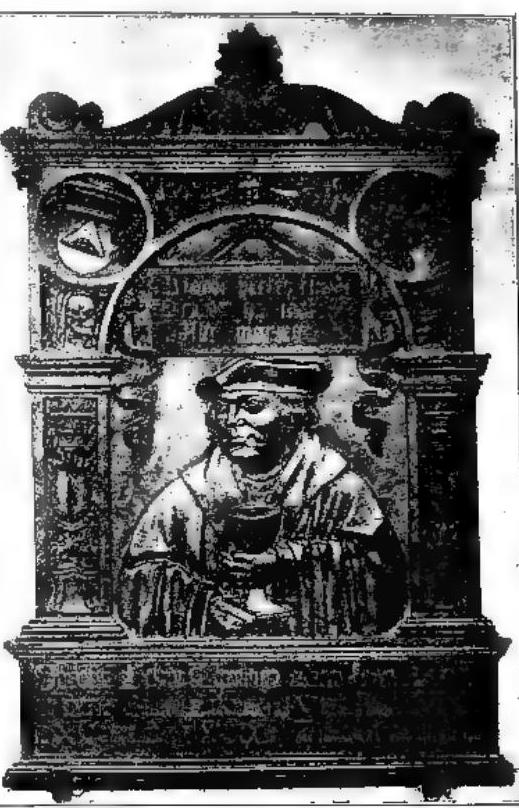
In agreement with the most illustrious men of his time, and above all with the Pope, he demanded extensive reforms in Rome itself; in his memorandum, without any reticence, he exposed the abuses existing in the Curia and gave a vivid portrait of the intrigues of prebend hunters. In 1526 he also went to Switzerland to take part in a disputation against Zwingli. For his ardour in combat, Cardinal Pole (v.) rightly called him the “Achilles of the Catholics.”
His publications were numerous, and all of them, with the exception of the hastily prepared translation of the Bibbia into German, command the attention of the scholar. The principal ones are: Chrysopassus praedestinationis (Augsburg 1514); De primatu Petri (Ingolstadt 1520); De paenitentia et confessione secreta (n. p. 1523); De Purgatorio (Rome 1523); De Satisfactione (ibid. 1523); De initio paenitentiae (ibid. 1523), and above all the Enchiridion locorum communium (Landshut 1525) and De Sacrificio Missae (ibid. 1527). Cf. H. Jedin, Storia del Concilio di Trento, Italian trans., I, Brescia 1949 (v. index).