
LUGANO, DIOCESE of. — Governed by an apostolic administrator with episcopal character. The evangelization of these lands situated between S. Gottardo and the regions of Lago Maggiore, L. and Como is due to various missionaries; the work presumably falls into two periods: 1) the Milanese-Comacine period, extending from the 4th to the 6th century; 2) the Rhaeto-Merovingian period, extending from the middle of the 6th century to the 8th, through the work of the Irish monks associated with s. Colombano (d. in 615) and s. Gallo (d. in 645).
Until 1 September 1884, the northern part of the present diocesan territory, with the pieve of Capriasca and Brissago, belonged to the diocese of Milan (the belonging of the valleys called Ambrosian is said to go back to the donations of Attona, bishop of Vercelli, of 945–48, whose authenticity is highly doubtful, at least in the case of the earliest ones; cf. F. Savio, Gli antichi vescovi d’Italia. Il Piemonte, Turin 1899, pp. 452–53; P. Fr. Kehr, Italia Pontificia, VI, II, Berlin 1914, p. 12), while the southern part, except for the pieve of Capriasca and Brissago, was under the jurisdiction of the bishop of Como.
The present diocese, nominally united with that of Basel, was established by Leo XIII with the bull Ad Universam of 7 September 1883 (Leonis XIII P. M. Acta, VIII, Rome 1889, pp. 301–25). The first apostolic administrator was Msgr. E. Lachat (d. 1 November 1886). It was, however, under his successor, Msgr. V. Molo (d. 15 March 1904), that the diocesan question of Ticino was definitively settled by the Convention of 16 March 1888 between the Holy See and the Swiss Federal Council. The Convention does not explicitly speak of a diocese, but designates it by referring to the erection of the church of S. Lorenzo of L. as a cathedral, «canonically united and on an equal footing of rights with the Church of Basel, whose Ordinary shall henceforth bear the title of bishop of Basel and of L.». The term diocese was avoided out of consideration for those circles that had until then opposed the creation of an autonomous diocese for Ticino. The principal architects of this creation were, on the part of the Holy See, Msgr. D. Ferrata, the future cardinal (d. in 1914), and, on the part of the Ticinese government, the Hon. Martino Pedrazzini. The diocese depends directly on the Holy See; it has its cathedral in Lugano, with a Chapter, and its own seminaries. The bishop-administrator is freely chosen by the Holy See «in agreement with the diocesan bishop» from among the Ticinese clergy.
Among the people of Ticino, the following distinguished themselves for holiness: the blessed Manfredo Settala, priest and hermit (d. in 1217); Pietro Berno of Ascona, Jesuit martyr (1583); the blessed Contardo Ferrini, layman and university lecturer (d. in 1902); the venerable Francesca Vacchini of Ascona, virgin (d. in 1609); and Niccolò Rusca of Bedano, first parish priest of Sessa and subsequently archpriest of Sondrio, killed for the faith in 1618.
The diocese possesses various sanctuaries, among the most celebrated of which are: the Madonna del Sasso above Locarno, a basilica (apparition of the Blessed Virgin, 14 August 1480); the Madonna dei Miracoli in Morbio Inferiore (approval 29 July 1594); the Madonna della Grazie in the Cathedral, Lugano (crowned, Vatican Decree of 10 July 1939).
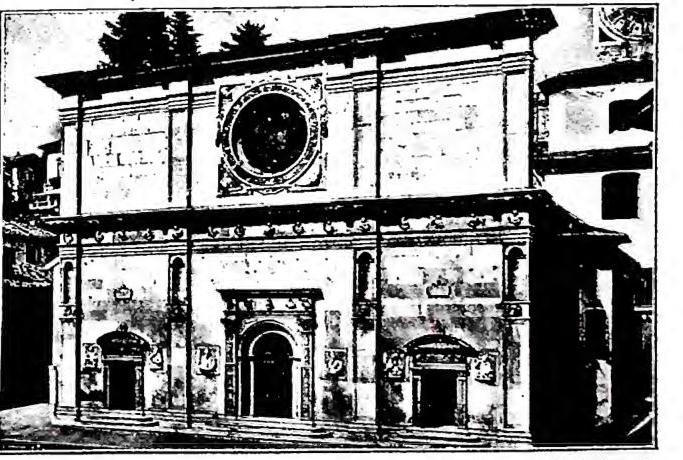
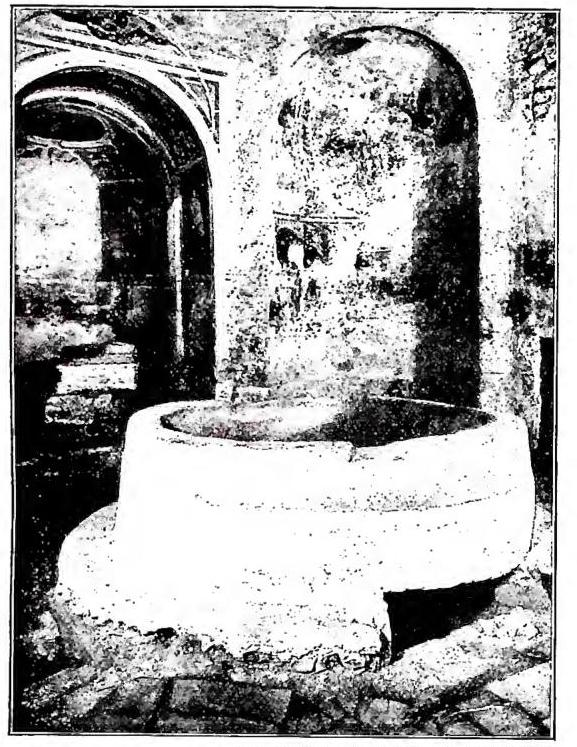
Ticino gave the Comacine masters to Lombard art and possesses notable monuments: the baptistery of Riva S. Vitale, dating from the 5th century; the thousand-year-old cathedral of Lugano, Lombard Romanesque, with additions made over the centuries up to the 18th; several Romanesque churches, the principal ones being S. Vittore in Muralto, S. Nicolao in Giornico, and S. Pietro in Biasca (11th–12th centuries), etc.; the collegiate church of Bellinzona, Renaissance in style, rebuilt in the 16th century.