SALISBURGO. – Archiepiscopal see, capital of the Austrian confederate state of the same name.
I. ORIGINS
The Salzburg territory of the ecclesiastical principality extended over a large part of the Bavarian plain and the narrow valleys of the Salzach and Saalach Rivers, together with the smaller high-mountain valleys; the principal resources of this region were mineral salt (Dürnberg above Hallein, Reichenhall), copper and other valuable minerals (Kitzbühel, various valleys of the Tauern), gold in the valleys of Rauris and Gastein, and Adnet marble, all exploited since prehistoric times.Meanwhile, as early as the Celtic period, an important settlement called Petena, later Iuvavum, existed on the site of S.; the river was called Igonta, later Ivarus. Under Roman rule (from 15 B.C.), the territory was included for the most part in the province of Noricum; Iuvavum, a municipium under Claudius, became an administrative centre, without military importance. In the life of St. Severinus (d. in 482), it appears in the form Iuvao and had outside the city a monastic church, «basilica» (chs. 13 and 14), or «cellula», with some «spiritales» monks; there were also believers in nearby Cucullis (today Kuchl) (ch. 11). The ancient church of the castrum Cucullis apparently survives in the present church on the Georgenberg (St. George). On the other hand, the identification of the priest Maximianus (ch. 24) in «Iovaco» with a martyr named Maximus, whose cell is shown at S. in the so-called catacombs, does not appear justified, since that locality stood on the Danube, with a fleet station.
After the death of St. Severinus, ancient Iuvavum was largely destroyed by the Heruli (488). Around 500 the region was occupied by the Baiuvari, and in that century a «castellum superius» situated on the present-day Nonnberg is mentioned. The region, like all Bavaria, was slowly Christianized by Frankish missionaries.
Around 690–95 St. Rupert (v.), a missionary bishop, appeared in the country and established various «cells», that is, centres of monastic and missionary life. He received from Duke Theodo of Bavaria the ancient Iuvavum with its castle as a gift, and took up his residence there, founding a male monastery under the title of St. Peter and a female one on the site of the castle; both still exist today (Sankt Peter and Nonnberg [v.]). Theodo also obtained from Gregory II (716) the establishment of a permanent ecclesiastical organization in Bavaria, with S. as its centre; but it was only St. Boniface who, in 739, regulated ecclesiastical affairs there by establishing four permanent sees: S., Regensburg, Passau (which had already had bishops, at least temporarily), and Freising. The first bishop of S. was Giovanni (739–45), abbot of Sankt Peter. His successor, St. Virgil (v.), was the true organizer of the diocese (745–84): he built the first cathedral, distinct from the abbey church of St. Peter, and transferred there the body of St. Rupert (774), who from then on was venerated as the saint and patron of the diocese and the region. Learned and extremely active, he directed the diocese’s principal efforts toward the largely Slav regions of Carinthia, Styria, and Pannonia. In 755 the present name «Salzburg» (salt settlement) appears for the first time, and the German dukes and kings donated the nearby saltworks to the bishopric.
II. ARCHBISHOPRIC
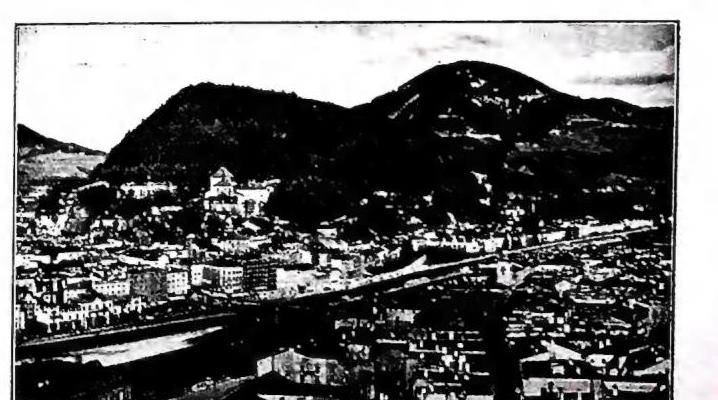
1. Missionary center (c. 898–950). — From 758 to 821, the diocese was governed by Arno (v.), who on 20 April 798 saw his see elevated to a metropolitan see by Leo III, with the suffragan sees of Sabiona, Bressanone (v.), and the Bavarian sees existing since 739: Frisinga, Passavia, and Ratisbona, as well as Neuburg, soon united with Augusta, which was under Magonza. The school of Sankt Peter flourished: the famous codex of traditions was composed (the register of the Church of S.’s landed properties), and an immense impetus was given to the missions toward the East, especially after the Avar wars. Charlemagne assigned all the immense territories of the Avars to S. as mission lands, and the archdiocese extended as far as the Tisza, while from 811 the Drava formed the boundary with Aquileia; shortly thereafter, the boundaries with Passavia were regulated (v. Christianity*). Since the area was immense, a chorepiscopate was established in Carinthia, with its seat at Maria Saal. Under Liuphram (836–859), a missionary center beyond the Danube for the Slovaks was established at Nitra, the beginning of a politico-religious disputeSALISBURGO – Panorama with the Kapuzinerberg and the Gaisberg.
2. Medieval ecclesiastical principality; the suffragans (c. 950–1450). – After the Magyars had been defeated, the archbishops of S. attempted a recovery. Frederick I (958–91) definitively obtained immunity in 984 and, in the same year, separated the archiepiscopal mensa from the abbey’s property; as a result, the abbey of Sankt Peter came under its own abbot. Frederick earned distinction through his zeal in spreading culture and rebuilding the devastated regions. Since 996 S. has had its own coinage; in 1026 the archbishop received the title and prerogative of legatus natus, and for this reason the archbishops later wore the cardinalitial purple. In 1039 the monks of Sankt Peter also ceased to have the right to elect the archbishop. Archbishop Balduin (1041–60) reformed the clergy and monks and devoted much attention to the more distant regions, Carinthia and Styria, founding monasteries, churches, parishes, etc. Gebhard (1066–88), in order to strengthen his political position against the emperors and the other neighboring princes (Bavaria, Austria), built the impregnable fortresses of Hohensalzburg, above the city; Hohenwerfen, to bar the passes toward the Tauern; and Friesach in Carinthia. He also began establishing «suffragan» bishops, founding in 1070 Gurk (v.) in Carinthia, where there had previously been a convent of nuns with a large church and extensive possessions (v. EMMA), a bishopric. In the theory of German law concerning «Eigenkirchen», Gurk was an «Eigenbistum» of S.; the archbishop who had founded and endowed the see appointed and invested the suffragan bishop.
Conrad II (1106–47) likewise established and endowed its own Chapter, under the rule of St. Augustine. During the investiture struggles the archbishops of S. were ordinarily allied with the popes, and suffered greatly on their account; but they emerged from them more powerful and respected. Eberhard II (1200–46), a supporter of Emperor Frederick II, obtained confirmation of the full political independence of his ecclesiastical principality (20 April 1220) and, following Gebhard’s ideas, established three further «suffragan» sees: Chiemsee in Bavaria (1217–18), Seekau in Styria (1218), and, in eastern Carinthia, Lavant, with its residence at Sankt Andrä (1228). Indeed, the bishop of Chiemsee took up residence as early as 1300 in the city of S. itself (Chiemseehof). Thus, in addition to the suffragans, in the ordinary sense, of Brixen, Freising, Passau, and Regensburg, S. had four suffragans of its own, with full rights of election, investiture, etc. This «unicum» remained in force for Chiemsee until its suppression in 1807, and for the others largely until the Austrian Concordat of 1933–34.
From 1366 the archbishops of S. also had the right to mint gold coinage. But, owing to the political movements of the period, intruded archbishops appeared with increasing frequency; they often gave rise to violent conflicts, including armed ones, and caused decline and serious internal tensions.
3. The height of power and art (c. 1450–1750). – Emperor Frederick III was able to establish his own bishoprics at Vienna and Wiener Neustadt, something that S. and Passau had until then managed to prevent. The same Frederick later granted the city of S., in 1481, the rights of a free imperial city, in order to weaken the power of the prince-archbishop. But he did not succeed, because Archbishop Leonardo of Keutschach (1495–1519) intervened against these aspirations to independence. The transport, in the middle of winter, of the city’s most prominent citizens to Radstadt, accompanied by the executioner, and the construction of the great organ on the city fortress («Stier»), which was to play at 4 in the morning and at 9 in the evening to regulate urban life, became famous. The work is still functioning admirably, although it plays choral melodies that differ each month. He then reinforced the fortress and also made it a princely residence, with the church of St. George, where he had himself depicted in red marble, blessing the city and the country from above. He was succeeded by the celebrated Cardinal Matteo Lang of Wellenbach (1519–40), who brought his state to renewed splendor and in 1529 received the title of «primas Germaniae», which has remained attached to the see to this day. After the Council of Trent, reforming synods were not lacking (1569–1576), and religious life remained flourishing despite Protestant infiltration.
The new Renaissance spirit led to a rapid and extensive renewal of the city and principality, thanks to the work of three celebrated prince-archbishops. The first and most controversial was Wolf Dietrich of Raitenau (1587–1612), a student of the Germanicum in Rome, who became prince-archbishop at the age of twenty-eight and brought with him profound impressions of Italian life and art. He demolished the magnificent medieval Cathedral down to its foundations (1600), and in 1610 laid the foundation stone of the new one. In the center of S. he began constructing an entire ecclesiastical quarter (residence, offices, Chapter Palace, etc.), opened a new cemetery, and promoted every kind of art, employing Italian artists. To counter Protestant expansion he summoned the Capuchins and built several monasteries for them. In promoting commerce he came into armed conflict («Salzkrieg») with Maximilian of Bavaria. He was defeated, imprisoned, and denounced to Rome (1612). His passion for construction had won him enemies, especially in the Chapter, but what harmed him above all was his relationship with Salomè Alt (whom the Emperor granted the title of Altenau), by whom he had ten children and for whom he built Altenau Castle, today Mirabell. A papal commissioner, while freeing him from Bavarian imprisonment at Hohensalzburg, declared him a prisoner of the Holy See, under the supervision of the new archbishop. Wolf Dietrich lived for another five years (d. 1617) in strict confinement, but in sincere repentance. He was succeeded (1612–19) by Marco Sittico of Hohenems, who continued his predecessor’s construction projects with greater success. In 1614 he began the new Cathedral according to a different plan, and with the gymnasium (1617) prepared the future University.
But the greatest prince of that period was Paris of Lodron (1619–53), who succeeded in preserving complete peace in his states during the Thirty Years’ War and indeed in bringing them to genuine material and spiritual prosperity. In 1628 he was able to complete the exterior construction of the Cathedral and many other buildings in the city, giving it in part the appearance of a Baroque city. For greater security he built new fortifications, while maintaining a modest but well-equipped army. His greatest glory, however, was the foundation of the Benedictine University of S. (1632) and the establishment of the Benedictine Congregation of S., which included many Bavarian and neighboring abbeys (1641–1808).
When the missions among the Protestants, who remained steadfast in their Alpine valleys, had proved fruitless, Leopold of Firmian (1727–44), in order to rid himself of them, exiled them from the state on 31 October 1731; the event alarmed all Europe at the time. More than 25,000 people left the country, most of them settling in Prussia and Hesse.
4. Decline (1750–1816). – S. was unable to escape the Enlightenment and the Josephinist ecclesiastical policies of Joseph II, and Girolamo Colloredo (1772–1803), who was deeply imbued with them, introduced many «reforms», abolishing processions, restricting external forms of piety, suppressing confraternities and charitable institutions, and even prohibiting nativity scenes, much to the people’s regret.
With the advent of Napoleon, Colloredo fled (1800) before the French, never to return. He died in Vienna in 1812. But as early as 1786 he had been obliged to conclude a Convention with Joseph II (19 Apr.), by virtue of which the jurisdiction of S. in the Austrian territories ceased, and the Emperor (with Rome’s consent) reduced the Salzburg “suffragans”—Gurk, Seckau, Lavant, and the new bishopric of Leoben—to suffragans of S. in the ordinary sense of the word. S., however, retained the right to nominate the bishops of these sees.
In 1803, with the great German secularization, the millennium-old ecclesiastical principality of S. also came to an end. In the Peace of Lunéville, its territory was assigned to the Archduke of Tuscany with the title of Electorate (Kurfürstentum). In 1805 it passed to Austria, which lost it in 1809. Meanwhile, the Cathedral Chapter had also been suppressed (1807). The bishop of Chiemsee administered the archdiocese spiritually. From 1809 to 1810 S. was under the French, then passed to Bavaria (1810–16), which suppressed the right to mint coinage and the University.
III. THE MODERN ARCHDIOCESE (FROM 1825 ONWARD)
With the Congress of Vienna (1816), the territory of the principality of S. passed definitively under Austria; however, some important parts, such as Reichenhall, Berchtesgaden, and the “Flachgau,” the flatland beyond the Salzach, remained with Bavaria. Since 1918 it has been one of the confederate states of the Austrian Republic. A reorganization of ecclesiastical relations was also necessary.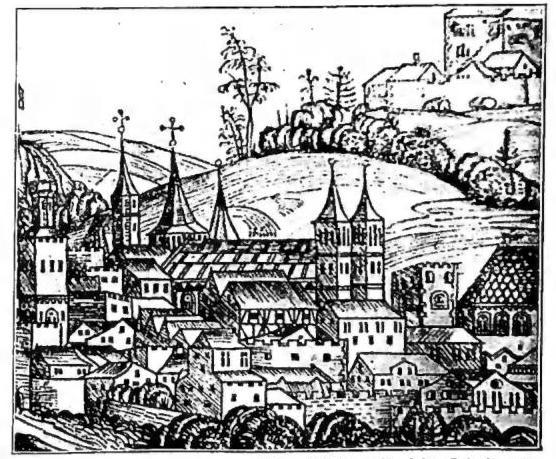
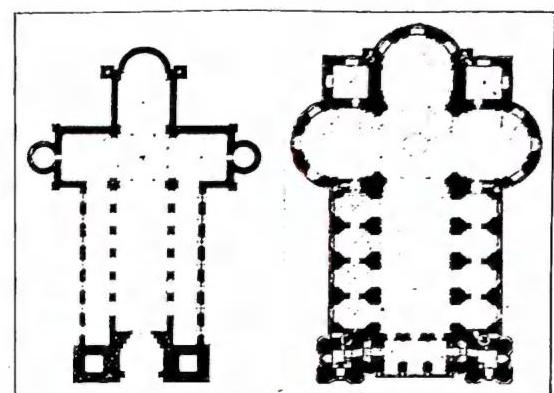
SALISBURGO – 1. Plan of the medieval Cathedral (12th century), Romanesque, with six towers, transept, and octagonal dome; 2. Design by S. Solari, executed between 1614 and 1628, in the Vignola style, with a central dome and two lateral aisles in the form of chapels.
Austria’s incorporation into Germany (1938–45) brought to the archdiocese of S. all the difficulties created by the Nazi regime; and the bombs did the rest: the Cathedral dome and other churches were destroyed, and religious works suppressed. Worthy of mention as a sign of the religious revival are the « Österr. Borromäuswerk » (1946) for the Catholic press; the Permanent Commission of the Austrian episcopate for the liturgy, based at the Liturgical Institute at St. Peter’s Abbey (1947); the « Österr. Institut für Caritaswissenschaft » for preparing laypeople for social work; and the revival of the Catholic University.
The present archdiocese covers 9715 sq. km., with 456,000 inhabitants, of whom 380,000 are Catholics (the city of S. alone now has more than 100,000 inhabitants). It is divided into 19 deaneries with 200 parishes. Its major and minor seminaries are well organized. There is also a faculty of theology. S. is also known as the place of origin of the Society of St. Peter Claver for the African missions.
IV. UNIVERSITIES, CULTURAL INSTITUTIONS
Sacred and secular studies always flourished Sankt Peter (v.); consequently, it continuously exercised a very considerable influence on the spiritual life of the city and of the ancient principality. The same applies, with regard to the abbey of Nonnberg, to the female sex. In the Middle Ages there was also the cathedral school. But the glory of Baroque S. in the educational field is its Benedictine University, established, after many difficulties, with the definitive assistance of Prince-Archbishop Paris di Lodron and the enthusiastic collaboration of the Benedictines of S. and Bavaria. A gymnasium was established first in 1617; in 1620 (9 March) the imperial diploma was granted; in 1625 (17 Dec.) came the papal confirmation by Urban VIII; in 1623 the University opened. Around 1700, the celebrated « Kollegienkirche », a first-rate Baroque creation, arose beside the University. It is noteworthy that the University of S. was the only Catholic university in which history too had practical and universal instruction. Bavaria suppressed it at once (24 Dec. 1810); a kind of lycée nevertheless continued in its place until 1850, when the Faculty of Theology was re-established.Since 1884 there has existed the « Kath. Universitätsverein » for the foundation and endowment of a complete Catholic University. After a halt during and following the First World War, the Nazi period destroyed the work that was nearing completion. Everything has now resumed; the Faculty of Philosophy and various higher institutes have been added. Since 1931, S. has hosted the « Salzburger Hochschulwochen », highly renowned international university summer courses of advanced study. S. also has the « Studienbibliothek », with more than 1,200 manuscripts, more than 4,600 incunabula, and more than 100,000 volumes. Since 1880 there has also been the well-known international institute « Mozarteum » for music. The great musician W. A. Mozart was born in S. (in 1756) and began his career with the support of the prince-archbishop. The « festival » (Salzburger Festspiele) has enjoyed worldwide fame since 1917; resumed in 1925 during the summer season, it features grandiose performances, especially dramatic ones, in the Cathedral square.
V. ARTE
Today S. presents itself at first sight as a Baroque city: it is also called German Rome because of its many domes, dominated by that of the Cathedral. This is the city’s principal sacred monument. It is dedicated to ss. Ruperto and Virgilio. After the primitive construction begun by s. Virgilio (774) had been destroyed, reconstruction took place during the 12th century in grandiose Romanesque forms, influenced by Saxony, with a great atrium between two square towers, three interior naves with a transept and two further round towers, an octagonal dome, and two smaller towers with stairways in the presbytery. Gothic renovations and interior embellishments followed: grandiose altars, sculptures, and works of art of every kind, so that the cathedral of S. was among the most magnificent in Germany. Severely damaged by fire in 1598, it was razed to the ground from 1600 onward. Wolf Dietrich di Raitenau, prince-archbishop, summoned Vincenzo Scamozzi, who prepared a first grandiose design inspired by St Peter’s in Rome and the Gesù (1606–10), but in 1610, when Wolf Dietrich laid the foundation stone, the design had already been simplified. His successor, Marco Sittico, commissioned Santino Solari to prepare a third design, executed from 1614 to 1628. The two bell towers were completed in 1655. The façade is of white marble, while the entire remainder of the exterior is in grey stone (length 100 m., width 70, dome 72 m.). The exterior is pure Renaissance, the interior early Baroque, with rich furnishings by various artists. In the presbytery are ten archiepiscopal tombs dating from 1619 to 1771 and a grandiose 18th-century organ. From the old Cathedral comes the 12th-century baptismal font; the Treasury contains relics from every period.The Cathedral Square, with the arcades by G. A. Dario (1600), forms a grandiose quadrangle of porticoes, with the monument to the Immaculate Conception (1771), by Hagenauer, in the centre. Beside it stands the sumptuous residence (now the seat of the government) of the prince-archbishops, built on the site of the ancient one dating from about 1120 and renovated in the 16th century (from 1595 to 1619, with additions in 1788–92); as a whole, it attests to the power of the former principality. In the square in front stands the residence fountain (1631–61), by Tommaso di Garona, the finest Renaissance fountain beyond the Alps.
Another residence was the fortress of Hohensalzburg, begun as a castle in 1077 and largely rebuilt by Leonardo di Keutschach, with a Palace, church, and all the appurtenances. The princely rooms (« Fürstenzimmer », especially the « goldene Stube ») reveal great taste and refinement; a unicum is the maiolica stove, dated 1501, each individual tile of which has its own sculptural design. The fortress, enlarged in the 17th and 18th centuries, dominates the city with its vast bulk. The residence of the « suffragan » of Chiemsee was the Chiemseehof, a vast medieval and Baroque building, but later much transformed and now another seat of the government. Noteworthy is the « Hofapotheke », the official pharmacy, with interior and furnishings dating from 1500 to 1700. The whole city is filled with other secular monuments of the princes, such as fountains, riding schools, horse baths, palaces, bourgeois and merchants’ houses with arcaded courtyards, etc.
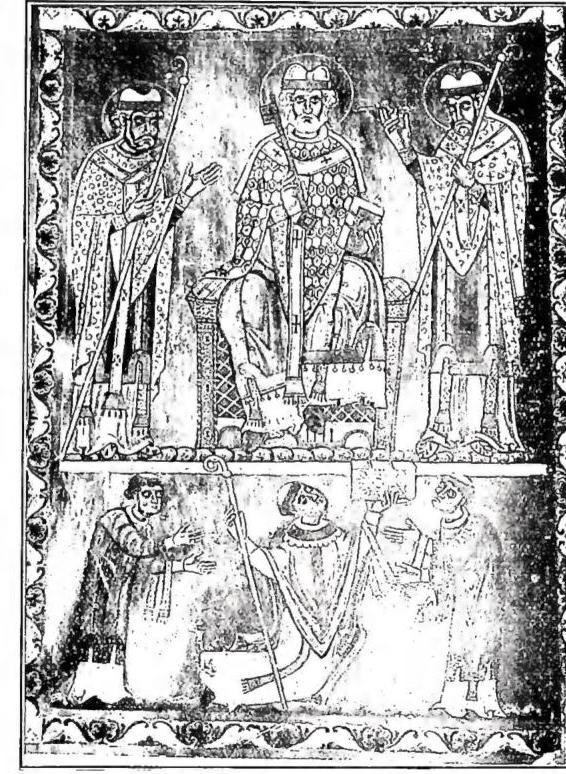
SALZBURG - Antiphonary (12th century). Miniature depicting the offering of the book to s. Peter - Abbey of St. Peter.
replaced in about 1408–32 by master Hans Stethaimer with a luminous Gothic choir, in the form of a “Hallenkirche,” with very tall, palm-shaped pillars, and an ambulatory of grandiose effect. The bell tower dates from 1486–98. For the high altar, the greatest artist of the age, Michele Pacher, was summoned; of his work (1486–98), however, only the statue of the Madonna remained; the rest was replaced by the Baroque altar of J. B. Fischer V. Erlach (1709–11). Worth noting is the cemetery near the church of S. Sebastian, by A. Bertoletto (1595–1600), with arcades all around and very numerous monuments; in its centre is the domed mausoleum of Wolf Dietrich.
The Baroque appearance of S. derives from its many churches with domes in this style. At first, Gaspare Zugalli built a great deal there, with the assistance of other Italian artists; his most characteristic works are above all the churches of S. Erardo (1685–89) and S. Gaetano (1685–1700), in Italian Baroque forms. This was followed by the period of J. B. Fischer V. Erlach, the imperial architect of Vienna. His works include the church of the Holy Trinity (1694–1702), with the two wings of the Paggeria and the Seminary; his major work at S. is the “Kollegienkirche,” that is, the University church (1694–1707), dedicated to the Immaculate Conception. Less grandiose are the churches of S. Giovanni, of the hospital (1699–1714), and of the Ursulines (1699–1705). All these churches are decorated by various local and foreign artists, with great taste.
Among the various castles, Mirabell should be mentioned, built in 1606 by Wolf Dietrich of Raitenau and rebuilt by J. L. V. Hildebrand in 1721–27, with a magnificent park; after the fire of 1818, it was remodelled by P. Nobile. The interior staircase has been preserved, with the celebrated putti in cast lead by R. Donner (1726). Hellbrunn Castle (1613–15), built by the architect of the Cathedral, S. Solari, is celebrated above all for its various water features (1615–19), the open-air theatre for Italian comedies, and the “Nonatsschlössl,” built in one month. J. B. Fischer V. Erlach, already mentioned, was also the architect of Klessheim Castle, in very sober, almost classical forms, whereas Leopoldskron Castle (1736) is simpler and more intimate. In the city, mention should also be made of the Town Hall of 1407, remodelled in 1616, and the tunnel beneath the Mönchsberg, the “Neutor” (123 m.), dating from the beginning of the 18th century.
Outside the city of S., some of the most renowned works of art must not be omitted. Mattsee, founded in 777, has a Romanesque collegiate church with Baroque decoration; Tamsweg, in the Lungau, has a church dedicated to S. Leonardo, filled with works of art (medieval antiquities, frescoes from the 14th and 15th centuries, and canvases by the family of painters Lederwasch, which included at least 18 masters over two centuries). Nearby is Mariapfarr, with other celebrated frescoes in the parish church. Among Marian shrines, the most frequented is that of Maria Plain, near S., the church of A. Dario (1671–74); for the coronation of the statue, W. A. Mozart wrote the well-known “Krönungsmesse.” - Vedi tav. CV.
BIBLI: sources: A. V. Müller, Regesta archiepiscopale, Salisburg, 1106–1246, Vienna 1866; A. Brackmann, Germania Pont., I. Provincia Salisburg et episcopatus Tridentinus, Gottling 1910–11; W. Hauthaler-F. Martin, Salzburger Urkundenbuch, 3 vols., Salisburg 1898–1918. Studies: W. Hund, Metropolis S., Ingolstadt 1882; 2nd ed., by Gewold, 1620 (still useful for its wealth of information); M. Hansiz, Germania sacra, II, Augusta 1729; H. Dalham, Concha Salisburg, Augusta 1783; J. Dürlinger, Histor.-Statist. Handbuch der Erzdiöz. Salzb. in ihren heutigen Grenzen, 3 vols., Salisburg 1862–67; G. Reitlechner, Mariannisches Salzburg, Innsbruck 1904; H. Widmann, Gesch. Salzburg, 3 vols., Salisburg 1907–14; P. Lindner, Monastiera Metropolis Salisb., ibid. 1908; A. Brackmann, Die Kurie und die Salzburger Kirchenprovinz., Vienna 1912; G. Swarzenski, Die Salzb. Malerei, Vienna 1913; J. Mühlmann, Der alte Dom zu Salzb., ibid. 1925; F. Martin, Kunstgesch. von Salzb., ibid. 1925; id., Salzb. Fürsten in der Barockzeit, Salisburg n. d.; Ch. Greinz, Die Fürsterschicht. Kurie und das Stadtdekanat Salzb., ibid. 1920; E. Tomek, Kirchengesch. Österreichs, I, Innsbruck 1935; H. ibid. 1940, passim (v. indici); W. Mayer, Der Tiroler Anteil des Eb. Salzburg, kirchen- kunst- und heimatgesch., in publication since 1936; K. Ginbart, Die bildende Kunst in Österreich, 3 vols., Baden 1936–39 (indices; much material); K. O. Wagner, Alt-Salzb., Vienna 1947; E. Schaffran, Kunstgesch. Österreichs, ibid. 1948; R. K. Donin, Vinz. Scamozzi u. der Einfluss Venedigs auf die Salzb. Architektur, Innsbruck