
GURK, DIOCESI of. — Austrian city and diocese comprising the entire federal territory of Carinthia (9,533 sq. km.), with 497,000 inhabitants, of whom 455,000 are Catholics. The territories ceded in 1918 are administered by Maribor, Lubiana, and Udine. The Slovenian minority, approximately 10% of the population, enjoys complete religious and cultural freedom. The diocese comprises 26 deaneries and 327 parishes, with 372 diocesan priests and 122 religious priests, one seminary, 20 male and 33 female religious communities (1949).
HISTORY. – In the present diocesan territory there existed in the 4th–6th centuries the dioceses of Virunum and Teurnia. After
(phot. Bildarchiv d. Ö. Nationalbibliothek)
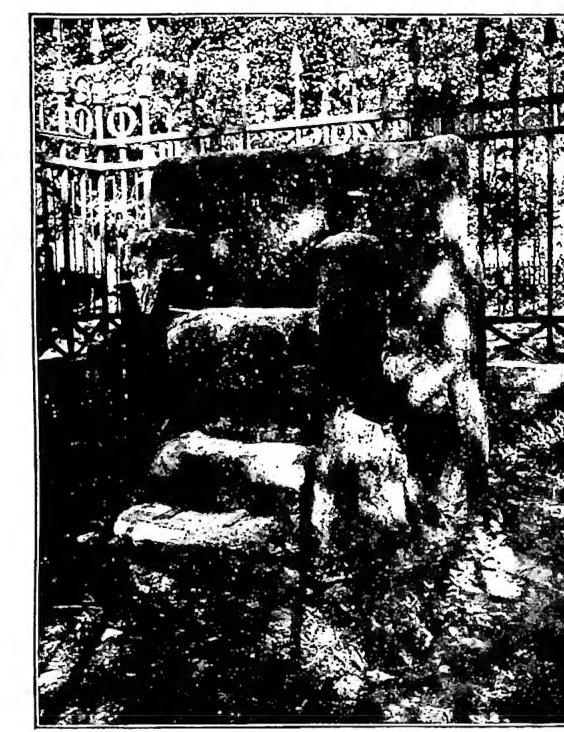
Carinthia, since antiquity a land of crossings and contacts among cultures and peoples, is, in addition to its natural beauty, extraordinarily rich in art, including sacred art. In some places ancient centers of worship still exist, for example, in the Möll valley, above a large isolated cone (Danielsberg), where prehistoric, Celtic, Roman, and Christian cults followed one another (an extremely ancient church of St. Daniel the Prophet); on the Ulrichsberg, the ancient « Mona Carantanus », from which the country takes its name, the ruins of a Roman temple are superimposed upon a Celtic one, and above them stands the Romanesque-Gothic church of St. Ulrich, etc. For the Roman period, Teurnia, Virunum, the ancient « refuges », etc. (v. Christianity).
Some churches date from the Carolingian period, such as Karnburg, where an imperial Pfaltz (residence) existed (888), and St. Peter in Friesach; many others, including those in alpine and rural settings, have a pre-Romanesque or Romanesque core (Plattnitz, a Romanesque alpine domed church; V. ibid., col. 427 ff.); the wealth of frescoes is enormous, often also in scattered churches; it is enough to consult the two volumes by W. Frodl, Die romanische Wandmalerei in Kärnten (Klagenfurt 1942) and Die gotische Wandmalerei in Kärnten (ibid. 1946).
In place of an earlier church built by St. Emma (d. in 1045), the first bishops erected a magnificent cathedral (ca. 1160–1220, with a crypt, two towers 60 m high, and an atrium with the episcopal chapel above it) in the Romanesque style, its exterior made of carefully squared marble blocks (of considerable interest for the study of masons’ marks; cf. J. Löw, Die romanischen Steinmetzzeichen am Gurker Dom, in Carinthia, 1 [1930], p. 1 ff.). The crypt measures 20 × 20 m and has 100 small marble columns, the sarcophagus of its founder St. Emma (1174), remains of frescoes, etc. The interior, with three naves and tall pillars, is now covered with Gothic vaults, partly painted (late 15th, early 16th century). Numerous frescoes include St. Christopher (ca. 1380), the 24 Elders (ca. 1480), etc. Six enormous carved and painted wooden panels, with scenes from the life and miracles of St. Emma (ca. 1500, L. Pambatel), depict those who received miracles with stark realism. A grand high altar in gilded wood, 16 m high, with more than 76 life-sized figures, has at its center the Assumption (by M. Hönel, 1626–32); the altar of the Holy Cross, in lead, has the celebrated and impressive Pietà by G. R. Donner (1741), who also made several panels of the monumental pulpit. The main door, carved in wood and painted (ca. 1218). Countless minor sacred objects.
More important, however, are three great preserved pictorial cycles: 1) Romanesque (1220, renewed in 1268), in the episcopal chapel, with the Glory of Christ and Mary (Throne of Solomon), and a painted stained-glass window from the same period; 2) Early Gothic (ca. 1349), in the atrium, with stories from the Old and New Testaments; 3) Gothic (1458, Conrad of Friesach), painted on canvas (10 meters per side), with 100 small panels, half depicting scenes from the Old Testament and half from the New Testament, serving as a Lenten veil (the largest known) to cover the high altar.
Strassburg is also noteworthy: the episcopal residence until 1787, it is a small town joined to the grand castle-palace (Romanesque, Gothic, Baroque), with a collegiate church containing the tombs of the bishops and a Gothic domed Church of the Holy Spirit (1337), built for the episcopal hospital. At Böckstein is the summer residence by G. G. Hagenauer (1780), a celebrated building uno sub tecto.
The town of Friesach is remarkable: from the 8th century to 1803 it was Salzburg territory, with walls, a moat, and four defensive castles, including Petersberg, with a church already existing in 927; a large Romanesque collegiate church; the first Dominican convent north of the Alps (1217, St. Hyacinth), with an enormous Gothic church (70 m long); the headquarters and hospital of the Teutonic Order from 1213, etc.
Principal sanctuaries: Maria Saal, founded around 870 by the chorepiscopus St. Modestus, who was buried there, today a magnificent fortified complex; Maria Wörth, on the lake of the same name, founded around 900 by Waldone, bishop of Freising, who deposited there (in the Carolingian crypt) Saints Primus and Felician; the present Gothic structure dates from the 14th century. Heiligenblut (1301 m), world-famous for its panorama, at the foot of the Grossglockner (3798 m); the present Gothic church (1485) is especially notable for a relic of the Most Precious Blood, said to have been brought there from the East by St. Briccius. The magnificent panel in the church of Ober-Vellach by Jan Scorel (1520) is celebrated. Other sanctuaries: Maria Rain, mentioned in 927, today entirely Baroque; St. Leonhard, with a French Gothic cathedral built by St. Otto, bishop of Bamberg (1106–39); it has an enormous iron chain around the building (stained-glass windows with figurative scenes from the period). Luggau (since 1635, Servants of Mary), Maria Hilf (Guttaring), 1725–27, which overlooks the center of the country from its mountain.
As a distinctive feature, the many ossuaries (Karner), widespread everywhere and often highly characteristic, must not be omitted; they have an underground chamber for the bones and an apsidal chapel above; Romanesque structures are generally round, while Gothic ones have 6 or 8 sides. The ossuary at Pisweg is entirely frescoed (12th century), while that at Metnitz has a celebrated Dance of Death on the exterior (ca. 1500). In the eastern part, ever since the Turkish invasion (at its height 1470–1529), there have been many fortified churches, for example Diex, Hohenfeistritz, etc.
Among the many castles, a curiosity worth noting is Hochosterwitz, a picturesque complex with a series of 14 gate-towers, a palace, and a church; its present form dates from 1570–86; it belongs to the counts Khevenhüller. – Vedi tav. LXXXIX.
XXIII, pp. 8–10. Studies: A. V. Jaksch, Geschichte Kärntens bis 1335, 2 vols., Klagenfurt 1928–29; Mayr-Kandl-Pirchegger, Geschichte und Kulturleben Deutschösterreichs, 3 vols., Vienna 1929–37; E. Riebel, Zur Geschichte der Kirchen und Pfarren Kärntens, Klagenfurt 1930; K. Ginhart, Die Kunstdenkmäler Kärntens, 8 vols., ibid. 1930–32; K. Ginhart and B. Grimschitz, Der Dom zu Gurk, Vienna 1930; J. Löw, Kl. Gurber Domführer, 3rd ed., ibid. 1930, based on the Chapter Archive of G.; E. Tomek, Kirchengeschichte Österreichs, 2 vols., Innsbruck 1935–49; A. Lamprecht, Heilige und Heiligenreliquien in Kärnten, Klagenfurt 1936; W. Frodl, Die romanische Wandmalerei in Kärnten, ibid. 1942; id., Die gotische Wandmalerei in Kärnten, ibid. 1946; G. Graber, Volksleben in Kärnten, Graz 1949; V. Paschinger, Landeskunde von Kärnten, Klagenfurt 1949; X. Braumüller, Geschichte von Kärnten, ibid. 1949. Giuseppe Löw