
ENRICO IV, EMPEROR. — Son of the preceding and of Agnese, born on 11 Nov. 1050, died near Visé (Belgium) on 7 Aug. 1106. Crowned king at the age of four, he was able to succeed his father in 1056 through the intervention of Pope Vittore II; but, since he was still a child, a regency headed by Agnese was established. Following a conspiracy, in 1062 he was taken from his mother and brought to Cologne to be educated, but he grew up unscrupulous and of corrupt habits. Declared of age at fifteen in 1065, the following year he married Berta di Savoia, whom he soon abandoned in order to devote himself to the coarsest pleasures, and from whom he would gladly have divorced had s. Pietro Damiani not threatened him with ecclesiastical penalties. Taking the reins of government in 1069, he immediately set about energetically strengthening his authority over the lands of the Empire, and consequently had to engage in struggles that made his life and government difficult. But the fiercest struggle he undertook was against the Church over the controversy concerning investitures.
During Agnese’s regency and in the first years of E.’s reign, simony was openly practiced in Germany: bishoprics and abbeys were put up for auction and purchased by persons who were not always worthy. Gregorio VII, elected on 22 Apr. 1073, decided to put an end to such disorder by striking at the evil at its root. His relations with E., however, were initially marked by cordiality and a spirit of conciliation, so much so that the Emperor promised to make amends and showed himself favorable to an agreement. Meanwhile, at the Lenten Synod of 1075 Gregorio promulgated the decree against lay investiture. E., who needed loyal ecclesiastical feudal lords to balance the authority of the lay ones, judged the papal prohibition injurious to his rights and, strengthened by the victory he had won over the Saxons, continued undeterred to confer investitures. Gregorio, though still disposed toward peace, protested energetically, but his legates obtained no satisfaction and summoned E. to the Roman Synod of 1076. In response, E. convened a diet at Worms and, on 24 Jan. 1076, deposed Gregorio on the basis of the most absurd accusations. The decision was subsequently approved also by the bishops of northern Italy assembled at Piacenza and was notified in Rome during the Lenten Synod. Gregorio answered such impudence with excommunication, forbidding E. to govern Germany and Italy and releasing his subjects from their oath of fidelity. A void formed around E.: princes and bishops abandoned him, and in Oct. 1076 the Diet of Tribur decided to convene a synod for the following February, to be held in Germany under the presidency of the Pontiff, in order to decide the matter. E. then forestalled his enemies with an adroit move: he went down into Italy and at Canossa, on 28 Jan. 1077, obtained from Gregorio absolution from excommunication. Meanwhile, the German princes elected another emperor at Forchheim, in the person of Rodolfo di Svevia; civil war broke out and continued with varying fortunes until 15 Oct. 1080, when, upon Rodolfo’s death, E. remained sole master. Gregorio VII, however, had again excommunicated E. in March 1080 as a perjurer and traitor. On 31 May, at the Diet of Mainz, E. deposed Gregorio, and on 25 June had some bishops sharing his views elect an antipope at Bressanone, in the person of Guiberto di Ravenna (Clemente III). He returned to Italy in March 1081, placed the iron crown on his head at Pavia, and, after seizing the possessions of the countess Matilde, laid siege to Rome in May, hoping to take it with the help of the people. Disappointed, he returned to Lombardy, while in Germany the electoral princes chose Ermanno di Lussemburgo as king. In February 1082 he resumed the siege of Rome, but had to suspend it because of the summer heat; he returned the following year and in June 1083 succeeded in taking possession of the Leonine City.
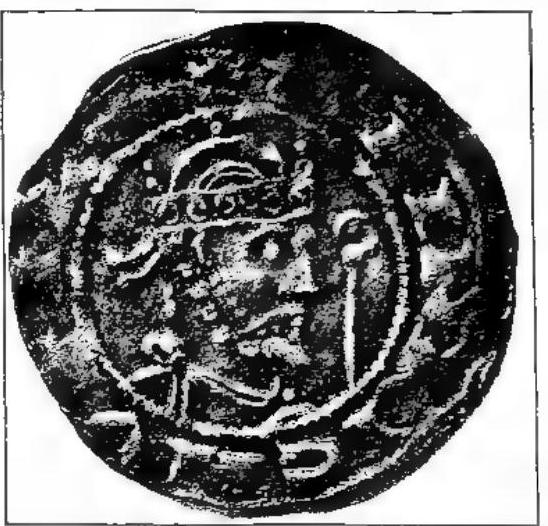
Along with the military setback, E. had to endure the revolt of his son Corrado, who, with the help of the countess Matilde, was crowned king of Italy at Milan; the formation of a league among the Lombard cities; and the defection of several German bishops. He nevertheless remained in northern Italy and, while renouncing all offensive ambitions, did not cease to work diplomatically to isolate Urbano, until, discouraged, he returned to Germany in 1097, abandoning the antipope Clemente to his fate. When Urbano died in July 1099, E. took steps with his successor Pasquale II to reach a reconciliation with the Church. He acknowledged that he had been at fault in disturbing the peace, but his proposals, which involved little commitment, were rejected, and the Pontiff renewed the excommunication (March 1102). New negotiations were undertaken the following year, and this time E. seemed determined to reconcile himself with the Church; he also promised to go on pilgrimage to Jerusalem, but was prevented from doing so by a grave event. In December 1104, his other son Enrico, who had been associated with him in power after the defection of his firstborn Corrado, abandoned his father, drawing with him all those dissatisfied with E.’s policy. Civil war broke out fiercely between father and son and ended with E.’s defeat and deposition, sanctioned at the Diet of Mainz at the beginning of 1106. In August of that same year E. died reconciled with the Church. — Vedi tav. XXX.
BIBLI.: H. Floto, Kaiser Heinrich IV und sein Zeitalter, 2 vols., Stoccarda 1833-36; C. Kilian, Dinerer Kaiser Heinrich IV, Karlsruhe 1886; P. Sander, Der Kampf Heinrich IV und Gregori VII, Berlino 1893; G. Meyer von Knosau, Jahrbücher des deutschen Reichs unter Heinrich IV und Heinrich V, 7 vols., Lipsia 1898-1909; A. Fliche, La réforme gregorienne, II-III, Lovatio 1925-37; A. Brackmann, Heinrich IV als Politiker beim Ausbruch des Investiturstreites, Berlino 1927; B. Schmeidler, Kaiser Heinrich IV und seine Helfer im Investiturstreit, ibid. 1927; E. Voosen, Popendi ed pouvoir civil à l'époque de Grégoire VII, Gembloux 1927; A. Fliche, L'Europe occidentale de 88e à 1113, Parigi 1930, passim; A. Fliche-V. Martin, Hist. de l'Eglise, VIII, ibid. 1946, pp. 130-345. Agostino Amore