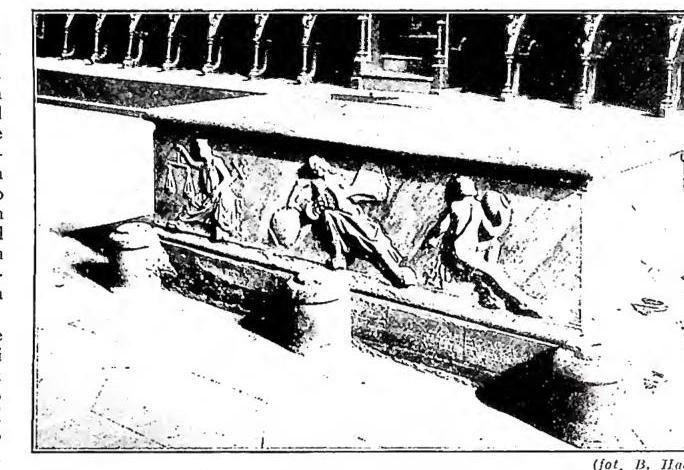
CLEMENT III, POPE. — The Roman Paolo Scolari, a cardinal from 1179 and bishop of Palestrina from 1181, was elected pope at Pisa on 19 December 1187 and took the name of C. III. His first concern was to make peace with the Roman Republic, which had been in conflict with the popes since the time of Arnaldo da Brescia. He was able to establish himself in the city (February 1188) and conclude an agreement with the Commune that guaranteed the rights of the Holy See (31 May 1188). The previous year, Saladin had wrested Jerusalem from the Christians (3 October 1187). C. worked to organize a Crusade—the third—with such energy that even the three most powerful sovereigns of Europe, Filippo Augusto, Riccardo Cuor di Leone, and Federico Barbarossa, took the Cross. C. was unable to see its outcome, which was, in any case, not very encouraging. Meanwhile, Guglielmo II of Naples had died (1189). The sole legitimate heir was Costanza, wife of Enrico, son and heir of Barbarossa. To prevent the two kingdoms of Naples and Germany from being united in a single hand, C. supported the election of Tancredi di Lecce, the natural son of Ruggero II. Enrico, who had become emperor after his father’s miserable end in the East, did not resign himself to this; he soon descended into Italy to be crowned there and occupy Naples. Death spared C. the task of resolving this further affair.