Machine translation of the 1948–1954 Italian original. The original text is authoritative.
CLEMENTE XIII, PAPA. - Carlo Rezzonico, born in Venice on March 7, 1693, to a family originally from Como that had recently been entered in the Libro d'oro (1687). He studied at the Jesuit college in Bologna. He graduated
(photo Alinari) CLEMENTE XI, PAPA - Portrait of C. XI by C. Maratta. Rome, Villa Albani.in theology and canon law at the University of Padua. Two years later (1714) he entered the Academy of Noble Ecclesiastics in Rome. Ordained a priest, he was sent by Clement XI as governor to Rieti and then to Fano. Recalled to Rome in 1725, he became auditor of the Sacred Roman Rota for Venice (Decisiones S. Rotae Romanae coram R. P. D. Carolo Rezzonico, 3 vols., Rome 1759). Clement XII created him cardinal-deacon of S. Nicolò in Carcere on Dec. 20, 1737, and Benedict XIV called him to succeed Card. Ottoboni in the episcopal see of Padua (March 11, 1743), which Rezzonico honored with distinguished works, such as the Synod (1746) and the rebuilding of the Seminary (Il Seminario di Padova, Padua 1911, pp. 227-31), and even more with his apostolic zeal, inexhaustible charity, and holiness of life. Indeed, the people of Padua called him "the saint." The cardinals gathered in conclave twelve days after the death of Benedict XIV (May 3, 1758), after the candidacies of Archinto, Cavalchini, and Passionei fell through, upon the proposal of the Austrian card. De Roth, agreed upon Rezzonico, who took the name of C. XIII. He was of a mild and generous nature, of an alert and persevering spirit, and of tireless activity in his work, as his contemporary Cordara judged him. However, he lacked breadth of ideas and clairvoyance regarding his times. He did not admit transactions or compromises of any kind, and his policy therefore could not result in anything other than a complete antithesis to that of his predecessor. The arbiter of this policy was Card. Luigi Torrigiani, successor to Card. Archinto (Oct. 1758) in the Secretariat of State; he was a resolute and inflexible man and a great friend of the Jesuits. The Seven Years' War was then being fought in Europe. C., in notifying the princes of his elevation to the pontificate, warmly exhorted them to peace. In 1763-64, from southern Italy and Lazio, on the occasion of a very serious famine, people rushed to Rome; C. welcomed and fed 6 thousand foreigners and 8 thousand subjects daily for many long months.
This did not prevent him from undertaking and continuing great public works. Though he could not carry out the much-cherished idea of draining the Pontine Marshes, he favored art in Rome (under his pontificate the Trevi Fountain was completed). He acquired precious manuscripts on various occasions for the Vatican Library, for which he issued very rigorous regulations (Aug. 1761). He favored arts and artists, especially Anton Raphael Mengs and Giovanni Battista Piranesi. He entrusted the office of commissary of antiquities to Winckelmann. He also protected studies. He praised the Illyricum sacrum of Daniele Farlati, and made possible the publication of the Inscriptiones Romanae infimi aevi (3 vols., Rome 1760) of the Benedictine Pier Luigi Galletti. Firm and vigilant was his position in the face of the Enlightenment movement: he condemned Helvetius's De l'esprit, Rousseau's Emile, and the Encyclopédie of D'Alembert and Diderot (Sept. 3, 1759). With an encyclical he pointed out to the bishops the danger of anti-Christian literature and invited them to combat it (Nov. 25, 1766). When, under the pseudonym of Justinus Febronius, Johann Nikolaus von Hontheim (1701-90), coadjutor bishop of Trier, published De statu Ecclesiae et legitima potestate Romani pontificis (1763), which greatly detracted from the pope's primacy of jurisdiction, this work was placed on the Index (Feb. 27, 1764). C. saw an anchor of salvation in the devotion to the Sacred Heart of Jesus, whose feast he instituted in 1765. He canonized: Joseph Calasanz, Joseph of Cupertino, Jerome Miani, Jane Frances de Chantal, and John Cantius, and proclaimed many others blessed, among whom was his relative and predecessor in the see of Padua, Gregorio Barbarigo (Sept. 20, 1761).
The struggle of the Bourbon courts against the Jesuits made the pontificate more difficult for the sickly C.
It began in Portugal, where the Marquis of Pombal, blaming them for the assassination attempt against King Joseph Em-
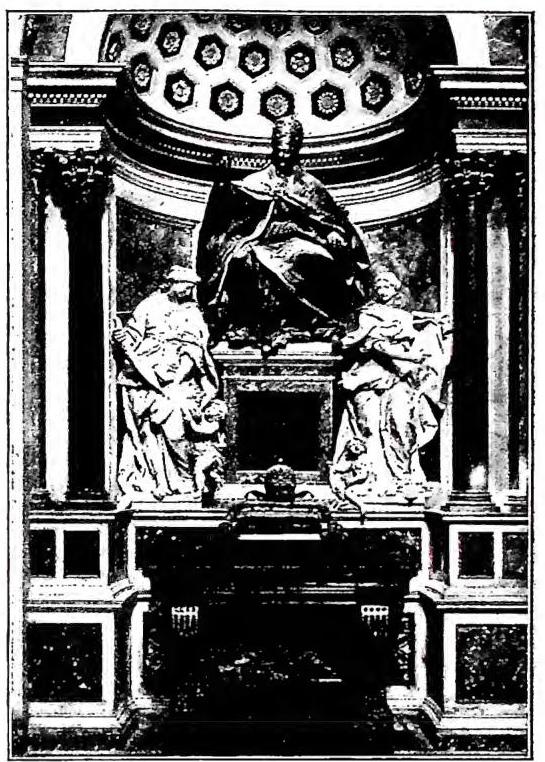
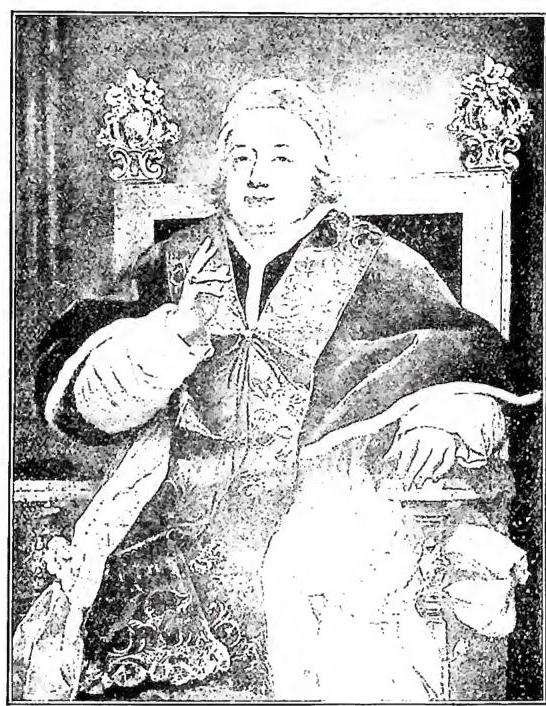
CLEMENTE XIII, PAPA - Portrait of C. XIII by R. Mengs, Milan, Pinacoteca Ambrosiana.nuele (3 Sept. 1758), partly imprisoned them and partly deported them to Civitavecchia. C. protested against this arbitrary measure. Pombal expelled the papal nuncio (4 June 1760) and severed relations with the Holy See (7 July 1760). France followed, where the Society's refusal to compensate for the losses caused by Father Lavalette's bankruptcy gave the Parliament, goaded by Minister Choiseul and Madame de Pompadour, the occasion to decree its expulsion (1 April 1762). In vain did C. implore the king to prevent the abuse, and publish the constitution Apostolicum poscendi munus in praise of the Society (7 Jan. 1765). Spain, too, would not be outdone. A sudden and secret order expelled the Jesuits in April 1767. Shortly afterwards, Minister Tanucci, who governed the Kingdom of Naples in the name of the young Ferdinand IV, declared the Society suppressed in the South (31 Oct.). New and harsher protests from the Pope. When Du Tillot, minister to Ferdinand of Parma, also drove the Jesuits from the duchy, a papal fief, C. reacted vigorously with the monitorium of 30 Jan. 1768, which annulled the measures taken in the duchy against the Holy See, and excommunicated their authors. The Bourbon courts, united in the "family compact," raised a great uproar over this. France occupied Avignon and the Venaissin county, Naples occupied Pontecorvo and Benevento, and Spain presented harsh demands. In Jan. 1769, the ambassadors of France, Spain, and Naples formally requested the suppression of the Society. C. declared to his intimates that he would have his hands cut off rather than sign the abolition. He convened the special cardinalitial Congregation for the affairs of the Jesuits for 3 Feb.; but he was unable to hold the meeting, as an apoplectic stroke put an end to his slow martyrdom (2 Feb. 1769). He was buried in St. Peter's, where his relatives had a funerary monument erected to him, a masterpiece by Canova.
BIBL.: J. de la Servière, s. V. in DThC, III, I, coll. 115-224; Pastor, XVI, I, pp. 465-1053; E. Rota, Le origini del Risorgimento, II, Milano 1938, p. 786 sgg. Ireneo Daniele
Cite this article
“CLEMENTE XIII, PAPA.” Enciclopedia Cattolica, vol. III (1949), p. 1067. Azione Romana digital edition, https://azioneromana.com/article/clemente-xiii-papa.