
GIUSEPPE CALASANZIO, santo. - B. at Peralta de la Sal, in Aragon, in 1556 or 1557 of a modest family, perhaps of ancient nobility, d. in Rome on Aug. 25, 1648. In religion G. of the Mother of God.
Having completed his initial studies in his homeland and at Estadilla, he diligently pursued
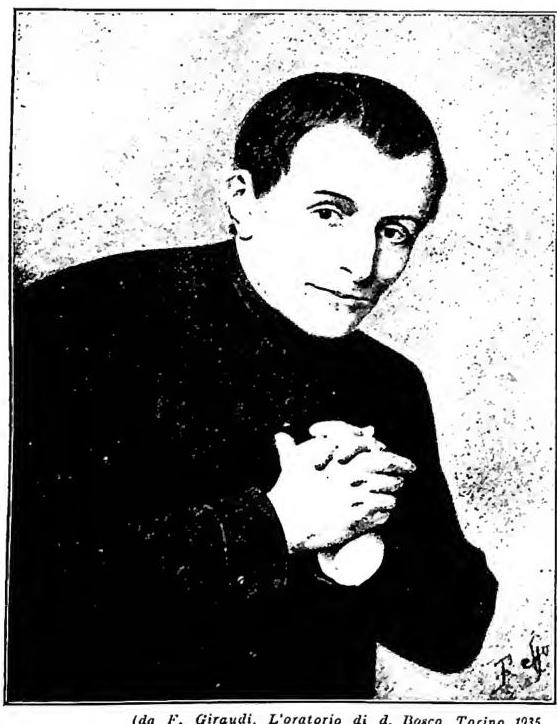
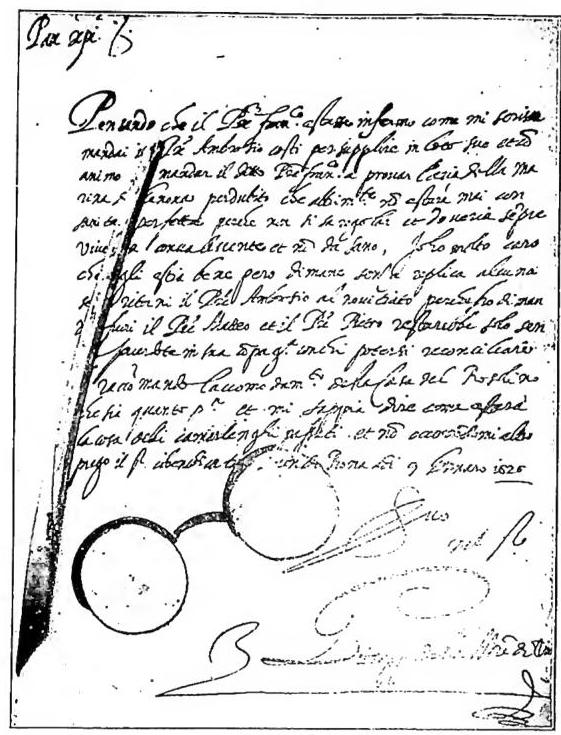
One day, while passing through a Roman street, the very sad spectacle of a group of children left to themselves and shameless in words and gestures struck him extraordinarily. From that moment, the mission assigned to him by God took shape: the school. Having tried in vain to induce others to undertake this most noble work, in the late autumn of 1597, in two poor rooms adjacent to the sacristy of S. Dorotea in the very popular Trastevere district, he opened his schools, calling them Pious Schools (Scuole Pie) from their very inception. He intended them to be entirely free and open to all: poor and non-poor children, with special regard for the former.
And they were truly schools, his, because literary and scientific instruction was not absorbed and sacrificed there by religious instruction, but was wisely flanked by it with well-defined teaching programs, careful class division, punctuality of schedule, seriousness of periodic examinations, and the intent of practical preparation for life. He was not a pedagogue, but he had the talent and natural genius of the educator, also because he admired and loved science like few others, so much so that he showed himself to be, and was, fearlessly benevolent and beneficial to Galileo Galilei and Tommaso Campanella. Due to the ever-increasing influx of boys, he very soon had to transfer the schools to a more suitable location on this side of the Tiber, first near S. Andrea della Valle and then near S. Pantaleo, which became their permanent residence. And since he was persuaded of the necessity of establishing a religious congregation to guarantee the continuity and perpetuity of his schools, he began to this end by keeping his teachers with him in a common life.
The Pope, assured of the goodness of the Calasanctian
GIUSEPPE CALASANZIO - GIUSEPPINE DELLA S.MA TRINITÀ
sanziana by two highly learned cardinals, Cesare Baronio and Silvio Antoniano, encouraged and assisted him, despite the opposition of envious, self-interested, or uncomprehending people. In 1617 Paul V elevated the Piarists to the rank of a true and proper religious Congregation with simple vows. In 1621 Gregory XV promoted the Institute to the dignity of a religious Order with solemn vows.
After Rome and Lazio, Liguria, and subsequently the Neapolitan region, Tuscany, Sicily, Sardinia, Moravia, Bohemia, and Poland requested and obtained the Calasanctian schools, while the founder was still alive. Thus, within the Order there arose what might be called a growth crisis, contrary to the desire and will of its founder, who resisted such excessive expansion for as long as he could, foreseeing its serious dangers.
Indeed, among the less worthy Piarists there was no lack of those who took advantage of the internal situation and internal opposition to fish in troubled waters; the entire Order was subjected to an apostolic visitor, while the founder, even made a prisoner for a short time by the Holy Office, was deposed by Urban VIII on August 12, 1642, from the office of superior general, which had been conferred upon him for life by the same Pontiff several years earlier. And in 1646 Innocent X even decreed the suppression of the Order. Heroic was the patience of C., then in his ninetieth year, yet living and firm was his hope in the resurrection of his work.
Alexander VII in 1656 and Clement IX in 1669 respectively restored to the Calasanctian Order the rank and dignity of a religious Congregation with simple vows and of a religious Order with solemn vows. C. was canonized in 1767 by Clement XIII. His feast day falls on August 27.