
RIETI, DIOCESI di. In Latium and Abruzzo, in the province of R., it borders the dioceses of Terni, Sabina and Poggio Mirteto, Tivoli, L’Aquila and Ascoli Piceno. It covers an area of 2,700 sq. km., with 125,000 inhabitants, all Catholics, distributed among 172 parishes, with 155 diocesan priests and 35 religious priests, 10 male and 24 female congregations (Ann. Pont., 1952, p. 338). It has its minor seminary in R. and its major seminary in Assisi, shared by the dioceses of Umbria.
R., called Reate by the Latins, is situated in the centre of the valley that takes its name from it and claims also to be the geographical centre of Italy; on a rough stone plaque in the little square of the church of S. Rufo one reads: « Medium totius Italiae ». The ancient capital of the Sabines, it later became a Roman municipium and, after the barbarian incursions, a Lombard gastaldate and a Frankish county. Under Hadrian I it became part of the Papal States, and when Pius VII established the delegations, R. became the seat of the delegation of that name, which included the whole of Sabina. Until the division of the provinces decreed in 1927, R. and its district belonged to Umbria.
The documents that claim to trace the preaching of the Gospel in R., and consequently the episcopal see, back to the pre-Constantinian age have no serious foundation. The mission of s. Prosdocimo, alleged first bishop of Padua, on behalf of the Prince of the Apostles, is legendary. A Latin translation (BHL, 2450) of the Greek Martyrdom of s. Eleuterio reports that he came to Rome and suffered martyrdom there with his mother Anaia, and that their bodies, secretly carried away, were brought to R. and
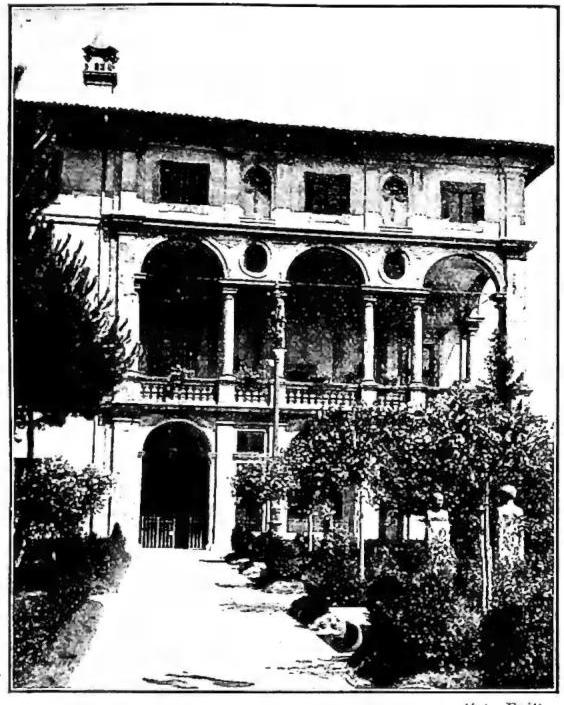
The first Reatine bishop certainly known is Ursus, who took part in the Roman Synods of 499, 501 and 502. Thus, the existence of the diocese of R. by the end of the fifth century is beyond dispute. In the sixth century there is evidence of the existence of the Reatine cathedral dedicated to the Virgin. A letter of s. Gregory the Great (Reg., I, 9, 49), from 598, says that « Paulus Ecclesiae Reatinae diaconus » asks the Pope for relics of ss. Ermete, Giacinto and Massimo for the baptismal font of the basilica (cathedral) of S. Maria. As attested by an inscription set into the wall of the sacristy of the Confraternity of the Stigmata, the present basilica was begun in 1109 by Bishop Benincasa and solemnly consecrated by Pope Honorius III in 1225. But the temple’s original Romanesque lines disappeared with the Baroque restoration of 1639. Despite alterations, the crypt and portico of the Cathedral, the bell tower and the Bishop’s Palace have retained their Romanesque character; owing to the political circumstances of the times, the latter received the bishops of Rome in its halls on numerous occasions during the twelfth and thirteenth centuries. Toward the end of the eleventh century, Amiterno (v.) was united to R.; this lasted until 1257, when it was united to the diocese of L’Aquila (v.). In 1502 Alexander VI detached Città Ducale from R. and made it a diocese, but six years later Julius II restored the previous arrangement.
The documents preserved in the municipal and episcopal Archives of R. date no earlier than 1225, since the fire of 1217 destroyed all the earlier ones. In the diocese of R. the ancient monasteries to be remembered are those of S. Salvatore Maggiore; of SS. Quirico and Giulitta at Introdoco; of S. Eleuterio; of S. Giorgio; of S. Michele; of SS. Pa-
Pastore and Matteo. With reference to the oldest and most important of these monasteries, Pius XI, on 3 June 1925, united the abbey title of S. Salvatore Maggiore to R. The Franciscan sanctuaries of Greccio, Fonte Colombo, La Foresta and Poggio Bustone, which form an ideal cross and from which it takes the name of Valle Santa, have impressed the valley of R. with a mystical character. They all associate their origin with the presence of s. Francesco, who chose these elevated places for his mystical ascents. They are all mentioned in the earliest Franciscan literature and play a significant role in the history of the spirituality of the Order of Friars Minor. Greccio is regarded by the devotees of s. Francesco as the Bethlehem of Franciscanism, since in the grotto of the sacred forest the Saint caused the Christian world to relive, in a tangible form, the idyll of Bethlehem. The small convent, begun by the Saint himself, was continued by s. Bonaventura di Bagnoregio, but the restoration of the sixteenth century gave it a simplicity and poverty that make it distinctive and unmistakable, as does its panoramic appearance as a swallow’s nest.
Fonte Colombo is considered the Sinai of the Franciscan age, especially in the Order’s spiritual literature, which has seen in it the Regola given to the founder just as the Law was given to Moses. Its name perhaps derives from « Fons columbarum », as the hill was called in the Saint’s time. In the sanctuary complex, one can distinguish the period of s. Francesco, that of s. Bernardino da Siena, and especially the rebuilding carried out in the sixteenth century.
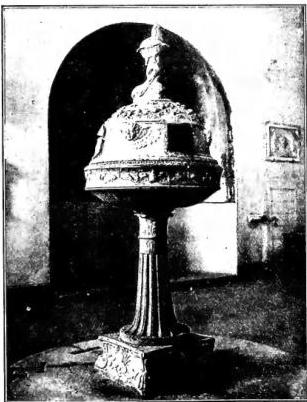
RIETI, DIOCESI di - Baptismal font from the early sixteenth century. Rieti, Baptistery of the Cathedral.
sco and the promises made to him by God for himself and his friars. The small convent is dedicated to s. Giacomo delle Marche and bears the characteristic features of the fifteenth century, even though later alterations have attempted to disfigure it, despite the restoration carried out in Aug. 1952.
These sanctuaries are still cared for today by the Friars Minor of the Roman province, who, especially since 1946, through the work of mons. Cristoforo Terzi of that same province, have lovingly overseen the restoration of the buildings and the improvement of the access roads, restoring life to these places of spiritual repose, so dear to the devotees of the saint of Assisi.
The diocese of R. is immediately subject to the Holy See and has its ordinary court of appeal in the episcopal curia of Spoleto.