
RIESSLER, PAUL. — Catholic exegete, born on 16 September 1865 in Stoccarda; parish priest at Blaubeuren in 1898; from 1907 to 1933 professor of the Old Testament at the University of Tubinga; died there on 10 September 1935.
He distinguished himself by the stylistic qualities of his version of the Old Testament. His preferred field of study was textual criticism, in which he developed an original theory, though one not accepted by exegetes, according to which the oldest texts of the Old Testament were written on Akkadian cuneiform tablets, with some Aramaic “notes”; after the exile, these tablets were supposedly translated by Esdra into Aramaic, and more recent books were added in Aramaic. After 300 B.C., those books were supposedly translated into Greek (the so-called “pre-Septuagint”); during the national renewal inaugurated by the Maccabees, in the years of Ircano (135–105 B.C.), they were supposedly retranslated into the sacred dialect of the Temple of Jerusalem, that is, Classical Hebrew; from that translation the Septuagint would have arisen (v.). This daring theory explains what in R.’s versions may appear arbitrary.
His works are rich in Hebraistic erudition: Das Buch Daniel. Textkrit. Untersuchung (Stoccarda 1899); Das Buch Daniel erklärt (Vienna 1902); Kleine Propheten... (Rottenburg 1911); Der Untergang des Reiches Juda (Münster 1912); Der Prophet Jeremias (there 1914); Die hl. Schrift des Alten Bundes (Magonza 1924) ff.; 4th ed. [in collaboration with R. Storr, who translated the New Testament]. 1934); Altjüdisches Schrifttum ausser-
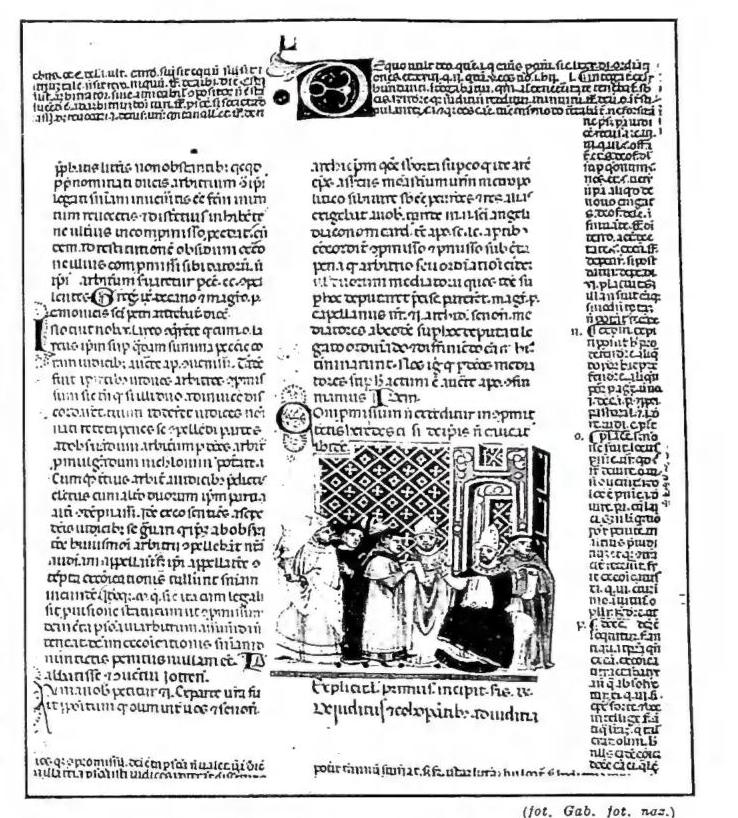
RIETI, DIOCESI di — Codex from the 14th century containing the Decretals — Rieti, Municipal Library.