
SAVOIA, CASA di. — Appears in the history of western Italy at the beginning of the 11th century. Its first feudal domains were found in the Alpine valleys: on the eastern side, in Val d’Aosta; on the western side, in the valleys of the Moriana, Savoia, and also in the Viennese region. The first representative of the dynasty was Count Umberto, later called Biancamano. All attempts to trace his ancestors have failed; he was probably a feudal lord connected with various feudal dynasties of the region. After the death of Rodolfo III, the last king of Burgundy (d. in 1032), he helped Emperor Corrado II acquire the Kingdom by repelling his com-
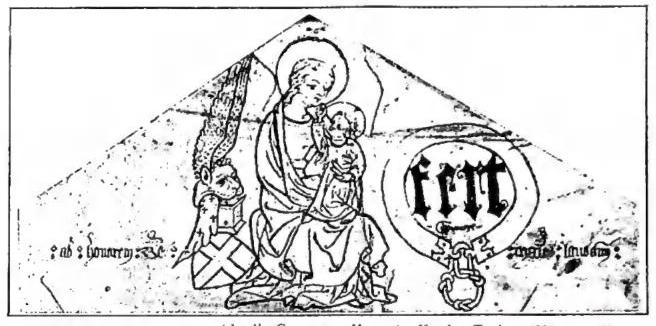
petitors. Thanks to his loyalty to the Empire, Oddone, Umberto’s son, received from Enrico III the government of the March of Turin and consent to marry Adelaide, heiress of the local marquisal house. Because of the discord between the emperors and the counts of S., these soon encountered serious difficulties in preserving the March: relations between the S. and the emperors of the Staufer House were, throughout the 12th century, either cool or hostile. The counts of S. adopted an attitude of absolute independence and succeeded in establishing ties with the Houses of France and England and in securing friendly support against the Empire.
The political crisis of the 13th century, following the struggle between the Papacy and the Empire, enabled the S. to acquire considerable importance in international relations, both between popes and emperors and between the kings of France and England. In the S.’ policy of expansion, three directions became clear in the 13th century: the Po Valley, the Swiss plateau, and the Rhône Valley. Their policy apparently had a simple patrimonial character. In Italy they asserted their property rights over all the territories that two centuries earlier had formed part of the March of Turin and of which they had retained only a few points in Val di Susa and between Chisone and Pellice; they aimed to reach Turin by overcoming the claims of the local Commune, the bishop, and the marquis of Monferrato. Beyond the mountains, the plan was slowly to transform into a continuous and compact territorial possession that network of feudal rights and monastic and ecclesiastical protectorates already formed, with the less openly avowed aim of reconstituting Burgundian unity between the Rhine and the Rhône—something that only they could attempt from that Savoia which was the principal crossroads of the routes. Thus, for the S., the Alps were not a boundary line but the true center and unifying point of their activity. Although they did not disdain the use of arms, they entrusted their advance in the three theaters preferably to a skillful policy of marital negotiations, cessions, and enfeoffments by princes, bishops, and abbots; often relying on the voluntary submission of populations who did not see in them figures of cruel and exploitative tyrants, but rather rugged, simple princes, willing to grant protection against violent princes and against territorial disorder. Everywhere the S. encountered fierce resistance. In Italy, these lords descending from the Alps were first opposed by the marquises of Saluzzo and Monferrato and the counts of Piedmont of the House of Anjou, and later by the Visconti of Milan. On the Swiss plateau, after the dukes of Zahringen, the counts of S. encountered the counts of Kyburg and then the counts of Habsburg. Likewise, in the Rhône Valley, the most tenacious opposition came from the Dauphins of the Viennese region. From Federico II, in Italy, they obtained the two cities of Turin and Ivrea (1248): the possessions of the valleys of the two Dore tended to become connected. The two cities were lost again, but recovered: Turin definitively in 1281, Ivrea several decades later. Along the Rhône, the Bresse was absorbed, while they cast their eyes toward imperial Lyon, unfortunately coveted by the monarchy of Paris. On the Swiss plateau, they established themselves in the Valais and Vaud, facing the Habsburgs. And all this was achieved while overcoming the inevitable family dissensions and the often lengthy minorities of the princes, such as those of Umberto III and Tommaso I. In 1263, with Bonifacio, son of Amedeo IV, the senior branch became extinct: the county subsequently passed to Amedeo IV’s younger brothers, Pietro II and then Filippo I. In 1285 the inheritance of the S. was gathered by a nephew, Amedeo V, who detached the dominions of Piedmont for the son of his already deceased brother Tommaso, Filippo, called of Acaia because of the principality brought to him in dowry by his wife Isabella di Villehardouin; thus he created the county of Vaud for his brother Ludovico. Three dynasties, therefore, three centers of activity and expansion.
When, in 1418, the duke of S. unified all the dominions of the House, Savoyard power demonstrated the progress made in little more than a century. Modest on the Swiss plateau around Lake Geneva; along the Rhône, the Dauphins of the Viennese region had been replaced by the kings of France, and an advance southward toward the sea to achieve the fortunate annexation of Nice seemed impossible. The expansion in the Po Valley was extraordinary, however: the marquises of Saluzzo and Monferrato had been confined within the narrow circle of their old dominions, the Visconti of Milan had been driven back to the line of the Sesia, and the Angevin dominions had disappeared. The Savoyard State of Piedmont now included flourishing cities: Ivrea, Chieri, Biella, Mondovì, Cuneo, Fossano, and Savigliano. It was more a complex of cities and territories obeying the same lord than a state. Amedeo VIII (v.) in 1418 obtained from Emperor Sigismondo the title of Duke and occupied a distinguished position among European princes; from the Duchy of Milan he succeeded in obtaining Vercelli and all its territory as far as the Sesia, and from there looked toward the line of the Ticino, considering how to obtain the entire Duchy of Milan by adoption or succession. His abdication enabled him to offer himself to the Council of Basel as a candidate for the papal throne and, having now Felice V (v.), he endeavored to serve the interests of the family and the country in the question of Milan. In the middle of the 15th century, the process of fortune and development of the Savoyard dynasty was interrupted. In France, once the war with England had ended, the monarchy could resume its old policy of expansion in Italy. The S. were too weak to resist on their own; they relied on the dukes of Burgundy, but after the collapse of Carlo il Temerario’s power they had no further support. Amedeo IX left the government to his consort Iolanda di Francia;
(from G. Guelfi Camajani, Dir. araldico, in ed. Milan 1891, p. 173)
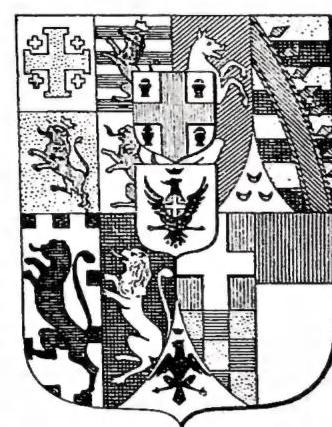
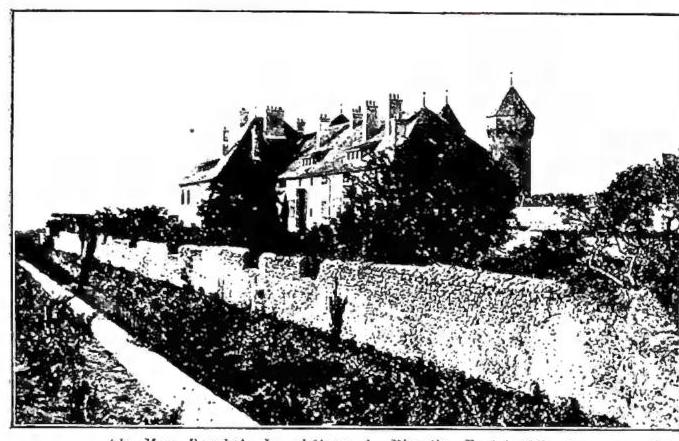
In 1536 Francesco I resolutely decided to occupy the Duchy of Savoy, so as to counterbalance the Habsburg occupation of the Duchy of Milan. More to close France’s gateway into Italy than out of affection for S.’s nephew, Carlo V received the young heir of the House, Emanuele Filiberto, and supported his rights. Only after the Battle of S. Quintino, however, once France and Spain had been reconciled, did the great captain regain his States, on condition that he marry the sister of Enrico II, the elderly Margherita di Valois. Contrary to expectations, the union produced the continuator of the dynasty, Carlo Emanuele. Only then were the S. secure in possession of their ancestral dominions. The peace that reigned for several decades after the Treaty of Cateau-Cambrésis enabled Emanuele Filiberto to devote himself to the reconstruction of the State.
Among the Italian States, the S. now asserted themselves with an authority and military strength such as none other possessed.
The French Wars of Religion gave Carlo Emanuele I the opportunity to resolve the problem of Saluzzo through the exchange of Bresse established by the Treaty of Lyon (1601). This was the first example of a policy of territorial exchanges with France in order to obtain enlargements in Italy. Carlo Emanuele did not, however, succeed in resolving the problem of Monferrato, although he did not hesitate to enter into war with Spain without any assistance. Vittorio Amedeo I, his heir, brought the great conflict to an unhappy, though provisional, conclusion; by the Treaty of Cherasco (1631) he obtained part of Monferrato—Alba and Trino—but had to surrender Pinerolo to France. The French thus recovered the gateway into the peninsula, and the S. had to chafe under the restraint. This was what occurred during the two reigns of Vittorio Amedeo I (1630–37) and Carlo Emanuele II (1638–75), an age in which European conflicts barely touched the Italian peninsula. But the great wars that began in the final decade of the century once again brought Italian questions to the forefront. Vittorio Amedeo II sought to exploit the opportunities to recover independence and resume his expansionist projects, manoeuvring between the contending parties. From the War of the Spanish Succession he obtained Alessandria and that part of Monferrato which his grandfather Vittorio Amedeo I had not received at the Peace of Cherasco; Lomellina and Valsesia, thereby completing the territory of Vercelli; and Sicily, together with the royal title. He was subsequently forced to exchange Sicily for Sardinia, which was easier to govern and incorporate into the Savoy dominions. The royal title, too, was of importance.
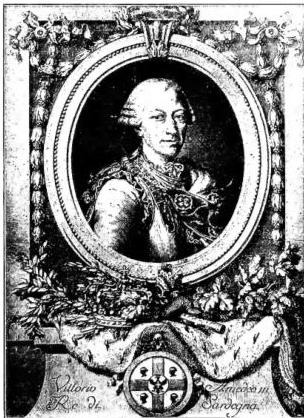
Carlo Emanuele III continued his father’s work. The Wars of the Polish and Austrian Successions brought him the conquest of all the territories as far as Lago Maggiore and the Ticino; south of the Po, possession of the Oltrepo pavese enabled him to establish contact with the Emilian Duchies. Thus this was a great State, this complex of lands called Piedmont, under its old name, having emerged in the 12th century from the Cottian Alps, and confronted more than ever with the problem of relations with Genoa. The Savoy State was in a precarious balance after the Peace of Aachen: the movement of ideas that manifested itself in Turin in the mid-18th century expressed this situation of uncertainty, the conflict between aspirations and present difficulties, and the fear that the country’s actual forces might not suffice to sustain the edifice that the diplomacy and arms of the Savoy princes had constructed. After 1748 the S. withdrew into neutrality under the weight of the Bourbon-Habsburg union; and when this broke apart, during the period of the French Revolution, the S. were sacrificed between the ambitions of revolutionary expansionism and the calculations of Austrian policy, which sought to recover what the S. had obtained during the 18th century. Vittorio Amedeo III preferred the alliance of Vienna to submission to France; after the heroic defence in the Alps, this led to the armistice of Cherasco, then the abandonment of Turin and withdrawal to loyal Sardinia.
In 1814 Vittorio Emanuele I, having returned to Turin, sought to restore the dynastic tradition. But the problems of the 18th century reappeared. Even enlarged by Liguria, the Savoy State could not remain anco-
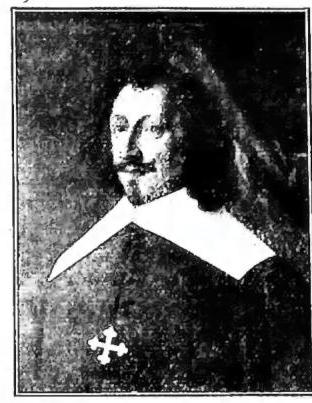
(fot. Almar)
Destined, as a cadet, for an ecclesiastical career, in 1683 he decided in favor of a military career and, in the face of Luigi XIV’s hesitation, left Paris and joined the imperial army in time to participate in the liberation of Vienna from the Turks: he never again left the Emperor’s service. His gifts of cool composure and lucid understanding of military situations earned him the esteem and confidence of his commanders. His career was extraordinarily rapid: in 1694 he was given command of the imperial forces in Italy in the War of the League of Augsburg and intervened in Piedmont to aid
rato al passato. After the conservative policy of Carlo Felice (1821–31), the new branch of S.-Carignano, which came to the throne with Carlo Alberto, once again made its own the program of expansion along the Po Valley already outlined by the subalpine politicians of the eighteenth century. The idea of Italian confederation had already shown its fragility when it appeared in Turin on the eve of the Revolution; in the Risorgimento debates, precisely because it proceeded from
his cousin Vittorio Amedeo II, duke of S.; in 1697 he assumed supreme command of the imperial forces in Hungary against the Turks, and the resounding victory at Zenta (11 September 1697) consecrated his fame. In the War of the Spanish Succession he commanded the imperial armies in Italy, where he won the victory at Turin (7 September 1706), and in Flanders, where he won repeated victories at Audenarde, Malplaquet, and Höchstäd in Bavaria. He then took part in the peace negotiations at Utrecht, displaying the same gifts of clarity and firmness. The Treaty of Rastadt of 1714 was particularly his achievement. The resumption of the war with the Turks recalled the prince to the Danube: in 1716 he won at Petervaradino, in 1717 he conquered Belgrade, and in 1718 he concluded the Peace of Passarowitz. After 1720 he lived in Vienna, occupied with the highest offices of government, and devoted his leisure to creating in his Belvedere palace a great library and a magnificent collection of paintings, since his spirit was open to the enjoyment of letters and the arts. In 1733, when the War of Poland broke out, he resumed command of the army despite his advanced age. He died in Vienna on 21 April 1736 and was buried in S. Stefano. He left behind a great reputation among friends and enemies alike for his rectitude and his spirit of Faith. He never wished to have a family and avoided the turmoil of passions, for throughout his life he knew only the love of duty.
MAURIZIO di S. – Cardinal, third-born son of Carlo Emanuele I, duke of S., and Caterina d’Austria (Spain), born in Turin on 10 January 1595, died on 4 October 1657.
Destined for the ecclesiastical life, he received the cardinal’s hat as a cardinal deacon from Paolo V in 1607. He nevertheless remained
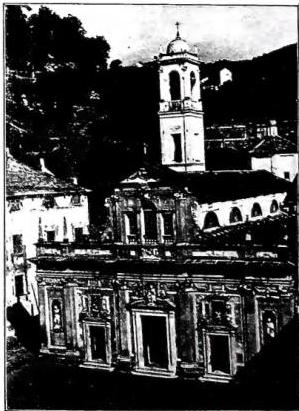
(photo Eni)
The blessed and venerable members of Casa S. are treated under their respective names.