
SAVONA AND NOLI, DIOCESE of. – Dioceses united aeque principaliter, in the Ligurian ecclesiastical province.
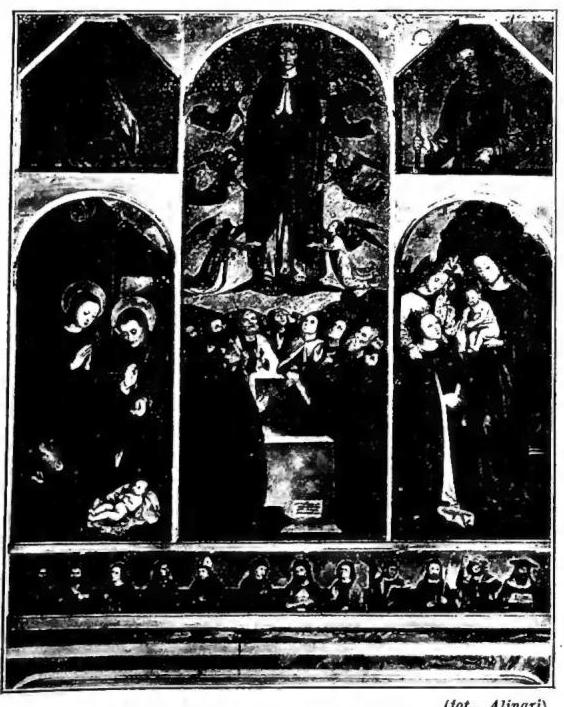
(Alinari photograph)
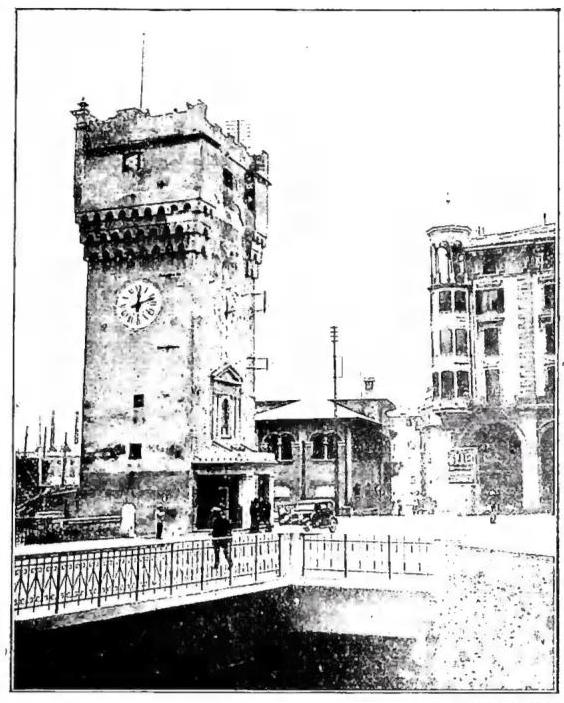
(Enit photograph)
I. ORIGIN AND DEVELOPMENT OF THE TWO DIOCESES
When the Romans consolidated their dominion over Liguria, “Vada Sabatia” (“Sabata”) was the terminal station of the Via Emilia of Scaurus, subsequently continued westward by the Via “Iulia Augusta.” A few kilometers away, Savo was the city’s port (cf. E. Forcellini, Lexicon totius latinitatis, VI, Padova 1940, p. 598). Regarding the Christian evangelization, there are no particulars beyond what can be said of Liguria in general (v.). The episcopal see of the settlement must have been at Vado, but it is not mentioned in Christian antiquity; it may have been destroyed during King Rotari’s invasion of Liguria in the 7th century. Vado must have been important when Emperor Lothair mentioned it in connection with the Edict concerning schools (828). The bishop must have extended his jurisdiction over the entire Vado territory, more or less within the present boundaries of the diocese of S.; nevertheless, reliable information is available only from the second half of the 9th century. Throughout the 10th century the bishop is designated sometimes as “vadese,” sometimes as “savonese,” while at the beginning of the 11th century the see was definitively established in the castle of S., which had come into the bishops’ possession and stood in a healthier and safer location. During the Ottonian period, the bishops of S. exercised temporal dominion not only over the city but also over a broad territory, and retained it even when the power of the Aleramici marquises Del Carretto became consolidated in the region; thus, under the bishops’ aegis, the people of S. prepared the advent of the free Commune. But a period of fierce struggles with Genoa began immediately, since Genoa claimed hegemony over all Liguria; and because Genoa was Guelph, S. always sided with the Ghibellines. Through Genoa’s intervention, the diocese of N. arose in 1239, at the expense of that of S. The people of N., too, having grown wealthy through overseas trade, had established themselves as a free Commune; but, in opposition to the people of Savona, they had allied themselves with Genoa in 1202, receiving protection and exemptions in return. Initially united with that of Brugnato, the see of N. obtained complete autonomy from Innocent IV in 1245; to endow its mensa, the abbey of S. Eugenio on the island of Bergeggi was annexed to II. This abbey had been founded in 992 by Bernardo, bishop of S. The diocese of N. was a suffragan of the archbishop of Genoa, whereas that of S. remained a suffragan of Milan until 1806. As belated compensation, Sixtus IV annexed to S. the abbey of S. Quintino of Spigno, with an extensive fief, the last remnant of which, the village of Lodisio, was ceded in 1784 to the king of Sardinia in exchange for an allowance and the title of prince for the bishop of S.From 1809 to 1812, and again in 1814, Pius VII, Napoleon’s prisoner, was confined at S. The episcopal residence of S. still preserves the apartment that hosted the Pontiff. In memory of this episode, Benedict XV granted the bishops of S. the privilege of the pallium. Once the political reasons that had given rise to the diocese of N. had ceased to exist, Pius VII, by a bull dated 9 October 1820, united it “aque principaliter” with that of S.: the Curia and the Seminary for the two dioceses are now located in this city, while N. has retained the cathedral Chapter.
II. BISHOPS AND DISTINGUISHED FIGURES
In the long succession of Savonese bishops, the bl. Ottaviano (1119–28), a Benedictine monk, is still the object of fervent popular veneration: he sustained the people of Savona with heroic charity and inspired the first free communal institutions. After the city’s ruin, when it fell into the power of the Genoese in 1528 and was largely destroyed, particular merit was due to Msgr. Pietro Francesco Costa (1587–1624), to whom the construction of the new, imposing Cathedral is owed. In the last century, Msgr. Agostino M. De Mari (1833–40) left a profound mark: he promoted the Savings Bank and the Society for the Encouragement of Industry, founded the Civic Library, inspired the Congregation of Evangelical Workers and three women’s religious congregations, including that of the Daughters of N. Signora della Misericordia, founded in 1837 by s. Maria Giuseppa Rossello and soon spread throughout Italy and the two Americas. Rossello was subsequently given particular support by Msgr. Ottaviano Alessandro Riccardi di Netro (1842–67), a prelate of singular intelligence and soundly patriotic sentiments, whom Gioberti sent in 1848 as extraordinary ambassador to Pius IX, exiled in Gaeta, to offer him the mediation of Piedmont. The last bishops, Msgr. Giuseppe Salvatore Scatti (1898–1926) and Msgr. Pasquale Righetti (1926–48), gave a shining example of charity and pastoral virtue in extremely difficult times. Among the bishops of N., mention should be made of Msgr. Antonio M. Arduini (1746–77), who provided the city with a hospital and an aqueduct, and Msgr. Benedetto Solari (1778–1814), whose name is linked to the events surrounding the Synod of Pistoia and the bishop Scipione de' Ricci. S. gave the Church two popes, Sisto IV and Giulio II, around whom flourished a host of cardinals, prelates, princes, and captains of their family. The poet Gabriello Chiabrera, beloved of Urban VIII, was born and lived almost always in S. In the last century S. was the scene of the industrious charity of s. Maria Giuseppa Rossello.III. MOST DISTINGUISHED SHRINES AND MONUMENTS
In the diocese of S. is the shrine of Our Lady of Mercy, which owes its origin to the apparition of the Virgin to the peasant Antonio Botta (18 March 1536) and drew crowds of pilgrims to the venerated shrine, immediately subject to the Holy See, rich in works of art and flanked by hospices for pilgrims, orphans, and the poor. Pius VII, while a prisoner, implored liberation at the feet of the Virgin, and on 10 May 1815 fulfilled his vow by crowning the image with his own hands. In 1904 Pius X granted the shrine the dignity of a basilica.In the cathedral-basilica of S. the image of Our Lady of the Column is especially venerated; it is a fresco that detached itself on 14 March 1601 from a column being demolished. The original cathedral of N. preserves a miraculous Holy Face and is dedicated to the fellow citizen St. Paragorius, a martyr who, according to tradition, suffered martyrdom with three companions in the Theban Legion. Abandoned in 1572 because it stood in an unsafe location outside the city walls, it was replaced by the present cathedral of St. Peter, in which the remains of St. Eugenio are venerated; he was an African bishop exiled by the Vandals and died on the island of Bergeggi.
At Finalmarina, the remains of the ancient parish church dating from the 5th century were recently discovered. At Finalpia, beside a venerated Marian shrine, the Benedictine abbey of St. Maria flourishes as a centre of liturgical studies and propaganda.
Noteworthy at Varazze are the remains of the collegiate church of St. Ambrogio, dating from the 10th century, and of the Cistercian monastery of St. Maria dell'Areneto in the Invrea district.