
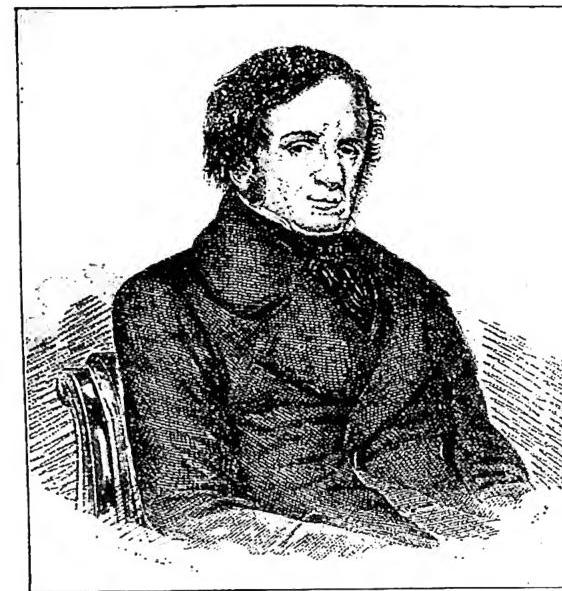
GIOBERTI, VINCENZO. – He is the most representative figure of that Catholic liberalism which accompanied our Risorgimento with the energetically combative and doctrinally elaborated intention of drawing upon the religious tradition of the Italians for the redemption of their moral consciousness and, consequently, for the political redemption and unification of the homeland. Born in Turin on 5 April 1801 to Giuseppe and Marianna Capra, and orphaned of his father at an early age, he was entrusted by his mother for his education to the fathers of the Oratory of S. Filippo and directed toward the priesthood. He received Ordination in 1825, and that same year was appointed associate doctor of the Theological College of the Turin Athenaeum; the following year he was promoted to court chaplain.
An avid reader from childhood, he experienced all the cultural influences of the period and left evidence of his youthful fervor and restlessness in many manuscripts, which were partially published after his death. His spiritual itinerary during his youth may be summarized as the passage from a phase of doubt to a period of fideism and traditionalism, and from traditionalism, through an ardent rationalistic demand, to deism and pantheism. A letter to Mazzini, published in 1834 in issue VI of La giovane Italia, under the title Della repubblica e del cristianesimo and the pseudonym Demofila, reflects, together with his ideas for social and political reform, the final phase of G.’s thought before his exile. He was never enrolled in Giovane Italia, but belonged to a «secret and political» society, probably of Carbonari inspiration. Compromised also by his open profession of liberal ideas, after being relieved of his position at court, he was arrested in May ’33 and held in prison until September of the same year, when Carlo Alberto, unable to derive sufficient grounds for conviction from the trial, ordered that he be «set at liberty and simultaneously conducted to the borders of the Royal States».
An exile in Paris from October ’33 to December ’34, G. had the opportunity, through personal acquaintance with men and institutions, to assess directly the consequences of some of the most advanced ideas with which he had left Italy. The fruit of this experiment was his repudiation of deism, together with an increasingly firm aversion to Mazzini’s revolutionary methods and to the politico-religious ideas of Lamennais, to whom he had nevertheless felt very close during the period preceding his exile. Thus, when in December 1834 he moved to Brussels to the Gaggia Institute, where he would remain until July 1845 as a teacher of philosophy and history, he developed there, through indefatigable study and intense meditation, a new orientation of thought that found expression in the various works published during this period: Teorica del sovranaturale (Brussels 1838); Introduzione allo studio della filosofia (ibid. 1840); Considerazioni sulle dottrine religiose di V. Cousin (ibid. 1840); Lettre sur les doctrines philosophiques et politiques de M. De Lamennais (ibid. 1841); Del bello
(Venice 1841); On the Philosophical Errors of Antonio Rosmini (3 vols., Brussels 1841–44); On the Good (ibid. 1843); On the Moral and Civil Primacy of the Italians (2 vols., ibid. 1843); Prolegomena to the Primacy (ibid. 1845). The first part of that complex of notes and sketches which would be published posthumously by Solmi under the title Theory of the Human Mind, Rosmini and the Rosminians, Catholic Liberty (Turin 1919) belongs to the period between 1837 and 1839; and between The Beautiful and the Errors there is a notebook of notes for the lectures of the philosophy course, brought to light through the efforts of G. Calò and M. Battistini in the 1947 edition entitled Cours de philosophie (Milan 1841–42). Having left the Gaggia Institute and settled in Paris in January 1845, the exile gave the five volumes of The Modern Jesuit to the press (Lausanne 1846–47); and subsequently collected other writings inspired in him by circumstances in the Apology of the Book Entitled «The Modern Jesuit» (Brussels–Livorno 1848), published in April 1848. Among this group of works, the first, especially the Theory, the Introduction, and the Primacy, set forth and develop G.’s philosophical, religious, and political idea; the others, from the Errors and the Prolegomena onward, constitute a polemical sequel in which the author, who had earlier obeyed a magnanimous sentiment of universal reconciliation, attacks his opponents and pursues them insistently and often intemperately, yielding to a suspicious and acrid mood that would never abandon him throughout his life. The great idea of the first works, destined to kindle flames of enthusiasm among the Italians and to win support for the national cause even in the most distrustful or indifferent circles, is that the principle of Italian union—that is, the pre-existing and effective unity, « real, concrete, living, and deeply rooted », which contains within itself the productive movement of every development—can be none other than Roman Catholicism, that same faith which restores Italy to the center of humanity’s eternal ideal history. Italy contains within itself all the conditions necessary for its national and political resurgence, and in order to bring this about it has no need of ill-considered movements or internal revolutions: it must only recover consciousness of itself (Primacy, Milan 1848, p. 616). A moderate, realistic, educational program, opposed to the revolutionary impatience of the Mazzinians; a gradual program seeking to reach « unity » through « union », that is, through the federation of the political entities existing in the peninsula.
Above all, attention is directed toward Rome and Turin, respectively the spiritual center and the military and political center of the peninsula: « if it is true that ideas and arms joined together travel the world, from Rome and Turin alike hang the destinies of Italy » (ibid., p. 118). The advent of Italian political unity, as a mature personality won by popular consciousness, is hastened by making the principal forces gravitate around the living and personal center of the Roman pontificate, which is « the civil and perpetual conscience of Italy » (ibid., p. 398), « the sovereign guarantee of rights, the living constitution of each individual people, and the pivot of their civil and fraternal association » (ibid., p. 211). In Rome, the Italian League would have found the peaceful arbiter who coordinates interests and resolves disagreements in a sphere of higher spirituality. Moreover, since Italy is « the ideal space of the European republic » (ibid., p. 582), and nothing is properly Italian that is not worthy of being given to the world, one could have hoped for the advent of a moral and civil confederation of nations, as they gradually entered into the circle of fraternity and spiritual fatherhood established by Christianity. Here the « prophecy » of the Primacy goes beyond the destiny of the Italian Risorgimento: the utopia of peace « cannot be put into effect by means of a European congress unless this is linked around a living and permanent center » (ibid., p. 589). The union of men is not founded upon protocols or armies: and a permanent congress of nations, according to the Primacy, is a chimera unless it is joined to the idea of arbitration, which in turn, if it is not to be reduced to an abstraction, must be embodied in the pontiff.
The elevation of Pius IX to the pontificate and his first liberal reforms seemed to realize the ideal that the exile had stirred before the conscience of the Italians. The names of Pius IX and G. were associated in the enthusiasm of our first ’48, and under the great inspiring aegis the campaign of liberation was begun. When the exile returned to Italy in May 1848, he received a triumph there that marked the height of what Solmi would call his « hegemony » over the Italians. But already, with the allocution of April, Pius IX had marked the limits of his participation in the national cause, and the Piedmontese forces had already suffered the setback of Custoza; consequently, in difficult circumstances G. had to assume responsibility for power, first as president of the Chamber, then as minister without portfolio in the Casati ministry (19 July–9 August 1848), and finally, after the Salasco armistice and after the Sostegno–Perrone ministry, as president of the Council of Ministers (13 December 1848–19 February 1849). In the position of greatest responsibility he pursued his idea inflexibly: union with a view to unity, union among the states of the peninsula, and union among the parties. But in order to stand above the parties, it was still necessary to take sides: by drawing closer to the Left, he had to let the Right slip away. And he was losing that National Society for the Italian Confederation which he had founded to unite the forces of governments and peoples: he was losing it because it had degenerated into Montanelli’s Tuscan Constituent Assembly, whose extremism served rather to divide the forces still further than to unite them. Through the opposition of those whom he called the « municipalists », that is, the men tied to the policy of Piedmontese particularism, he also lost the possibility of carrying out the planned Piedmontese intervention in Tuscany and Rome, in order to prevent the foreseeable foreign intervention in favor of the dispossessed princes. He was forced to leave the government one month before Novara.
Minister without portfolio in the De Launay government, extraordinary envoy and plenipotentiary minister in Paris, in May 1849 G. resigned from these offices and withdrew into private life, once again assuming the figure of the angry exile who looked with disdain not upon his homeland, but upon the men in the homeland who had opposed the execution of his political design. The secluded solitude of his final years yielded the great political work On the Civil Renewal of Italy (Paris–Turin 1851), which might be called his second Primacy, because in it G. intended to reclaim the continuity and rectitude of the line that con-
joins the various moments of his previous political activity and, extending beyond the present, indicates the direction to be followed in the future. He permitted Massari to collect some of his writings and speeches in the volume Operette politiche (Capolago-Turin 1851), and gave an unpleasant continuation to the recriminations provoked by the Rinnovamento in various pamphlets of bitterly personal polemic. Philosophy owes to this period the Discorso preliminare to the second edition of the Teorica del sovranaturale (ibid. 1850): the Discorso was intended to demonstrate the consistency maintained throughout all his philosophical writings, just as the Rinnovamento was intended to demonstrate the consistency of his political activity. This period also produced, for the most part, that body of manuscripts, generally fragmentary and in draft form, from which, under Massari’s supervision, the posthumous works Della protologia (Turin-Paris 1857), Della filosofia della Rivelazione (ibid. 1856), and Della riforma cattolica della Chiesa (ibid. 1856) would be derived. Of the last of these, Balsamo-Crivelli would prepare a more accurate and complete edition under the title: I frammenti «Della riforma cattolica» e «Della libertà cattolica» (Florence 1924). Among the posthumous works, particular importance belongs to the Protologia (= first science), the work whose idea G. had conceived even before writing the Introduzione and which he carried in his soul throughout his life, without succeeding in completing it even during the brief solitude of his second exile. Amid anticipatory visions of his country’s future destiny and palingenetic dreams concerning the destiny of humanity before God, the exile was struck by sudden death in his little room in Paris, on the night between 25 and 26 October 1852.
As regards G.’s political activity, criticism is almost unanimously agreed on the essential contribution he made to the cause of the Risorgimento: through the inspired first message by which he drew the most intimate spiritual forces of our people into the national orbit; through having counterbalanced the boldness of the revolutionary current with a moderate and realistic programme; and, finally, through the “prophecies” of the Rinnovamento, which guided the political men of Piedmont, and especially Cavour, in the subsequent development of national policy during the decade of preparation and beyond.
Judgment is no less unanimous, however, concerning the “consistency” and “gradualness” which he claimed always to have maintained in passing from one phase to another of his ideological campaign and militant politics. There are those who, like Onodeo (V. G. e la sua evoluzione politica, Turin 1941), describe the exile’s spiritual process as an inchoate rhapsody of contradictions, whether unconscious or deliberate and calculated; or, like Croce (Discorsi di varia filosofia, I, Bari 1945, pp. 95–96), judge that he relied too heavily on cunning retreats and astute combinations, which later dissolved in his hands. From the initial unanimous enthusiasm aroused by the Primato, Catholics passed to distrust and hostility when the rigorous dialectic of that work, which sought to reconcile all forces in the common cause, gave way to an antagonistic need to exclude what he called “the exclusivism of the exclusivists,” and he began his intemperate campaign against the Jesuits. The five substantial volumes of Il gesuita moderno, which enjoyed the immediate success in the peninsula of fourteen thousand copies sold, fomented the popular disturbances that broke out in Turin, Genoa, and Cagliari against the Jesuits; and the expulsions of the Jesuits from Sardinia and Genoa, as well as that decreed in Turin on 2 March 1848, are certainly attributable to the exile’s influence. G.’s jurisdictional policy, whether attempted by him or advocated in his writings, restricted the rights of the Church too decisively for the Catholic priest and the statesman of Turin to be seen as coexisting peacefully. Apart from all this, which explains the opposition and condemnations, it must be acknowledged that there is no glaring contradiction between the Guelfism of the Primato and the liberalism of the Rinnovamento that some attribute to him. There is nothing illiberal in the Guelfism of the Primato, nothing that could suggest hierocracy or theocracy, if the substance of G.’s Guelfism is the assertion of the decisive influence that the religious factor and religious inspiration ought to have had for Italians in their political emancipation.
Conversely, there is nothing secularist in the liberalism of the Rinnovamento, where, after events had proved him wrong, while renouncing temporal power and papal leadership, and while entrusting the political direction of the nation to secular powers, he assigned them the task of transferring themselves to Rome in order to establish the new Italy there, pacified through the distinction and harmony of the civil and ecclesiastical powers, and guardian of the values of Catholic transcendence—the only values capable of saving Europe from the moral decadence that inevitably follows pantheistic chaos. The idealization of the State is indeed identified, in the Primato and the Rinnovamento, with the idealization of the nation, and the State there constitutes the expression of the highest moral consciousness attained by the aristocracies of intellect, which, when governing public affairs, are capable of drawing the people to themselves and educating them. But even in G.’s final political works there is nothing that could suggest Hegel’s “ethical State” or an earthly conclusion to human destiny. In the consciousness of those who are capable and worthy of governing it, the State is always set in relation to the actual infinite, personally determined in its absoluteness—that is, to God, who judges history and judges States. Every possibility of a morally regulated civil society would otherwise be lost if earthly life were abandoned to the potential infinite, that is, to the passage of time through the successive moments of human finitude. The Catholic idea, personified in the teaching authority of Rome, continues in the Rinnovamento to be the inspiration for the immense task of human emancipation.
G.’s philosophical ideology was subjected to criticisms and censures no less severe than those that accompanied his political activity. A certain measure of support in religious circles initially shaped the Introduction to the Study of Philosophy, and even an ontological current persisted in the Jesuit schools of Sicily, under the influence of the Giobertian Father Giuseppe Romano, professor of philosophy at the Collegio Massimo of Palermo. But, especially after the campaign waged by G. against the Order, it was natural that the fathers should arm themselves in its defense and further define the critical position they had assumed from the beginning, through the writings of Curci, Sordi, Liberatore, and others, pronouncing the severest condemnation of every aspect of G.’s activity. He was chiefly reproached with the doctrine of intuition, which, by abolishing the intermediary of the intelligible species between the human spirit and its object, identifies man with God and, with the consequent pantheism, opens the way to rationalism: that rationalism which, skillfully disguised in G.’s early writings, would later emerge openly in the posthumous works, with the intention of secularizing the State and resolving religion into philosophy. Everything that for the Jesuits constituted grounds for condemnation became grounds for praise for those who judged G. from the opposite camp, namely the Hegelians who, first with Spaventa and later with Gentile and Saitta, admitted the doctrine of the Turin abbot into the developmental course of modern idealistic immanentism. Padovani made use of the idealistic interpretation to reaffirm the condemnation from the standpoint of Catholic orthodoxy. But through other writings by Piccoli, Calò, Pavese, Bonomi, Palhoriès, Bonafede, and Bruers, a less unfavorable attitude toward G. gradually emerged in criticism, with due emphasis on all the elements of his doctrine that enter into the channel of Catholic tradition.
For a rapid inventory, allowing some orientation in the face of the debates of criticism, it is useful to distinguish two moments in G.’s philosophical activity, corresponding on the one hand to the Introduction and on the other to the Protology and the other posthumous works. The first is characterized by “ontologism,” the second by “transcendent psychologism.” An examination of the intermediate writings, in the chronological sequence indicated, would make it possible to establish the continuity and progression between the two moments.
In the initial phase, almost as if to make amends for his youthful “error” of pantheism and deism, G. was wholly absorbed by the need to safeguard the “externality,” or, as it may be called, the transcendence of the object of intelligence over the act of understanding. For him, all the errors of modern thought are reducible to “psychologism,” that is, to the reduction of the object to a mode of being of the knowing subject, whether, with sensationalism, one claims to derive the idea from pure sensibility, that is, from an internal modification sterile of objectivity; or whether, with Kantianism, one subjects the matter of knowledge to the subjective forms of the understanding and consequently allows the thing-in-itself to escape. The finitude and contingency of man do not provide the conditions for scientific knowledge, that is, absolute and necessary knowledge, unless man transcends the conditions proper to him and attains in the known object what is lacking in the knowing subject. Hence philosophical psychologism is followed by all forms of hedonism and of social and political sensationalism, resulting from the loss of a universal criterion of truth and of an authoritative principle capable of containing individual arbitrariness and disciplining the tumultuous moods of the masses. Psychologism is opposed by ontologism, according to which the Idea, instead of being posited as the subjective term of understanding, is identified with its absolute object, that is, with the Being which, as it is understood by us insofar as it posits itself, posits itself insofar as it is understood (Introduzione allo studio della filosofia, I, Capolago 1845, chap. 4). The Idea is the true absolute and eternal, insofar as it appears to man’s intuition. The Idea cannot be demonstrated, but must be admitted as a primitive truth, because it is the source of every proof and every demonstration, just as it is the foundation of the entire encyclopedia of the sciences and the keystone of the whole moral and social edifice. The Psychological First and the Philosophical First are identified with the Ontological First: the first Idea is identified with the first Being, that is, with God (ibid., pp. 148–45).
It is clear that, had G.’s doctrine stopped at this level, it would not have avoided the pantheistic and immanentist outcome attributed to it by his vigilant opponents. Indeed, human thought does not resolve itself into the passivity of intuition except in order to reconstitute itself, as absolute thought, in the intuited object. The ontologist immanence of the ego in God is the historical and logical precedent of the idealist immanence of God in the ego. But G. guards against the pantheistic and immanentist consequences of ontologism by specifying that intuition of the Idea is intuition of the Idea in its relations with created nature, that is, intuition of the ideal formula: “Being creates the existent” (ibid., p. 195). The distinction that risked being lost through the identification of the act of knowing with the object of intuition is preserved in the two terms of the judgment, in which the distinction between God and the soul, between Being and the existent, between the Creator and the creature reappears; and between the two terms, the copula of creation performs its unifying and disjunctive function. The concept of creation, which is thus intrinsic to the formula, becomes central to G.’s entire ideology and enables him to distinguish heterodox systems, which ignored it and consequently fell into immanentism and pantheism, from the orthodox system of thought preserved through the centuries by Catholic tradition. The principal difficulties of speculation, in which heterodoxy remains ensnared, are overcome through this concept, according to an analysis that G. deepens and develops in every direction (ibid., pp. 180–85; chap. 5, pp. 47–50). The concept of creation is the presupposition of the concept of causality, insofar as the former is the concept of absolute causation; thus the difficulty that Kant raised against the cosmological argument for demonstrating the existence of God—the infinite regress that he assumed in the series of effects and causes—is overcome. Creationism resolves the antinomy of the one and the many, insofar as the varied multiplicity of creatures bursts forth from the absolute cause without affecting the unity of the principle. Creationism resolves the antinomy of the discrete and the continuous, insofar as the existent is the discrete, whereas Being is the continuous, and creation is the conjunction of both: the continuous is organically related to the discrete insofar as it creates it and, in its act, joins it to itself. The same may be said of the antinomy of the infinite and the finite: the infinite encompasses the finite without losing its absoluteness in finite modes and without identifying them with the infinite, insofar as the infinite contains the finite by way of creative efficacy and not by way of containment or modality. These are doctrinal elements that should not be lost to the philosophy of Christianity.
Però, se con l'intuito della formola ideale e del vincolo creativo tra l'Ente e l'esistente il G. si salvava dalle conseguenze immanentistiche dell'ontologismo, sorgeva la difficoltà di mettere insieme intuito e formola, cioè di ridurre a un'apprensione immediata una formola che è giudizio e quindi mediazione. Sotto lo stimolo di questa difficoltà si determina il passaggio dall'ontologismo delle prime opere, attraverso le opere intermedie, e specialmente gli Errori e i Prolegomeni, allo « psicologismo trascendente » della Protologia. Il motivo caratteristico di questo secondo momento della speculazione giobertiana è la funzione preminente assuntavi dalla « riflessione », cioè dall'atto per cui l'esistente fa proprio l'oggetto dell'intuito, lo elabora e lo esprime da sé come propria parola significativa, come verbum mentis (Protologia, I, Torino-Parigi 1858, pp. 153, 183, 253). Non mancava nelle prime opere la riflessione, accanto all'intuito, ma vi appariva niente altro che come un intuito secondario, come un riverbero dell'intuito, che non impegnava direttamente l'attività del soggetto conoscente. Ora, invece, il primato è assegnato alla riflessione e l'intuito perde il carattere di sapere attuale, di visione immediata dell'oggetto, e si fa pensiero potenziale, virtuale, « possibilità di conoscenza », che tocca alla riflessione di sviluppare e attualizzare (ibid., pp. 138-39, 141-142, 263; Il rinnovamento civile d'Italia, III, Bari 1912, pp. 4-6). Per quanto sia sempre Dio che, presente all'umana mentalità con il suo atto creativo, determina in noi la possibilità di conoscerlo, tocca all'umana riflessione di mettere in atto i mezzi per riconoscerlo. Quindi Dio non è più assioma, ma teorema: non è più oggetto d'intuito, ma di dimostrazione razionale (Discorso preliminare alla Teorica del sovranaturale, I, Capolago e Torino 1850, p. 223; Protologia, I, p. 291; II, p. 42). Il mero
intuito, senza soccorso della cognizione riflessiva, è escluso dal linguaggio come dalla scienza. Questo motivo dominante della Protologia fa intendere come le tracce ontologiche, che pur vi persistono, vogliono essere corrette con l'accentuazione dei poteri attivi del soggetto, in modo che sia segnata ulteriormente la distinzione tra il conoscente e il conosciuto e quindi ribadita la trascendenza del divino, secondo il proposito dichiarato dal G. col denominare questa seconda fase della sua dottrina « psicologismo trascendente » e non « psicologismo trascendentale », secondo la variazione indebitamente introdotta dalla critica idealistica.
Nell'orbita del tema dominante si accumulano, nelle pagine disordinate e frammentarie della Protologia, motivi di rara profondità speculativa cui qui è possibile far cenno appena con una serie di enunciati: la distinzione tra l'infinita attualità, che è propria di Dio, e l'infinità potenziale o l'indefinita finitezza che ne è la proiezione e l'immagine sul piano della natura creata (Protologia, I, pp. 185-89, 239-42, 327-33, 343; II, pp. 319-20); il denunciato errore hegeliano di scambiare l'indefinito processo dell'umana mentalità con l'infinito attuale che invece l'umana mentalità può significare, riferendolo a Dio, ma non mai conseguire come condizione propria (ibid., I, pp. 455, 466); l'universale dialetismo come processo ognora incompiuto della mentalità finita per congiungere i termini dell'esperienza sensibile e della ideazione in vista della sintesi finale, cioè della relazione assoluta stabilita essenzialmente in Dio e partecipata in immagine per mezzo dell'atto creativo (ibid., pp. 239, 244, 249, 285, 478); la contraddittorietà o adialecticità della contraddizione (ibid., I, pp. 301, 487; II, pp. 133, 166, 307); il male concepito quale sofistica morale o interruzione del processo dialettico che congiunge l'esistente al suo principio (Introduzione allo studio della filosofia, cap. 8, ed. cit., p. 301; Protol., II, pp. 318, 323, 342-43); l'arte come « finzione d'infinità » da parte dello spirito umano che, creando il suo fantasma, vi si possiede e vi si gode (Del bello, cap. 5, Venezia 1849, p. 55; Protol., I, p. 204, 345; II, p. 73); il pensiero moderno visto come un grande poema eterodosso, vero come poesia, falso come filosofia, visto cioè come il prodotto di una mitologia intellettuale che, invece di mantenere l'atto umano trasparente sull'allusione al divino trascendente, si chiude in se stesso a sancire la divina sufficienza del mondo e dell'uomo (Del bello, cap. 10, p. 142; Protol., I, p. 86; II, pp. 156-60); la concezione personale dell'essere nel suo principio assoluto e nelle persone finite le quali sono destinate, dopo la prova terrena, a convivere nella società palingenesiana delle anime, al cospetto beatificante di Dio (Protol., I, pp. 193-94, 360-61, 464; II, p. 414, 475-76, 480, 482).
È altamente apprezzabile nel genio del G. l'esigenza di stringere ogni momento contingente della realtà pratica e politica ai supremi postulati dell'ordine morale e religioso, facendo procedere insieme l'azione e la speculazione, e coinvolgendo il Risorgimento italiano nel ciclo d'una redenzione cosmica e metafisica. L'urgenza della lotta politica e la brevità della vita non gli concessero di chiudere il sistema in linee chiare e definite di dottrina. Nelle pagine del Rinnovamento raggiunse il vigore dell'espressione sobria, energica, incisiva, letterariamente pregevole. Un'infermità fisica, che portò per tutta la vita, influì sul suo umore sospettoso e iroso, instabile nell'amore e nell'amicizia. L'anelito a una magnanima universale comprensione di uomini, di idee, di partiti, fu in competizione con un temperamento antagonistico, insistente e intemperante nella polemica e nell'attacco personalistico. Orgoglioso, avido di riconoscimento e di consensi, disprezzò la fatuità degli onori. Non chiese per sé più di quanto gli fosse sufficiente a vivere e morì in po-
povertà, ricco della visione palingenesiana di cui si animano le ultime sue carte lasciate in eredità alla scienza e in dono di speranza agli uomini.
Tutte le opere del G. sono all'Indice (decr. 30 maggio 1849; 14 genn. 1852).
BIBLI: Fra le opere del G. si citano ancora, oltre le indicate: Pensieri di V. G., Miscellanea, Torino 1859-60; Ricordi biografici e carteggio, ivi 1860-62. Altri scritti postumi a cura di E. Solmi: Meditazioni filosofiche inedite di V. G., Firenze 1909; a cura di G. Balsamo-Crivelli: Ultima replica ai Municipali, Torino 1917; a cura di G. Gentile e G. Balsamo-Crivelli: Epistolario, 11 voll., ivi 1927-37; a cura di G. Calò e M. Battistini: Cours de philosophie (1821-42), Milano 1947. Un'antologia degli scritti del G. a cura di G. Gentile, reca il titolo: Nuova protologia, Bari 1912. L'edizione nazionale delle opere edite e inedite di V. G. comprende i seguenti volumi: I) Prolegomena del Primato morale e civile degli Italiani, a cura di E. Castelli, Milano 1938; II-III) Del primato morale e civile degli Italiani, a cura di U. Redanò, 2 voll., ivi 1938-39; IV-V) Introduzione allo studio della filosofia, a cura di G. Calò, 2 voll., ivi 1939-41; VIII-X) Degli errori filosofici di Antonio Rosmini, a cura di U. Redanò, ivi 1939; XII) Del bello, a cura di E. Castelli, ivi 1939; XIII) Del buono, a cura dello stesso, ivi 1939; XIII-XVIII) Il kemista moderno, a cura di M. F. Scicca, ivi 1940-42.
Studies: a) on G.’s political thought: D. Berti, Di V. G. «formatore politico e ministro, Firenze 1881; E. Solmi, Mazzini e G., Milano 1913; B. Giuliano, Il primato di un popolo: Fichte e G., Catania 1917; G. Maggiore, G. e Fichte, Milano 1918; A. Anzilotti, G., Firenze 1922; id., La funzione storica del giobertino, Firenze 1923; G. Gentile, I profeti del Risorgimento italiano, there 1923; A. Bruni, V. G., Torino 1937; A. Omodeo, V. G. e la sua evoluzione politica, there 1941; b) on philosophical thought in general: B. Spaventa, La filosofia di G., Napoli 1865; G. Gentile, Rosmini e G., Pisa 1868; G. Saitta, Il pensiero di V. G., Messina 1917; V. Piccoli, V. G., Roma 1923; U. Padovani, V. G. e il cattolicesimo, Milano 1927; S. Caramella, La formazione della filosofia giobertina, Genova 1927; F. Palboris, G., Parigi 1929; G. Bonafede, V. G., Palermo 1941; A. Bruera, Scritti filosofici, Bologna 1941; B. Croce, Del G. filosofo, in Discori di varia filosofia, Bari 1945, pp. 73-96; L. Stefanini, G., Milano 1947; S. Scimi, Il trionfo dell'ontologismo in Sicilia, Giuseppe Romano, Roma 1950, pp. 47-64; G. Bonafede, G. e la critica, Palermo 1950; c) on aesthetic thought: A. Faggi, V. G., esteto e letterato, Palermo 1901; V. Piccoli, L'estetica di V. G., Milano-Roma 1917; S. Caramella, Lo sviluppo dell'estetica giobertina, in Giornale critico della fil. it., 2 (1921), fasc. 1, 2; C. Sgroi, L'estetica e la critica letteraria di V. G., Firenze 1921; C. Calcaterra, Gli studi danteschi di V. G., in Dante e il Piemonte, Torino 1922. V. inoltre the bibliographical guide by A. Bruera, G., Roma 1924. Luigi Stefanini