
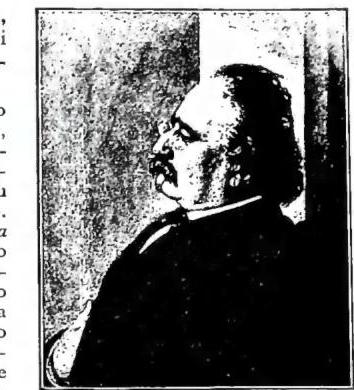
SPAVENTA, BERTRANDO. - Philosopher, b. at Bomba (Chieti) on 26 June 1817, d. at Naples on 20 February 1883.
A pupil at the Seminary of Chieti, then a teacher at the Seminary of Montecassino (1838-40), he received holy orders (1840) and settled in Naples, where he was directed by O. Colecchi to the study of modern philosophy, especially Kant and Hegel. In 1846 he opened a school of philosophy which Galluppi's successor (v.) at the University had closed, on account of the ideas professed by S. He then (1848) became tutor to the son of General Pignatelli and together with him, in 1849, moved to Florence. In 1850 he abandoned the priestly habit, because of the philosophical-religious crisis he had reached, and moved to Turin, where he found an environment favourable to his political sentiments, but which on the contrary he opposed because of the dissonance between his growing laicism and the religious and philosophical environment. In these years he published the Studi sopra la filos. di Hegel (in Riv. ital., 1850, pp. 1-78) and the Principi della filos. pratica di G. Bruno (in Atti dell'Accad. di filos. italica, Genoa 1854, reprinted in Saggi di critica filos., politic., e relig., Naples 1867, pp. 139-75). He lived by his work as a publicist, writing in newspapers and reviews, and took a stand against Catholic thought concerning freedom of teaching (the writings published in 1851 in the Progresso were collected by G. Gentile in the volume La libertà d'insegnamento, Florence 1920). He also polemicized against La civiltà cattolica, with articles in the Cimento, and in the daily Il Piemonte (collected by Gentile under the title La politica dei Gesuiti nel sec. XVI e XIX, Rome 1911). After a brief teaching post at Modena and Bologna he obtained the chair of philosophy at Naples. Here he developed his thought by expounding Hegel (writings gathered by Gentile in the volume Scritti filosofici, Naples 1900), and by setting out his own speculative point of view, with the (unfinished) volume Principi di filosofia (ibid. 1861, supplemented and reprinted by Gentile under the title Logica e metafisica, Bari 1911), and with the studies on Hegel's ethics (reprinted by Gentile under the title Principi di etica, Naples 1904). He also wrote on Bruno and Campanella (Rinascimento, Riforma e Controriforma, Venice 1928), on Gioberti (La filosofia del Gioberti, 2nd ed., Naples 1883) and above all the studies collected by Gentile in the vols. Da Socrate a Hegel (Bari 1905) and La filos. ital. nelle sue relazioni con la filos. europea (ibid. 1908; new school edition edited by G. Gentile, Florence 1937; by G. Tarozzi, Turin 1937; by E. Vigorita, Naples 1938). A member of the Consiglio Superiore from 1861 and a deputy in Parliament in the X, XI and XII legislatures, S. in the last period of his life founded the Giornale napoletano di filos. e lettere «struggling against the positivist tendency» that denied metaphysics (cf. Esperienza e metafisica, edited by D. Jaja, Turin 1888).
S. aimed to rethink Hegel (v.) critically and at the same time to renew the dialectic through a valorization of human thought, understood not as the point of arrival, but as the point of departure present from the very first category of logic. Hence his singular deepening of Hegelian logic, also in relation to a conception of experience capable of overcoming the partial points of view of Hegelianism and of positivism (v.). He recognizes the necessity of metaphysics (with which Kantian thought must be integrated); but metaphysics does not mean transcendence, but rather the affirmation of the transcendental. S.'s position was often polemical and clarifying rather than original; nevertheless his notable influence on Gentile's actualism (v.) should be noted. He intended to reintegrate Italian philosophy into European philosophy: maintaining its originality and nationality and clarifying its efficacy in European thought already from the Renaissance, in which Bruno would prelude to Spinoza, Campanella to Descartes, while Vico would substitute the metaphysics of mind for the metaphysics of being. Italian philosophy took on new prominence in the 19th century, though undergoing the influence of Germanic thought, with Galluppi «a Kantian in spite of himself», Rosmini, discoverer of the «unity of the spirit», and Gioberti.