
VICO, GIOVANNI BATTISTA. — Italian philosopher, born in Naples on 23 June 1668, died there on 22 January 1744.
I. LIFE
Born to a modest bookseller, G. B. V., after his early studies, partly on his own and partly with the Jesuits, was introduced to philosophy by the nominalist Fr. Del Balzo; he then continued with Fr. Ricci and ended by studying Suárez on his own. He subsequently studied law and practiced with a lawyer. But his metaphysical mind could not be satisfied with the quibbles of forensic disputes. He thus accepted the invitation to become tutor in the Rocca household at Vatolla, in Cilento, and remained there for nine years. This was the decisive period of his humanistic formation, through the study of the Italian and Latin classics, Roman law, and Greek and Christian philosophy. Returning to Naples, he won the chair of rhetoric at the University in 1699.These were politically difficult years, since, through the War of the Spanish Succession, the Kingdom of Naples was detached (1707) from Spain, where the Bourbons had established themselves, and temporarily passed under the Austrian crown. V., however, being estranged from politics, lived a rather secluded life, devoting himself with equal scrupulousness to his duties as a family man and as a teacher. He never succeeded in securing a stable prosperity that would free him from economic concerns, which he sought to meet by accepting commissions for dedications and commemorative inscriptions that he composed in excellent Latin. Unfortunate with his children, awkward in his relations with others, embittered by academic life — he did not obtain the chair of jurisprudence for which he applied in 1723 — V. lived wholly absorbed in the effort to clarify for himself and communicate to others the great insights of the Scienza nuova, which, always dissatisfied, he continually reworked until the definitive edition, published only a few months before his death. A belated consolation — although one he felt most keenly, just as he keenly felt every recognition, as well as every failure to recognize his merits — came to him in 1735 with his appointment as royal historiographer, and in 1741 with confirmation of the succession of his son Gennaro to the chair of rhetoric that he had held at the University for so many years.
Among the many problems concerning V.’s life, some bear more directly on his philosophical formation and his position with regard to orthodoxy. Was V. implicated in the famous trial of the Neapolitan “atheists” of 1688–93? It is certain that during the nine years at Vatolla V. was not so entirely self-taught and without contact with the world as one might think from reading the Autobiografia; he had connections with circles and persons, the names of some of whom appear among those indicted in the famous trial. But there is no proof that he himself was involved. One would also like to see evidence of a youthful period of doctrinal heterodoxy in the poem Affetti di un disperato and in certain expressions in a letter to Fr. Giacco (dated 12 October 1720) that refer to “youthful weaknesses and errors.” Yet the pessimism of the former, however unusual in the philosopher of Providence, can be understood within the limits of a psychological crisis; and as for the “weaknesses and errors” of the latter, there is no reason to regard them specifically as theoretical, philosophical, or religious in nature. It is the idealist interpretation (Nicolini, Croce) which, conscious of the intrinsic weakness of its own doctrinal reconstruction of Vichian thought, would like to reinforce it with extrinsic reasons drawn from the philosopher’s life. Moreover, in view of the orthodoxy of a body of thought entrusted to the mass of his writings, youthful lapses and heterodoxies would have little (philosophical) interest, even if documented, since those very works would disprove them (v. , in this regard, C. Cappello, G. B. V. e il processo contro ateisti napoletani del 1688-93, in Salesianum, 1947, pp. 326–42).
A question of more genuine interest concerns the formation of Vichian philosophy. The Autobiografia, otherwise a fundamental document but written very late, and therefore containing abridgements, juxtapositions, and omissions that may mislead, must be supplemented and corrected by examining the other writings (cf. F. Nicolini, La giovinezza di G. B. V., Bari 1932, and J. Chaix-Ruy, La formation de la pensée philosophique de J.-B. V., Gap 1945). V. studied St Augustine, became acquainted with scholastic thought, certainly with Suárez and Scotism, and read at least Aristotle’s Ethica; at the same time, however, he kept abreast of the philosophical innovations then being vigorously debated in Naples, where, particularly in certain circles, Epicurus, Descartes, Gassendi, Bacon, Bruno, the Italian Neoplatonists, and the anti-Curialist ideas of sections of the Neapolitan bourgeoisie were brought together. The question of sources evidently entails a twofold judgment: concerning the authors studied or in any case known by V., and concerning the influence they exerted on the Vichian mind. Now, it may be admitted that V. owed some of these authors — particularly Descartes — more than he was willing to acknowledge; but it remains indisputable that the formation of Vichian philosophy was anti-Cartesian, anti-sensualist, and anti-Enlightenment in orientation. Any possible suggestions deriving from heterodox philosophies — such as those of Epicurus, Hobbes, and Bruno — ultimately amount to cultural and erudite influences that are philosophically rather negative; similarly, although anti-Curialism may not be episodic and superficial, it never amounts to anticlericalism or irreligion. V. himself wished to summarize in four names the influences he considered decisive for his doctrinal conception: Plato, Tacitus, Bacon, and Grotius. Contemporary criticism recognizes the legitimacy of this statement insofar as Plato would represent the demand for truth and philosophy, Tacitus that for certainty and philology, Bacon the synthesis of both, and Grotius would indicate the path toward the realization of that synthesis, which, as is well known, is the undertaking of the Scienza nuova (cf. G. Fassò, I quattro «autori» del V., Bologna 1949).
II. WORKS
All V.’s significant writings are oriented toward his masterpiece, preparing the way for II. Leaving aside the occasional writings (inscriptions, dedications, commemorations, addresses, eulogies), the minor writings (among which should be mentioned the Vindiciae, an energetic reply to an ill-mannered review of the Scienza nuova that appeared in 1727 in the Leipzig Acta eruditorum; the De mente heroica, published in 1731; a Commento all'epistola ai Pisoni and the Institutionse oratoriae of 1711, reworked in 1738, writings that introduce us to his university teaching), and the writings on historical subjects (such as the De rebus gestis Antonii Carfei [1716] and the Principium neapolitanorum coniunctionis anni 1701 historia, which is the history of the so-called Macchia conspiracy, unpublished until the last century), we shall indicate the works of more properly philosophical scope. Between 1699 and 1707 V. delivered seven Orazioni for the inauguration of the academic year, of which only one was published at the time (1708), reworked and considerably expanded under the title De nostri temporis studiorum ratione, and containing an initial effective critique of the Cartesian orientation of culture and scholarship. The other orations, although predominantly rhetorical and pedagogical in character, are not without points of philosophical interest, important for the history of the formation of Vichian doctrine. The De antiquissima italorum sapientia dates from 1710, conceived in three parts—metaphysics, physics, and morals—of which only the first remains. The title refers to the work’s approach, in the sense that V. claims to derive the doctrines that(Int. Sansoni)
VICO. GIOVANNI BATTISTA – Portrait, canvas by an anonymous artist – Rome, Biblioteca Angelica.
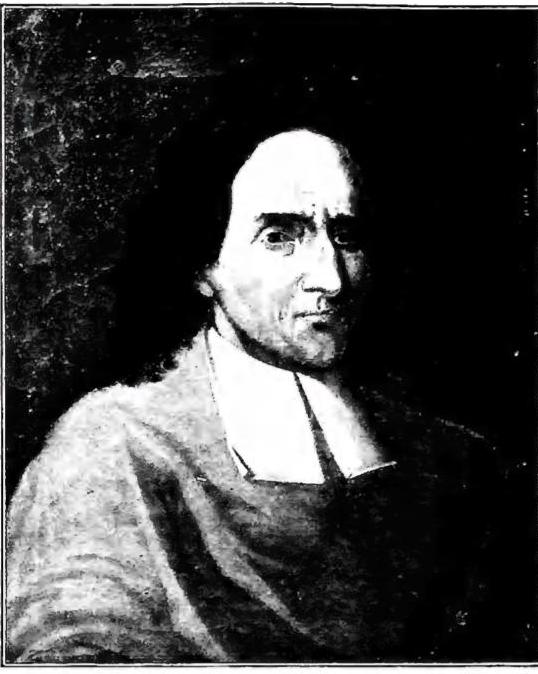
With these works V. society, whose law he studied as its most significant manifestation, in order to understand it in its development and to justify the ways in which it had evolved among the various peoples and in the various ages. Almost all the themes that would later constitute the texture and foundation of the Scienza nuova are already present in the Diritto universale, to such an extent that some wish to regard it as an immature first draft of the masterpiece, the latter extending to the interpretation of the entire course of history principles and methods that the former had tested in the limited sphere of the juridical world. It is known from V. himself that the first exposition of the Scienza nuova was «in negative form» (Autob., p. 48) [with regard to this work, as to the others cited, reference is made to the Nicolini edition], but only the various versions of the Scienza nuova «in positive form» have survived, the first of which bears the date 1725 and the title Principi di una Scienza nuova d'interno alla natura delle nazioni. In 1730 a 2nd ed. was published which, in fact, was a complete reworking of II. On the basis of this, V. continued to rework, expand, and clarify the text, with a view to the definitive ed. of 1744. Extremely important documents for understanding the formation and significance of Vichian philosophy are the Epistolario and the aforementioned Autobiografia, written in 1725 and subsequently completed with additions up to 1731.
V.’s works are available today in the ed. edited by F. Nicolini (Bari 1914 ff.), supplied with exceptionally precise historical-biographical information. It comprises 8 vols. and renders virtually unnecessary the earlier edd., both partial—such as those of Villarosa (4 vols., Naples 1823) and Corcia (2 vols., there 1834)—and complete—such as that of Ferrari (6 vols., Milan 1835–37). The masterpiece, the Scienza nuova, has had many other edd. Nicolini published a Commento storico alla seconda Scienza nuova (Rome 1949) and reissued the Autobiografia (Milan 1947).²
III. DOCTRINE
From a general opposition to Cartesianism as a culture and formation, of which the most notable documents are the De studiorum ratione and certain letters (especially that of 12 Jan. 1729 to Estevan and that of 20 Jan. 1726 to De Vitry), V. moves to a more precise critique of Cartesianism as a method and philosophical system, entrusted particularly to the De antiquissima.Cartesianism, as a culture, assigns exclusive importance to the physical and mathematical disciplines and to pure abstract reason. It is necessary, on the contrary, to vindicate the rights of humanistic and classical culture, in which poetry, the arts, law, and history develop the human spirit in its entirety, rich in ingenuity, feeling, and imagination, as well as in critical reason. Cartesianism as a philosophy is erroneous in its criterion and in its beginning: in its criterion (the clarity and distinctness of the idea), which is subjective and from which nothing can be derived other than “a skepticism befuddled with truth” (Seconde risposte, p. 274); and in its beginning, which is the “cogito,” a vulgar-precritical beginning, not a critical philosophical one. The critical and scientific character of knowing lies, in V.’s view, in reflection and mediation, whereas the “cogito” is immediate presence and pure observation: it “is an indubitable sign of my being,” that is, it gives me certainty of it, but “does not induce in me a science of being,” that is, it does not give me its truth (Prime risposte, p. 209). In the De ant., V. criterion, directed toward deepening the explanatory character of the intellect, the verum factum. If to explain a thing is to know its cause, knowing the cause nevertheless entails being its cause. Being a cause, efficere, must be understood in the cognitive sphere and not in the existential sphere. “To make the object” means possessing its elements in the mind in such a way as to be able to reconstruct the structure of the object; in this act of reconstruction one acquires the critical certainty of truth, whereby knowing (critically) and making — the verum and the factum in this sense — are identified: “dum mens colligit eius veri elementa, quod contemplatur, fieri non potest quin faciat vera, quae cognoscit” (De ant., p. 135; cf. p. 141).
The idealistic conception according to which knowing is making in the sense of “bringing the object into being” is therefore foreign to the Vichian meaning of the famous principle. In it, the vindication of the dynamism of knowing as a condition of its critical value leads neither to the denial of its informative value nor to that of the transcendence of the norm that makes it such (divine science is that “ad cuius veri normam vera humana metiri debemus” (De ant., p. 141).
The application of the criterion leads to confirmation of divine omniscience “quia Deus in se continet elementa ex quibus omnia componit” (De ant., p. 132). As for human science, it cannot concern physics, but only mathematics as an abstract construction of the mind, and history as a concrete construction of that same mind. The application of the verum factum to history had not yet been achieved in the De ant., which, despite its anti-Cartesian polemic, remained structured according to a still philosophical-scientific mentality. Only through the Diritto universale had V. arrived at the new point of view of philosophical-historical interest, which would enable him to exploit the epistemological principle of the De ant. in a brilliant and previously unrecognized manner. V.’s problem is the problem of history. It is therefore not a prospective problem, but rather a retrospective one, even if in solving it V. believed that he had reached principles (those constituting the eternal ideal history) that would allow him to give the Scienza nuova a deductive character and, indeed, a prophetic attitude (cf. L'arte diagnostica della Scienza nuova prima). V. philosophy. As science, insofar as it is a “‘critical art’... that gives the rules for distinguishing the truth in all gentile histories” (Scienza nuova prima, § 91; cf. Autob., p. 49). As philosophy, insofar as it seeks, in the ultimate reasons of history, some absolute law of human becoming, the “eternal ideal history” (Scienza nuova, § 34.9). In V., the two meanings are not always distinct, and this certainly does not contribute to the clarity of his masterpiece; but there can be no doubt that this is the pregnant meaning of the expression “Scienza nuova.” Now, the “scientific” character of historical knowledge derives from the applicability to it of the verum factum criterion: “this civil world was certainly made by men, and therefore its principles can — indeed must — be found within the modifications of our own human mind” (Scienza Nuova, § 331).
History, according to Vichian discoveries, is at once the advancement of the certain and the ascertainment of the true, the certain being that which is established, namely the given, the particular (not the physical given, which is founded on nature, but the civil given, such as laws, customs, etc., which is founded on human authority), whereas the true is that which is truly known, namely reason, the universal. History is therefore also at once a synthesis of philology (which “observes the authority of human free will, from which arises consciousness of the certain”; Scienza nuova, degn. 10) and philosophy (which “contemplates reason, from which arises knowledge of the true”; Scienza nuova, ibid.). V. thereby draws history away from the dual danger of remaining insignificant yet extremely exact erudition and of being filled with arbitrary anachronistic meanings: a condemnation of the historiographical fashions of his time and of later positivist and idealist ones. In history thus understood, the concrete richness of human nature is revealed according to a rhythm that V. defines as sense, imagination, and reason, expressed in three successive moments of historical becoming: the ages of the gods, of the heroes, and of men; men at first “feel without noticing, then notice with a disturbed and moved spirit, and finally reflect with a pure mind” (ibid., degn. 53). V. becoming, namely “the eternal ideal history above which, in time, run the histories of all nations” (ibid., § 349). Through it, the historical course can therefore be “verified” and that “had to, must, will have to” introduced into it (cf. ibid., § 348), without which history is not “science.”
The problem of history presented itself to V. essentially as the problem of origins. The field of origins — even for highly civilized nations such as Greece — teems with chronological, moral, and other incongruities and absurdities (ibid., §§ 79-80). If V. history, this key must first of all prove capable of unlocking the closed doors of that absurd world. Indeed, V. civilization, which he takes back to that presocial state, a hypothesis then common among natural-law theorists, and vividly depicts in famous pages such as the one concerning the primitive brutes (ibid., I. II, Prolog., cap. 3). But V.’s “brute” is filled with a meaning entirely different from that of Hobbes and the natural-law theorists with whom V. is constantly polemicizing. For, on the one hand, it is connected with the biblical datum (ibid., degn. 42), and on the other, it is acknowledged in its full humanity, however degraded (ibid., § 6, 446, etc.). The problem, then, is posed in general as follows: how is it that the “fallen Adam,” that is, primitive, uncouth men, all sense and passion, have sa-
have succeeded in constructing the society and civilization which, in the age of fully developed reason, they are not even able to preserve (ibid., §§ 79–80). The answer to this question introduces the concept of Providence; the disproportion between the ends and the means of action, on the one hand (self-interest and the narrowness of the primitive mind), and the result achieved, on the other (society and civilization), entails the presence of divine collaboration: the law of the heterogeneity of ends is Vico’s proof of Providence (ibid., § 1108). It is not without reason that the Scienza nuova also wishes to be a “reasoned civil theology of divine providence” (ibid., § 342). This transcendent Providence acts in history not through miracles, but by natural ways, through human knowledge and will. Insofar as minds know, venerate, fear, and love a Being superior to them, God (and this knowledge and will constitute religion), human beings succeed in overcoming selfishness and passions, in moralizing and civilizing themselves. Hence the intimate and necessary connection between religion and civilization, which is one of the dominant themes of the Scienza nuova. The beginnings of civilization lie in the first kindling of the idea of God (cf. degn. 30). However aberrant and imperfect, such religions are preferable to atheism, since “from them most illustrious nations arose, whereas from atheism not a single one was founded in the world” (ibid., § 518). But it is then also clear that, if society and civilization are due to human-divine collaboration, abandoning God means jeopardizing society and civilization. This becomes possible when the spontaneity of sensory-fantastic nature, naturally open to truth, is succeeded by the reflection of fully developed reason, which, through an abuse of freedom and as a creator of malice, can close itself off from truth and rebel against II.
Within this comprehensive vision, the tripartition of sense, imagination, and reason reveals itself as a somewhat mechanical and superficial scheme, and acquires its authentic and profound meaning only insofar as it is resolved into the dichotomy of spontaneity and reflection, vulgar wisdom and reflective wisdom, which constitutes the true and profound dialectic of history.
A large part of the Scienza nuova (Book II) is devoted to outlining the primitive world, which—as has been said—is the one that most strongly holds the interest of the V. This world, first the world of brutes, then of giants and heroes, is indeed the world of sensory-fantastic spontaneity, the world of the human race in childhood (cf. degn. 49), but it is also the world of “poetic wisdom.” Wisdom, because truth is present within II. The sensory-fantastic moment is not an alogical moment; if it were, it would be inhuman. But the logos, the truth present within it, does not exist in its perfect form, the critical form of reason, but in an imperfect form: the form of common sense within the envelope of imaginative expression, which is precisely the characteristic of the poetic attitude (cf. the doctrine of the fantastic universal or poetic character, for example, degn. 49). Here we find the recognition of a precious value, not only practical but also theoretical, in common sense, the true “wisdom of the human race” (Scienza nuova prima, § 46), and consequently in the poetry in which it lives. In his doctrine of poetry, conceiving it as the natural expression of the imaginative mind, the V. age, claiming for himself the merit of having initiated modern aesthetics; and, by asserting a value of truth in poetic expression, he distances himself from those who exalt pure imagination and anticipates modern mythological science. A large part of the Scienza nuova is in fact devoted to unveiling myths, hitherto mistakenly understood as idle inventions and disgraceful fables or disguises of philosophical truths. They are instead “true and severe histories” (Scienza nuova, § 7); they always express a natural truth (as Neptune, signifying the sea), or a civil truth (as Minerva, signifying armed heroes in assembly), or a metaphysical truth (as Jupiter, signifying the first notion of the divine). Myths are thus the authentic witnesses and documents of the ages in which they arose—ages which it is futile to think of reaching by following the traces of writers and historians such as Herodotus and Livy, or by applying reflective, conventionalist, and intellectualist criteria. In this same poetic wisdom lies the value of human authority, which is found at the foundation of customs,
laws, and civil usages—that is, the foundation of that certain something which is therefore not merely actuality and historicity, but also reason, however much “obscurity of reason” (degn. 111), as the V. takes pains to show, one might say, on every page of the Diritto universale and the Scienza nuova.
Everything in the earliest ages arises naturally, taking shape according to the logic of sense and imagination, passion and feeling: language and religion, property and family, economics and law, and even geography, physics, and astronomy. On the basis of this fantastic logic, the V. attempts to discover the authentic meaning of what the logic of reason has hitherto declared foolish, absurd, and—in any case—unintelligible, succeeding in giving us an original and exceptionally effective picture of many aspects of ancient civilization. In this field, the V. criticism, deducing from his philosophical canons what historical erudition later achieved by its slow methods. Among the countless anticipations in the field of the most ancient history of Rome and Greece, it is enough to recall the bold thesis that Homer was not a historical person, but a poetic character “of Greek men insofar as they narrated their histories by singing” (cf. all of Book III of the Scienza nuova).
The best-known and most misunderstood Vichian doctrine is that of the corsi and ricorsi. It certainly presents itself as a law of historical development, but it entails neither the necessity nor the repetition of events, since it does not concern the content of history—the events—but only their form, that is, the mentality that “verifies” them. When the course of history, having passed through sensory-fantastic spontaneity, reaches the reflection of fully developed reason, and the latter dissolves in the dissolution of civil society, the course does not come to a halt: in that dissolution, human beings rediscover the spontaneous primitive mind which, by conditioning the resumption of contact with God and with religion, makes it possible to resume the journey. What recurs, therefore, is the mind, the form, not the facts or things: infinite contents and infinite values can be expressed equally in a sensory-fantastic mode and in a reflective-rational one. The V. Middle Ages, which he attempts to interpret ingeniously precisely as a return of the primitive, sensory-fantastic mentality (ibid., Book V).